
Where Does Turmeric Come From?
Quick Answer: Where does Turmeric come from?
Turmeric comes from the rhizome of Curcuma longa, a plant associated with South and Southeast Asia. Its exact original wild location is uncertain because the cultivated species is not known to exist in the wild. India has the strongest historical and agricultural association with turmeric and remains the world’s largest producer.
Key Facts About the Origin of Turmeric
- Botanical name: Curcuma longa L.
- Plant family: Zingiberaceae, the ginger family.
- Part used: The underground rhizome, rather than a true root.
- Likely geographical origin: South or Southeast Asia.
- Strongest historical association: India and the Indian subcontinent.
- Exact wild origin: Uncertain because cultivated C. longa is not known in the wild.
- Modern production: India is the world’s largest producer and exporter.
- Historical uses: Food, dye, traditional medicine, cosmetics and cultural practices.
Where Does Turmeric Come From? Turmeric Plant and Rhizomes
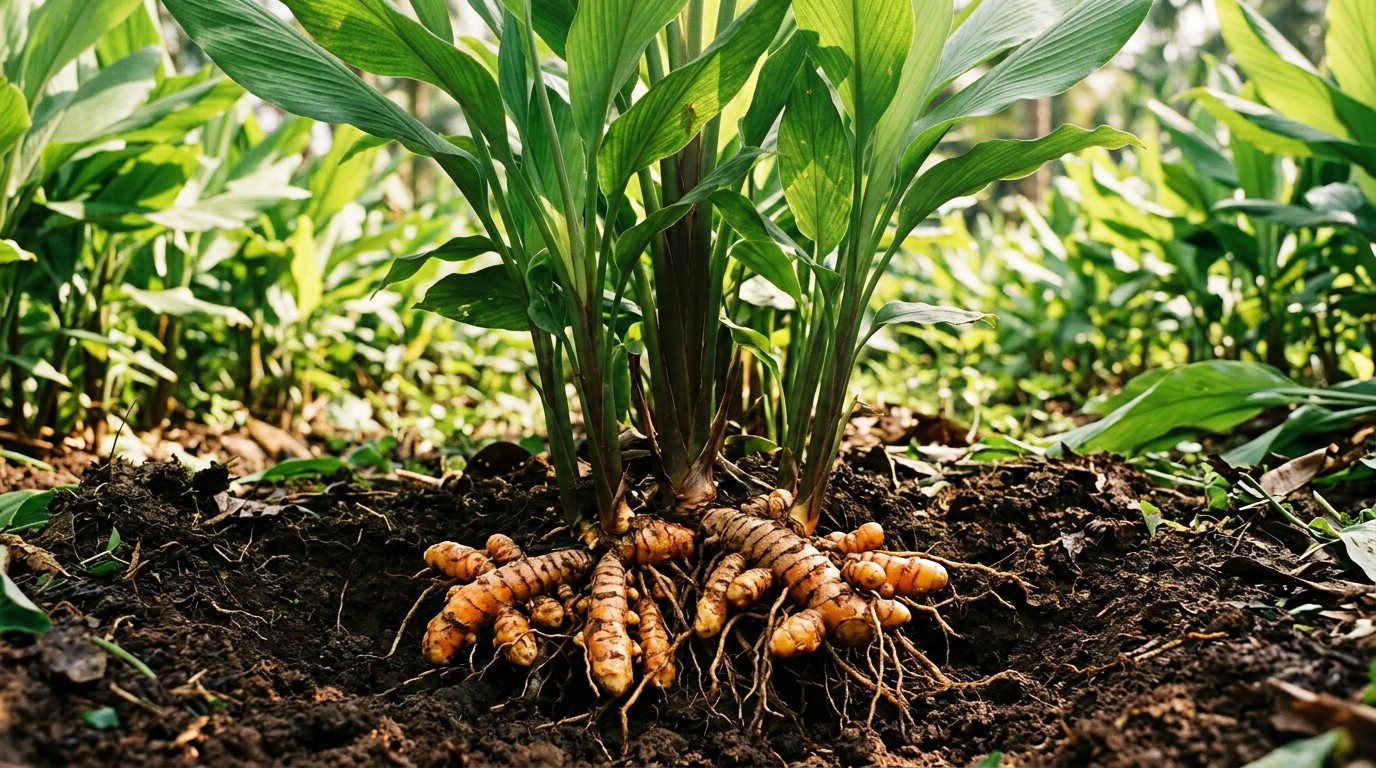
Turmeric plant showing the underground rhizomes from which the familiar spice is produced.
Table of Contents
- Where does turmeric originally come from?
- What part of the turmeric plant is used?
- Why is India so closely associated with turmeric?
- How old is turmeric?
- How did turmeric spread around the world?
- Where is turmeric grown today?
- How turmeric became a global spice
- Turmeric origin compared with modern production
- Frequently asked questions
- Summary
- Further Information
- Sources
Where Does Turmeric Originally Come From?
The simplest answer is South or Southeast Asia, but the scientific answer requires a little more caution.
Turmeric belongs to the genus Curcuma, which contains numerous species distributed naturally across tropical and subtropical Asia and into northern Australia. Curcuma longa is the particular species that produces the familiar culinary turmeric.
The exact original location of Curcuma longa is difficult to establish because it is a domesticated crop rather than a plant with a clearly documented wild population. Kew notes that it may have arisen through selection and vegetative propagation involving related Curcuma species. It also states that the precise origin is unknown, with possibilities including western India, Vietnam and China.
This is why it is more accurate to say that turmeric originated in South or Southeast Asia rather than claiming with certainty that one particular modern country was the sole birthplace of turmeric.
What Part of the Turmeric Plant Is Used?
The part commonly called turmeric is the plant’s rhizome.
A rhizome is an underground stem that stores nutrients and produces new shoots. It is different botanically from a true root.
The turmeric rhizomes are harvested, cleaned and commonly processed by boiling or steaming before being dried. Once dried, they can be used whole or ground into the bright yellow-orange powder familiar in cooking.
From Turmeric Plant to Turmeric Powder
The basic process is:
- Turmeric plants are grown in warm climates.
- The underground rhizomes develop beneath the soil.
- Mature rhizomes are harvested.
- They are cleaned and processed.
- The rhizomes are dried.
- Dried turmeric can be sold whole or ground into powder.
This explains why turmeric powder does not come from a seed, fruit or conventional tree root. It comes from the dried and ground underground stem of the turmeric plant.
Fresh Turmeric Rhizomes – Curcuma longa
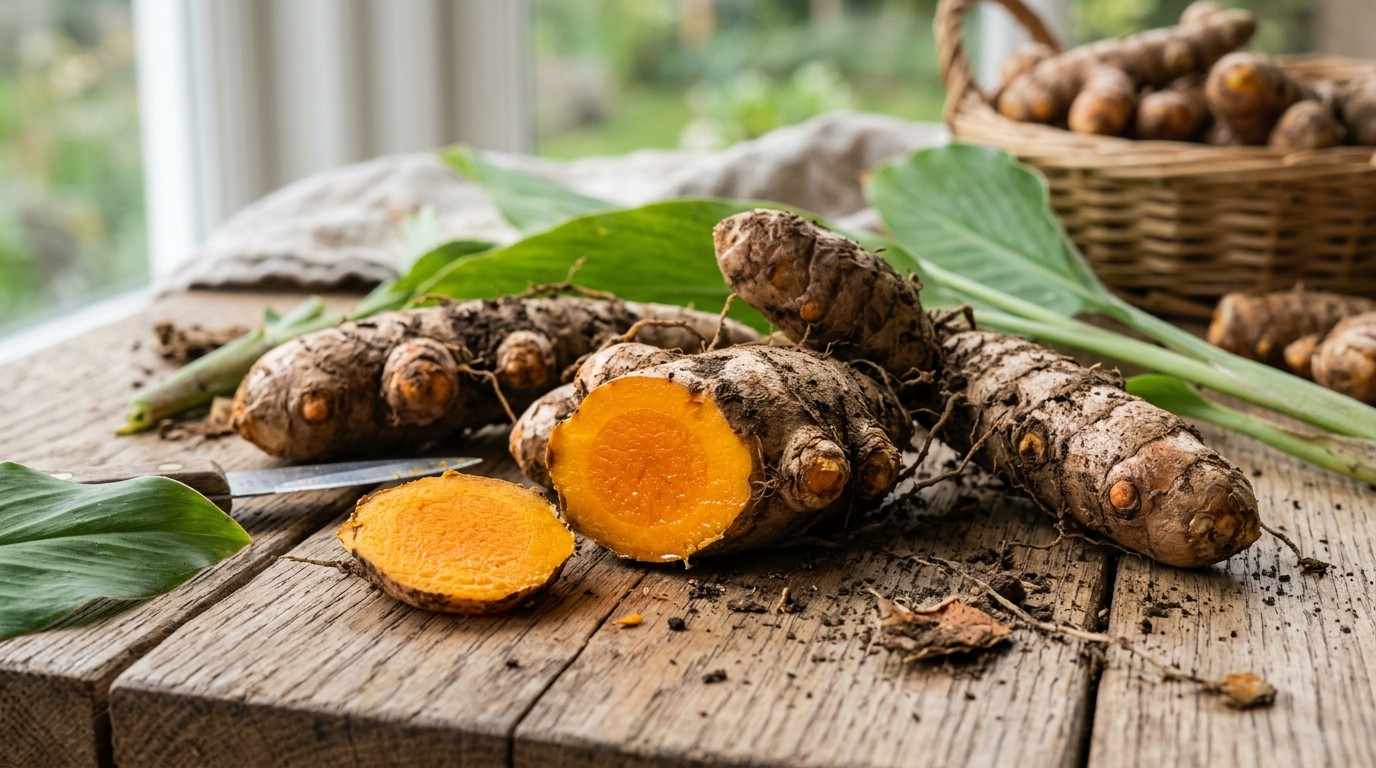
Fresh turmeric rhizomes from Curcuma longa, the plant used to produce turmeric spice.
Why Is India So Closely Associated with Turmeric?
India has an exceptionally strong connection with turmeric because throughout the history of turmeric the spice has been used there for thousands of years and became deeply integrated into food, traditional practices and cultural life.
Historical and scientific literature describes turmeric as an important Indian spice and traditional ingredient, while Kew records its use in India for at least 2,500 years. Turmeric has also been associated with traditional Ayurvedic practices and with cultural and ceremonial uses.
India is also highly significant from a modern agricultural perspective. It is the world’s largest producer, consumer and exporter of turmeric, and Indian turmeric cultivation includes considerable genetic and regional diversity. Research into Indian turmeric germplasm has found substantial variation between cultivated accessions, including differences in rhizome characteristics and curcuminoid content.
Turmeric in Indian Culture
Turmeric has historically been used for more than cooking.
Its intense yellow colour made it useful as a natural dye and colouring material. It has also been used in traditional preparations, cosmetics and cultural ceremonies.
In India, turmeric is known by several regional names, including haldi in Hindi and manjal in Tamil. The range of names reflects its long history across different linguistic and cultural communities.
Turmeric Farming in India
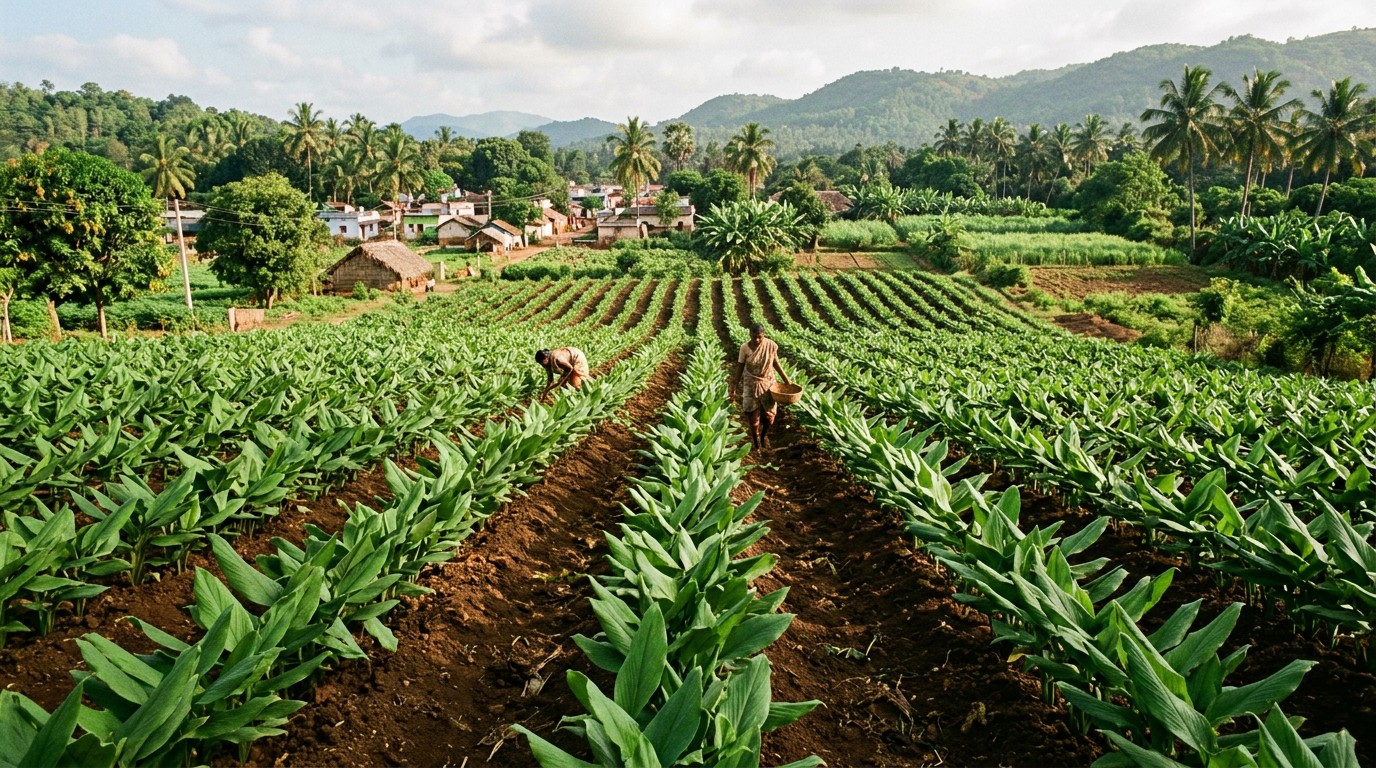
Turmeric growing in an agricultural field in India, one of the world’s leading turmeric-producing countries.
How Old Is Turmeric?
There is no single universally accepted date for the first use of turmeric.
Scientific literature describes turmeric as an ancient crop with thousands of years of use in South Asia. Kew reports evidence of turmeric use in India dating back at least 2,500 years, while scientific reviews discuss a considerably longer history of human use. Some sources suggest possible use going back several thousand years, but the evidence varies depending on whether researchers are referring to archaeological evidence, written records or later historical accounts.
This distinction is important. Claims that turmeric has been used for a specific number of years should not be presented as an exact archaeological fact unless the evidence supports that level of certainty.
Early Uses of Turmeric
Historically, turmeric had several roles:
- Food: Used as a spice and colouring ingredient.
- Dye: Its strong yellow pigment made it useful for colouring materials.
- Traditional medicine: Used in Ayurvedic and other traditional systems.
- Cosmetics: Used in traditional preparations for the skin.
- Culture: Used in ceremonies and religious practices.
These traditional uses explain why turmeric became much more than an ordinary culinary spice in South Asia.
How Did Turmeric Spread Around the World?
Turmeric’s spread around the world appears to have been closely connected with the movement of people, food traditions and trade networks.
It became established across much of Asia and was eventually introduced into regions outside its original area of cultivation. Kew records historical evidence of turmeric in China by around 700 CE, East Africa by about 800 CE and West Africa by around 1200 CE. It was later introduced to Jamaica during the 18th century.
Archaeological research also provides evidence of turmeric being present in Southeast Asia during the early centuries CE. Researchers examining residues from grinding stones at Oc Eo in southern Vietnam identified turmeric alongside other spices associated with South Asian culinary traditions. The findings provide evidence of spice movement and culinary exchange across the Indian Ocean region around 2,000 years ago.
Turmeric and the Ancient Spice Trade
The movement of turmeric demonstrates that historical spice trading was not simply about individual ingredients travelling from one country to another.
Spices travelled with merchants, migrants and communities, and their uses could change as they entered new cultures. Turmeric’s distinctive colour and flavour made it useful in food, while its traditional applications helped it become established in different regions.
Over time, turmeric became an important crop throughout parts of South and Southeast Asia.
Turmeric and the Ancient Asian Spice Trade
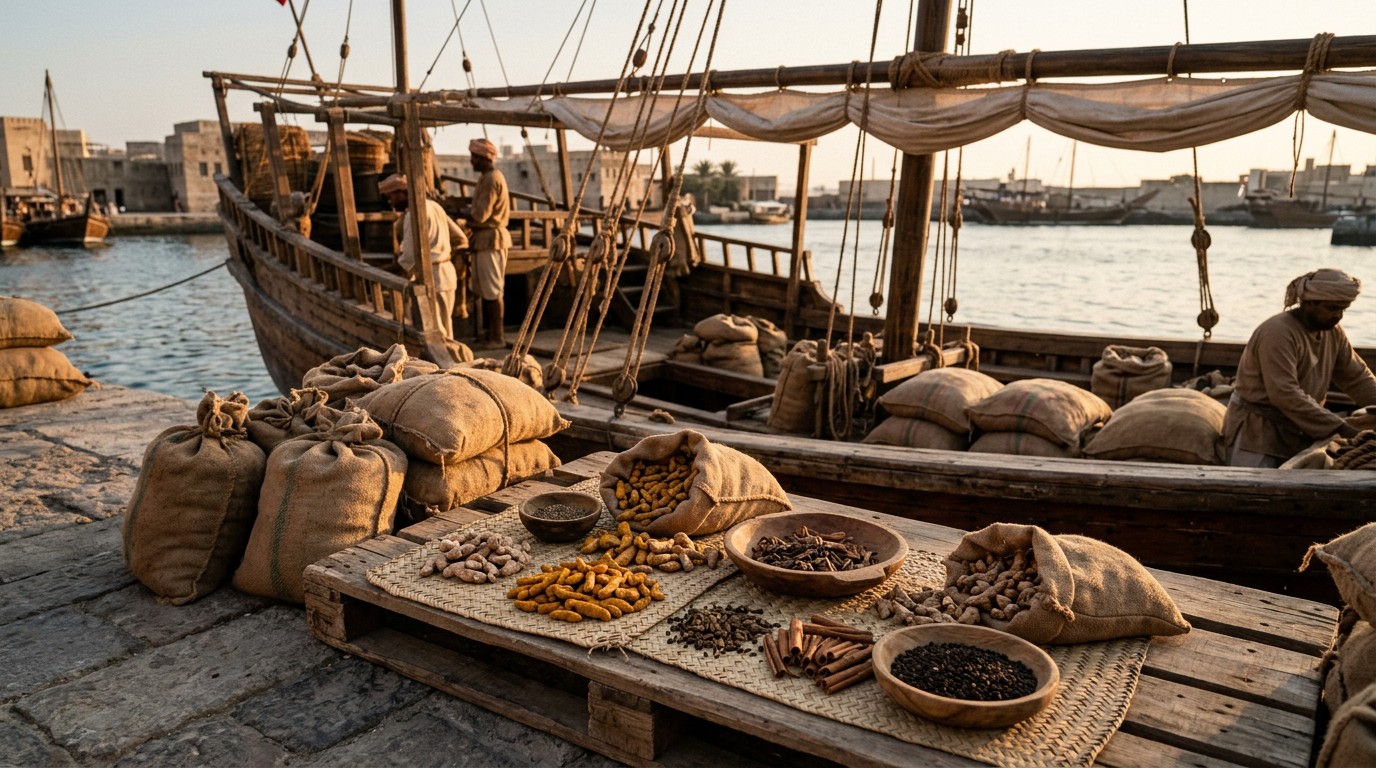
Turmeric represented as part of the historical movement of spices between South Asia and Southeast Asia.
Where Is Turmeric Grown Today?
Turmeric is now cultivated in many tropical and subtropical regions.
Modern cultivation is particularly important in:
- India
- Bangladesh
- China
- Thailand
- Cambodia
- Malaysia
- Indonesia
- The Philippines
- Other tropical and subtropical regions
Kew identifies India as the world’s largest producer, consumer and exporter and lists several Asian countries where turmeric is extensively cultivated.
Turmeric requires a warm growing environment and is generally cultivated as an annual crop even though the plant itself is a perennial herb. The rhizomes are planted in soil, allowed to develop over the growing season and harvested once mature.
How Turmeric Became a Global Spice
Turmeric is now familiar far beyond South Asia.
It is widely associated with South Asian cooking, particularly curries and spice mixtures, but its use has expanded into cuisines and food products around the world.
The dried rhizome can be ground into a powder and used as a natural yellow-orange colouring ingredient as well as a spice. Turmeric-derived colouring compounds are also used in the food industry.
Its global popularity has increased further as interest in traditional foods and plant-derived ingredients has grown. However, modern health claims about turmeric should be distinguished from its long history of traditional use and from evidence obtained in laboratory or clinical research.
Turmeric Origin Compared with Modern Production
| Question | Historical or botanical answer | Modern situation |
| Where does turmeric come from? | South or Southeast Asia is generally considered the region of origin. | It is now cultivated in many tropical regions. |
| Which plant produces turmeric? | Curcuma longa. | The same species is commercially cultivated today. |
| What part becomes the spice? | The underground rhizome. | Rhizomes are harvested, dried and often ground. |
| Is India the original home? | India has a very strong historical connection, but the exact original location is uncertain. | India is the leading producer and exporter. |
| Is turmeric only grown in India? | No. Related Curcuma species occur widely across Asia. | Turmeric is commercially grown in several countries. |
Frequently asked questions
Where does turmeric originally come from?
Turmeric is generally associated with South and Southeast Asia. Its exact original wild location is uncertain because cultivated Curcuma longa is not known to occur naturally in the wild. Kew identifies southwestern India within its native range while noting that the precise origin remains uncertain.
Is turmeric native to India?
India has a very strong historical and agricultural connection with turmeric. Kew lists Curcuma longa as a cultigen with a native range in southwestern India, but also notes uncertainty about its exact origin. Therefore, it is more accurate to describe India as a major centre of turmeric cultivation and diversity rather than making an absolute claim that India is its only place of origin.
Is turmeric a root or a rhizome?
Turmeric is a rhizome, which is an underground stem. The rhizome is harvested and processed to produce fresh turmeric, dried turmeric and turmeric powder.
When did turmeric first appear in history?
Turmeric has been used in South Asia for thousands of years. Historical sources provide evidence of its use in India at least 2,500 years ago, while archaeological and scientific research indicates that turmeric was moving through Asian trade networks many centuries ago.
Which country produces the most turmeric?
India is the world’s largest producer of turmeric and is also a major consumer and exporter. Scientific literature and botanical references consistently identify India as the leading turmeric-producing country.
How did turmeric get to other countries?
Turmeric spread through cultivation, migration, cultural exchange and historical trade. Evidence of turmeric in Southeast Asia during the early centuries CE supports the importance of ancient trade and cultural connections in spreading turmeric and other spices beyond South Asia.
Final summary
So, where does turmeric come from? Turmeric comes from Curcuma longa, a rhizomatous plant belonging to the ginger family. Its precise original wild location remains uncertain, but the plant is strongly associated with South and Southeast Asia, particularly India.
Turmeric has a long history as a spice, colouring agent, traditional ingredient and cultural plant. Its use spread through Asia and beyond as people, crops and spices moved along historical trade routes. Archaeological research provides evidence that turmeric was being used in Southeast Asia around 2,000 years ago, demonstrating that its history extends well beyond the Indian subcontinent.
Today, India remains the world’s leading turmeric producer, while the crop is cultivated throughout many warm regions. Understanding this history helps explain why turmeric has such an important place in food, agriculture and cultural traditions around the world.
From Turmeric Rhizome to Turmeric Powder
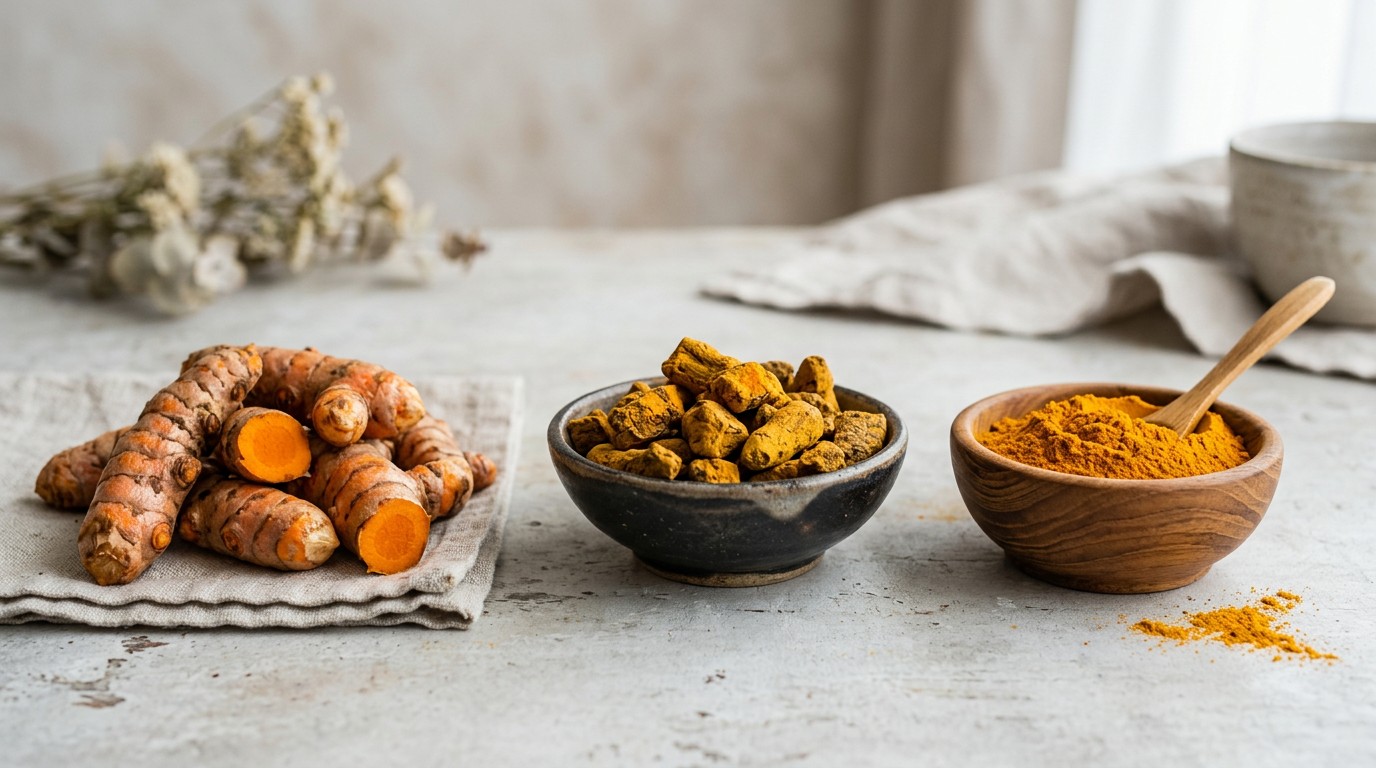
Alt text: Turmeric rhizomes, dried turmeric and turmeric powder showing how the spice is produced.
Further Information
1. TURMERIC | How Does it Grow?
2. Curcuma longa L. – Plants of the World Online
Brief description: Kew’s botanical reference for Curcuma longa, covering its taxonomy, geographical origin, distribution, cultivation and history. It is particularly useful because Kew explains that turmeric is a domesticated plant and that its exact origin is uncertain, while identifying southwestern India within its native range.
Published by: Royal Botanic Gardens, Kew
Direct URL: Read Curcuma longa L. – Plants of the World Online
3. Turmeric, the Golden Spice
Brief description: A detailed scientific reference covering the origin, nomenclature, history, cultivation and processing of turmeric. It discusses turmeric’s long history in India and its subsequent spread to China, East Africa, West Africa and Jamaica.
Published by: NCBI Bookshelf / National Center for Biotechnology Information
Direct URL: Read Turmeric, the Golden Spice
4. Curcuma Longa (turmeric): from traditional applications to modern plant medicine research hotspots
Brief description: A recent peer-reviewed review covering turmeric’s botany, geographical distribution, history, traditional uses and modern research. It is useful for providing scientific context around turmeric’s origins in South or Southeast Asia and its subsequent global spread.
Published by: Chinese Medicine, Springer Nature
Direct URL: Read Curcuma Longa – Springer Nature
Sources
- Royal Botanic Gardens, Kew – Plants of the World Online: Curcuma longa L. — botanical classification, geographical distribution, history, cultivation and uses.
- Royal Botanic Gardens, Kew – Plants of the World Online: Curcuma L. — information on the wider Curcuma genus and its distribution across tropical and subtropical Asia.
- Verma S, Singh S, Sharma S et al. (2015): Assessment of genetic diversity in indigenous turmeric (Curcuma longa) germplasm from India using molecular markers. Physiology and Molecular Biology of Plants. Research into genetic diversity of Indian turmeric and its importance as a major production region.
- Curcuma Longa (turmeric): from traditional applications to modern plant medicine research hotspots: A recent scientific review covering turmeric botany, history, traditional applications and geographical distribution.
- Earliest curry in Southeast Asia and the global spice trade 2000 years ago: Archaeological research published through PubMed documenting evidence of turmeric and other spices at Oc Eo in southern Vietnam.
- Protocols for In Vitro Propagation, Conservation, Synthetic Seed Production, Microrhizome Production, and Molecular Profiling in Turmeric: Scientific reference describing Curcuma longa as a rhizomatous perennial native to India and Southeast Asia and discussing its vegetative propagation.
- Exotic foods reveal contact between South Asia and the Near East during the second millennium BCE: Archaeological research providing evidence for the movement and use of turmeric beyond South Asia in ancient trade networks.
Medical disclaimer
This page is provided for general educational and informational purposes only. It is not intended to diagnose, treat, cure or prevent any medical condition and should not be considered medical advice.
Although turmeric has a long history of traditional use and is the subject of modern scientific research, historical use does not necessarily establish that a particular health claim is medically proven.
Always consult a qualified medical doctor or other healthcare professional before using turmeric or turmeric supplements for a health-related purpose, particularly if you have a medical condition, are pregnant or breastfeeding, or take prescription medicines.
Author
Written by J. Henderson
Health & Wellness Research Writer
J. Henderson writes evidence-based articles on nutrition, botanical supplements and everyday wellbeing. His work focuses on translating scientific research into clear, practical guidance that helps readers make informed decisions about natural health products.