Turmeric in Traditional Medicine
Turmeric has been used in traditional medicine for centuries, particularly across India and other parts of Asia. The plant, known scientifically as Curcuma longa, is valued for its rhizome, commonly called the turmeric root. In Ayurveda, traditional Chinese medicine and other traditional healing systems, turmeric has been used in preparations associated with digestion, inflammation, skin conditions, pain and other health concerns.
Turmeric in traditional medicine is different from the modern use of concentrated turmeric or curcumin supplements. Traditional preparations may contain the whole turmeric rhizome and other ingredients, whereas modern supplements can contain concentrated extracts with substantially different amounts of curcuminoids. Traditional use is also not the same as scientific proof of effectiveness. Modern research is investigating turmeric and curcumin for a range of potential health effects, but evidence varies depending on the condition, preparation and dose.
This guide looks at the history of turmeric in traditional medicine, how it has been used in different cultures, what traditional practitioners have associated it with and how these historical uses compare with modern scientific understanding.
Turmeric Traditional Medicine Timeline
- Over 2,500 years ago: Used in India in Ayurveda and as a spice.
- Around 659 AD: Recorded in Chinese medicinal literature.
- 800–1200 AD: Spread through parts of Africa.
- 13th century: Reached Europe through trade.
- Today: Still used traditionally and widely researched.
Turmeric (Curcuma longa) Rhizome
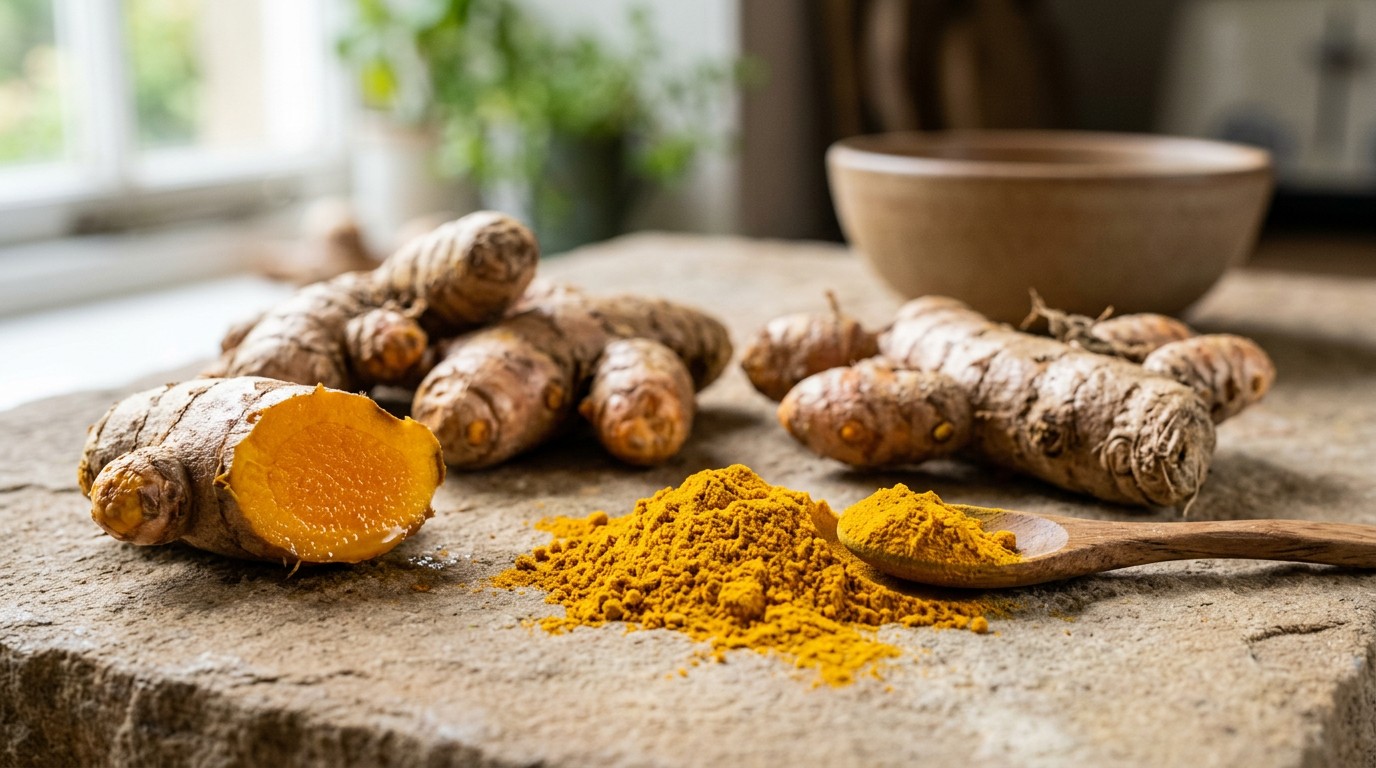
The rhizome of Curcuma longa, commonly known as turmeric, has been used as both a food ingredient and traditional medicinal plant.
Quick answer: What is turmeric used for in traditional medicine?
Turmeric has traditionally been used as a medicinal plant as well as a taking turmeric with food spice and colouring ingredient.
Key points include:
- Turmeric comes from the rhizome of Curcuma longa.
- Ayurveda has used turmeric for a wide variety of traditional purposes.
- Turmeric also has a long history within traditional Chinese medicine.
- Traditional uses have included digestive complaints, inflammation, pain and certain skin conditions.
- Turmeric has also been used in Islamic and other Asian traditional medicine systems.
- Curcumin is one of turmeric’s best-known compounds, but turmeric contains many other constituents.
- Traditional use does not by itself prove that a treatment is effective.
- Modern turmeric and curcumin supplements can differ considerably from traditional preparations.
- Some concentrated turmeric supplements have been associated with rare cases of liver injury.
Turmeric has been used throughout history in traditional medicine
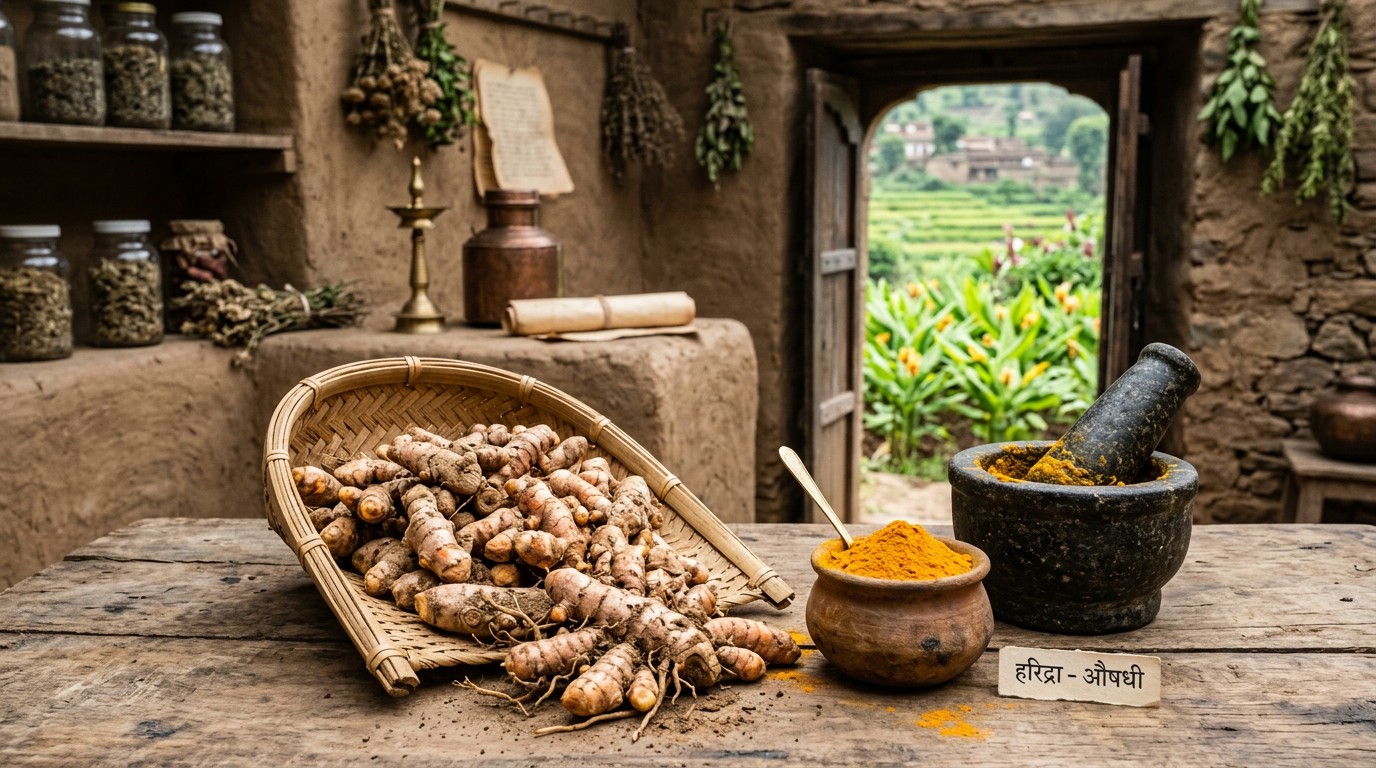
Traditional medicine used Turmeric for a range of medical conditions
Traditional turmeric uses at a glance
| Tradition or role | Historical use or significance |
| Ayurveda | Used in preparations associated with digestion, skin and inflammatory complaints. |
| Traditional Chinese Medicine | Used in preparations traditionally associated with circulation, pain and blood stasis. |
| Regional folk medicine | Used for a wide range of everyday health complaints. |
| Food | Used as a spice and colouring ingredient. |
| Cosmetics | Traditionally incorporated into some skin preparations. |
| Cultural practices | Used in ceremonies and religious traditions in parts of Asia. |
These descriptions summarise historical practices; they are not claims that these uses have been proven effective by modern clinical research.
Table of Contents
- What is turmeric?
- A brief history of turmeric in traditional medicine
- Turmeric in Ayurveda
- Turmeric in traditional Chinese medicine
- Turmeric in other traditional medicine systems
- What was turmeric traditionally used for?
- Turmeric, curcumin and traditional preparations
- Traditional use versus modern scientific evidence
- Is turmeric still used in traditional medicine?
- Safety and considerations
- Frequently asked questions
- Summary
- Sources and further information
- Medical disclaimer
What is turmeric?
Turmeric is the common name for Curcuma longa, a perennial plant belonging to the ginger family, Zingiberaceae. The part traditionally used is the rhizome, an underground stem that is dried and commonly ground into a yellow-orange powder.
Turmeric has served several roles throughout history. It has been used as a culinary spice, natural colouring agent, cosmetic ingredient and traditional medicinal plant. Its strong yellow colour is largely associated with curcuminoids, a group of naturally occurring compounds that includes curcumin.
It is important to distinguish turmeric from curcumin. Turmeric is the whole plant material or preparations made from its rhizome, while curcumin is one particular compound found within turmeric. Traditional medicine generally involved turmeric preparations rather than the highly concentrated curcumin extracts found in many modern turmeric supplements
A brief history of turmeric in traditional medicine
Turmeric has a long history in Asian cultures and traditional medicine systems. Scientific reviews describe its traditional use across India, China and other parts of Asia, as well as within Islamic traditional medicine.
The historical importance of turmeric is closely connected to its availability as both a food ingredient and medicinal plant. Its bright colour, distinctive taste and aroma and storage properties also made it useful for purposes beyond medicine.
In India, turmeric became closely associated with Ayurveda and cultural practices. In China, different Curcuma species and medicinal preparations became part of traditional Chinese medicine, with historical references appearing in classical Chinese medical literature.
Because traditional medicine developed over many centuries, descriptions of turmeric are not necessarily equivalent to modern medical diagnoses. Terms used in historical medical systems often reflect their own theories of health and disease rather than modern biomedical terminology.
History of Turmeric in Traditional Medicine
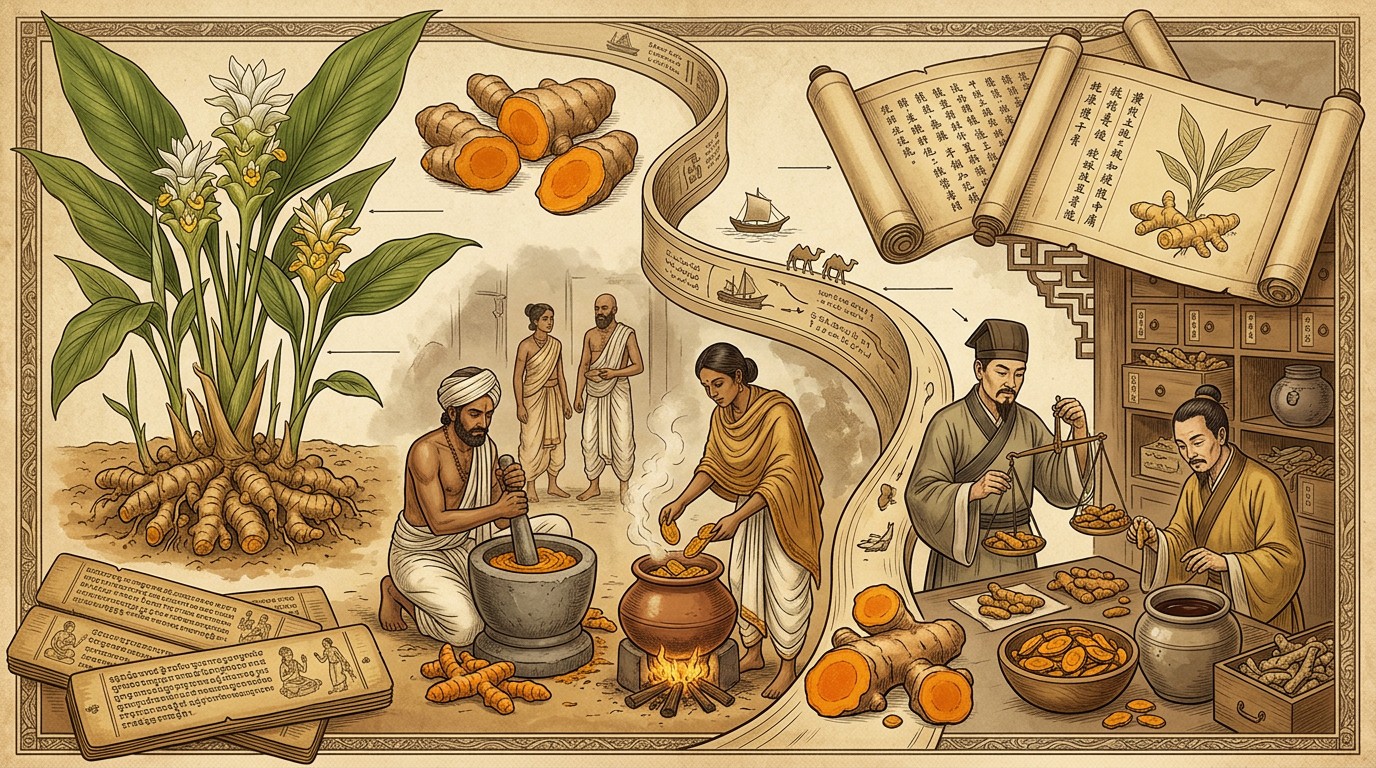
Turmeric has been used across several Asian traditional medicine systems over many centuries.
Turmeric in Ayurveda
Ayurveda is one of the major traditional systems of medicine associated with turmeric. The rhizome of Curcuma longa has been used in Ayurvedic preparations for a variety of traditional purposes.
Historical and scientific reviews report uses involving digestion, skin conditions, wounds, respiratory complaints and inflammatory conditions. Turmeric has also been described traditionally as a tonic, stomachic and carminative ingredient.
External applications were also important. Traditional preparations containing turmeric were used on the skin and in preparations associated with wounds, bruises and other local complaints.
Turmeric also has cultural significance in India beyond medicinal use. It has traditionally been used in religious and ceremonial practices, as well as in cosmetics and food. A 2025 review of Curcuma longa describes its historical use in Ayurveda alongside its culinary and cultural roles.
It is worth remembering that Ayurveda is a complex medical system rather than simply a collection of individual herbs. The way turmeric was traditionally used could depend on the preparation, combination with other ingredients and the individual circumstances of the person.
Turmeric in Ayurvedic Traditional Medicine

Turmeric has a long history of use within Ayurveda, one of the traditional medical systems of the Indian subcontinent.
Turmeric in traditional Chinese medicine
Turmeric also has a long history in traditional Chinese medicine (TCM).
Historical literature describes medicinal uses of Curcuma species in China dating back many centuries. A review of traditional Chinese medicines notes that Curcumae Rhizoma and Curcumae Radix have different botanical sources, medicinal parts and traditional applications.
This distinction is important because not every traditional Chinese medicinal product described as a “curcuma” preparation is necessarily identical to the turmeric commonly used as a kitchen spice.
Traditional Chinese medicine has associated particular Curcuma preparations with concepts such as promoting the movement of qi, addressing blood stasis and relieving pain. These terms belong to the theoretical framework of TCM and should not automatically be translated into modern medical claims.
Historical records show that Curcuma preparations appeared in Chinese medical texts over successive dynasties. Modern reviews also note that turmeric and related Curcuma medicines continue to be included within Chinese traditional medicine.
Turmeric in Traditional Chinese Medicine
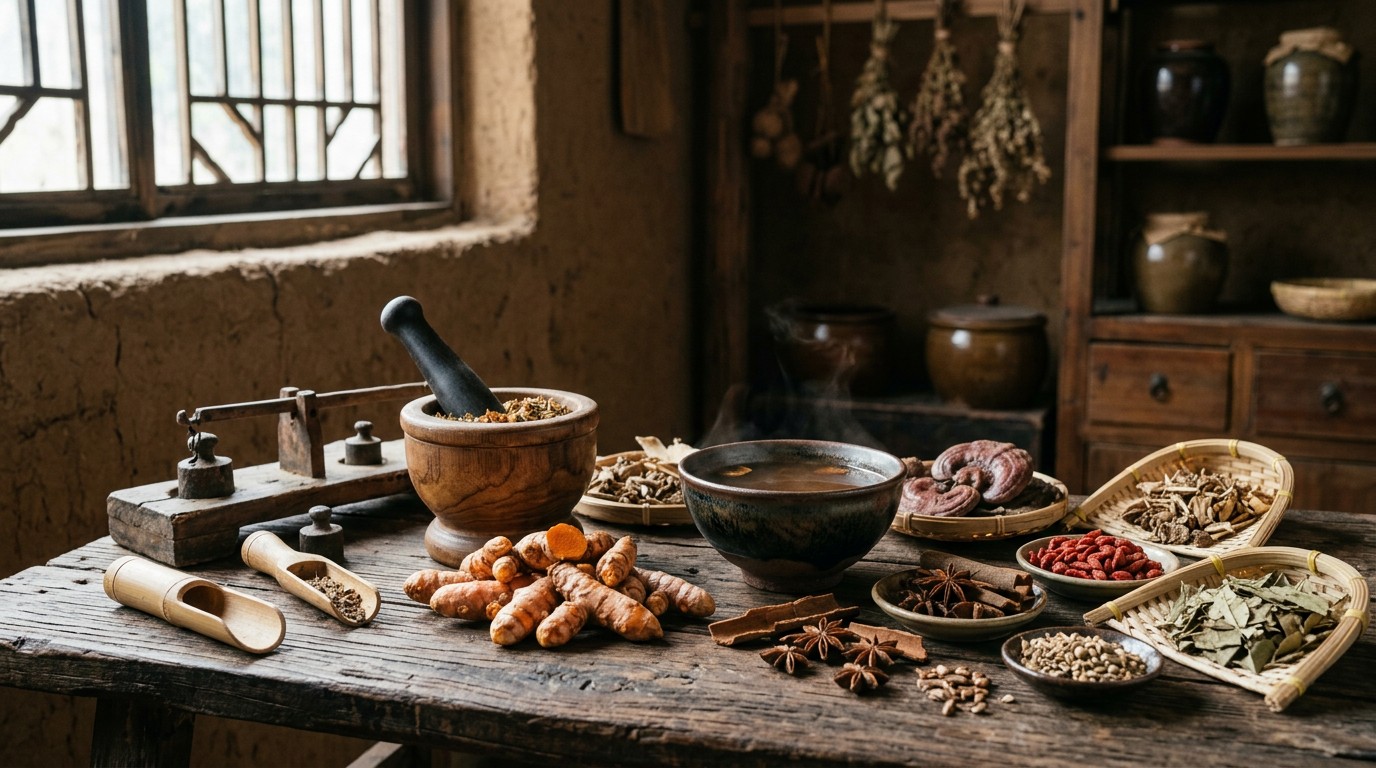
Turmeric and related Curcuma species have a long history within traditional Chinese medicine.
Turmeric in other traditional medicine systems
Turmeric’s traditional use was not limited to Ayurveda and traditional Chinese medicine.
Reviews of the historical literature describe turmeric and related Curcuma species within Islamic traditional medicine and other Asian medical traditions. Uses have included digestive complaints, liver-related conditions, wounds, skin problems and inflammatory complaints.
The details vary between traditions. Different cultures used different preparation methods and interpreted the properties of turmeric according to their own systems of medicine.
This is one reason it is more accurate to talk about the traditional uses of turmeric rather than suggesting that there has been one universal historical use.
What was turmeric traditionally used for?
Historical sources describe a broad range of traditional applications.
Commonly reported areas include:
Digestive health: Turmeric has traditionally been used for indigestion, feelings of fullness and other digestive complaints. The European Medicines Agency recognises certain turmeric preparations for the traditional-use indication of relief of mild digestive problems such as fullness, slow digestion and flatulence.
Inflammatory complaints: Traditional medicine has used turmeric in preparations associated with inflammatory conditions and pain. Modern research has subsequently investigated the biological activity of turmeric and curcuminoids, although laboratory findings should not automatically be interpreted as proven clinical benefits.
Skin applications: Turmeric has historically been applied externally in some traditional preparations for skin problems, wounds and other local complaints.
Respiratory complaints: Traditional applications have included coughs, colds and other respiratory conditions.
Liver and jaundice-related uses: Historical literature describes turmeric use in Ayurveda and Unani medicine in relation to liver obstruction and jaundice. These historical uses should not be interpreted as evidence that turmeric can treat modern liver disease.
The important distinction is that these are traditional uses, not a list of medically proven treatments.
Traditional Turmeric Preparation
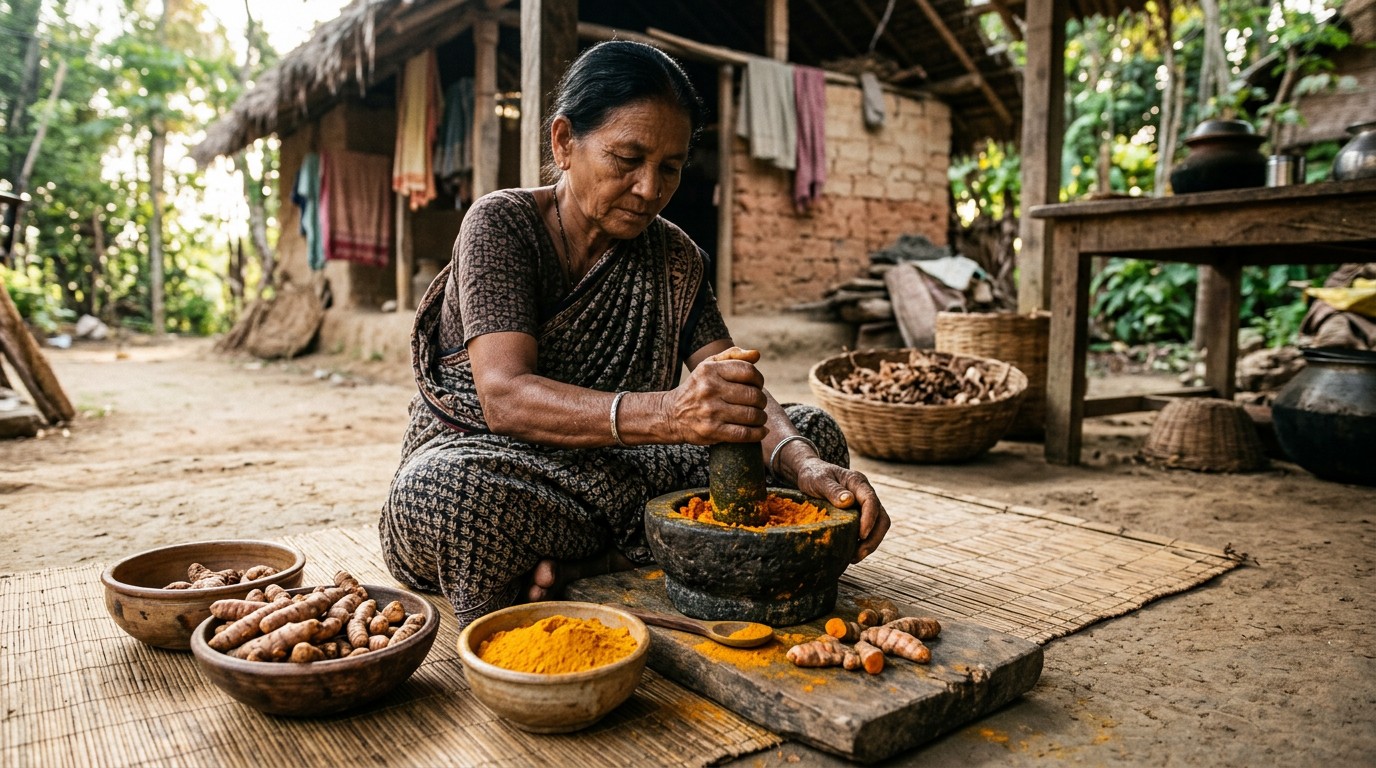
Traditional turmeric preparations have varied between cultures and medical systems.
Turmeric, curcumin and traditional preparations
One of the most important points when discussing turmeric in traditional medicine is the difference between whole turmeric and concentrated extracts.
Turmeric contains curcuminoids, including curcumin, as well as volatile oils and other naturally occurring compounds. Modern supplements may isolate or concentrate particular components, sometimes combining them with other ingredients intended to increase absorption.
This means a modern curcumin capsule is not necessarily equivalent to the turmeric preparations used historically.
| Comparison | Traditional turmeric | Modern turmeric or curcumin supplement |
| Main material | Turmeric rhizome | Powder, extract or isolated compounds |
| Typical context | Food and traditional medicine | Dietary supplement or herbal medicine |
| Composition | Multiple naturally occurring constituents | May be concentrated or standardised |
| Historical evidence | Centuries of traditional use | Modern products are comparatively recent |
| Scientific evidence | Historical use provides context | Clinical evidence depends on the specific preparation |
| Safety considerations | Usually considered in the context of traditional use | Concentrated products can have different safety considerations |
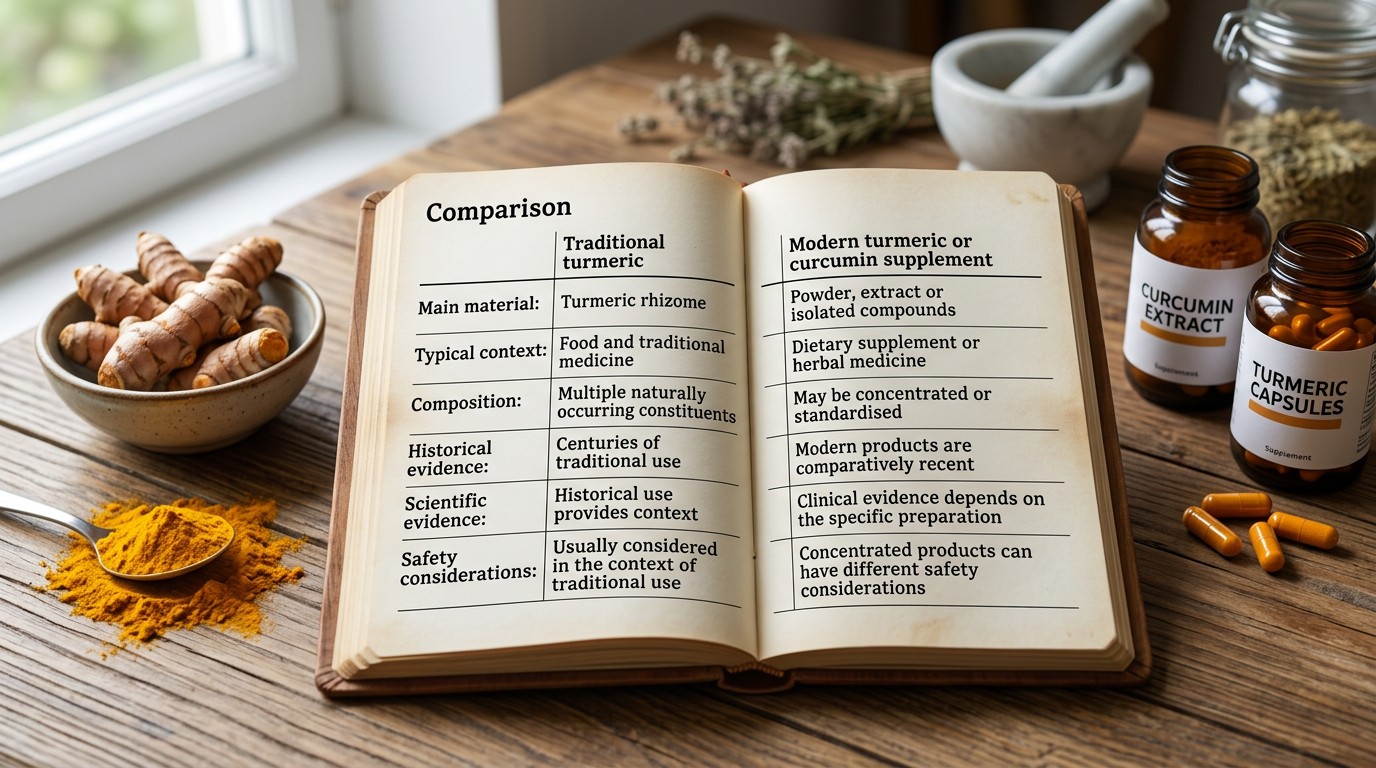
A comparison of the use of traditional turmeric vs modern turmeric supplements.
Traditional use versus modern scientific evidence
Traditional use and modern scientific evidence answer different questions.
Traditional medicine can provide valuable information about how a plant has been used historically and which preparations may deserve scientific investigation. However, historical use alone cannot establish that a treatment works for a particular medical condition.
Modern research has investigated turmeric and curcumin in laboratory studies, animal research and human clinical trials. Research has focused on areas including inflammation, osteoarthritis, metabolic health and other conditions. The quality and findings of studies vary, and results may differ depending on the turmeric preparation and amount of curcuminoids used.
The European Medicines Agency provides a useful example of the distinction. Its assessment of certain turmeric preparations for mild digestive complaints is based on traditional use, rather than sufficient clinical evidence to establish a well-established medicinal use.
This distinction is particularly important when reading claims online. “Used traditionally for” does not mean “proven to treat”.
Is turmeric still used in traditional medicine?
Yes. Turmeric and related Curcuma preparations remain associated with traditional medicine systems today, particularly Ayurveda and traditional Chinese medicine.
At the same time, turmeric has moved into modern nutrition, food supplements and scientific research. This has created a much wider range of products, from ordinary culinary turmeric powder to highly concentrated extracts.
Modern research has also increased interest in curcumin, particularly because of its biological activity in laboratory studies. However, modern supplements should not automatically be regarded as equivalent to traditional medicinal preparations.
Safety and considerations
Turmeric used as a food ingredient is different from taking concentrated turmeric or curcumin supplements.
The UK Committee on Toxicity has reviewed reports of liver injury associated with turmeric and curcumin supplements. Its assessment concluded that there is reasonable evidence of a link in some cases and that rare individuals may experience liver-related adverse effects through an idiosyncratic response.
The European Medicines Agency also advises against certain turmeric medicinal preparations in people with bile duct obstruction, cholangitis, liver disease, gallstones or other biliary disorders.
Turmeric and herbal medicines can also interact with conventional medicines. UK NHS guidance advises people to check with a pharmacist before taking herbal medicines when they are already using other medicines.
Anyone considering turmeric or curcumin as a medicinal supplement should therefore consider the specific product, preparation, dose, existing health conditions and medicines being taken rather than assuming that a traditional product is automatically risk-free.
Frequently asked questions
What was turmeric traditionally used for?
Turmeric was traditionally used for a variety of purposes, including digestive complaints, inflammatory conditions, skin problems, wounds, respiratory complaints and other health concerns. The specific use depended on the traditional medical system and preparation.
How long has turmeric been used in traditional medicine?
Turmeric and related Curcuma species have a long history of use across Asian traditional medicine systems. Historical sources document its use in India and China over many centuries, although it is difficult to assign a single precise date to the beginning of medicinal turmeric use.
Is turmeric part of Ayurvedic medicine?
Yes. Turmeric (Curcuma longa) is an established traditional medicinal plant within Ayurveda and has been used in a variety of preparations and for several traditional purposes.
Is turmeric used in traditional Chinese medicine?
Yes. Turmeric and other Curcuma species have a long history within traditional Chinese medicine. However, different Curcuma species and medicinal plant parts can have different traditional uses, so they should not all be treated as interchangeable.
Is traditional use proof that turmeric works?
No. Traditional use provides historical evidence that a plant has been used in a particular way, but it does not prove effectiveness according to modern clinical standards. Clinical research is needed to determine whether a particular turmeric preparation is effective for a specific condition.
Is turmeric in traditional medicine the same as taking a curcumin supplement?
Not necessarily. Traditional preparations may use whole turmeric rhizome, while modern supplements can contain concentrated turmeric extracts or turmeric capsules. Their composition, concentration and potential effects can therefore be different.
Summary
Turmeric has a long and varied history in traditional medicine, particularly in Ayurveda and traditional Chinese medicine. It has also been used in Islamic and other traditional medical systems.
Historically, turmeric has been associated with digestive health, inflammatory complaints, skin applications, wounds, respiratory problems and other conditions. These uses provide important historical and cultural context, but they should not be confused with modern clinical evidence.
Turmeric is also more complex than simply “curcumin”. The whole turmeric rhizome contains many naturally occurring compounds, while modern supplements may use concentrated extracts or isolated curcuminoids.
For anyone interested in turmeric, the most useful distinction is between traditional use, scientific evidence and modern supplement use. Considering all three separately provides a more balanced and accurate understanding of turmeric’s place in traditional and modern health practices. For further information read our related guide on how to choose a turmeric supplement.
Sources and further information
1. Should You Take Turmeric Every Day? Here’s What Doctors Say
2. What Exactly Is Turmeric? It’s Not Just a Spice! – A History of Simple Things
3. Turmeric, ginger and cinnamon: Everyday medicine in your kitchen | Simon Mills – The Doctors Kitchen
4. 5 Natural Medicines Big Pharma Are Hiding from You! No.1 Herbal Medicine Expert – The Diary of a CEO
5. Turmeric and in Herbal Medicine – College of Naturopathic Medicine
6. Turmeric: Usefulness and Safety — National Center for Complementary and Integrative Health (NCCIH)
A reliable US government health resource covering turmeric’s background, traditional uses, modern research and safety considerations. NCCIH — Turmeric: Usefulness and Safety
7. Curcumae longae rhizoma — European Medicines Agency
The EMA’s official assessment of turmeric herbal medicinal preparations, including its traditional-use indication for mild digestive complaints and relevant safety information. European Medicines Agency — Curcumae longae rhizoma
8. Curcuma Longa (turmeric): from traditional applications to modern plant medicine research hotspots
A 2025 peer-reviewed review published in Chinese Medicine examining the history, traditional applications, pharmacology and modern research surrounding Curcuma longa. PubMed — Curcuma Longa: from traditional applications to modern plant medicine research hotspots
9. Turmeric and Curcumin: From Traditional to Modern Medicine
A peer-reviewed scientific review discussing turmeric’s historical use in Ayurveda, traditional Chinese medicine, Islamic traditional medicine and other medical systems, alongside modern research. PubMed — Turmeric and Curcumin: From Traditional to Modern Medicine
10. Sources, morphology, phytochemistry, pharmacology of Curcumae Longae Rhizoma
A peer-reviewed review covering turmeric and related Curcuma medicinal materials, including their historical use in traditional Chinese medicine. PubMed — Sources, morphology, phytochemistry and pharmacology of Curcumae Longae Rhizoma
11. A Comprehensive Review on the Therapeutic Potential of Curcuma longa Linn.
A peer-reviewed review examining the traditional uses of Curcuma longa in Ayurveda and Unani medicine and discussing the distinction between turmeric and its major constituent, curcumin. PubMed — A Comprehensive Review on the Therapeutic Potential of Curcuma longa Linn.
12. Turmeric and Curcumin Supplements — Committee on Toxicity
UK government scientific assessment covering turmeric and curcumin supplements, including reported liver toxicity and the distinction between food use and concentrated supplement exposure. UK Committee on Toxicity — Turmeric and Curcumin Supplements
13. Turmeric and Curcumin Supplements — Summary and Conclusions
The UK Committee on Toxicity’s conclusions regarding the potential risk of liver injury associated with turmeric and curcumin supplements. UK Committee on Toxicity — Summary and Conclusions
14. Herbal medicines and complementary therapies — NHS
UK NHS guidance covering the safety of herbal medicines, potential medicine interactions and the importance of consulting a healthcare professional. NHS — Herbal medicines and complementary therapies
Medical disclaimer
This page is provided for general information and educational purposes only. It is not intended to diagnose, treat, cure or prevent any disease or medical condition and should not be considered a substitute for professional medical advice.
Always speak to a qualified medical doctor, pharmacist or other appropriate healthcare professional before using turmeric or curcumin medicinally, particularly if you take prescription or over-the-counter medicines, have an existing medical condition, are pregnant or breastfeeding, or are considering a concentrated turmeric or curcumin supplement.
Do not stop or change prescribed medication because of information provided on this page.
Author
Written by J. Henderson
Health & Wellness Research Writer
J. Henderson writes evidence-based articles on nutrition, botanical supplements and everyday wellbeing. His work focuses on translating scientific research into clear, practical guidance that helps readers make informed decisions about natural health products.