
Dried Turmeric
Dried turmeric is one of the most widely used forms of turmeric around the world. Made by drying mature turmeric rhizomes, it offers a long shelf life, concentrated flavour, and excellent versatility for cooking, herbal preparations, and spice blends.
Whether you are choosing between fresh and dried turmeric or simply want to understand how to prepare and store it properly, this guide explains everything you need to know in a clear and practical way.
At a glance
- Dried turmeric is made from dehydrated turmeric root (rhizome).
- It has a warm, earthy flavour with a slightly bitter finish.
- Available as whole dried pieces or ground turmeric powder.
- Stores for much longer than fresh turmeric when kept correctly.
- Commonly used in curries, teas, spice blends, and traditional cooking.
- Contains naturally occurring curcuminoids, including curcumin, alongside essential oils and other plant compounds.
Dried Turmeric Whole Rhizomes
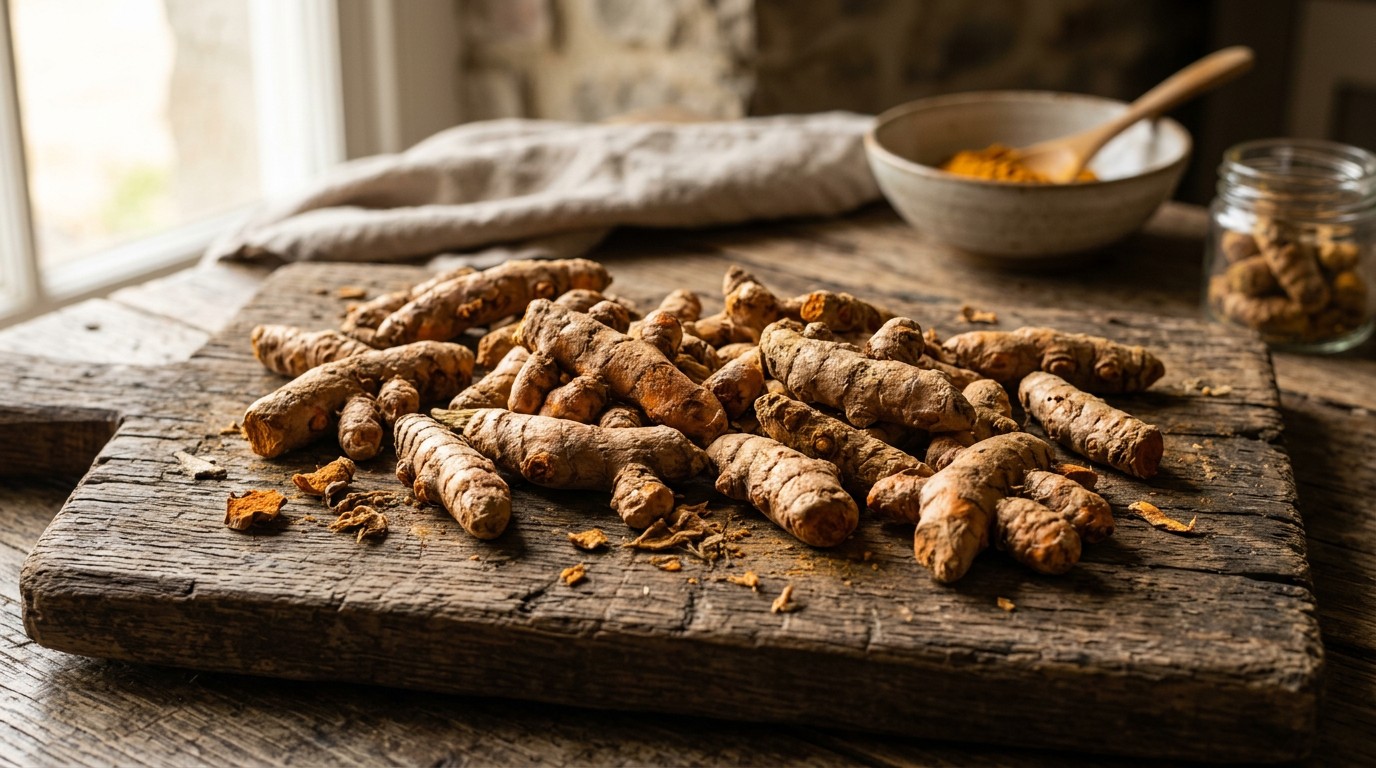
Whole dried turmeric rhizomes used for cooking and spice preparation.
Table of Contents
Dried turmeric comparison overview
| Feature | Dried turmeric | Fresh turmeric |
| Shelf life | 1–3 years when stored well | Around 2–3 weeks refrigerated |
| Flavour | Earthy, concentrated, slightly bitter | Bright, fresh, mildly peppery |
| Preparation | Often needs grinding or soaking | Ready to slice or grate |
| Best for | Spice blends, long cooking, storage | Juices, fresh dishes, pickling |
| Convenience | Excellent pantry ingredient | Better for immediate use |
Fresh vs Dried Turmeric Comparison
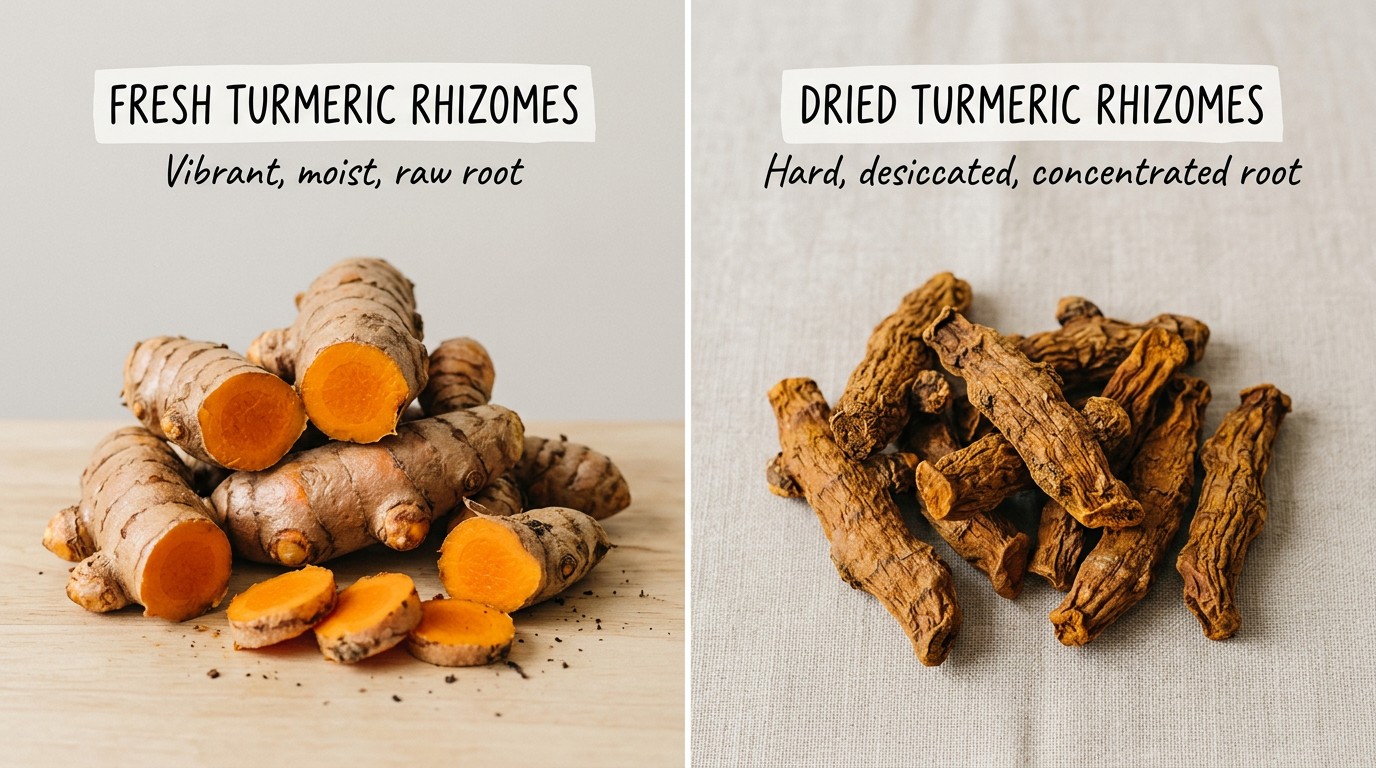
Visual comparison of fresh turmeric root and dried turmeric rhizomes.
What is dried turmeric?
Dried turmeric is the dehydrated form of the turmeric plant’s underground stem, known as the rhizome. After harvesting, the rhizomes are typically cleaned, boiled or steamed to preserve colour, then dried until most of their moisture has been removed.
The result is a hard, golden-orange ingredient that can be stored for years without refrigeration. It is commonly sold in two forms:
- Whole dried turmeric: Small, hard rhizome pieces that can be grated or ground.
- Ground turmeric: A fine powder made by milling dried turmeric.
Because drying removes water rather than the plant’s natural compounds, dried turmeric retains much of its characteristic taste, aroma, colour, and culinary value. The drying process also makes it easier to transport and store, which is one reason it has become the most common form used globally.
How dried turmeric is made
Understanding how dried turmeric is produced helps explain its flavour and texture.
From harvest to pantry
- Harvesting: Mature turmeric rhizomes are lifted from the soil after 7–10 months of growth.
- Cleaning: Soil and outer debris are thoroughly removed.
- Boiling or steaming: This traditional step helps develop the deep golden colour and reduces raw bitterness.
- Drying: The rhizomes are sun-dried or mechanically dried until moisture levels are very low.
- Grinding (optional): Some dried turmeric is milled into powder for easier everyday use.
Well-produced dried turmeric should have a rich orange interior, a pleasant earthy aroma, and minimal signs of mould or excessive fading.
Grinding Dried Turmeric into Powder
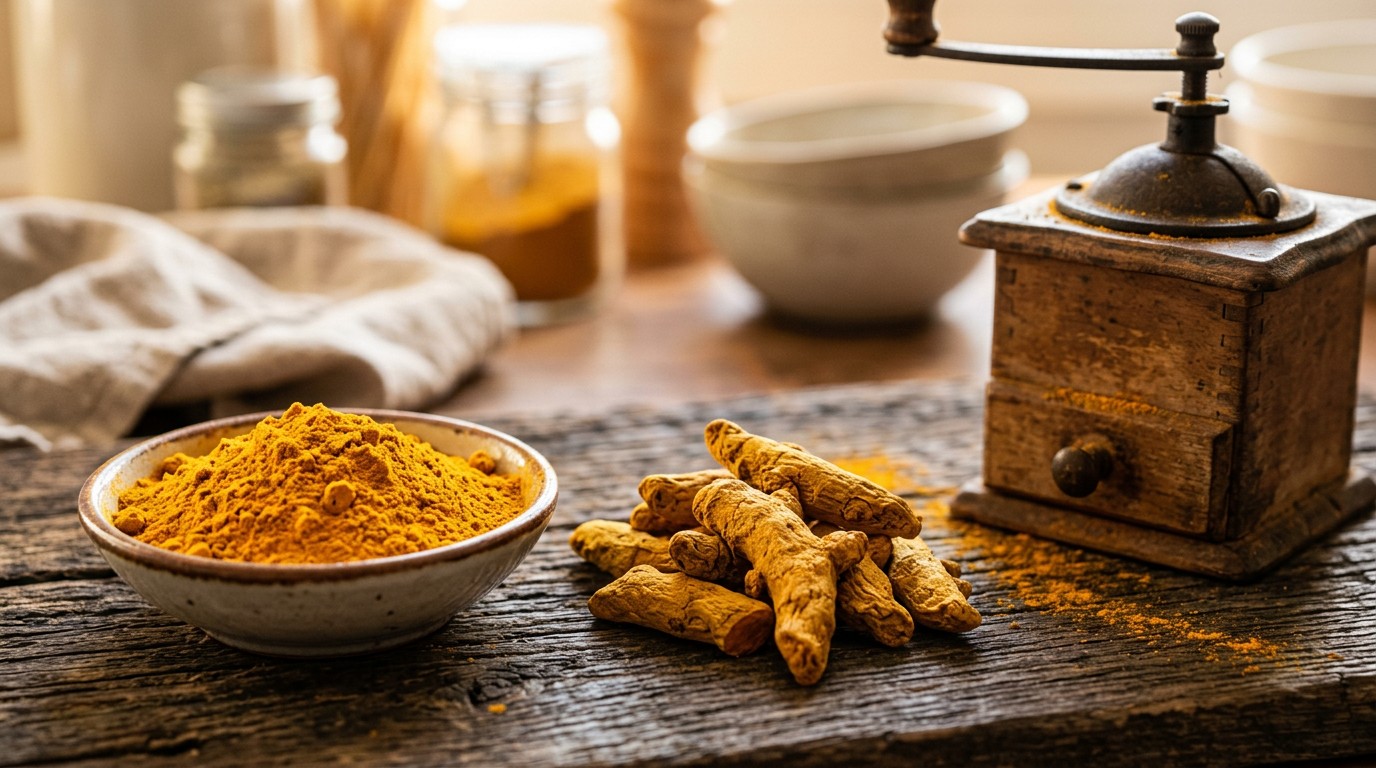
Grinding whole dried turmeric into fresh turmeric powder using a spice grinder.
Dried turmeric vs fresh turmeric
Choosing between fresh and dried turmeric depends on how you plan to use it rather than which is “better”. Both come from the same plant, but they behave differently in the kitchen.
Fresh turmeric
Fresh turmeric has a vibrant, juicy texture and a brighter flavour. It works particularly well in smoothies, fresh juices, stir-fries, salads, and pickled dishes. However, its short shelf life means it needs to be used relatively quickly.
Dried turmeric
Dried turmeric offers greater convenience and consistency. Its concentrated flavour makes it ideal for curries, soups, rice dishes, marinades, and homemade spice mixes. It is also much easier to keep as a pantry staple throughout the year.
For many home cooks, keeping both forms available provides the greatest flexibility.
Common uses of dried turmeric
Dried turmeric is valued primarily as a culinary spice, although it also appears in traditional herbal preparations and natural food colouring.
Everyday cooking
The most common use is adding warmth, colour, and depth to savoury dishes.
Popular examples include:
- Curry powders
- Lentil soups
- Rice dishes
- Roasted vegetables
- Marinades
- Homemade spice rubs
Because dried turmeric is more concentrated than fresh turmeric, recipes usually require smaller amounts.
Herbal teas and warm drinks
Whole dried turmeric can be simmered in water to create an earthy herbal infusion, such as turmeric tea. Many people combine it with ginger, cinnamon, black pepper (which helps with absorption of curcumin), or lemon for additional flavour.
Homemade spice blends
Dried turmeric is a key ingredient in many spice mixes, including:
- Curry powder
- Garam masala variations
- Golden seasoning blends
- Middle Eastern spice mixtures
Its stability makes it particularly suitable for batch cooking and long-term storage.
Cooking with Dried Turmeric
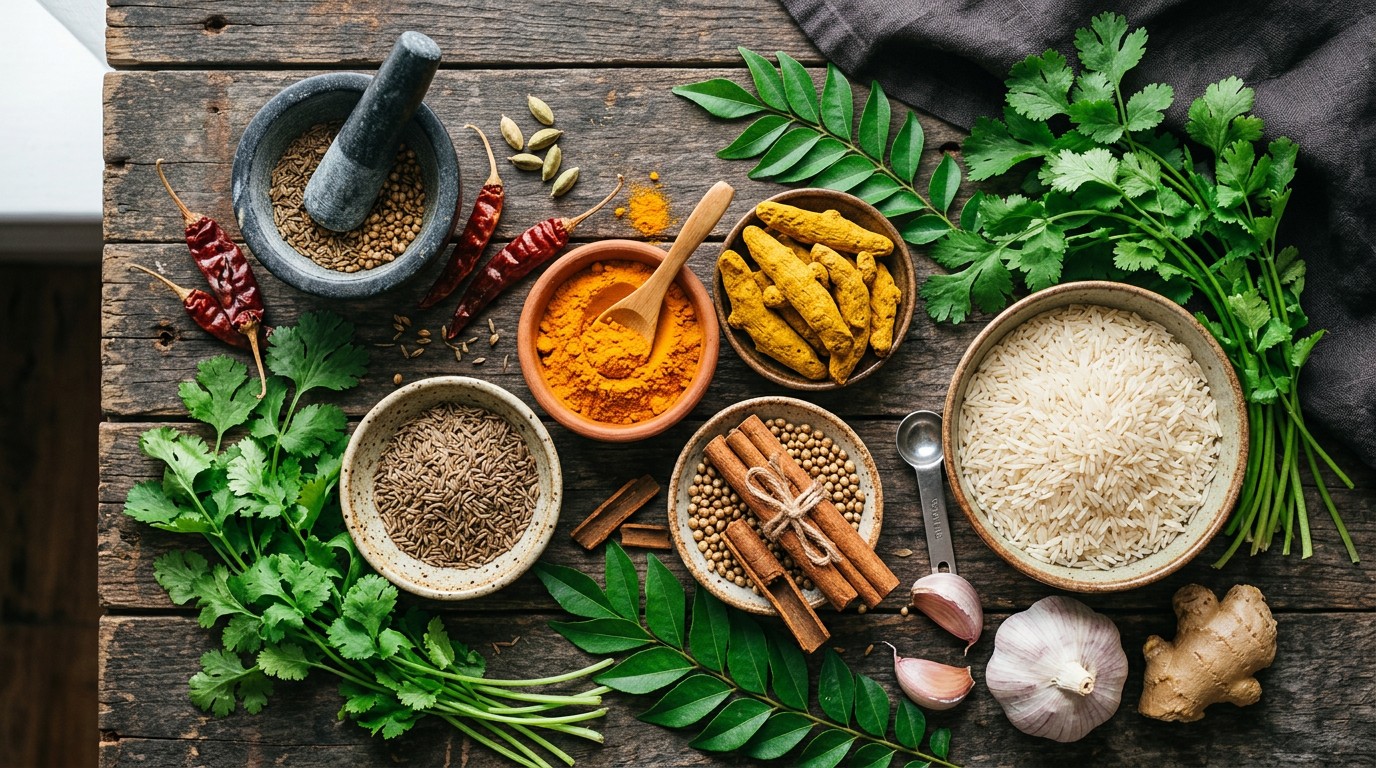
Dried turmeric used with traditional spices in a homemade curry preparation.
How to prepare dried turmeric
Preparation depends on whether you are using whole dried turmeric or ground turmeric.
Whole dried turmeric
Whole pieces are extremely hard and usually need one of these methods:
- Grate using a fine spice grater.
- Grind in a spice grinder.
- Soak in warm water before slicing for certain recipes.
- Simmer directly in soups or broths, then remove before serving if desired.
Ground turmeric
Ground turmeric is ready to use immediately. It is often added early in cooking so its flavour can develop fully alongside other spices.
A useful guideline is:
- 1 teaspoon ground turmeric is roughly equivalent to 2–3 cm of fresh turmeric root in many recipes, although flavour intensity varies.
How to store dried turmeric properly
Proper storage is one of dried turmeric’s biggest advantages.
Best storage conditions
Keep dried turmeric in:
- An airtight container
- A cool, dry cupboard
- Away from direct sunlight
- Away from moisture and steam
Glass jars with tight-fitting lids are often the best option because they help preserve aroma while protecting against humidity.
How long does it last?
| Form | Typical shelf life |
| Whole dried turmeric | Up to 3 years |
| Ground turmeric | Around 1–2 years for best flavour |
While turmeric rarely becomes unsafe simply because it is old, its aroma, colour, and flavour gradually weaken over time.
A simple freshness test is to crush a small piece or smell the powder. Fresh turmeric should have a strong earthy aroma with warm, slightly citrus notes.
How to Store Dried Turmeric

Airtight glass jar used for long-term storage of dried turmeric.
Advantages and disadvantages
Like any ingredient, dried turmeric has strengths and limitations.
Advantages
- Excellent shelf life — Stores for years without refrigeration when kept dry.
- Highly versatile — Suitable for cooking, spice blends, teas, and pantry staples.
- Convenient year-round — Available regardless of growing season and easy to keep on hand.
Disadvantages
- Less fresh flavour — It lacks the bright, juicy character of freshly harvested turmeric.
- Harder to prepare in whole form — Whole dried rhizomes require grinding or soaking before many uses.
How to choose quality dried turmeric
Not all dried turmeric is the same. Higher-quality products tend to have stronger colour, better aroma, and fewer impurities.
Look for these characteristics:
- Deep golden-orange colour rather than dull brown
- Strong earthy fragrance
- Firm, dry texture without softness
- Minimal broken fragments or dust (for whole turmeric)
- Clearly labelled origin and harvest information where possible
Organic certification may appeal to some buyers, but freshness and proper storage are often just as important for culinary quality.
Is dried turmeric nutritious?
Dried turmeric naturally contains carbohydrates, fibre, and small amounts of minerals alongside plant compounds known as curcuminoids. The best-known curcuminoid is curcumin, which has been widely studied for its biological activity.
However, it is important to distinguish culinary use from medical treatment. The amount of turmeric typically used in food is much lower than the concentrated extracts used in many scientific studies. Current research continues to explore turmeric’s potential role in health, but results vary depending on formulation, dosage, and study design.
For most people, dried turmeric is best viewed as a flavourful culinary ingredient rather than a substitute for medical care.
Frequently asked questions
Is dried turmeric the same as turmeric powder?
Not exactly. Dried turmeric refers to the dehydrated rhizome, while turmeric powder is made by grinding dried turmeric into a fine spice. They come from the same ingredient but differ in preparation and use.
Can I replace fresh turmeric with dried turmeric?
Yes. Dried turmeric is commonly substituted for fresh turmeric, although the flavour will be earthier and more concentrated. You generally need a smaller quantity of ground turmeric than fresh root.
Does dried turmeric expire?
Dried turmeric has a long shelf life but gradually loses flavour and colour over time. Whole dried turmeric often keeps its quality longer than ground turmeric when stored correctly.
Should dried turmeric be soaked before cooking?
Whole dried turmeric sometimes benefits from soaking if you need to slice or grate it. Ground turmeric does not require soaking and can be added directly to recipes.
What is the best way to store dried turmeric?
Store it in an airtight container in a cool, dry, dark place. Avoid moisture, heat, and frequent exposure to air to preserve its aroma and colour.
Final summary
Dried turmeric is a practical and versatile form of turmeric that combines long shelf life with concentrated flavour. Whether used whole or ground, it is an essential pantry ingredient for curries, soups, rice dishes, teas, and homemade spice blends.
While fresh turmeric offers a brighter taste and softer texture, dried turmeric excels in convenience, storage, and year-round availability. Choosing high-quality dried turmeric and storing it properly helps preserve its colour, aroma, and culinary value for months or even years.
For anyone exploring the different forms of turmeric, dried turmeric remains one of the most accessible and widely used options.
Further Information
1. How to Make Turmeric Powder from Fresh Home-Grown Root.
2. Turmeric, the Golden Spice
Description: A detailed reference covering turmeric as a rhizome, how it is processed into dried turmeric and powder, traditional processing methods, moisture levels and how storage can affect flavour and quality.
Published by: National Center for Biotechnology Information (NCBI Bookshelf)
Read it: Turmeric, the Golden Spice – NCBI Bookshelf
3. Optimizing drying techniques for turmeric (Curcuma longa L.): impacts on color, curcumin, and essential oil composition
Description: A recent scientific study comparing six turmeric drying techniques, including sun drying, oven drying, microwave drying and freeze drying. It examines how different methods affect colour, curcumin, antioxidants and essential oils. This is particularly useful if you want scientifically supported information about how dried turmeric is produced.
Published by: Food Chemistry: X / Elsevier
Read it: Optimizing drying techniques for turmeric – ScienceDirect
4. Post-harvest processing in medicinal turmeric
Description: An agricultural and technical article explaining post-harvest turmeric processing, including curing, boiling and drying. It is particularly relevant to understanding how fresh turmeric is converted into a stable dried product.
Published by: Indian Council of Agricultural Research (ICAR), Indian Horticulture
Read it: Post-harvest processing in medicinal turmeric – ICAR
Sources
The information in this guide is based on established nutritional references and peer-reviewed scientific literature, including:
- Hewlings SJ, Kalman DS. Curcumin: A Review of Its Effects on Human Health. Foods. 2017.
- National Center for Complementary and Integrative Health (NCCIH). Turmeric: Usefulness and Safety.
- Prasad S, Gupta SC, Tyagi AK. Curcumin, a component of golden spice: From bedside to bench and back. Biotechnology Advances. 2014.
- World Health Organization. WHO Monographs on Selected Medicinal Plants (Turmeric monograph).
- European Food Safety Authority (EFSA). Scientific opinions relating to curcumin and food safety.
Medical disclaimer
This page is provided for general educational and informational purposes only. It is not intended to diagnose, treat, cure, or prevent any medical condition. The nutritional and scientific information discussed here should not replace professional medical advice. Always consult a qualified doctor or other healthcare professional before making changes to your diet, taking turmeric supplements, or using turmeric for any health-related purpose, particularly if you are pregnant, breastfeeding, have a medical condition, or take prescription medication.
Author
Written by J. Henderson
Health & Wellness Research Writer
J. Henderson writes evidence-based articles on nutrition, botanical supplements and everyday wellbeing. His work focuses on translating scientific research into clear, practical guidance that helps readers make informed decisions about natural health products.