Turmeric is a spice made from the rhizome of Curcuma longa, a plant related to ginger. It is widely used in cooking and is also available in supplements. Turmeric contains curcuminoids, including curcumin, which have been extensively studied for their potential health effects.
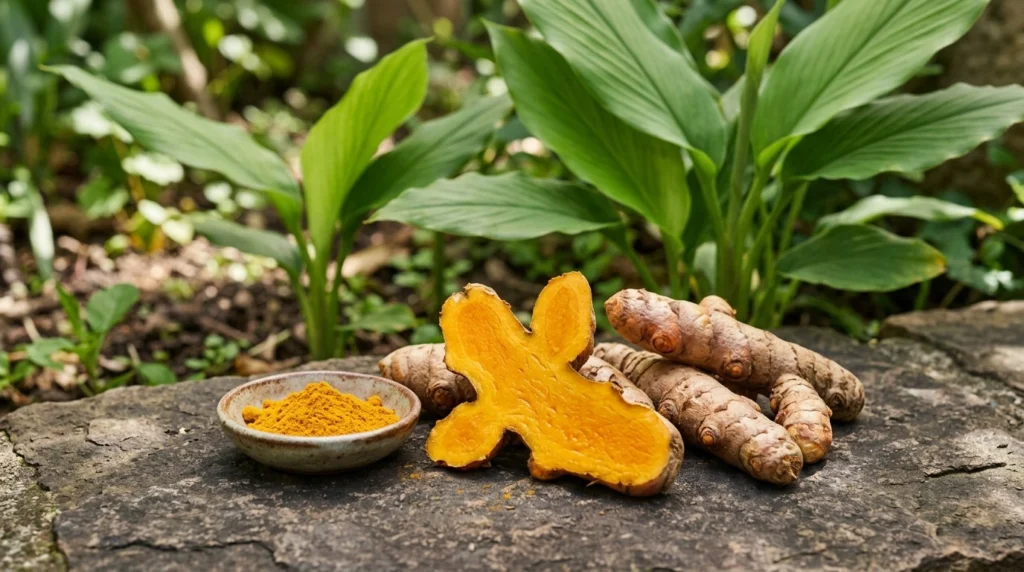
Turmeric comes from the rhizome of the Curcuma longa plant, a member of the ginger family.
Turmeric is used by people around the world as a spice and food ingredient and also has a long history of use in traditional medicine. Today, it is also found in supplements, particularly those containing turmeric extracts or curcumin.
Turmeric comes from the rhizome of Curcuma longa, a plant in the ginger family. The rhizome can be used fresh or processed and dried to make the familiar yellow-orange turmeric powder.
Turmeric has a long history of cultivation and use in South Asia, particularly India. Today, it is grown in several tropical regions and used around the world in foods, drinks, traditional practices and supplements.
Turmeric can be used whenever its distinctive colour and flavour suit a food or drink. Culinary turmeric is different from concentrated turmeric supplements and curcumin products, which can vary considerably in their composition.
People are interested in turmeric for its culinary uses, history and potential health effects. Much of the scientific research focuses on curcumin and other curcuminoids, although the strength of evidence varies depending on the health outcome being studied.
Turmeric can be used fresh, dried or ground into powder and added to foods and drinks. It is also available as extracts, capsules, tablets and other supplements. These different forms are not necessarily equivalent, particularly when comparing culinary turmeric with concentrated extracts.

Turmeric is used in many ways, from cooking and drinks to supplements and traditional practices.
Turmeric is a plant, spice and food ingredient derived from Curcuma longa.
The turmeric plant is a member of the Zingiberaceae, or ginger family. The part normally associated with turmeric is its rhizome, an underground plant stem that looks somewhat similar to ginger. Our guide to what turmeric is explains the plant, its rhizome and how turmeric is commonly used.
Fresh turmeric rhizomes have a distinctive orange-yellow interior. They can be used fresh or processed to produce the familiar ground turmeric powder found in kitchens around the world.
Turmeric contains numerous naturally occurring plant compounds.
The best known are a group called curcuminoids, which include curcumin, demethoxycurcumin and bisdemethoxycurcumin.
Curcumin has attracted particular scientific attention and is partly responsible for turmeric’s characteristic yellow-orange colour.
However, turmeric is more than simply curcumin.
This becomes particularly important when reading about turmeric research, because a study investigating concentrated curcumin should not automatically be interpreted as evidence that ordinary culinary turmeric will produce the same result.
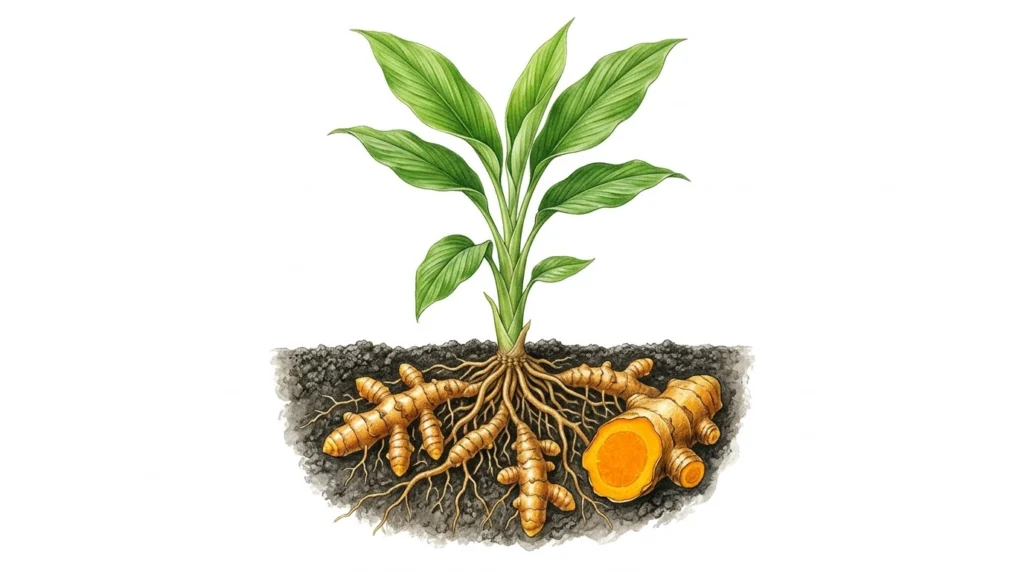
The familiar turmeric spice is produced from the underground rhizome of Curcuma longa.
Turmeric has a particularly long association with South Asia and India.
Royal Botanic Gardens, Kew identifies Curcuma longa as an accepted plant species in the ginger family. It is a cultivated plant with a long history of culinary, medicinal and cultural use.
Turmeric grows from underground stems called rhizomes, rather than conventional roots.
Understanding where turmeric comes from also involves looking at its cultivation and history. After harvesting, the rhizomes can be used fresh or processed and dried before being ground into powder.
Turmeric has since become an important ingredient in cuisines around the world and is particularly associated with Indian and other South and Southeast Asian foods.
Its distinctive colour has also made turmeric useful as a natural colouring and dye.
Turmeric is primarily used as a food and spice, but it has also been investigated for a range of potential health effects.
In everyday life, turmeric has many culinary and practical uses, including:
When considering what turmeric is good for beyond these everyday uses, the evidence around potential health benefits is more complicated.
Turmeric and particularly curcumin have been investigated in research involving osteoarthritis, joint symptoms, metabolic health, liver conditions and other areas.
However, being studied for a health condition does not mean turmeric has been proven to treat it.
That distinction is important.
Laboratory research can identify interesting biological effects. Small clinical trials can produce encouraging findings. Stronger conclusions generally require consistent, good-quality evidence from appropriately designed human studies.
For many proposed turmeric benefits, that level of certainty has not yet been reached.
Turmeric has become particularly well known because of interest in its potential anti-inflammatory and antioxidant effects.
Much of this research centres on curcumin.
Scientists have investigated turmeric and curcumin in relation to several areas of health, including:
The evidence is not equally strong across these areas.
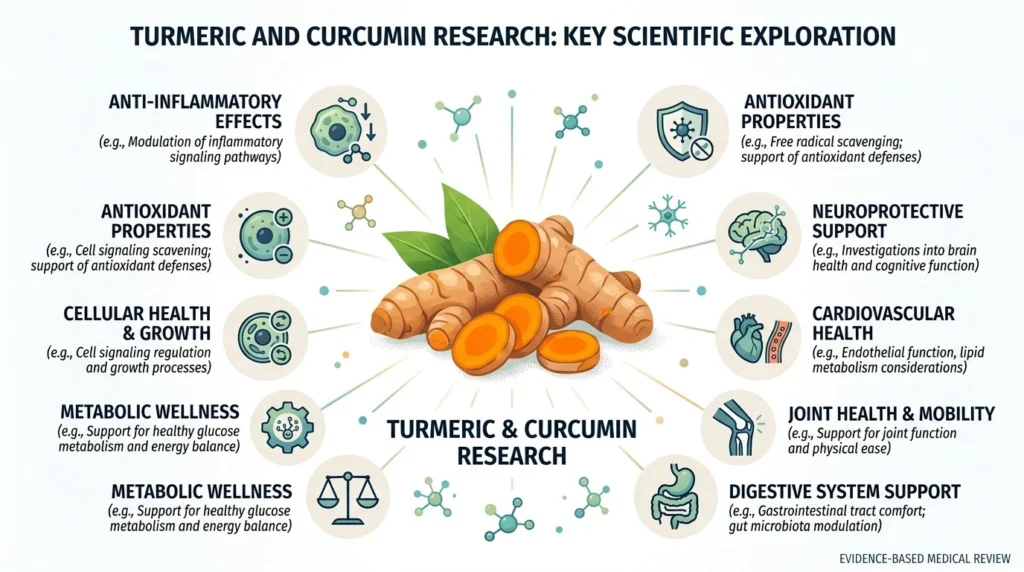
Turmeric and curcumin have been studied for potential health effects, but the strength of evidence differs between outcomes.
Osteoarthritis is one of the more encouraging areas of human curcumin research.
Several reviews and meta-analyses have reported potentially favourable effects on measures such as knee pain, stiffness and physical function.
However, there are important limitations.
Clinical studies can use very different products, including ordinary turmeric extracts, concentrated curcuminoids and formulations specifically designed to increase curcumin absorption.
Doses, treatment periods, study sizes and research quality also differ.
The most sensible interpretation is therefore that the evidence is encouraging, but not definitive.
Turmeric is frequently described as “anti-inflammatory”.
This requires some explanation.
Curcumin has demonstrated effects on biological pathways associated with inflammation in laboratory and experimental research.
That is scientifically interesting, but inflammation is a normal and complex biological process, and evidence of an effect on an inflammatory pathway does not automatically prove that taking turmeric will successfully treat an inflammatory disease.
Human outcomes are what ultimately matter when evaluating a proposed health benefit.
Curcumin has also been widely investigated for antioxidant activity.
Again, laboratory evidence showing antioxidant behaviour should not automatically be translated into claims that taking turmeric supplements will prevent disease or produce a particular health outcome.
The clinical evidence for the specific outcome needs to be considered separately.
There is a large amount of turmeric and curcumin research, but quantity of research does not automatically mean certainty.
The US National Center for Complementary and Integrative Health states that many studies have investigated turmeric or curcumin for conditions including osteoarthritis, non-alcoholic fatty liver disease and lipid disorders.
However, it currently concludes that there is not enough evidence to definitively determine whether turmeric or curcumin is beneficial for any health purpose.
That doesn’t mean turmeric has no potential benefits.
It means the evidence should be described accurately.
Some findings are encouraging. Some remain preliminary. Different formulations may produce different results, and more high-quality research is required in many areas.
For readers, the simplest rule is:
Look at the evidence for the particular benefit you are interested in rather than assuming that every turmeric claim is equally well supported.
Turmeric is the plant material. Curcumin is one of the natural compounds found within it.
This is one of the most important distinctions to understand when reading about turmeric.
Turmeric contains curcumin, but it also contains many other naturally occurring substances.
Turmeric powder used in cooking has a very different composition from a concentrated curcumin supplement. Understanding the difference between turmeric and curcumin is therefore important when comparing products or interpreting research.
This distinction can also help explain why findings about curcumin should not automatically be applied to turmeric as a whole.
A clinical trial may have investigated a particular concentrated curcumin formulation, while an article discussing the study simply refers to “turmeric”.
Those are not necessarily equivalent.
When assessing research, check what researchers actually gave the participants.
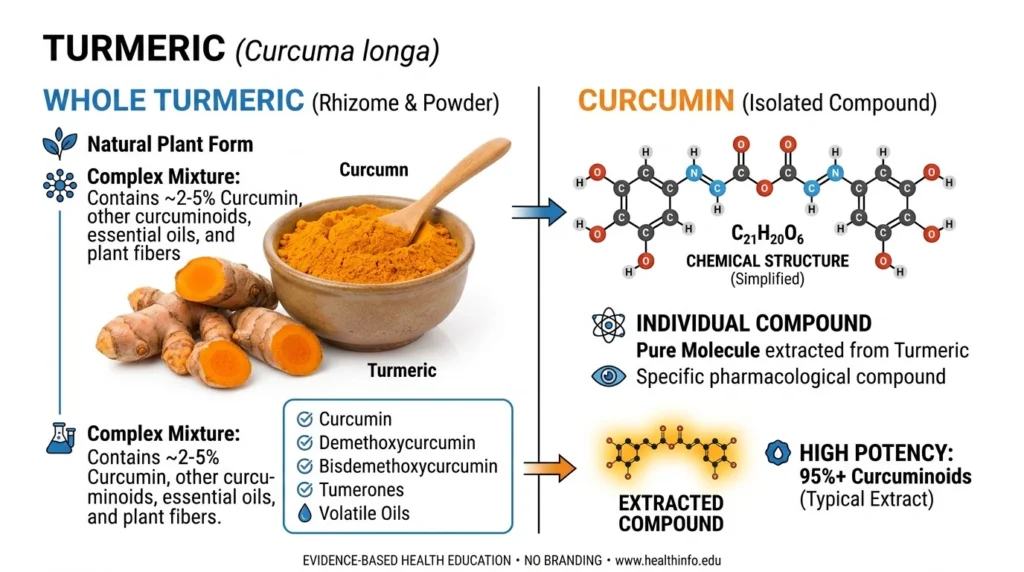
Turmeric is the plant material; curcumin is one of the naturally occurring curcuminoids found within turmeric.
Turmeric is available in several forms, each suited to different uses.
Fresh turmeric root resembles ginger on the outside but typically reveals a vivid yellow-orange interior when cut.
It can be grated, sliced or blended into foods and drinks, and has a different flavour and texture from dried turmeric powder.
Whole turmeric rhizomes can be processed and dried, allowing dried turmeric to be stored for longer and later ground into turmeric powder.
Turmeric powder is one of the most familiar forms of turmeric.
It is normally produced from processed, dried and ground turmeric rhizome.
The powder is widely used in cooking and can be added to curries, soups, rice dishes, marinades and drinks.
Turmeric powder contains naturally occurring curcuminoids, but it should not be confused with concentrated curcumin extracts used in many supplements and research studies.
Extracts concentrate selected constituents from turmeric.
Different extraction and standardisation methods mean that turmeric extracts are not necessarily equivalent to one another.
Some products specify their curcuminoid concentration.
Turmeric is also available as capsules, tablets, powders, gummies, extracts and concentrated curcumin products.
These can differ substantially in composition, concentration and absorption.
Someone considering supplementation should therefore look beyond the word “turmeric” on the front of the product.
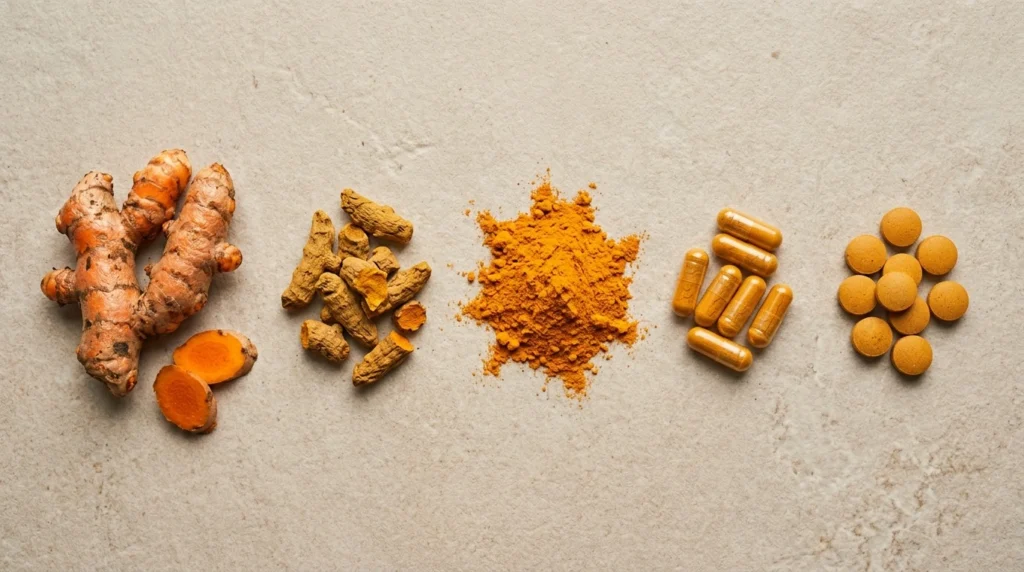
Turmeric is available fresh, dried and powdered, as well as in extracts, capsules, tablets and other supplements.
Turmeric powder is dried, ground turmeric rhizome.
It is the form most people recognise as the yellow-orange spice commonly used in cooking.
Turmeric powder can vary in colour, aroma, flavour and composition depending on factors such as the plant material, growing conditions and processing.
It has an earthy, slightly bitter flavour and a distinctive warm aroma.
Culinary turmeric powder is also different from many concentrated turmeric extracts and curcumin supplements.
A large quantity in milligrams does not necessarily mean one product provides more curcumin or produces greater biological exposure than another.
The form and composition matter.
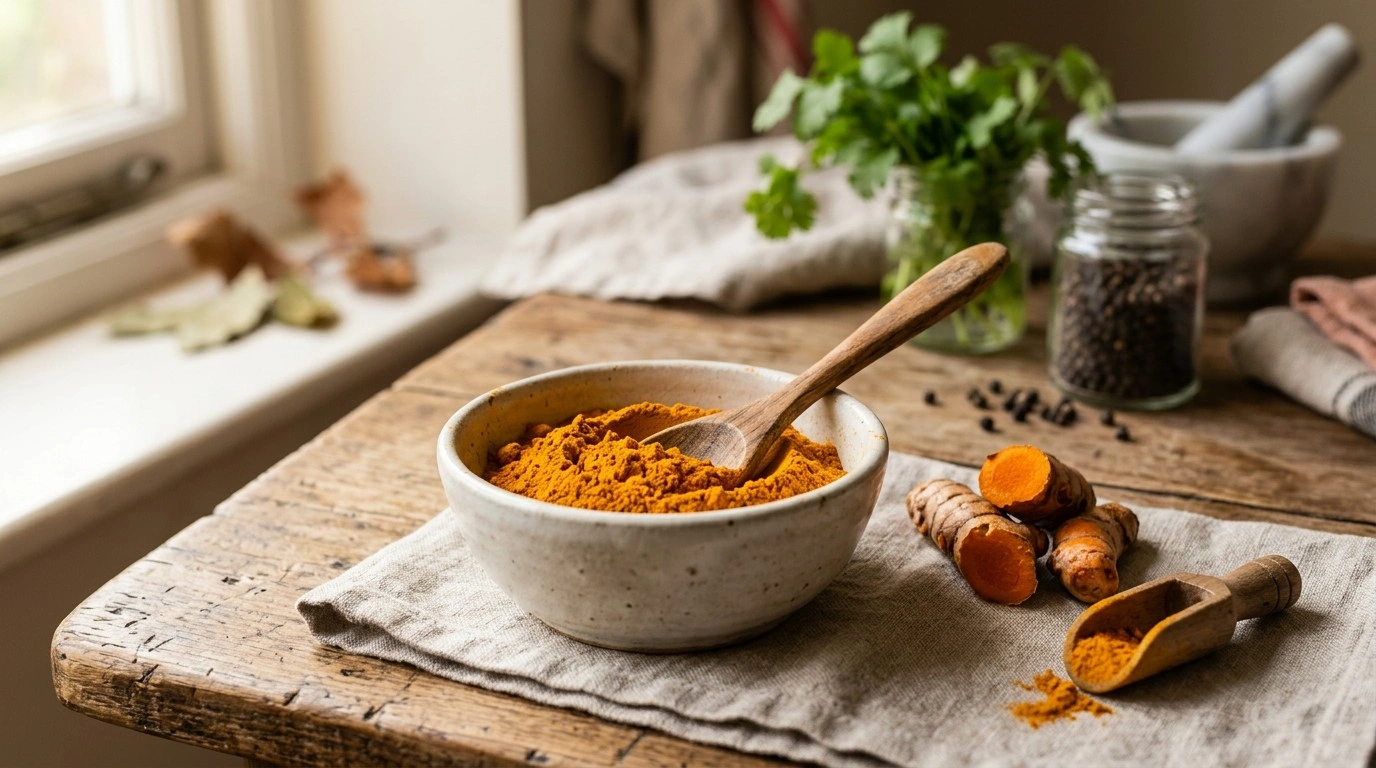
Ground turmeric is widely used as a spice in cooking and differs from concentrated turmeric and curcumin extracts.
Turmeric supplements contain turmeric, turmeric extracts, curcuminoids or concentrated curcumin in a convenient supplemental form.
Common types include:
These products should not be treated as interchangeable.
A capsule containing ordinary ground turmeric can be very different from a concentrated curcumin formulation.
This is also why comparing supplements simply by looking for the biggest number of milligrams can be misleading.
Anyone interested specifically in supplementation should consider what the product actually contains, the evidence relevant to its intended use and its safety, rather than assuming that every turmeric supplement provides the same potential benefits. Our guide to the different types of turmeric supplements explains the main options and how they differ.
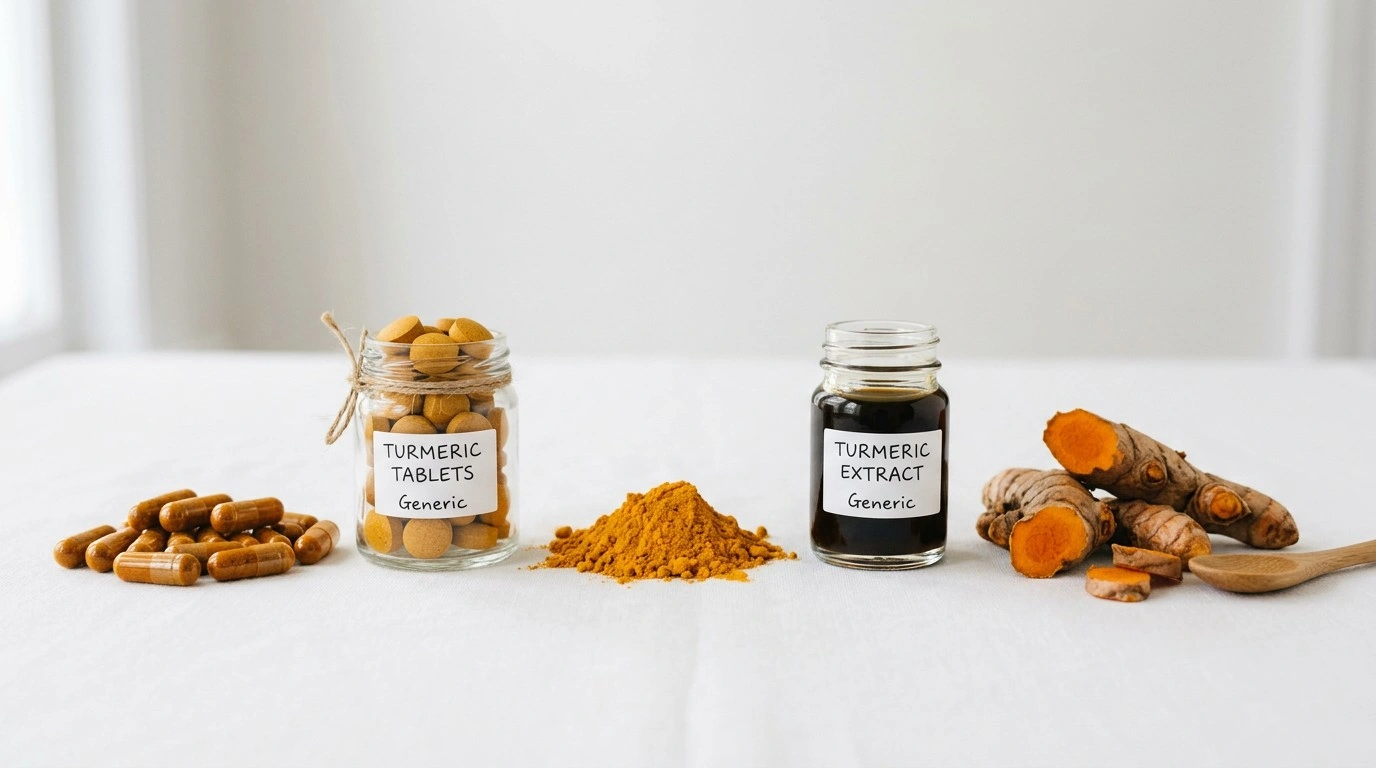
Turmeric supplements can contain very different ingredients, concentrations and formulations.
Black pepper is sometimes combined with curcumin to increase its bioavailability.
Curcumin naturally has relatively low oral bioavailability, meaning relatively little conventional curcumin becomes available to the body after it is swallowed.
Piperine, a constituent of black pepper, is often added to supplements because black pepper can increase curcumin absorption.
This is why black pepper extract appears in many curcumin supplements.
However, there is an important distinction:
Better absorption does not automatically mean better health outcomes.
Increasing the amount of curcumin available to the body is a pharmacokinetic effect. Demonstrating that the change produces greater clinical benefit requires appropriate human research.
Formulation and safety also need to be considered.
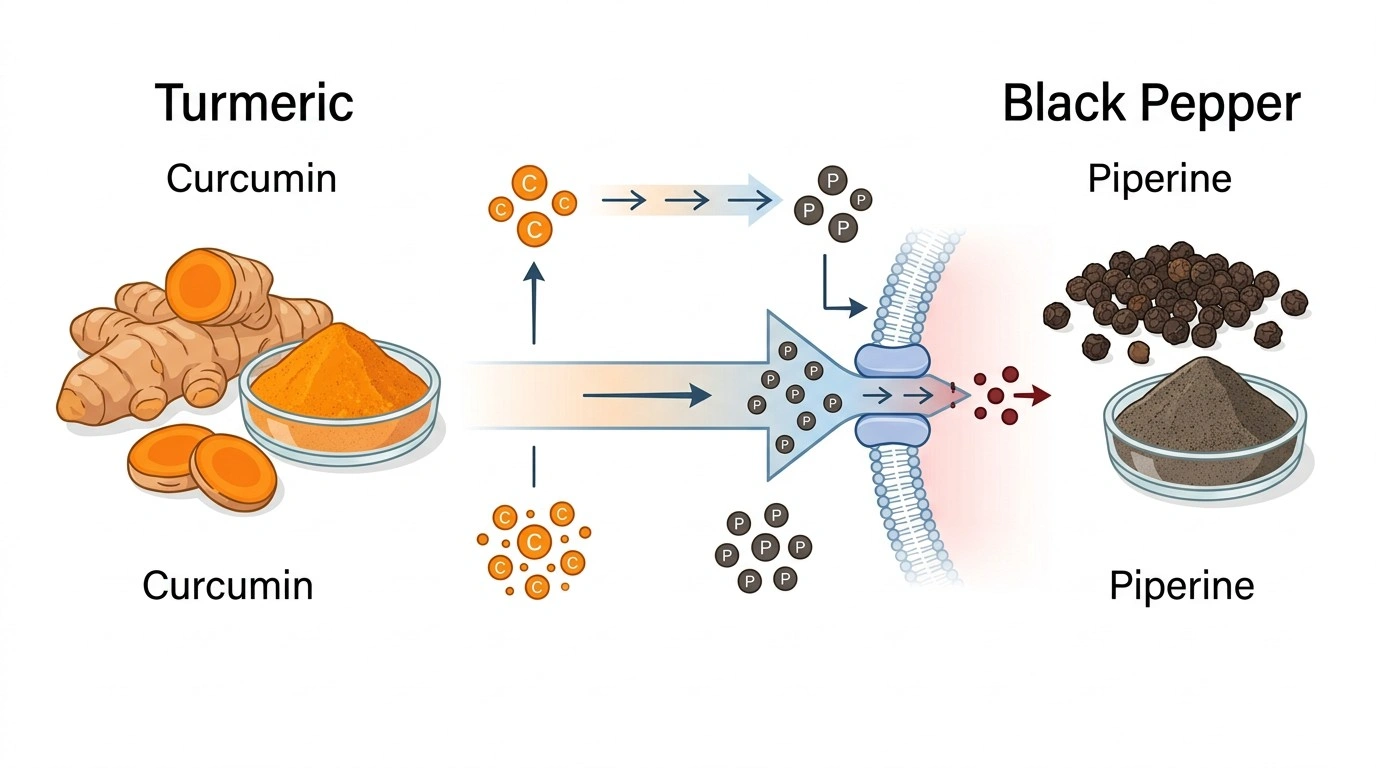
Piperine from black pepper can increase curcumin bioavailability, although greater absorption does not automatically mean greater clinical benefit.
Turmeric has a remarkably broad range of uses and can be included in the diet in several different forms. The best way to consume turmeric can depend on how and why you choose to use it.
Its best-known modern use is as a spice.
Turmeric is commonly used in food with:
Its strong colour means relatively small amounts can noticeably change the appearance of food.
Turmeric is also commonly used in drinks. One popular option is turmeric tea, while other preparations include golden milk and turmeric-based smoothies.
Recipes vary considerably and may include ingredients such as ginger, milk or plant-based alternatives, black pepper and other spices.
Turmeric has a long history of use in traditional systems including Ayurveda and other Asian traditions.
Historical or traditional use is interesting and culturally important, but traditional use is not the same as modern evidence of clinical effectiveness.
Both can be discussed without confusing one for the other.
Turmeric and curcumin are now widely available as dietary supplements.
Supplement use differs from using turmeric as an ordinary culinary ingredient because products may contain concentrated extracts or formulations designed to alter absorption.
Turmeric has an earthy, warm and slightly bitter flavour with a distinctive aromatic smell.
The taste of turmeric can vary depending on whether it is fresh or dried. Fresh turmeric tends to have a brighter, more aromatic character, while dried ground turmeric generally has a warmer, earthier aroma and flavour.
Kew describes turmeric powder as having a warm, bitter flavour and an earthy, mustard-like aroma.
These sensory characteristics are one reason turmeric works particularly well alongside other spices rather than necessarily being used alone.
Turmeric used in ordinary food amounts is different from taking concentrated turmeric or curcumin supplements.
This distinction is important when discussing safety.
According to NCCIH, conventionally formulated oral turmeric or curcumin is likely safe in recommended amounts for periods of up to two or three months.
Reported adverse effects from oral turmeric can include:
Safety can differ depending on the product and formulation.
Cases of liver injury have been reported in people taking turmeric or curcumin products, particularly some formulations designed to increase bioavailability.
This appears to be uncommon, but it is an important consideration when discussing concentrated supplements.
Symptoms that may indicate liver problems can include unusual fatigue, nausea, poor appetite, dark urine or yellowing of the skin or eyes.
Anyone who develops concerning symptoms while using a turmeric or curcumin supplement should stop taking it and seek appropriate medical advice.
It is sensible to speak to a doctor, pharmacist or appropriately qualified healthcare professional before using concentrated turmeric or curcumin supplements if you:
Turmeric supplements should not be used as a replacement for prescribed medical treatment without appropriate professional advice.
Turmeric is a yellow-orange spice obtained from the rhizome of the plant Curcuma longa. It belongs to the ginger family and is used in cooking, traditional practices and modern supplements.
Turmeric is widely used as a spice and food ingredient and has also been studied for potential health effects. Research has investigated areas including osteoarthritis, inflammation and metabolic health, but evidence varies considerably between proposed uses.
There is no definitive list of proven turmeric health benefits. Some of the more encouraging clinical evidence concerns curcumin and osteoarthritis symptoms, but many other proposed benefits remain uncertain or require better-quality research.
No. Turmeric is the plant material, while curcumin is one of several naturally occurring curcuminoids found within turmeric. Concentrated curcumin supplements can therefore be very different from ordinary turmeric powder.
Turmeric powder is a culinary spice that can form part of a varied diet. However, claims about specific health benefits need to be assessed individually, and evidence from concentrated curcumin supplements should not automatically be applied to culinary turmeric powder.
Turmeric is commonly consumed as a food ingredient, but concentrated supplements are different. When considering daily use, how much turmeric to take per day can depend on the product, formulation, intended use, medicines being taken and individual health circumstances.
Black pepper-derived piperine can increase curcumin bioavailability, but greater absorption does not automatically mean greater health benefit. The evidence and safety of the particular formulation still matter.
Turmeric is a spice and plant ingredient derived from the rhizome of Curcuma longa, a member of the ginger family.
It has been used for centuries in cooking, traditional practices, colouring and other applications.
Modern interest increasingly focuses on turmeric’s potential health benefits, particularly those associated with curcumin.
However, turmeric and curcumin are not interchangeable.
Many clinical studies investigate concentrated curcumin or turmeric extracts rather than ordinary turmeric powder, making it important to understand exactly what was studied before interpreting the results.
Some of the more encouraging human research relates to osteoarthritis, but the evidence for turmeric and curcumin varies substantially depending on the health outcome, formulation and study quality.
Turmeric is available fresh, dried and powdered, as well as in teas, foods, capsules, tablets, extracts and concentrated curcumin supplements.
For someone discovering turmeric for the first time, the simplest way to understand it is:
Explore our guides to turmeric, its forms, potential benefits and supplements.
This page provides general educational and informational content based on published research and authoritative sources. It is not intended to diagnose, treat, cure or prevent a medical condition and is not a substitute for individual medical advice.
Turmeric foods and supplements can differ considerably. Speak to a doctor, pharmacist or appropriately qualified healthcare professional if you are considering supplementation and take medicines, have an existing medical condition, are pregnant or breastfeeding, or have concerns about side effects.
Prefer to watch rather than read? We have selected three educational videos featuring doctors and health professionals discussing turmeric, curcumin and supplements from different perspectives.
These videos are included for further learning and do not replace medical advice or the scientific sources used throughout this guide.
A useful overview of daily turmeric use, including potential benefits, safety considerations and what to consider when using turmeric regularly.
Dr Rupy Aujla discusses turmeric alongside other spices, with a focus on inflammation, joint health and how these ingredients can be incorporated into the diet.
Dr Suneel Dhand provides an accessible overview of turmeric, including curcumin, potential health effects and some of the limitations surrounding its use.
The information in this guide is based on authoritative health and botanical sources together with published scientific research. We have selected a small number of useful sources below for readers who would like to explore the evidence and science behind turmeric in greater detail.
Published by: National Center for Complementary and Integrative Health (NCCIH), part of the US National Institutes of Health.
A useful independent overview of turmeric and curcumin, including current evidence, osteoarthritis research, bioavailability, possible side effects and supplement safety. Readers can explore the NCCIH’s Turmeric: Usefulness and Safety resource for more information.
Published by: Royal Botanic Gardens, Kew
An accessible botanical introduction covering Curcuma longa, the turmeric rhizome, its relationship to ginger and its long history of culinary and traditional use. Learn more about the turmeric plant and its uses from the Royal Botanic Gardens, Kew.
Published by: Plants of the World Online, Royal Botanic Gardens, Kew
An authoritative botanical reference for the scientific classification, plant family and geographical distribution of Curcuma longa. More botanical information is available in Kew’s Curcuma longa plant profile.
Published in: BMJ Open Sport & Exercise Medicine
A systematic review examining randomised controlled trials of turmeric or curcumin extracts for knee osteoarthritis. The authors reported encouraging findings for pain and function while noting that questions remain around factors including optimal dose and formulation. You can read the systematic review of turmeric and curcumin for knee osteoarthritis for the full findings.
Published in: Nutrition Reviews
A systematic review and meta-analysis examining randomised controlled trials of curcumin supplementation and inflammatory markers in humans. It also highlights uncertainty surrounding factors such as dose, duration and formulation. The systematic review and meta-analysis of curcumin supplementation provides further details.
Published in: Planta Medica
An often-cited human pharmacokinetic study investigating how piperine, a component of black pepper, affects curcumin bioavailability. This research helps explain why black pepper extracts are included in some curcumin supplements. Read the study of piperine and curcumin bioavailability for more information.
Published by: National Institute of Diabetes and Digestive and Kidney Diseases, National Institutes of Health
An authoritative clinical resource covering turmeric and curcumin in relation to liver safety, including reported cases of liver injury associated with some turmeric products. The LiverTox overview of turmeric and liver safety provides more detailed information.
Written by J. Henderson
Health & Wellness Research Writer
J. Henderson writes evidence-based articles on nutrition, botanical supplements and everyday wellbeing. His work focuses on translating scientific research into clear, practical guidance that helps readers make informed decisions about natural health products.