
What Does Turmeric Taste Like?
Turmeric has a distinctive earthy, warm and slightly bitter taste, with a mild peppery or pungent quality and an aromatic flavour that can linger after eating. If you have never tried turmeric before, its flavour is often easier to understand as a combination of earthy, bitter, warm, spicy and slightly woody notes rather than as a hot spice like chilli.
The taste of turmeric can vary depending on whether it is fresh turmeric root, dried turmeric powder, turmeric tea or a concentrated extract. The amount used also makes a significant difference. In small quantities, turmeric can add warmth, colour and depth to food without dominating the dish. Larger amounts can make a recipe noticeably more bitter, pungent or astringent.
Quick answer: what does turmeric taste like?
Turmeric tastes mainly earthy and slightly bitter, with warm, aromatic, peppery and mildly pungent notes. It is not normally considered a very hot spice. Its aroma also contributes strongly to the overall flavour experience, so what people describe as the “taste” of turmeric is partly a combination of taste and smell. Scientific research has identified several volatile compounds that contribute to turmeric’s characteristic aroma.
Key points:
- Turmeric has an earthy, warm and slightly bitter flavour.
- It can have peppery, pungent, woody and aromatic notes.
- Fresh turmeric tends to have a different sensory profile from dried turmeric powder.
- The flavour becomes more noticeable as the quantity increases.
- Turmeric is generally less hot than chilli and less sharp than black pepper.
- Its aroma is an important part of how turmeric flavour is perceived.
What Does Turmeric Taste Like? Fresh Root vs Turmeric Powder
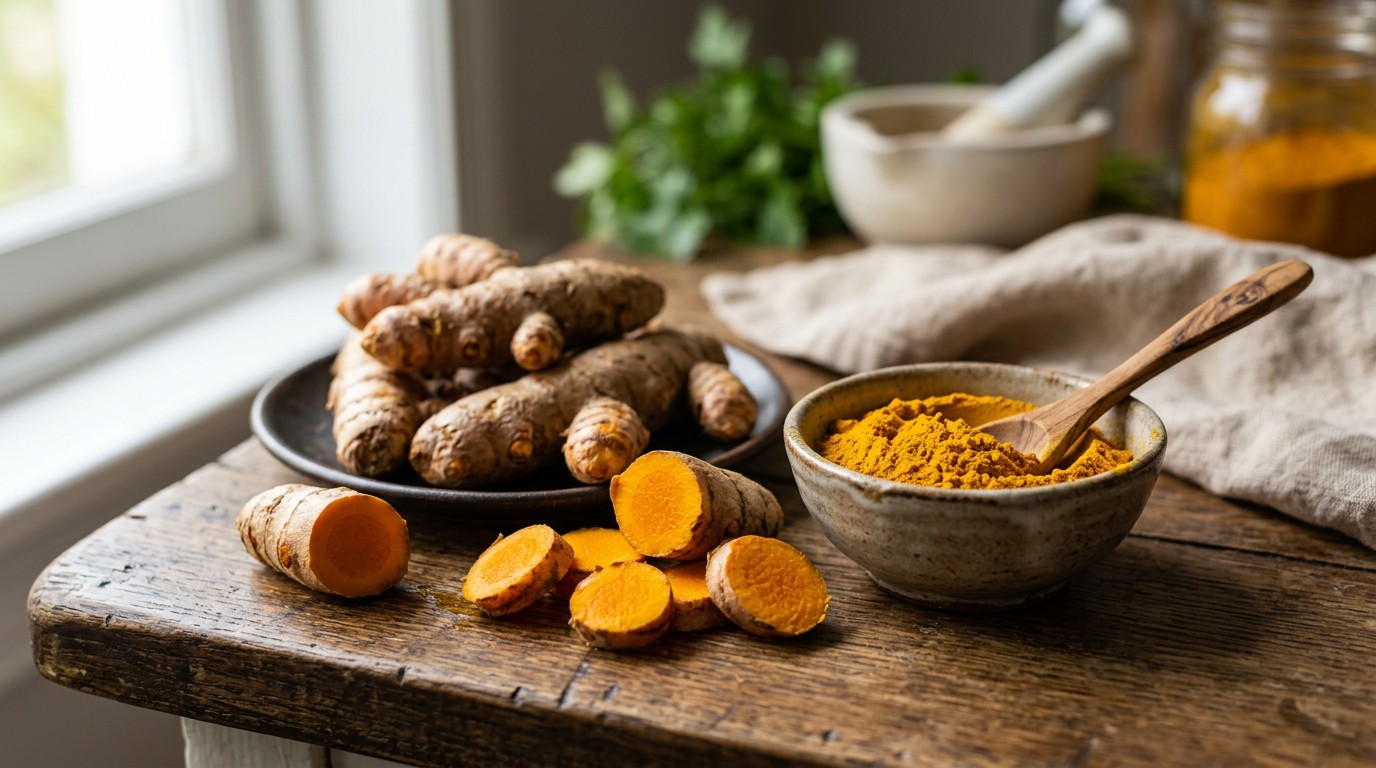
Fresh turmeric root and ground turmeric powder have related but noticeably different flavour profiles.
Table of Contents
What does turmeric taste like?
The simplest description is earthy, bitter and warm.
Turmeric is not usually intensely hot. Instead, its flavour has a gentle pungency and aromatic quality that can give curries, soups, rice dishes and other foods greater depth. Descriptions of turmeric flavour in food science literature include bitter, pungent, aromatic, spicy, metallic and earthy characteristics.
There is also an important distinction between taste and flavour. Taste refers primarily to sensations detected by the taste system, such as bitterness, while flavour is the broader experience created by taste, aroma and other sensory sensations. Research into turmeric aroma has identified compounds such as ar-turmerone and β-turmerone among constituents contributing to its characteristic smell.
This helps explain why turmeric can seem more complex than its basic taste description suggests.
Turmeric Flavour Profile: Earthy, Warm and Slightly Bitter
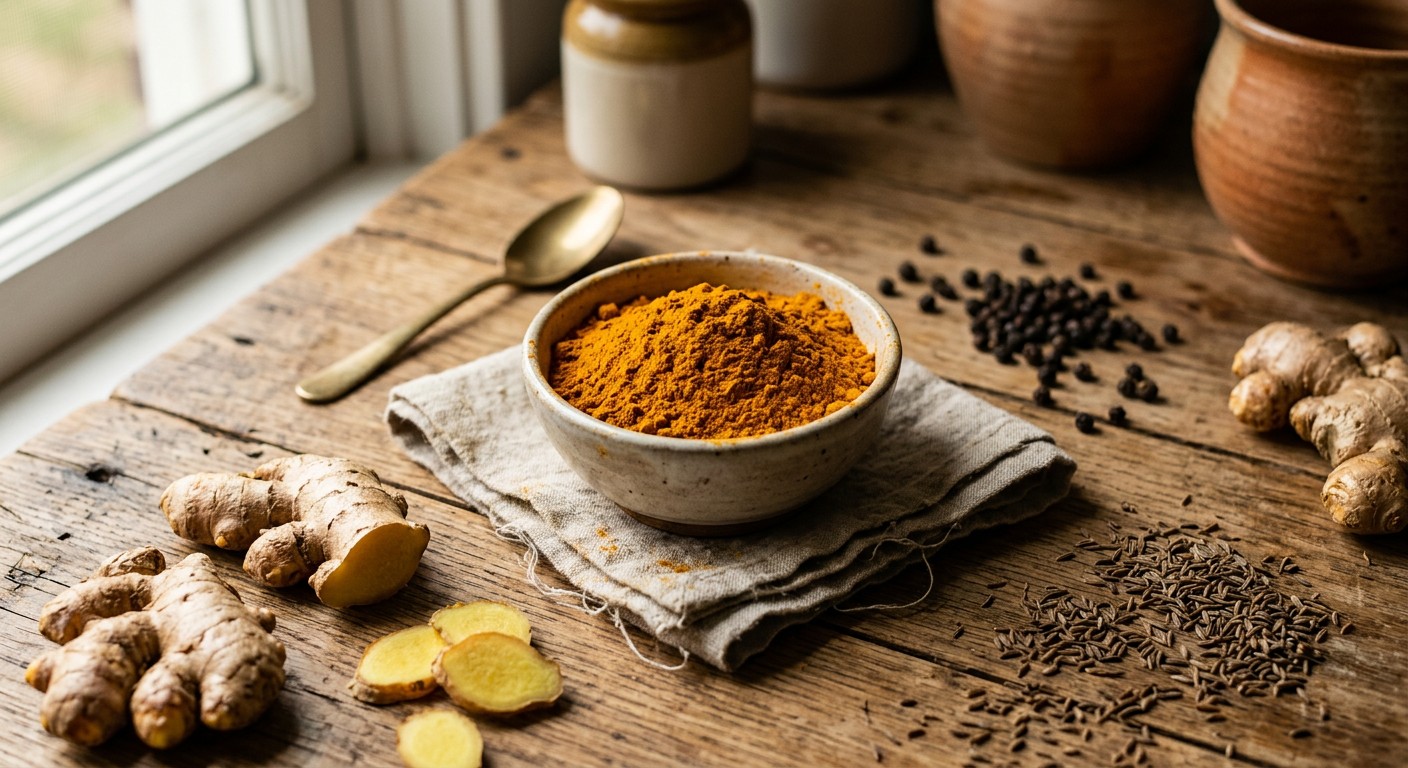
Turmeric is commonly described as earthy, warm, aromatic and slightly bitter.
What does fresh turmeric taste like?
Fresh turmeric root is generally more moist, aromatic and lively than dried turmeric powder. It has an earthy character combined with a mild bitterness and a fresh, root-like quality.
The flavour can also vary between turmeric varieties. Recent analytical research has found measurable differences in chemical composition and flavour characteristics between turmeric cultivars, showing that turmeric does not have one completely uniform flavour profile.
Fresh turmeric can therefore taste somewhat different from the familiar yellow powder used in cooking.
How does turmeric compare with other spices?
| Spice | General flavour | How turmeric differs |
| Turmeric | Earthy, bitter, warm and aromatic | More earthy and bitter than hot |
| Ginger | Warm, fresh, sharp and spicy | Ginger is generally brighter and sharper |
| Black pepper | Hot, peppery and pungent | Black pepper is noticeably sharper and hotter |
| Chilli | Hot, fruity or smoky depending on variety | Chilli produces much stronger heat |
| Cumin | Earthy, nutty and warm | Cumin can taste more savoury and toasted |
| Cinnamon | Sweet, woody and aromatic | Cinnamon is considerably sweeter and less bitter |
These turmeric comparisons are only general descriptions. The final flavour depends on the variety, preparation method, concentration and the other ingredients in the food.
How Turmeric Tastes Compared with Other Spices
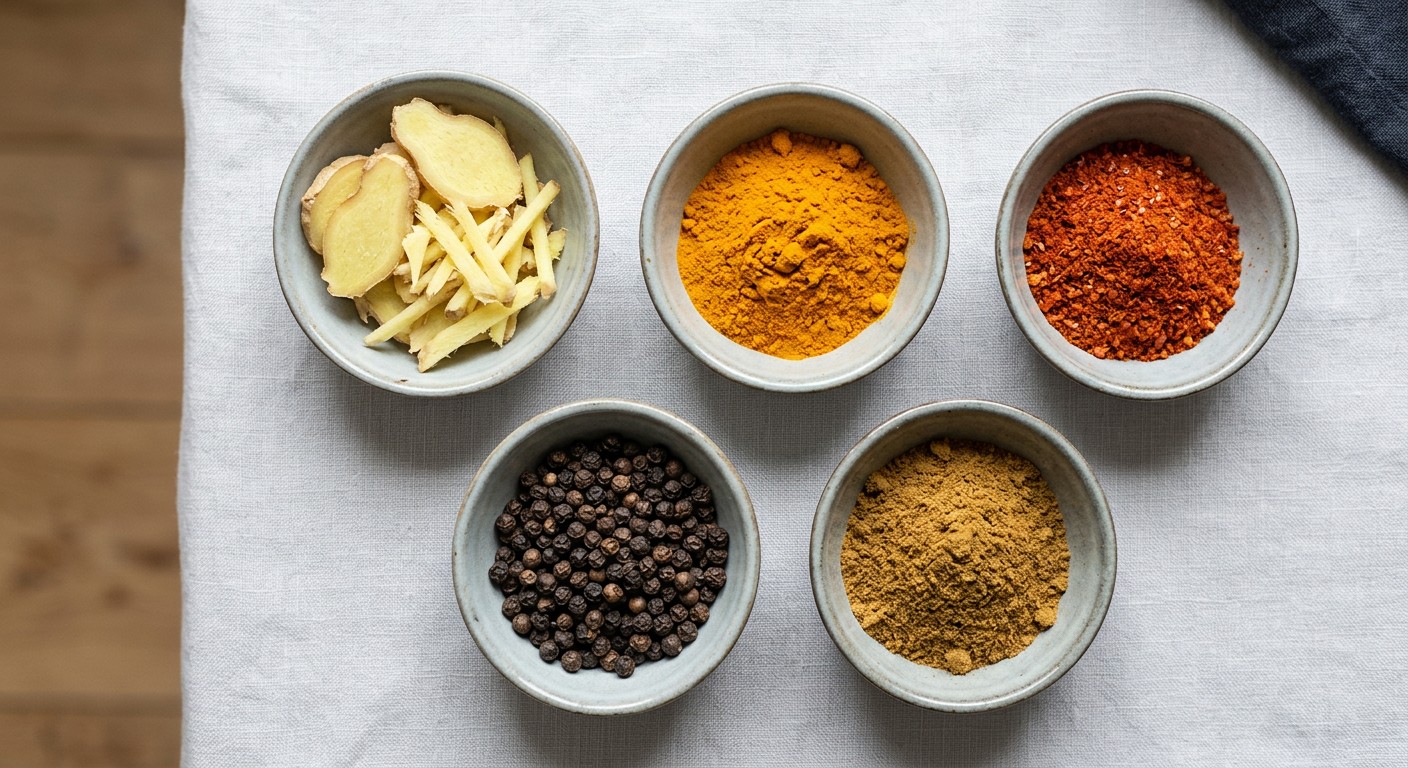
Turmeric is earthy and mildly pungent, rather than intensely hot like chilli.
What affects the taste of turmeric?
Several factors can change how turmeric tastes.
Freshness: Older or poorly stored spices may have a weaker aroma and less vibrant flavour.
Form: Fresh root, dried powder, extracts and other turmeric preparations can have different sensory characteristics. Research has found that different commercial turmeric forms can produce different sensory experiences in food.
Amount used: A small amount can add background warmth and colour, while a larger quantity may make bitterness and turmeric flavour much more obvious. Sensory research has found that increasing turmeric extract can intensify bitterness and reduce flavour acceptance in some drinks.
Other ingredients: Sweetness, acidity, fat, salt and other spices can change how turmeric is perceived. Sensory research has demonstrated that other ingredients can alter the perceived intensity and acceptability of turmeric flavour.
Advantages and benefits of turmeric’s flavour
From a culinary perspective, turmeric has several useful characteristics:
- Adds depth: Its earthy flavour can give savoury dishes a fuller character.
- Provides warmth: Turmeric adds a gentle warming quality without the intense heat of chilli.
- Works with other spices: It can complement ingredients such as ginger, cumin and black pepper.
- Useful in small amounts: A modest quantity can contribute flavour without overwhelming other ingredients.
- Adds aroma as well as taste: Turmeric’s volatile compounds contribute to its characteristic aromatic profile.
- Versatile in food: Turmeric is widely used for both flavouring and colouring foods.
It is worth separating these culinary benefits from claims about turmeric supplements. Although curcumin has been extensively researched, evidence for health benefits varies by condition, formulation and study quality. A 2024 systematic review of 103 randomised controlled trials found potentially beneficial effects for several outcomes, but the certainty of evidence varied considerably and the authors called for better long-term research.
Disadvantages of turmeric’s flavour
There are two main drawbacks if too much turmeric is used:
- Bitterness can become prominent: Increasing the concentration can make food or drinks less pleasant, particularly when turmeric is used in concentrated forms.
- The flavour can linger: Strong turmeric preparations may leave an earthy, bitter or astringent aftertaste.
For this reason, turmeric is often more effective as part of a balanced recipe rather than as the dominant flavour.
How Turmeric Adds Flavour to Food

Small amounts of turmeric can add earthy warmth, colour and aroma to savoury dishes.
Frequently asked questions
Is turmeric bitter?
Yes. Turmeric can have a noticeable bitter taste, particularly when used in larger quantities or concentrated preparations. Its bitterness is usually accompanied by earthy, warm and aromatic notes.
Does turmeric taste like ginger?
Not exactly. Both turmeric and ginger are warm spices and come from related plants, but ginger tends to be fresher, sharper and more pungent, while turmeric is generally more earthy and bitter.
Is turmeric spicy or hot?
Turmeric can have a mildly pungent or peppery quality, but it is not normally considered a hot spice in the same way as chilli. Its main flavour characteristics are earthy, bitter, warm and aromatic.
Does fresh turmeric taste different from turmeric powder?
Yes. Fresh turmeric can have a fresher, more root-like and aromatic character, while dried turmeric powder tends to have a deeper, earthy and concentrated flavour. Differences in turmeric varieties and processing can also affect flavour.
Why does turmeric sometimes taste unpleasant?
Too much turmeric can make bitterness, pungency and aftertaste more noticeable. The flavour can also be affected by the concentration, preparation method and other ingredients in a recipe. Sensory studies show that higher concentrations can reduce consumer acceptance in some food and drink applications.
How can I describe the taste of turmeric?
A useful short description is: turmeric tastes earthy, warm, slightly
Final summary
So, what does turmeric taste like? Turmeric has a distinctive earthy, warm and slightly bitter flavour, with mild peppery, pungent and aromatic notes. Fresh turmeric can taste fresher and more root-like, while dried turmeric powder tends to provide a deeper and more concentrated earthy flavour.
The amount used matters considerably. In small quantities, turmeric can add warmth, depth and aroma. In larger quantities, its bitterness and aftertaste can become more noticeable.
Turmeric’s flavour should also be distinguished from claims about its potential health effects. Research into curcumin and turmeric continues, but health evidence does not automatically apply to every form or quantity of turmeric.
Turmeric Taste Profile
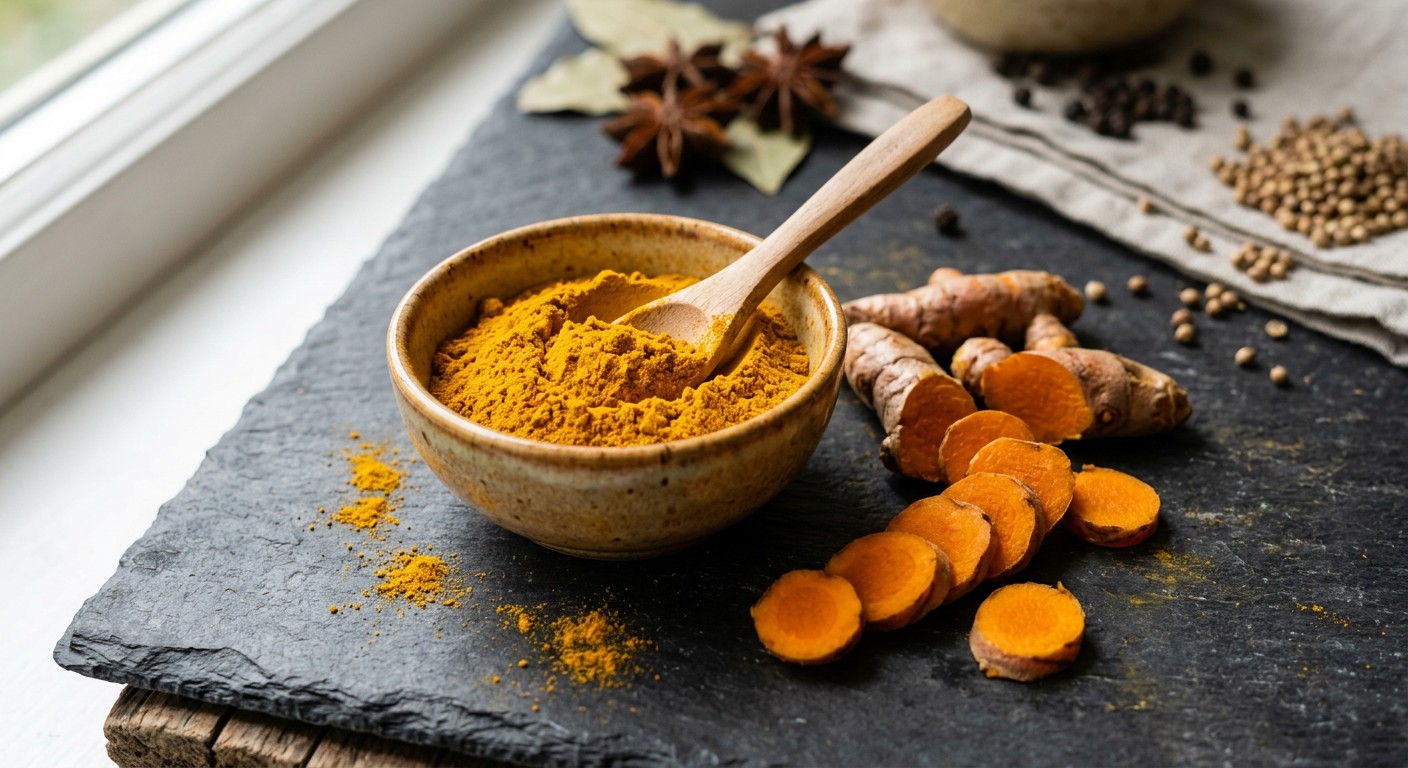
The characteristic taste of turmeric is earthy, warm, mildly peppery and slightly bitter.
Further Information and Articles
1. Healthy Turmeric Chicken Recipe By Jamie Oliver
2. What Is Turmeric? The Guide to Using This Ancient Spice in Your Kitchen
Published by: Allrecipes
Article title: What Is Turmeric? The Guide to Using This Ancient Spice in Your Kitchen
Description: A beginner-friendly guide explaining what turmeric is, how it tastes, how fresh and dried turmeric differ, and practical ways to use it in cooking. The article describes turmeric as bold, peppery, earthy and slightly bitter.
Direct link: Read the article
3. Turmeric 101: What It Tastes Like and How to Cook With It
Published by: Forks Over Knives
Article title: Turmeric 101: What It Tastes Like and How to Cook with It
Description: Covers turmeric’s flavour profile in detail, including its earthy, slightly bitter, peppery and citrus-like notes. It also provides cooking tips and suggestions for using both fresh and dried turmeric.
Direct link: Read the article
4. Turmeric Glossary
Published by: BBC Good Food
Article title: Turmeric
Description: An ingredient reference guide from BBC Good Food that explains the flavour of fresh and ground turmeric. It notes that fresh turmeric is acidic and earthy, while ground turmeric provides a mild fragrance, ginger-like bite and can become bitter if overused.
Direct link: Read the guide
Sources
- Wang Z, Zhong W, Zhao W, et al. (2026).
Turmeric: A Comprehensive Review of Its Botany, Traditional Uses, Phytochemistry, and Mechanisms as a Functional Food. Nutrients. - Hasegawa T, Nakatani K, Fujihara T, Yamada H. (2015).
Aroma of Turmeric: Dependence on the Combination of Groups of Several Odor Constituents. Natural Product Communications. - Yusufali Z, Follett P, Wall M, Sun X. (2024).
Physiochemical and Sensory Properties of a Turmeric, Ginger, and Pineapple Functional Beverage. Foods. - Govindarajan VS. (1980).
Turmeric—Chemistry, Technology, and Quality. Critical Reviews in Food Science and Nutrition. - National Center for Complementary and Integrative Health (NCCIH).
Turmeric: Usefulness and Safety. - BBC Good Food.
Turmeric — Ingredient Guide. - Allrecipes.
What Is Turmeric? The Guide to Using This Ancient Spice in Your Kitchen.
Medical disclaimer
This page is provided for general educational and informational purposes only. It is not medical advice and should not be used to diagnose, treat, cure or prevent any medical condition. Turmeric used as a food ingredient is different from concentrated turmeric or curcumin supplements, and safety can depend on the product, dose and individual circumstances. The U.S. National Center for Complementary and Integrative Health notes that some highly bioavailable curcumin formulations have been associated with liver injury and that turmeric can cause gastrointestinal side effects.
Always speak to a qualified medical doctor or other appropriate healthcare professional before taking turmeric or curcumin supplements, particularly if you are pregnant, breastfeeding, taking medicines or have an existing medical condition.
Author
Written by J. Henderson
Health & Wellness Research Writer
J. Henderson writes evidence-based articles on nutrition, botanical supplements and everyday wellbeing. His work focuses on translating scientific research into clear, practical guidance that helps readers make informed decisions about natural health products.