Turmeric Comparison: Turmeric vs Curcumin, Ginger, Fish Oil and More
Choosing the right supplement can be confusing, especially when several products are marketed for similar health goals. Turmeric comparison searches often lead to questions such as whether turmeric or curcumin is better, how turmeric compares with ginger or fish oil, and whether capsules, powder or fresh turmeric root are the best choice.
Turmeric is best known for containing curcuminoids, a group of naturally occurring compounds that have been studied for their biological and anti-inflammatory properties. However, turmeric is not the same thing as a concentrated curcumin supplement, and different products can vary considerably in their curcuminoid content, formulation and absorption.
This guide compares turmeric with several popular supplements, explains the main differences and benefits in simple terms, and highlights what to consider before buying. It is intended as general health information rather than medical advice.
Quick answer: which supplement is best?
There is no single supplement that is best for everyone. The most appropriate choice depends on what you want from a supplement, the form you prefer, the ingredients included, the evidence available and your individual circumstances.
For someone specifically interested in turmeric’s compounds, a standardised curcumin product may provide a more predictable amount of curcuminoids than ordinary culinary turmeric powder. On the other hand, turmeric powder may be more versatile and suitable for everyday turmeric recipes and cooking.
Other supplements may be more appropriate when your main interest is a different nutrient or compound. For example, fish oil provides omega-3 fatty acids, collagen provides collagen peptides, and glucosamine is commonly chosen for joint-related supplementation.
Turmeric vs Popular Supplements: Key Differences and Benefits
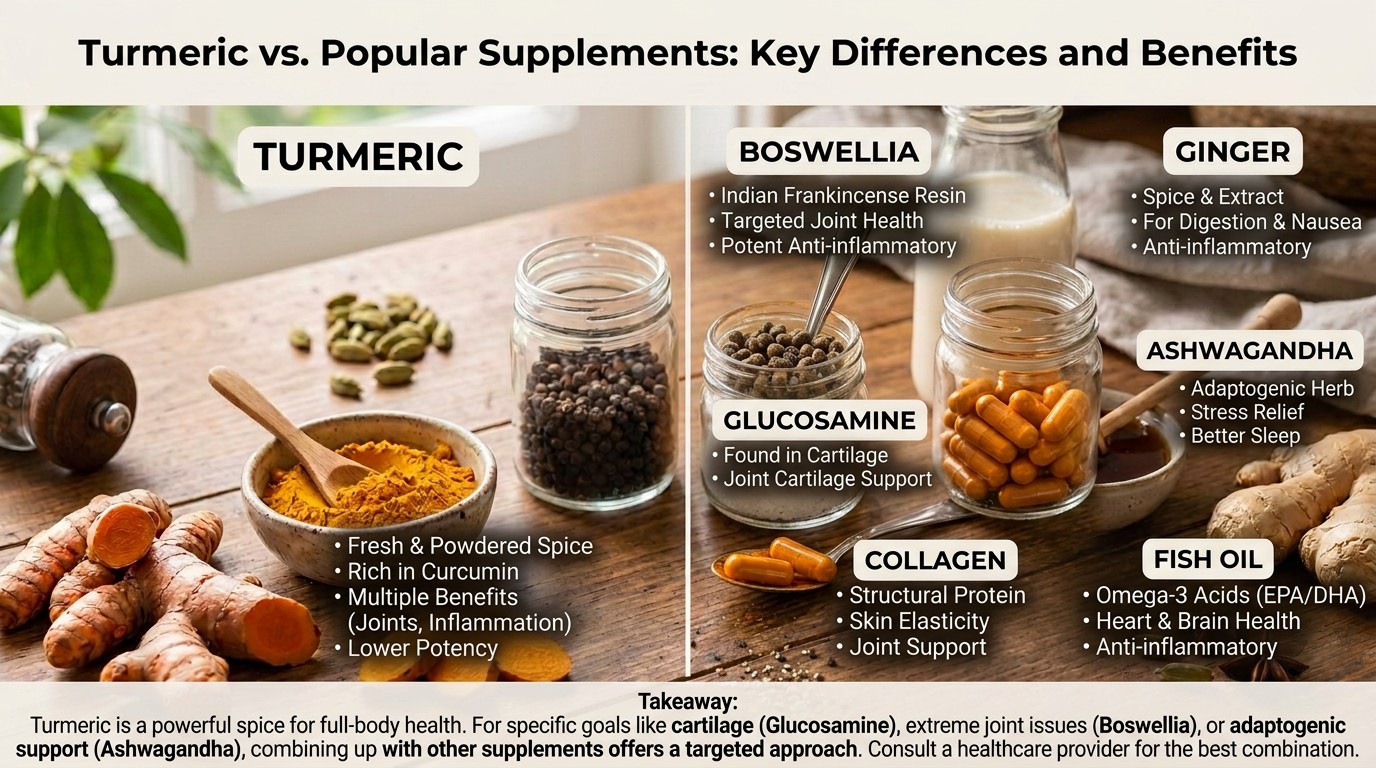
Turmeric comparison with other supplements like Ginger, Ashwagandha, Glucosamine, Collagen etc.
Turmeric comparison table
| Comparison | Main difference | Which may be preferable? |
| Turmeric vs Curcumin | Turmeric is the whole spice; curcumin is a concentrated group of compounds found in turmeric. | Curcumin for a more concentrated, measured intake; turmeric for whole-spice use. |
| Turmeric vs Ginger | Turmeric contains curcuminoids, while ginger contains compounds such as gingerols. | Depends on the intended use and personal preference. |
| Turmeric vs Apple Cider Vinegar | They contain completely different compounds and are used for different nutritional purposes. | Choose according to your specific reason for supplementation. |
| Turmeric vs Boswellia | Turmeric comes from the Curcuma longa plant; Boswellia comes from Boswellia trees. | Both have been researched in relation to inflammation and joint health, but they are not interchangeable. |
| Turmeric vs Fish Oil | Turmeric supplies curcuminoids; fish oil supplies omega-3 fatty acids such as EPA and DHA. | Fish oil if omega-3 intake is the priority; turmeric if curcuminoids are the focus. |
| Turmeric vs Glucosamine | Glucosamine is a naturally occurring compound commonly used in joint supplements; turmeric contains curcuminoids. | Depends on the nutritional goal and individual needs. |
| Turmeric vs Collagen | Collagen supplements provide collagen peptides, whereas turmeric supplements provide turmeric or curcuminoids. | They address different nutritional interests and are not direct substitutes. |
| Turmeric vs Ashwagandha | Turmeric is primarily researched for curcuminoids; ashwagandha is an adaptogenic herb traditionally used in Ayurvedic practice. | Depends on the intended purpose and personal circumstances. |
| Fresh Turmeric vs Powder | Fresh turmeric contains more water and has a different flavour and texture; powder is concentrated and convenient. | Fresh for cooking; powder for convenience and longer storage. |
| Turmeric with Black Pepper vs Without | Black pepper contains piperine, which can increase curcumin absorption. | A formulated product with piperine may provide greater curcumin absorption, but piperine can interact with some medicines. |
| Turmeric Capsules vs Powder | Capsules offer measured doses and convenience; powder is more flexible and can be used in food and drinks. | Capsules for convenience and consistency; powder for versatility. |
Table of Contents
- Turmeric vs Curcumin
- Turmeric vs Ginger
- Turmeric vs Apple Cider Vinegar
- Turmeric vs Boswellia
- Turmeric vs Fish Oil
- Turmeric vs Glucosamine
- Turmeric vs Collagen
- Turmeric vs Ashwagandha
- Fresh Turmeric vs Powder
- Turmeric with Black Pepper vs Without
- Turmeric Capsules vs Powder
- What to look for when buying turmeric
- Frequently asked questions
- Final summary
- Related Articles
- Disclaimer
1. Turmeric vs Curcumin
Turmeric is the whole spice, while curcumin refers to a group of compounds called curcuminoids found in turmeric.
Turmeric contains curcuminoids as well as other naturally occurring components. Standard turmeric powder therefore generally contains a relatively modest proportion of curcuminoids.
When considering turmeric vs curcumin, curcumin supplements are usually formulated to provide a more concentrated and consistent amount of curcuminoids. This can make them more suitable for people specifically looking to supplement curcuminoids rather than simply add turmeric to their diet.
Best choice: Consider curcumin when a measured, concentrated intake is important. Choose turmeric powder when you want a versatile whole-spice ingredient.
Turmeric vs Curcumin: What’s the Difference?
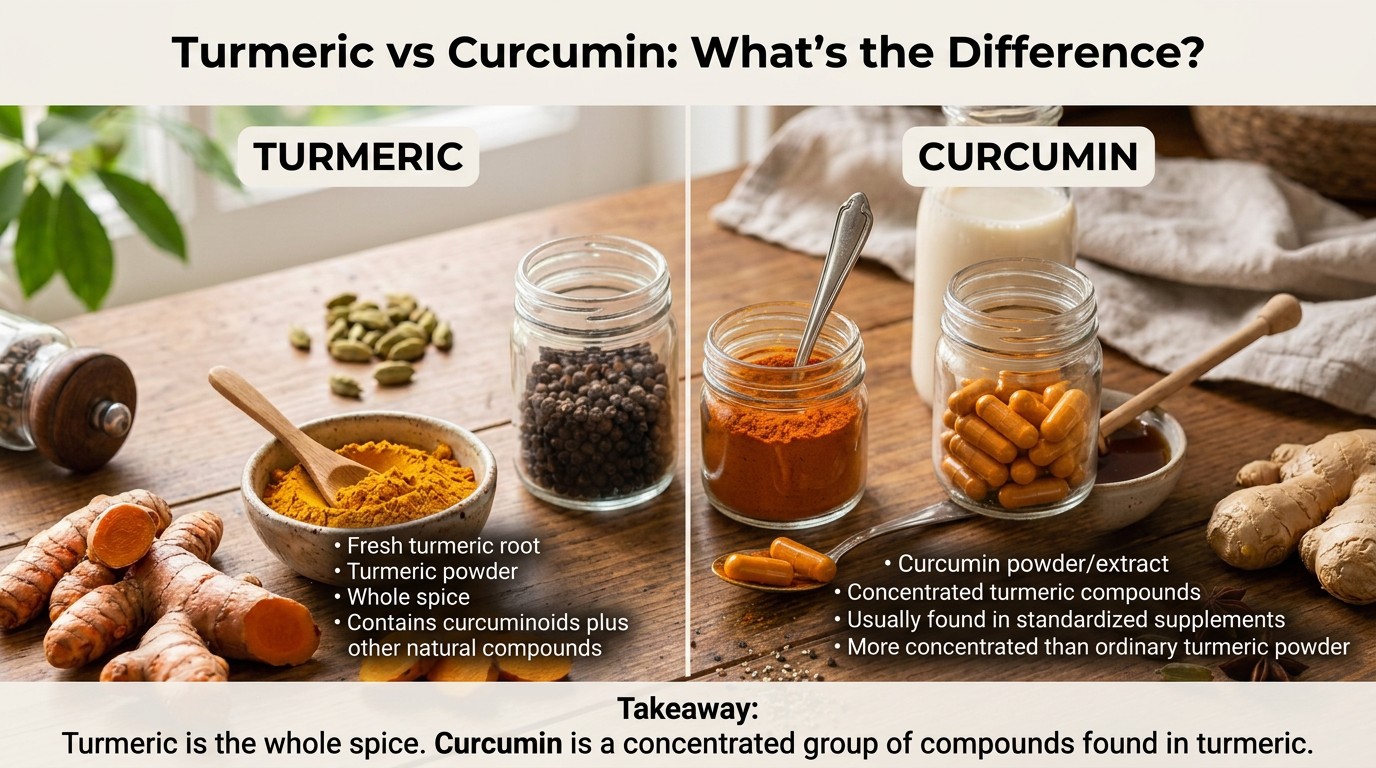
Turmeric is the whole spice, while curcumin refers to its best-known concentrated compounds.
2. Turmeric vs Ginger
Turmeric and ginger are both members of the Zingiberaceae plant family, but they contain different naturally occurring compounds.
Turmeric is associated particularly with curcuminoids, whereas ginger contains compounds including gingerols and shogaols. Both have been studied extensively, but they should not be viewed as identical supplements.
Best choice: The decision depends on your reason for taking a supplement rather than one being universally better.
Turmeric vs Ginger: How Do They Compare?
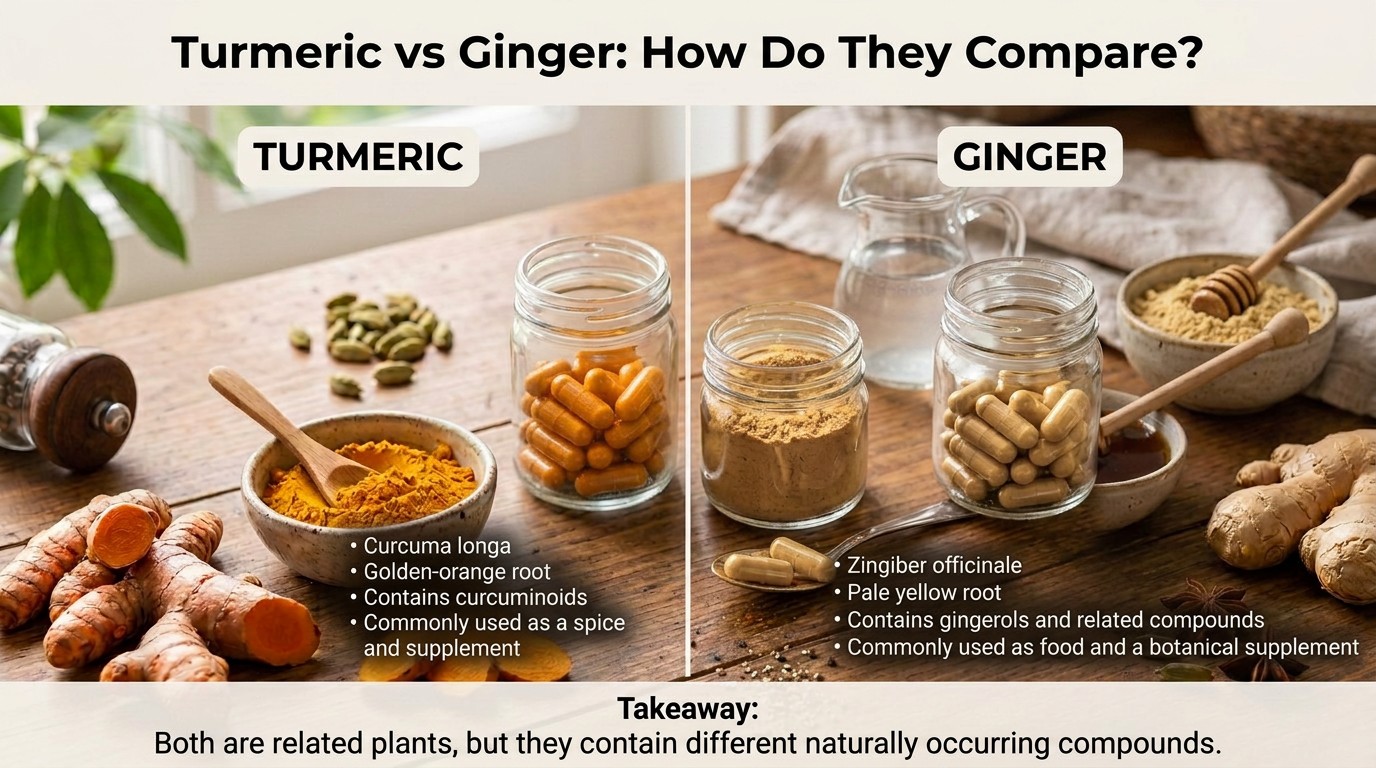
Turmeric and ginger are related botanicals but have different chemical compositions and traditional uses.
3. Turmeric vs Apple Cider Vinegar
Turmeric and apple cider vinegar are very different products.
Turmeric is a spice containing curcuminoids, while apple cider vinegar is produced through the fermentation of apple juice and contains acetic acid.
Despite both being popular in the health and wellness market, they should not be considered direct alternatives. The evidence, composition and potential uses are different.
Best choice: Choose based on the specific nutritional or dietary purpose rather than comparing them as equivalent supplements.
4. Turmeric vs Boswellia
Boswellia is an extract derived from the resin of Boswellia trees. It contains compounds called boswellic acids and has been studied particularly in relation to inflammatory processes and joint health.
Turmeric and Boswellia therefore have some overlapping areas of research, but they are botanically and chemically different.
Best choice: Neither is automatically better. Look at the standardisation, dosage, evidence and your individual requirements when comparing products.
Turmeric vs Boswellia: Which Is Right for You?
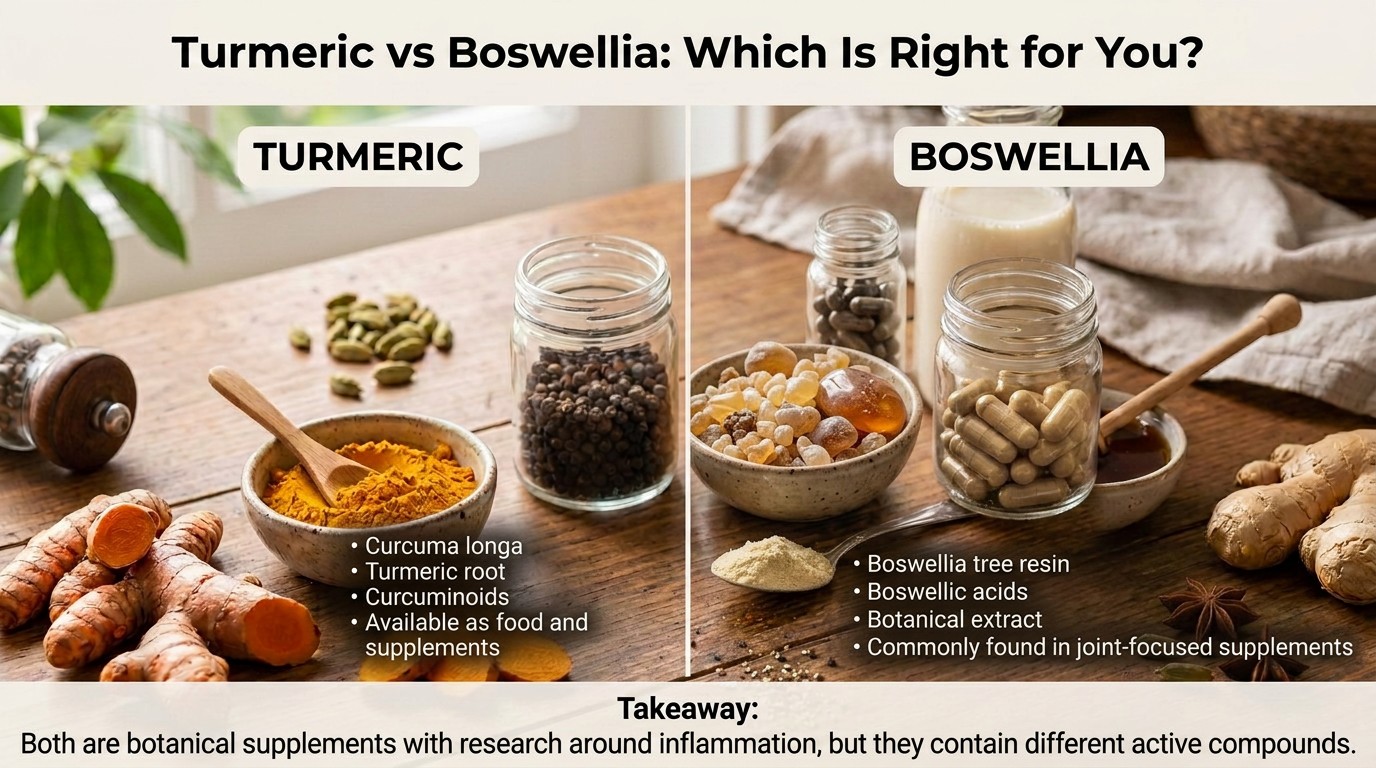
Turmeric and Boswellia are different botanical ingredients with overlapping areas of scientific research.
5. Turmeric vs Fish Oil
This is an important comparison because the two supplements provide completely different substances.
Fish oil provides omega-3 fatty acids, particularly EPA and DHA. Turmeric provides turmeric compounds, including curcuminoids.
Fish oil may therefore be the more logical choice for someone whose diet is low in oily fish and who is specifically looking to supplement omega-3 fatty acids.
Turmeric is a different type of supplement and should not be regarded as an alternative source of omega-3.
Best choice: Choose fish oil when omega-3 intake is the priority; choose turmeric when curcuminoids are the focus.
6. Turmeric vs Glucosamine
Glucosamine is commonly included in joint-support supplements and is structurally different from turmeric’s curcuminoids.
Although both are frequently marketed towards people interested in joint health, they work through different biological pathways and the evidence surrounding their effectiveness is not identical.
Best choice: Compare the actual ingredients, evidence and intended purpose rather than choosing based solely on joint-health marketing.
Turmeric vs Glucosamine: How Do They Compare?
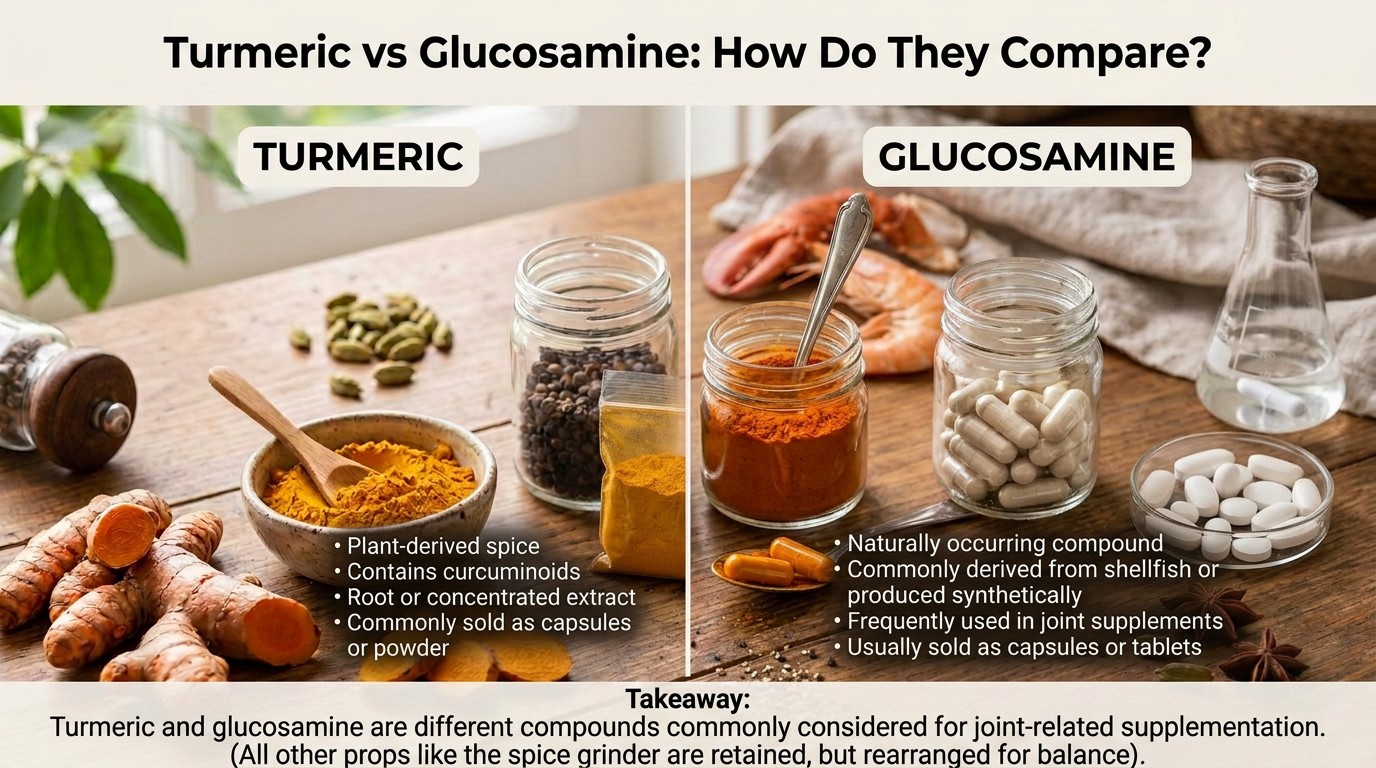
Turmeric and glucosamine have different origins and compositions despite both appearing in many joint-support supplements.
7. Turmeric vs Collagen
Turmeric and collagen are particularly different supplements.
Collagen supplements generally contain hydrolysed collagen peptides, which provide amino acids associated with the body’s collagen proteins. They are commonly marketed for skin, bones, connective tissue and joints.
Turmeric products, by contrast, provide turmeric compounds and are often selected for their research around inflammatory pathways.
Best choice: Collagen may be more relevant when collagen peptides are specifically desired; turmeric is the more relevant choice when curcuminoids are the priority.
8. Turmeric vs Ashwagandha
Ashwagandha is an adaptogenic herb traditionally used in Ayurvedic medicine and is commonly included in modern supplements aimed at stress, relaxation and general wellbeing.
Turmeric has a different traditional history and chemical profile, with curcuminoids being its best-known compounds.
These products therefore have quite different purposes despite both being herbal supplements.
Best choice: Consider the specific reason for supplementation and check whether the ingredient is appropriate for you before buying.
Turmeric vs Ashwagandha: What’s the Difference?
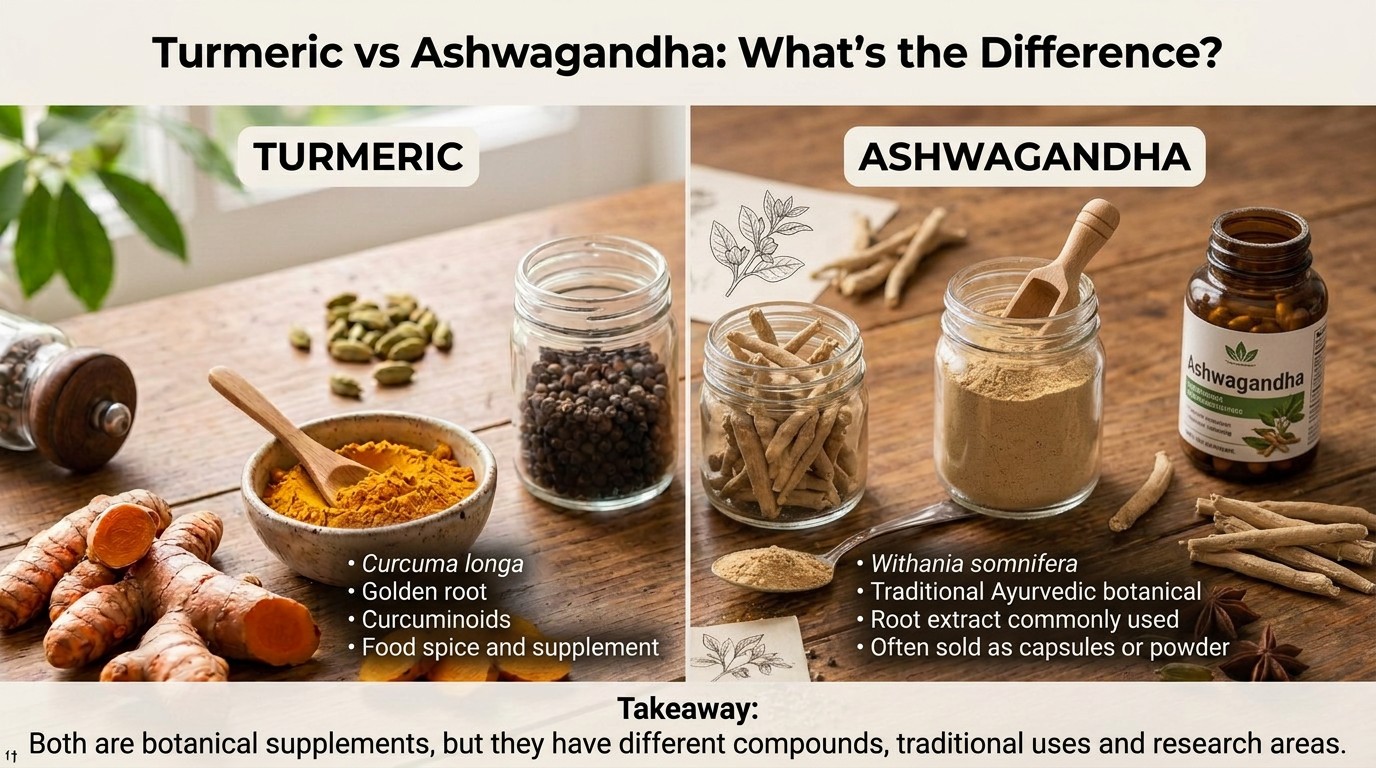
Turmeric and ashwagandha are different botanicals with distinct compounds and traditional uses.
9. Fresh Turmeric vs Powder
Fresh turmeric root and turmeric powder come from the same plant but are very different to use.
Fresh turmeric has a stronger, more aromatic character and contains a significant amount of water. Turmeric powder is dried and ground, making it considerably more convenient for storage and measuring.
Powder can easily be added to cooking, smoothies or drinks. Fresh turmeric can also be used in cooking but requires preparation and has a shorter shelf life.
Best choice: Fresh turmeric is useful for cooking and recipes; powder is generally more convenient for regular use and storage.
Turmeric Root vs. Turmeric Ground Powder Comparison
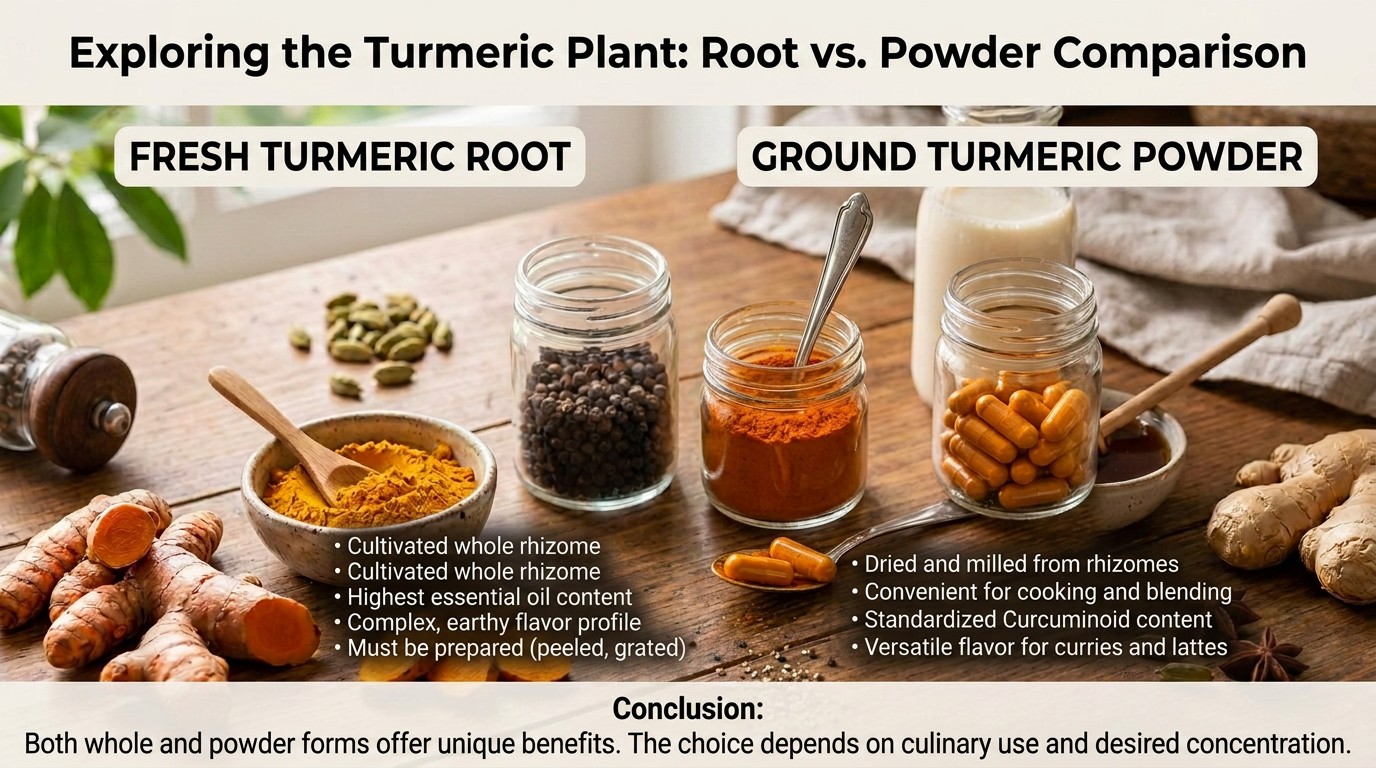
Exploring the Turmeric Plant – Turmeric Root vs Turmeric Powder Comparison
10. Turmeric with Black Pepper vs Without
Black pepper is frequently added to turmeric supplements because it contains piperine, a compound that can increase the absorption of curcumin.
This is one reason some turmeric and curcumin products contain a turmeric-plus-black-pepper formulation.
However, increased absorption is not automatically better for everyone. Piperine may affect the absorption or metabolism of some medicines, so anyone taking medication should check with a doctor or pharmacist before using a high-absorption formulation.
Best choice: A formulation containing piperine may be useful when improved curcumin absorption is desired, but it is important to consider potential interactions.
11. Turmeric Capsules vs Powder
Capsules and powder can both be useful, but they suit different preferences.
Capsules are convenient, portable and provide a measured amount of the product. Turmeric capsules can be particularly attractive if you do not enjoy the taste of turmeric.
Powder is more flexible. It can be incorporated into food and drinks and is often a practical choice for people who already use turmeric in cooking.
When buying either type, look beyond the front of the packaging. Check the ingredient list, amount of turmeric or curcuminoids per serving, whether the product is standardised, and which additional ingredients are included.
Best choice: Capsules generally win for convenience and consistency, while powder offers greater versatility.
What should you look for when buying a turmeric supplement?
A good comparison should look beyond the word “turmeric” on the label. Products can differ substantially in their formulation.
Consider:
- The amount provided per serving: Check exactly how much turmeric or curcuminoids you are getting.
- Standardisation: A standardised curcumin product can make the active compound content easier to understand.
- Absorption technology: Some products use piperine or other formulations designed to improve absorption.
- Additional ingredients: Check whether the capsule contains black pepper, oils, fillers or other botanical ingredients.
- Form: Decide which turmeric form is best, whether capsules, powder or fresh turmeric fits your routine.
- Quality and testing: Look for transparent information about manufacturing and quality control.
- Value: Compare the cost per serving rather than simply the price of the container.
- Your individual circumstances: Supplements are not risk-free and can interact with medicines or be unsuitable for some people.
Most importantly, avoid assuming that a higher dose automatically means a better product. More is not necessarily better, particularly when a product is highly concentrated.
Frequently asked questions
Is turmeric better than curcumin?
Not necessarily. Turmeric is the whole spice, whereas curcumin supplements generally provide a more concentrated and measurable amount of turmeric’s best-known compounds. The better choice depends on whether you want culinary turmeric or a concentrated supplement.
What is the best form of turmeric to take?
There is no universally best turmeric form. Capsules are convenient and provide a measured serving and is a popular way to consume turmeric daily, while powder is versatile and can be added to food and drinks. A standardised curcumin product may be preferable if consistent curcuminoid content is important.
Does black pepper make turmeric more effective?
Black pepper contains piperine, which can increase the absorption of curcumin. However, this does not mean every person should take a turmeric product containing piperine. Piperine can affect the absorption or metabolism of some medicines, so professional advice is appropriate if you take medication.
Can you take turmeric with other supplements?
It depends on the supplements and your individual circumstances. Turmeric is commonly combined with other ingredients in turmeric supplement products, but combining several supplements can increase the complexity of potential interactions. Check with a healthcare professional or pharmacist if you take medicines or have an existing medical condition.
Is turmeric worth buying as a supplement?
It can be, particularly for people who specifically want to supplement turmeric or curcuminoids and prefer the convenience of a formulated product. However, a supplement should complement a balanced diet rather than replace it. Compare the actual ingredients, serving size, formulation and quality before deciding which product offers the best fit.
Final summary
Turmeric is a popular supplement, but turmeric is not interchangeable with curcumin, ginger, fish oil, glucosamine, collagen, Boswellia or ashwagandha. Each provides different compounds and has different research behind it.
For buying decisions, the most useful comparison is not simply which supplement is “best”, but which ingredient best matches your reason for taking a supplement.
If your priority is turmeric itself, compare the form, curcuminoid content, serving size and absorption formulation. Capsules can provide convenience and consistency, while powder is versatile and suitable for cooking. Products containing piperine may increase curcumin absorption but require additional consideration if you take medicines.
Ultimately, the best supplement is the one that is appropriate for your individual needs, has transparent labelling and quality information, and fits sensibly into a balanced diet and lifestyle.
Important note
This page provides general information and is not medical advice. Supplements can interact with medicines and may not be suitable for everyone. If you are pregnant or breastfeeding, take prescription or regular medicines, have a medical condition, or are unsure whether a supplement is suitable for you, speak to a qualified healthcare professional before using it.
Related Articles
1. Turmeric and Ginger: Combined Benefits and Uses
Brief description: A direct comparison of two closely related botanicals. It discusses potential effects on inflammation, pain, nausea, immune function, their active compounds, side effects, and medication interactions. It is particularly useful if you’re comparing turmeric/curcumin vs ginger.
Published by: Healthline
Read the article
2. Herbal and botanical supplements: what to know before buying
Brief description: A particularly useful comparison resource because it examines turmeric, ashwagandha, echinacea, St John’s wort, ginkgo, garlic and other botanicals in the same article. It compares their claimed uses, quality of evidence, risks, and potential interactions.
Published by: Which? — an established UK consumer organisation with evidence-based health and product research
Read the guide
3. Turmeric and curcumin: what the evidence does and doesn’t show
Brief description: A recent evidence-focused guide from a major UK NHS teaching hospital. It explains the distinction between turmeric and curcumin, what clinical research actually supports, absorption/bioavailability, potential benefits and safety considerations. This makes a good evidence baseline when comparing turmeric with other supplements.
Published by: University College London Hospitals (UCLH)
Read the guide
4. Ashwagandha: evidence, forms and safety
Brief description: A companion evidence guide for ashwagandha, covering what it is, evidence for stress and sleep, different forms/extracts, and important safety issues. It pairs especially well with the UCLH turmeric guide if you’re trying to make a turmeric vs ashwagandha comparison based on evidence rather than marketing claims.
Published by: University College London Hospitals (UCLH)
Read the guide
5. Turmeric Benefits
Brief description: A medical-institution guide explaining turmeric’s active compound, curcumin, and the current evidence around inflammation, joint discomfort, antioxidant effects and culinary use. It also provides useful context for distinguishing turmeric as a food/spice from concentrated turmeric/curcumin supplements.
Published by: Johns Hopkins Medicine
Read the article
Related Videos
How to Make Turmeric Powder at Home
Disclaimer
The information on this page is for general educational purposes only and is not intended to provide medical advice, diagnosis or treatment. Supplements may affect people differently and can interact with medicines or may not be suitable for everyone. Always check with your doctor, pharmacist or another qualified healthcare professional before starting a new supplement, particularly if you take medication, have an existing health condition, or are pregnant or breastfeeding. Do not use the information on this page as a substitute for professional medical advice.
Author
Written by J. Henderson
Health & Wellness Research Writer
J. Henderson writes evidence-based articles on nutrition, botanical supplements and everyday wellbeing. His work focuses on translating scientific research into clear, practical guidance that helps readers make informed decisions about natural health products.