
How Much Turmeric Per Day?
Quick Answer
Most adults can safely consume 500mg to 2,000mg of turmeric extract per day, depending on the product and the amount of curcumin it contains. If you’re using turmeric powder in food, around 1–3 grams daily is commonly used. Always follow the manufacturer’s directions and speak to your GP before taking turmeric supplements if you’re pregnant, taking blood-thinning medication, or have gallbladder problems.
Table of Contents
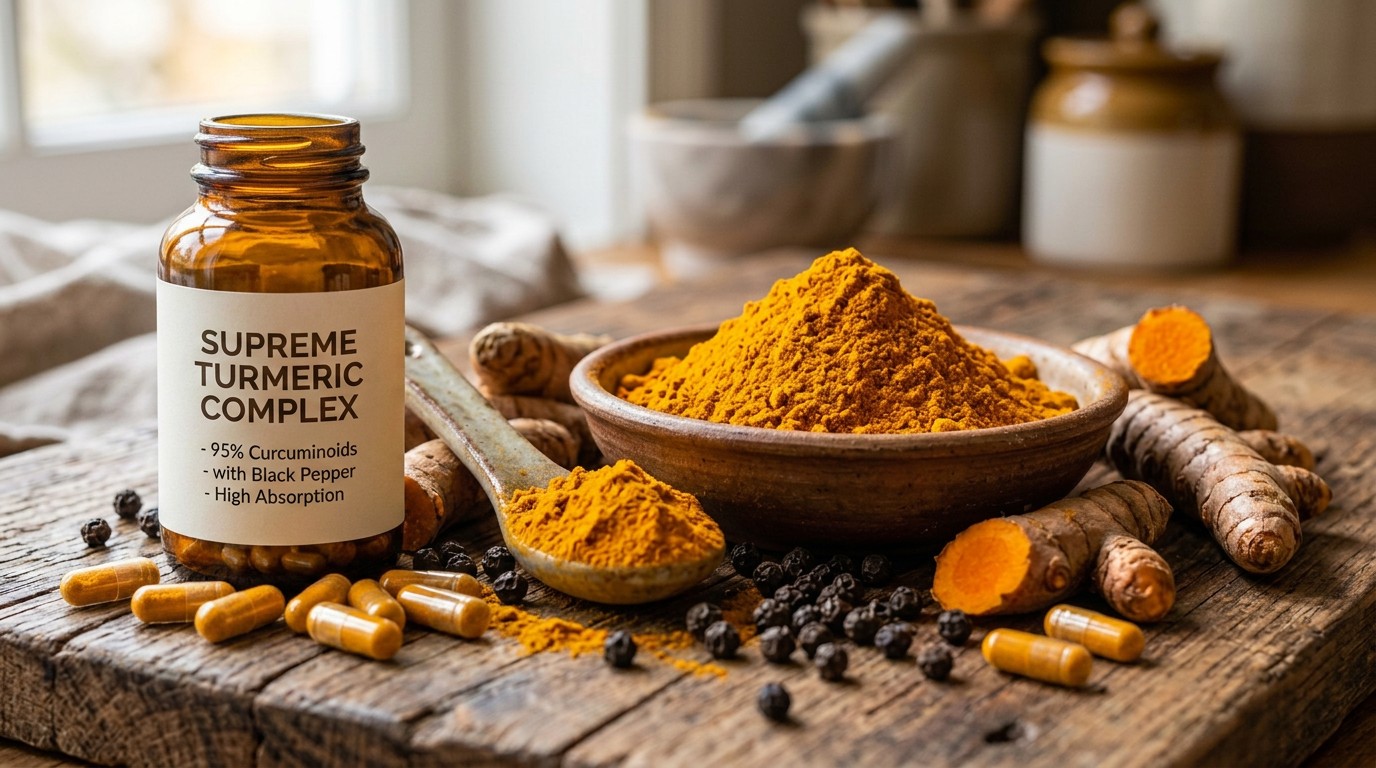
A quality turmeric supplement alongside fresh turmeric root.
How Much Turmeric Should You Take Per Day?
If you’re looking for a simple answer, most people take between 500mg and 2,000mg of turmeric extract per day, depending on the strength of the supplement and the level of curcumin it provides.
Turmeric itself contains only around 2–8% curcumin, which is the natural compound most research focuses on. That’s why many supplements use concentrated turmeric extract rather than plain turmeric powder.
Here is a simple guide:
Form | Typical Daily Amount |
Turmeric powder | 1-3g per day |
Turmeric extract | 500-2,000mg per day |
Curcumin extract | Follow the manufacturer’s dosage, often 500-1,000mg daily |
For many healthy adults, 500mg to 1,000mg of a quality turmeric extract is a sensible starting point.
Many people split the dose into morning and evening to improve comfort and consistency.
Does the Type of Turmeric Matter?
Yes. Not all turmeric products are the same.
There are three common forms:
Turmeric Powder
This is the spice used in cooking. While it’s a healthy ingredient, turmeric powder contains relatively little curcumin, so larger amounts are needed to match the levels found in supplements.
Turmeric Extract
This is concentrated to provide much higher levels of active compounds. Turmeric extract is the most common form used in food supplements.
Curcumin Supplements
These contain purified curcumin and are often combined with ingredients designed to improve absorption.
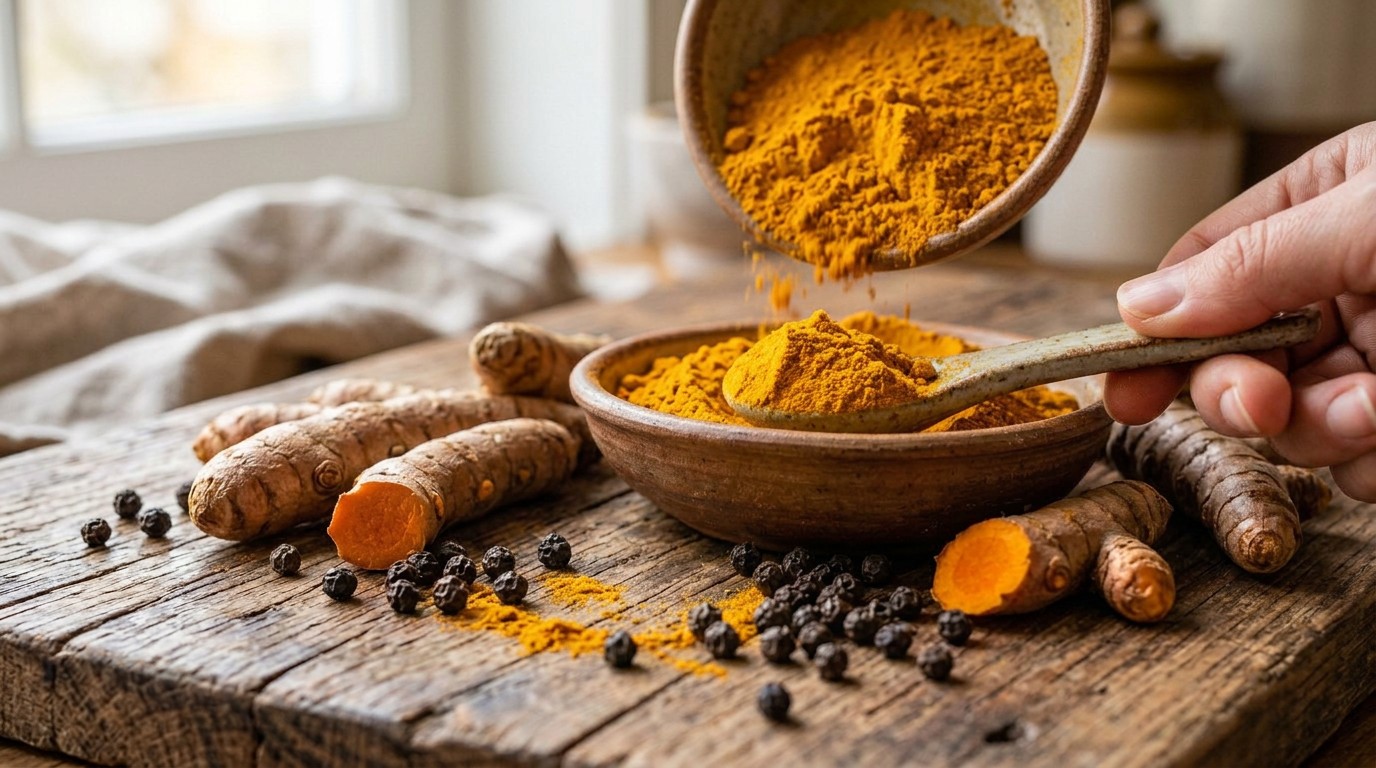
Turmeric powder measured for a typical daily intake.
Absorption Is Just as Important
One challenge with turmeric is that curcumin is naturally absorbed quite poorly by the body and our guide Turmeric vs Curcumin explains the differences.
Many premium supplements include ingredients such as black pepper extract (piperine) or use specialised delivery systems that help improve absorption.
A lower dose with enhanced absorption may be more effective than taking a much larger amount of ordinary turmeric powder.
Can You Take Turmeric Every Day?
For most healthy adults, turmeric can be taken daily as part of a balanced lifestyle.
Many people choose to take it consistently rather than occasionally, as food supplements generally work best when used regularly.
As with any supplement:
- Follow the recommended serving.
- Do not exceed the stated dose.
- Take it with food if advised by the manufacturer.
- Stay well hydrated.
If you develop stomach discomfort, reducing the amount or taking it with a meal may help.

Taking a turmeric supplement daily as part of a healthy routine.
Who Should Avoid Turmeric Supplements?
Although turmeric is considered safe for most people, supplements are not suitable for everyone.
You should speak to your GP or pharmacist before taking turmeric supplements if you:
- Take blood-thinning medication.
- Have gallstones or gallbladder disease.
- Have a bleeding disorder.
- Are pregnant or breastfeeding.
- Are due to have surgery within the next couple of weeks.
- Take medication for diabetes or blood pressure.
If you have any long-term medical condition, it’s always sensible to seek professional advice before starting a new supplement.
Are There Any Side Effects?
Turmeric is generally well tolerated.
However, higher doses may occasionally cause:
- Mild stomach upset
- Nausea
- Diarrhoea
- Acid reflux
- Bloating
These effects are usually mild and often improve by reducing the amount taken.
If you experience an allergic reaction or persistent symptoms, stop taking the supplement and seek medical advice.
How to Choose a Good Turmeric Supplement
Not every supplement offers the same quality.
When comparing turmeric supplement products, look for:
- Clearly labelled turmeric or curcumin content
- Standardised turmeric extract
- Turmeric with added black pepper extract (where appropriate)
- Third-party quality testing
- UK manufactured products where possible
- Clear dosage instructions
A quality supplement should make it easy to know exactly how much turmeric you’re taking each day.
Popular Turmeric Supplements can be found in these Best Turmeric Supplements Guides
Best Turmeric Supplements, Tried and Tested (Good Food)
An expert-reviewed guide that evaluates a range of popular turmeric supplements based on curcumin content, black pepper (piperine) for absorption, quality, value, and ease of use. It includes detailed reviews and “best for” recommendations.
12 Best Turmeric Supplements Recommended by Dietitians (British Vogue)
A roundup of leading turmeric supplements selected with input from dietitians, highlighting products that combine curcumin with black pepper or enhanced-absorption formulations, along with their strengths and ideal use cases.
Why Many People Choose Turmeric Supplements
While adding turmeric to meals is a great habit, supplements offer a convenient way to enjoy a consistent daily amount without needing to use large quantities of the spice.
A high-quality turmeric supplement can be particularly useful for people who:
- Don’t regularly cook with turmeric
- Want a measured daily serving
- Prefer capsules over powders
- Are looking for a convenient addition to their daily wellness routine
When choosing a supplement, focus on quality, transparency and clear ingredient labelling rather than simply buying the cheapest option.
Frequently Asked Questions
Is 500mg of turmeric enough?
For many adults, yes. A daily dose of 500mg of turmeric extract is a common starting point and may be suitable for general wellbeing.
Is it safe to take turmeric every day?
For most healthy adults, daily use is considered safe when taken as directed. If you have a medical condition or take prescription medication, speak to your GP first.
Is turmeric powder the same as turmeric supplements?
No. Turmeric powder is the cooking spice, while supplements usually contain concentrated turmeric extract or curcumin, providing much higher levels of active compounds.
Should I take turmeric in the morning or at night?
There isn’t a best time. Many people take turmeric with breakfast or an evening meal. The most important thing is taking it consistently.
Related Articles
Below is a curated list of authoritative articles, clinical reviews, and scientific studies related to “How Much Turmeric Per Day?”.
Turmeric: Usefulness and Safety (NCCIH)
Description: Official U.S. National Center for Complementary and Integrative Health overview covering current evidence, safety, liver concerns, and what research says about turmeric and curcumin.
Turmeric (Curcuma longa) and Its Major Constituent (Curcumin) as Nontoxic and Safe Substances: Review
Description: Pubmed Peer-reviewed safety review summarizing human clinical studies, including evidence that doses up to 6 g/day of curcumin were generally well tolerated over several weeks.
Turmeric Uses, Benefits & Dosage
Description: Professional reference from Drugs.com summarizing clinical trial dosing across multiple health conditions, including arthritis and antioxidant studies.
How Much Turmeric Per Day Should You Take?
Science-based article from Science Insights explaining the difference between turmeric powder and standardized curcumin extracts, with practical dosage guidance based on clinical studies.
Disclaimer
The information on this page is provided for general educational purposes only and should not be considered medical advice. Turmeric supplements are not intended to diagnose, treat, cure or prevent any disease. Always follow the manufacturer’s recommended dosage and consult your GP, pharmacist or another qualified healthcare professional before taking turmeric supplements if you are pregnant, breastfeeding, have an existing medical condition or take prescription medication. Individual responses to supplements may vary.