Turmeric vs Ginger: Which Supplement Is Better?
Turmeric and ginger are two of the most popular plant-based supplements, but which is better: turmeric vs ginger? Both have a long history of traditional use and contain naturally occurring compounds that have been widely researched. However, they are not interchangeable, and the better choice depends on what you want from a supplement.
Turmeric is best known for curcumin, a compound studied for its potential effects on inflammation and joint health. Ginger is particularly well known for its use in digestive health and nausea, although it has also been researched for menstrual discomfort and joint symptoms.
If you are deciding which turmeric supplement or ginger supplement to buy, this comparison explains the main differences, potential benefits, safety considerations and what to look for in a quality product.
Turmeric vs Ginger Comparison
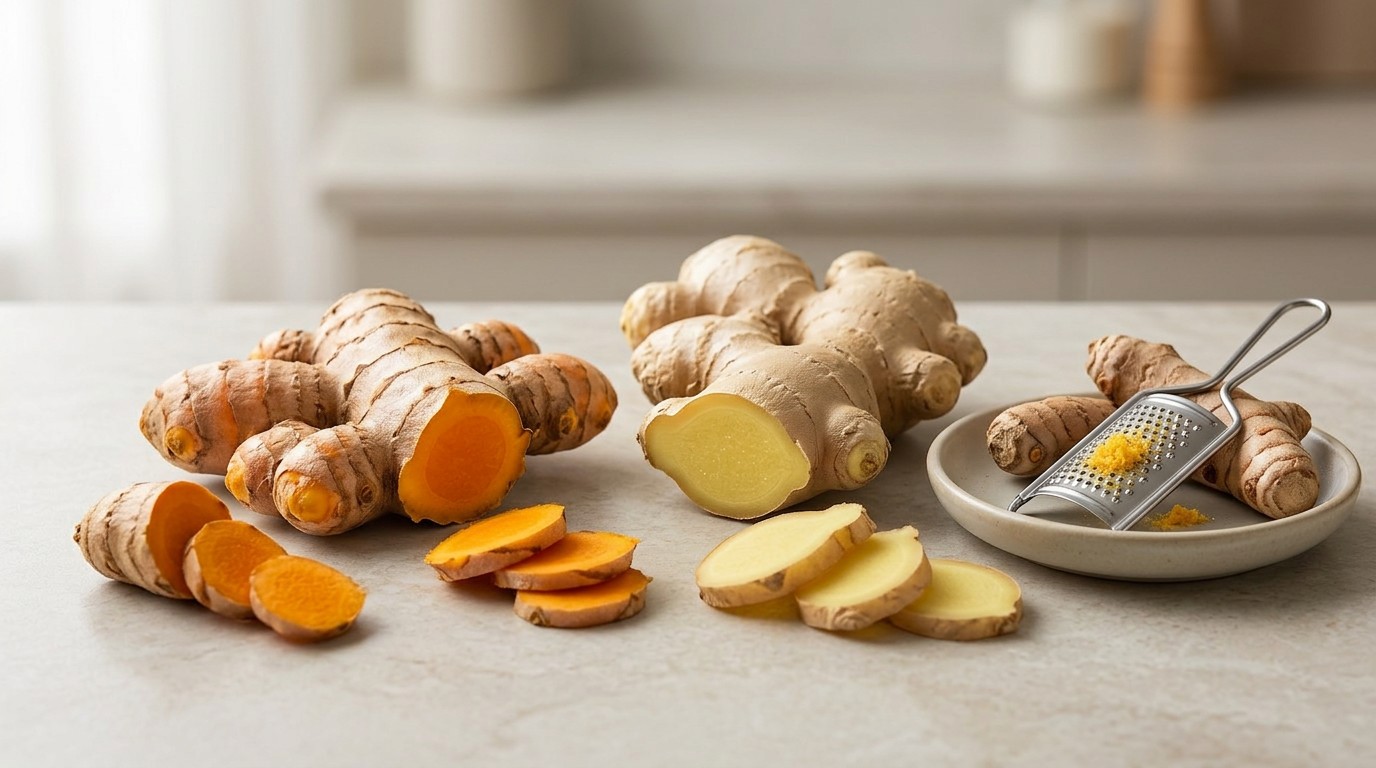
Turmeric and ginger are related plants but contain different naturally occurring compounds and have different areas of research.
At a glance: turmeric vs ginger
| Comparison | Turmeric | Ginger |
| Plant | Curcuma longa | Zingiber officinale |
| Main compounds | Curcuminoids, including curcumin | Gingerols and related compounds |
| Best known for | Research into inflammation and joint health | Digestive comfort and nausea |
| Traditional use | Cooking, traditional herbal medicine | Cooking, traditional herbal medicine |
| Supplement forms | Capsules, tablets, powders, extracts | Capsules, tablets, powders, extracts |
| Evidence | Some promising research, but results vary | Useful evidence for some types of nausea |
| Digestive effects | Can cause stomach upset in some people | Can cause heartburn or stomach discomfort |
| Buying consideration | Curcumin content and formulation | Ginger extract strength and standardisation |
| Better choice for | People primarily interested in turmeric/curcumin research | People primarily interested in ginger’s digestive applications |
| Can they be combined? | Sometimes, but consider total supplement intake | Sometimes, but check medicines and individual circumstances |
Turmeric vs Ginger Health Comparison
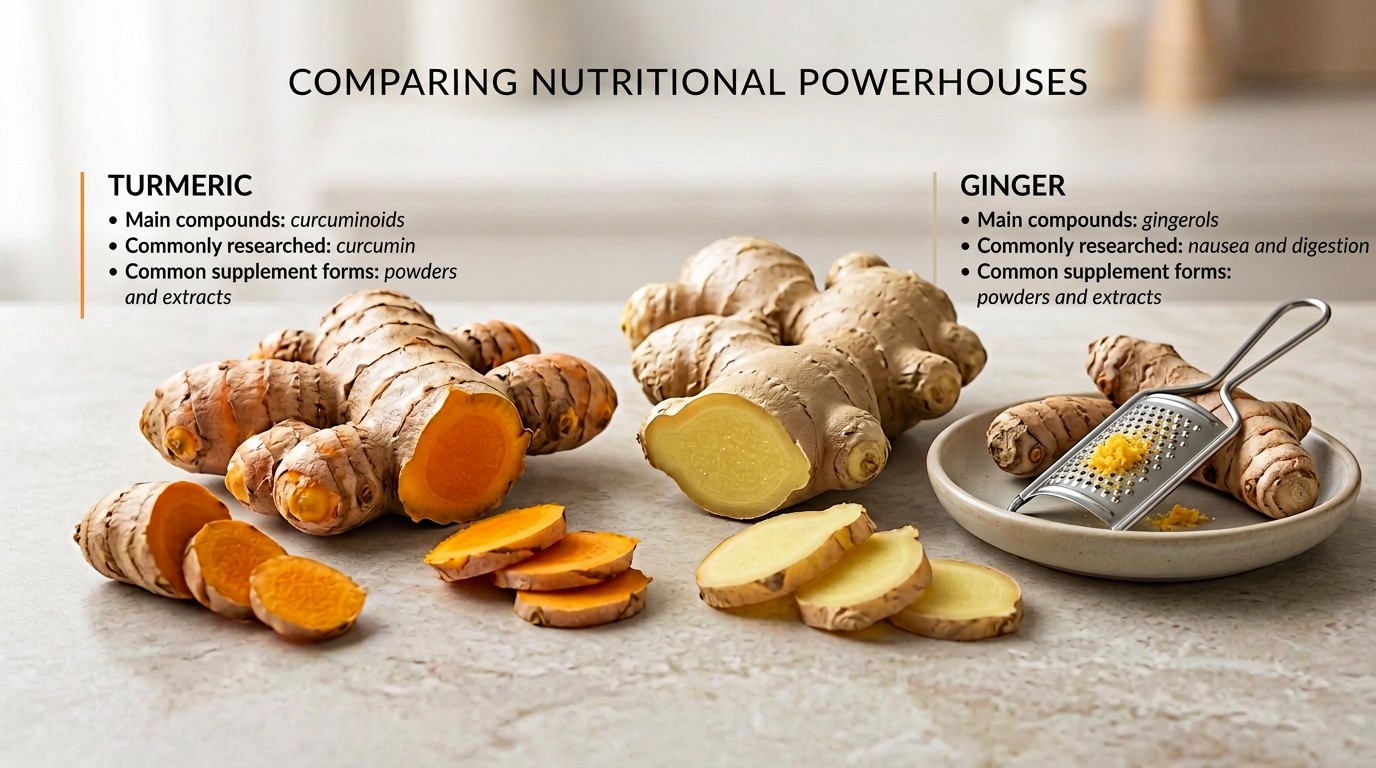
A quick comparison of turmeric and ginger, including their main compounds, common supplement forms and research areas.
Table of Contents
What is turmeric?
Turmeric is a bright yellow-orange spice obtained from the rhizome of Curcuma longa, a plant related to ginger. It is widely used in cooking and has also been used traditionally in various forms of herbal medicine.
The compound most commonly discussed in turmeric research is curcumin, one of the naturally occurring curcuminoids in turmeric.
Research into curcumin has investigated areas including inflammation, joint symptoms and other health conditions. However, promising laboratory findings do not automatically mean that a turmeric supplement will provide a clinically meaningful benefit. Evidence from human studies remains mixed for several uses.
One important consideration when buying a turmeric supplement is that ordinary turmeric powder and concentrated curcumin extracts are not necessarily equivalent products.
What is ginger?
Ginger comes from the rhizome of Zingiber officinale and is another widely used culinary spice. Fresh ginger, dried ginger and ginger extracts contain a variety of naturally occurring compounds, including gingerols and related substances.
Ginger has been studied particularly for nausea and vomiting, with evidence suggesting it may help with nausea associated with pregnancy. Research has also investigated ginger for menstrual cramps and some joint symptoms.
Ginger is therefore often a more obvious choice for someone specifically looking for a supplement related to digestive comfort or nausea rather than primarily looking for a curcumin product.
Turmeric and Ginger Root and Powder
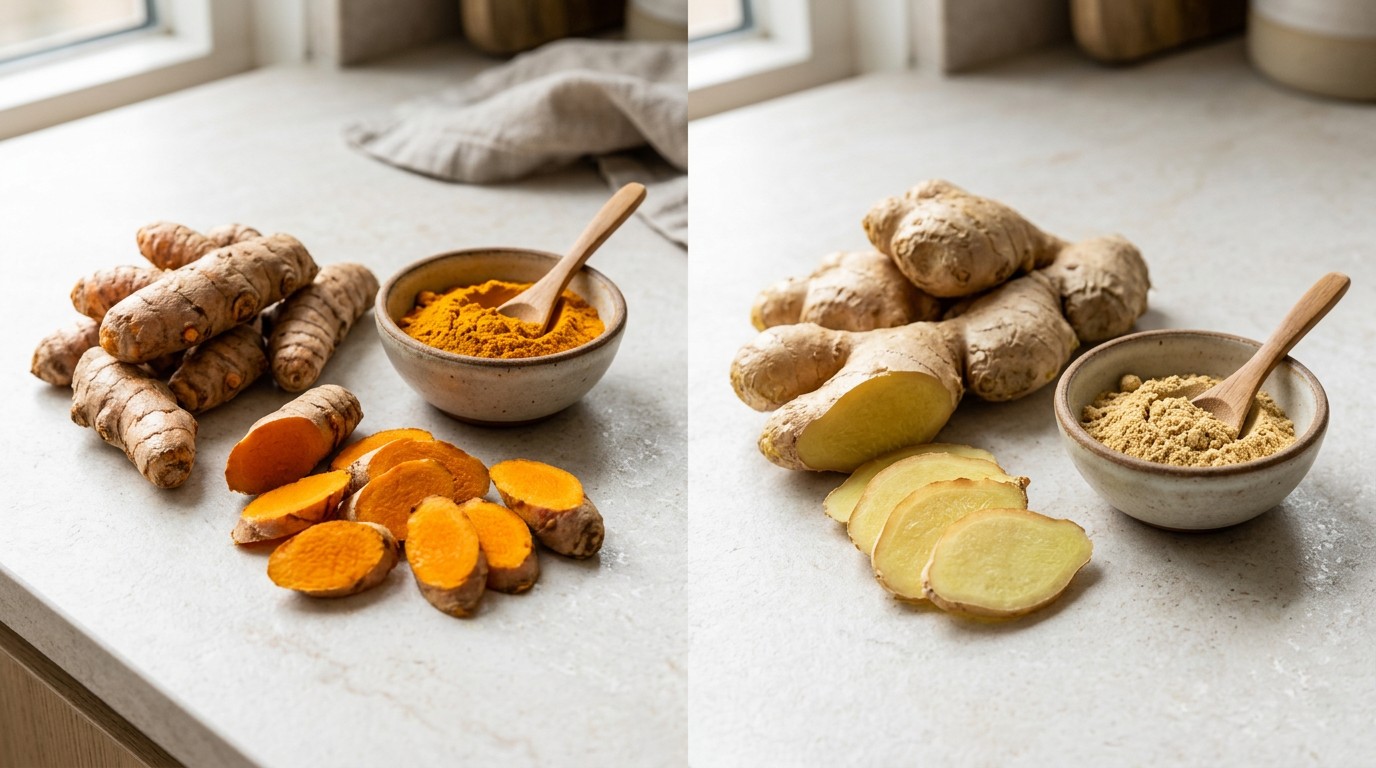
Turmeric and ginger are available as fresh roots, powders and concentrated supplements
Turmeric vs ginger: health benefits compared
There is no universal winner when comparing turmeric and ginger. The research is different for each plant, and the quality of evidence varies depending on the particular health outcome being studied.
Turmeric and inflammation
Curcumin has attracted considerable scientific interest because laboratory research suggests it can influence inflammatory pathways.
However, this should not be interpreted as proof that turmeric supplements treat inflammatory diseases. The evidence for using turmeric supplementation for inflammatory disorders remains insufficient for firm conclusions.
Ginger and digestion
Ginger has a stronger reputation for digestive uses. Research suggests ginger supplements may be helpful for some types of nausea, particularly nausea and vomiting associated with pregnancy.
Evidence for motion sickness is much less convincing, while research into other causes of nausea has produced mixed results.
Turmeric vs ginger for joint health
Both turmeric and ginger have been investigated for joint symptoms, including osteoarthritis.
Turmeric and curcumin have received substantial research attention, but evidence is still not strong enough to describe turmeric supplementation as a proven treatment for inflammatory or joint conditions.
Ginger has also been studied for knee osteoarthritis and other musculoskeletal symptoms. Some studies have reported potential benefits, but research quality has varied.
Bottom line: neither should be viewed as a replacement for proper medical assessment or treatment. If joint pain is persistent or worsening, speak to a healthcare professional.
Which is better: turmeric or ginger?
The answer depends on your reason for taking a supplement.
Choose turmeric if:
- You are specifically interested in curcumin research.
- You want a supplement centred around turmeric extract or curcuminoids.
- Joint and general inflammatory health are the areas you are researching.
- You prefer a product based around turmeric rather than ginger.
Choose ginger if:
- Digestive comfort is your main consideration.
- You are particularly interested in research surrounding nausea.
- You prefer ginger as a food and supplement ingredient.
- You are looking for a supplement with a different research profile from curcumin.
There is no evidence-based reason to assume that one is simply “healthier” than the other.
Turmeric vs ginger supplements: what should you buy?
The quality of the product can be just as important as the ingredient itself.
When comparing supplements, check:
1. The active ingredient
Look at whether the product contains turmeric powder, a turmeric extract, curcumin or a specified curcuminoid content. With ginger, check whether it contains powdered ginger or a concentrated extract.
2. The amount per serving
Compare the actual amount of the relevant ingredient rather than judging products by capsule size or marketing claims.
3. Clear labelling
A reputable product should clearly state its ingredients, serving size and other relevant information.
4. Unnecessary extras
Be cautious of products making a long list of impressive health claims. More ingredients do not automatically mean a better supplement.
5. Quality and testing
Choose products from established manufacturers that provide transparent information about manufacturing and quality control.
Remember that supplements available commercially can differ from products used in scientific studies, so a research result cannot automatically be applied to every product on a shop shelf.
Turmeric and Ginger Supplements
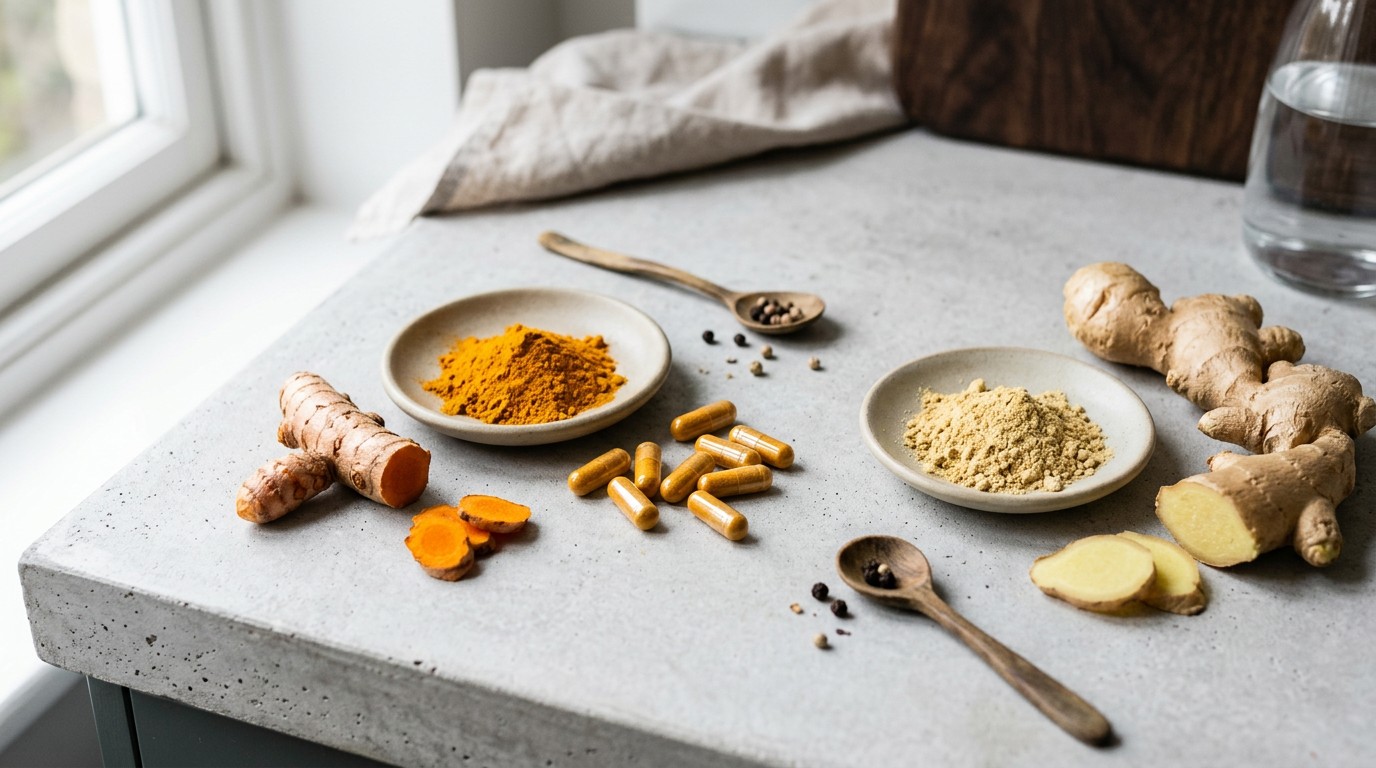
Turmeric and ginger supplements are available in different forms, strengths and formulations.
Why choose turmeric or ginger as a supplement?
For many people, the first choice should be food rather than supplements. Both turmeric and ginger can be incorporated into an ordinary diet, including meals, teas and other recipes.
A supplement may be worth considering if you specifically want a more consistent, convenient or concentrated amount of an ingredient.
Turmeric may suit you better if your interest is primarily in curcumin and the research surrounding joint or inflammatory health.
Ginger may suit you better if your main interest is digestive health or nausea, where ginger has a particularly established research history.
If you take prescription medicines, have a medical condition, are pregnant or breastfeeding, or are preparing for surgery, check with a healthcare professional before starting an herbal supplement.
Fresh Turmeric and Ginger

Both turmeric and ginger can be enjoyed as ingredients in food and drinks as well as being available as supplements.
Frequently asked questions
Is turmeric better than ginger?
Not necessarily. Turmeric and ginger contain different compounds and have different research profiles. Turmeric is particularly associated with curcumin research, while ginger has notable research around nausea and digestive symptoms.
Can you take turmeric and ginger together?
They are commonly consumed together as foods, but taking concentrated supplements together is different. Check the individual products and consider possible interactions with medicines before combining them.
Is ginger or turmeric better for inflammation?
Both have been studied in relation to inflammation and joint symptoms, but the evidence is not strong enough to say that either supplement is a proven treatment for inflammatory disease. Turmeric and curcumin have particularly extensive research interest.
Is ginger better than turmeric for digestion?
Ginger has the clearer research profile for certain digestive-related uses, particularly nausea. That does not mean ginger will work for every digestive problem, and persistent symptoms should be assessed medically.
What should I look for when buying turmeric or ginger supplements?
Look for clear ingredient labelling, an appropriate amount per serving, transparent manufacturing information and realistic health claims. For turmeric supplements, pay particular attention to whether the product contains turmeric powder or a specified curcumin/curcuminoid extract. For ginger, check the form and amount of ginger provided.
Final summary: turmeric vs ginger
Turmeric vs ginger is not really a question of which plant is universally better. They are different supplements with different active compounds and areas of research.
Turmeric is the more obvious choice if you are researching curcumin, turmeric extracts and joint or inflammatory health. Ginger may be the better fit if your main interest is nausea, digestion or ginger’s traditional uses.
If you are buying either a turmeric or ginger supplement, focus less on which ingredient has the biggest marketing claims and more on the specific ingredient, amount, product quality, evidence and your own circumstances.
For most people, the best supplement is not necessarily the one with the most impressive label. It is the one that matches a sensible goal and can be used appropriately and safely.
Related Articles
1. Herbs for Inflammation: Turmeric, Ginger, and More
Description: A useful side-by-side resource discussing turmeric and ginger as anti-inflammatory herbs, including what research says about their potential benefits and limitations.
Published by: Healthline
Read the article
2. 10 Foods That Help Ease Your Arthritis Pain
Description: Cleveland Clinic discusses both ginger and turmeric among foods with potential anti-inflammatory properties, making this particularly relevant for comparing their roles in joint and arthritis health.
Published by: Cleveland Clinic
Read the article
3. 6 Ginger Shot Benefits
Description: Explores ginger’s potential health benefits and specifically discusses adding turmeric to ginger shots because both ingredients have anti-inflammatory properties.
Published by: Cleveland Clinic
Read the article
4. Synergistic Anti-Inflammatory Activity of Ginger and Turmeric Extracts
Description: A peer-reviewed research article that directly investigates the anti-inflammatory effects of ginger and turmeric individually and in combination, making it especially relevant to a turmeric-versus-ginger comparison.
Published by: PubMed Central / scientific research literature
How to Make Ginger and Turmeric Shots
Disclaimer
This article is for general information only and is not medical advice. Turmeric, curcumin and ginger supplements are not intended to diagnose, treat or cure disease. Evidence for supplements varies by product, dose and health condition. If you take medication, have an existing medical condition, are pregnant or breastfeeding, are due to have surgery, or are unsure whether a supplement is suitable for you, speak to a qualified healthcare professional before using it.
Author
Written by J. Henderson
Health & Wellness Research Writer
J. Henderson writes evidence-based articles on nutrition, botanical supplements and everyday wellbeing. His work focuses on translating scientific research into clear, practical guidance that helps readers make informed decisions about natural health products.