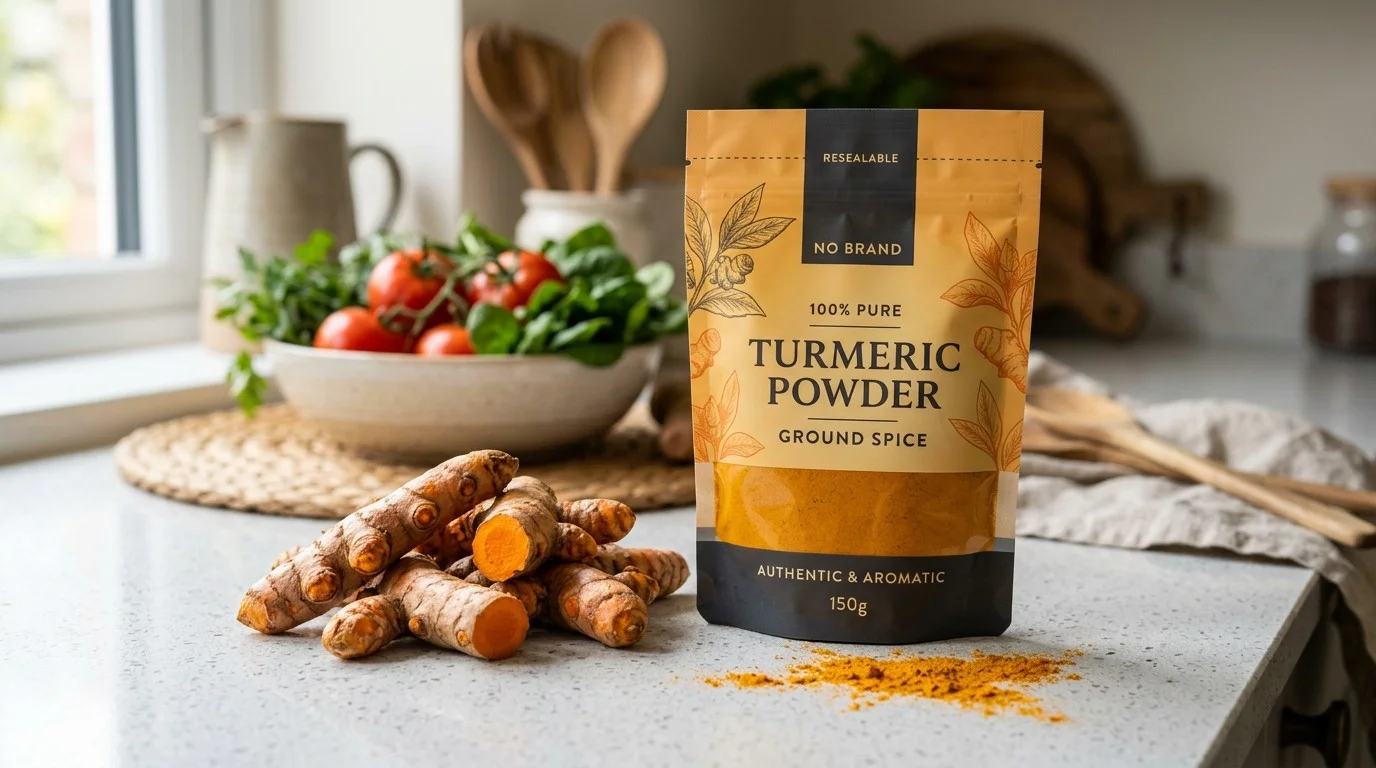
Turmeric vs Glucosamine
Turmeric and glucosamine are both commonly used as supplements for joint health, but they are very different substances with different proposed mechanisms of action. Turmeric comes from the Curcuma longa plant and contains curcuminoids, including curcumin. Glucosamine is a naturally occurring compound involved in the formation of cartilage and other connective tissues.
Both have been researched for osteoarthritis, particularly knee osteoarthritis, but the evidence is not equally clear and neither should be considered a proven cure.
At a glance
- Turmeric is a plant-derived spice containing curcumin and other compounds with potential anti-inflammatory activity.
- Glucosamine is a compound naturally found in the body and is involved in the structure of cartilage.
- Turmeric and curcumin have shown promising results in some studies of knee osteoarthritis pain and function, although the best dose and formulation remain uncertain.
- Glucosamine has produced inconsistent clinical results, with several major guidelines finding insufficient evidence of meaningful benefit for osteoarthritis.
- Neither supplement should replace established treatments such as appropriate exercise, weight management where relevant, or medical care.
Turmeric vs Glucosamine: quick comparison
| Feature | Turmeric | Glucosamine |
| What is it? | A plant/spice containing curcuminoids | A naturally occurring compound found in the body |
| Main interest | Inflammation and pain | Joint and cartilage health |
| Most researched condition | Knee osteoarthritis | Knee osteoarthritis |
| Evidence for osteoarthritis | Promising but still developing | Mixed and often unfavourable |
| Typical form | Turmeric extract or curcumin supplement | Glucosamine sulphate or glucosamine hydrochloride |
| Main limitation | Products and formulations vary considerably | Research results vary by formulation and study |
| Key safety consideration | Digestive side effects and possible interactions | Possible interaction with warfarin; may affect blood glucose in some people |
| Is it a cure? | No | No |
Turmeric and Glucosamine have been studied for Joint Health
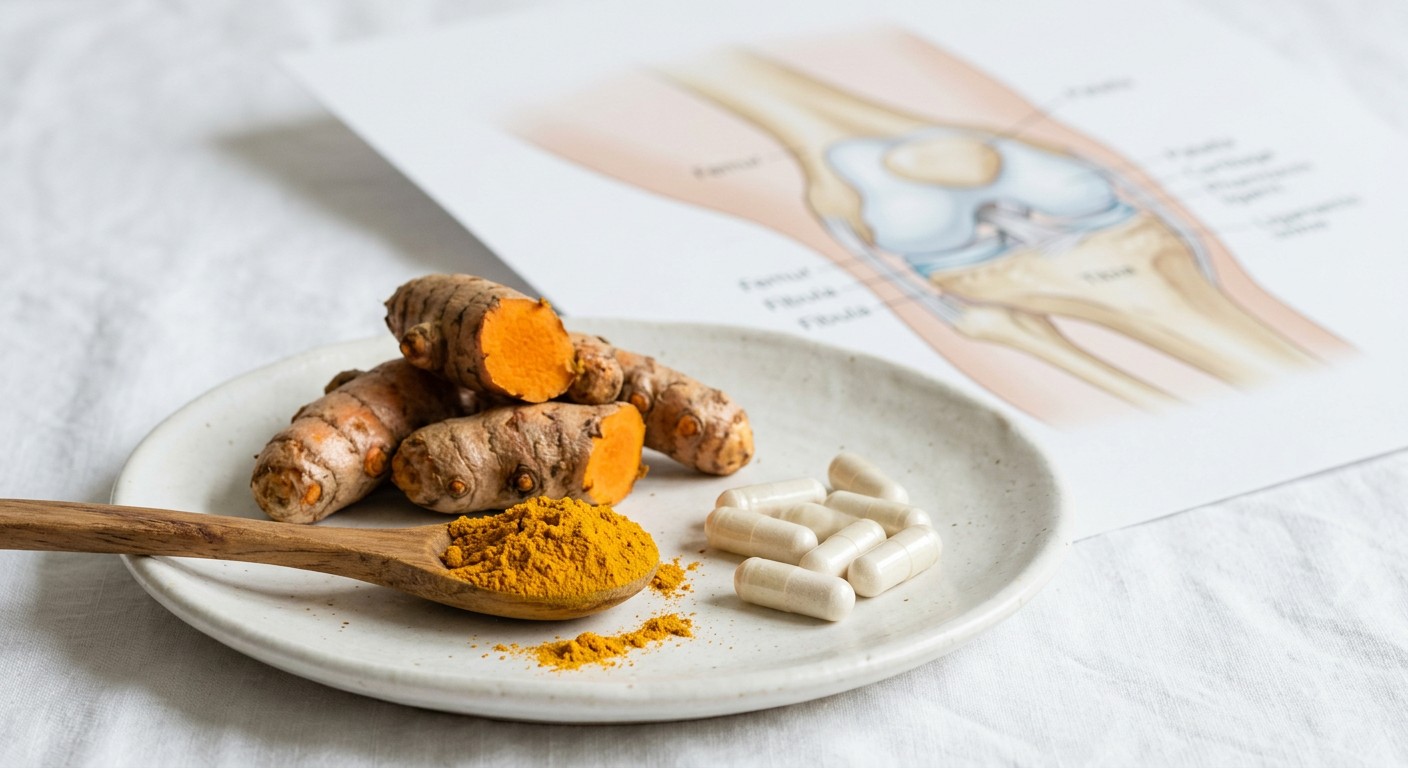
Turmeric and glucosamine are different supplements commonly compared for joint health.
Related Guides
Explore related turmeric guides:
- Turmeric for Joint Pain and Arthritis — understanding turmeric and joint discomfort.
- Is Turmeric Good for Arthritis? — what the evidence says about arthritis.
- Turmeric vs Boswellia — comparing two ingredients discussed for joint health.
- Turmeric Benefits — the wider picture of potential turmeric benefits.
- Turmeric Capsules — understanding turmeric capsule formulations.
Table of Contents
- What is turmeric?
- What is glucosamine?
- Turmeric vs glucosamine: the main differences
- Detailed Turmeric vs Glucosamine comparison
- What conditions might they help?
- Why choose turmeric or glucosamine?
- Advantages and disadvantages
- Frequently asked questions
- Summary
- Further Reading, Information and Related Articles
- Disclaimer
What is turmeric?
Turmeric is a bright yellow-orange spice obtained from the rhizome of Curcuma longa. Its best-known active compounds are curcuminoids, particularly curcumin.
Curcumin has attracted scientific interest because laboratory research suggests anti-inflammatory and antioxidant activity. Clinical research has particularly investigated turmeric and curcumin supplements for musculoskeletal pain and knee osteoarthritis.
A 2021 systematic review of 10 studies involving 1,287 participants found that turmeric may improve knee osteoarthritis pain and function compared with placebo. However, researchers noted uncertainty about the optimum dose, frequency and formulation.
More recent research continues to investigate different turmeric products, suggesting that the formulation used may matter.
What is glucosamine?
Glucosamine is a naturally occurring compound and a building block for molecules called glycosaminoglycans, which form part of cartilage. It is commonly sold as a dietary supplement, either alone or alongside chondroitin.
Glucosamine has been extensively studied for osteoarthritis, particularly osteoarthritis of the knee. However, the findings have been inconsistent. The National Center for Complementary and Integrative Health notes that it remains uncertain whether glucosamine provides a meaningful improvement in osteoarthritis symptoms or joint structure.
The type of glucosamine may also be important. Research has examined products including glucosamine sulphate and glucosamine hydrochloride, and results cannot necessarily be assumed to apply equally to every product.

People often do research into turmeric or glucosamine for information on joint health
Turmeric vs glucosamine: the main differences
The biggest difference is what each supplement is intended to provide.
Turmeric is primarily researched for its potential effects on inflammation and pain. Curcumin is thought to influence several biological pathways involved in inflammation, although laboratory activity does not automatically mean that a supplement will produce a clinically important effect.
Glucosamine is associated more directly with cartilage biology. Because it is a component involved in cartilage-related structures, researchers have investigated whether supplementation might help preserve joint structure or reduce osteoarthritis symptoms. Evidence for these effects remains uncertain.
Another important distinction is the strength of current clinical guidance. NICE advises against offering glucosamine for osteoarthritis because there is no strong evidence of benefit.
Turmeric is not established as a standard treatment for osteoarthritis either. Current evidence is promising in some areas but not sufficiently consistent to regard it as a replacement for conventional treatment.
Detailed Turmeric vs Glucosamine comparison
The table below gives a more detailed comparison of turmeric and glucosamine, including their source, main uses, evidence, safety and practical differences.
| Comparison | Turmeric | Glucosamine |
| What is it? | A plant and spice | A naturally occurring compound |
| Main active component | Curcuminoids, including curcumin | Glucosamine |
| Natural source | Curcuma longa root | Found naturally in the body and cartilage-related tissues |
| Main reason people take it | Joint comfort and general inflammation support | Joint and cartilage support |
| Most researched joint condition | Knee osteoarthritis | Knee osteoarthritis |
| Other conditions studied | Musculoskeletal pain and some inflammatory conditions | Hip, knee and hand osteoarthritis |
| How might it work? | Curcumin may influence inflammatory pathways | Glucosamine is involved in cartilage-related structures |
| Evidence for knee pain | Some promising evidence | Mixed evidence |
| Evidence for joint function | Some studies suggest improvement | Results are inconsistent |
| Evidence for rebuilding cartilage | Not established | Not established |
| Evidence for slowing osteoarthritis | Not established | Not established |
| Recommended by NICE for osteoarthritis? | Not recommended as a standard treatment | No. NICE advises against offering glucosamine |
| Main potential advantage | May help some people with joint pain | Has a biological link to cartilage |
| Main limitation | Products and curcumin formulations vary | Clinical benefits remain uncertain |
| Common supplement forms | Turmeric powder, turmeric extract and curcumin | Glucosamine sulphate and glucosamine hydrochloride |
| Absorption considerations | Curcumin is poorly absorbed on its own | Absorption and formulation vary |
| Digestive side effects | Can occur, particularly at higher doses | Can occur |
| Medicine interactions | Possible, depending on the product and medicines taken | Can interact with some medicines, including warfarin |
| Suitable for everyone? | No | No |
| Can it replace medical treatment? | No | No |
| Is it a cure for osteoarthritis? | No | No |
| Overall evidence | Promising but still developing | Inconsistent |
| Best described as | A plant-based supplement being researched for symptom relief | A joint supplement with uncertain clinical benefit |
Turmeric and Glucosamine
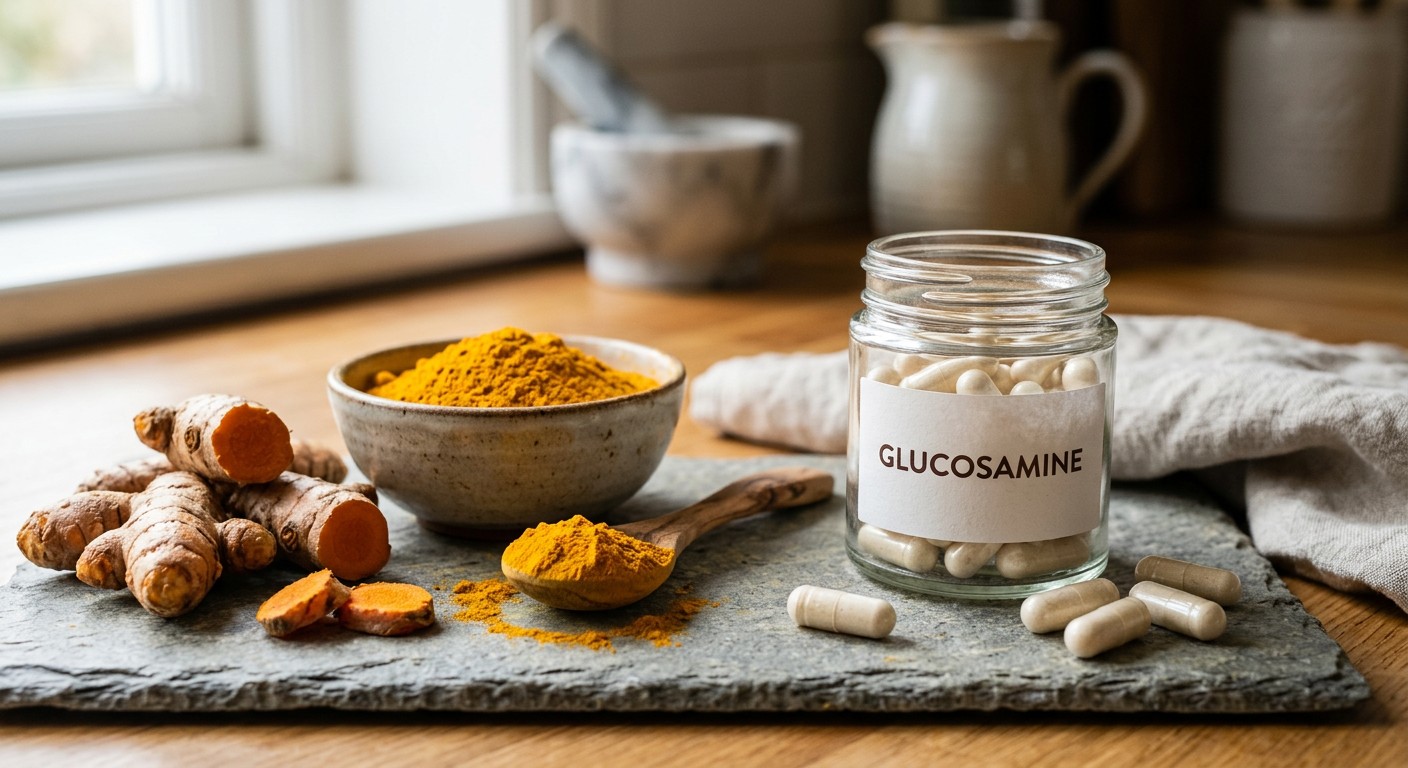
Turmeric and Glucosamine are available in different forms
What health conditions might they help with?
1. Turmeric
Turmeric and curcumin have been studied for several inflammatory and painful conditions, including:
- Knee osteoarthritis
- Other forms of musculoskeletal pain
- Exercise-related muscle soreness
- Some inflammatory conditions
The evidence is strongest and most relevant to this comparison for knee osteoarthritis, where some clinical trials have reported improvements in pain and physical function. However, further high-quality research is needed and always consult a health professional or GP.
2. Glucosamine
Glucosamine has primarily been investigated for:
- Knee osteoarthritis
- Hip osteoarthritis
- Hand osteoarthritis
- Some other joint-related conditions
Evidence outside knee osteoarthritis is relatively limited. For hip osteoarthritis, for example, a high-quality study found glucosamine sulphate was no better than placebo for pain, function or joint structure.
Why might you choose turmeric or glucosamine?
Someone considering turmeric may be particularly interested in a plant-derived supplement with research suggesting potential benefits for inflammatory pain and knee osteoarthritis. Its main potential advantage is the emerging evidence for symptom relief, although results vary between products.
Someone considering glucosamine may be attracted to its biological relationship with cartilage and its long history of research in joint health. However, the lack of consistent clinical benefit is an important consideration, and UK NICE guidance does not recommend offering glucosamine for osteoarthritis.
Neither choice is automatically better for everyone. The decision should take account of the person’s condition, medicines, other health factors and the quality of the evidence.
Advantages and disadvantages
1. Turmeric
Potential advantages
- Plant-derived and widely available.
- Curcumin has been extensively studied for inflammatory pathways.
- Some clinical research suggests potential benefits for knee osteoarthritis symptoms.
Potential disadvantages
- Different supplements can contain substantially different formulations and amounts of curcuminoids.
- High doses or prolonged use may cause indigestion, nausea or diarrhoea.
2. Glucosamine
Potential advantages
- Naturally occurring compound associated with cartilage structure.
- Has been studied extensively for osteoarthritis, particularly knee osteoarthritis.
- Some studies have reported benefits, although results are inconsistent.
Potential disadvantages
- Major clinical guidelines have found insufficient evidence of meaningful benefit, with NICE specifically advising against offering it for osteoarthritis.
- It may interact with warfarin, and glucosamine may increase blood glucose in some people.
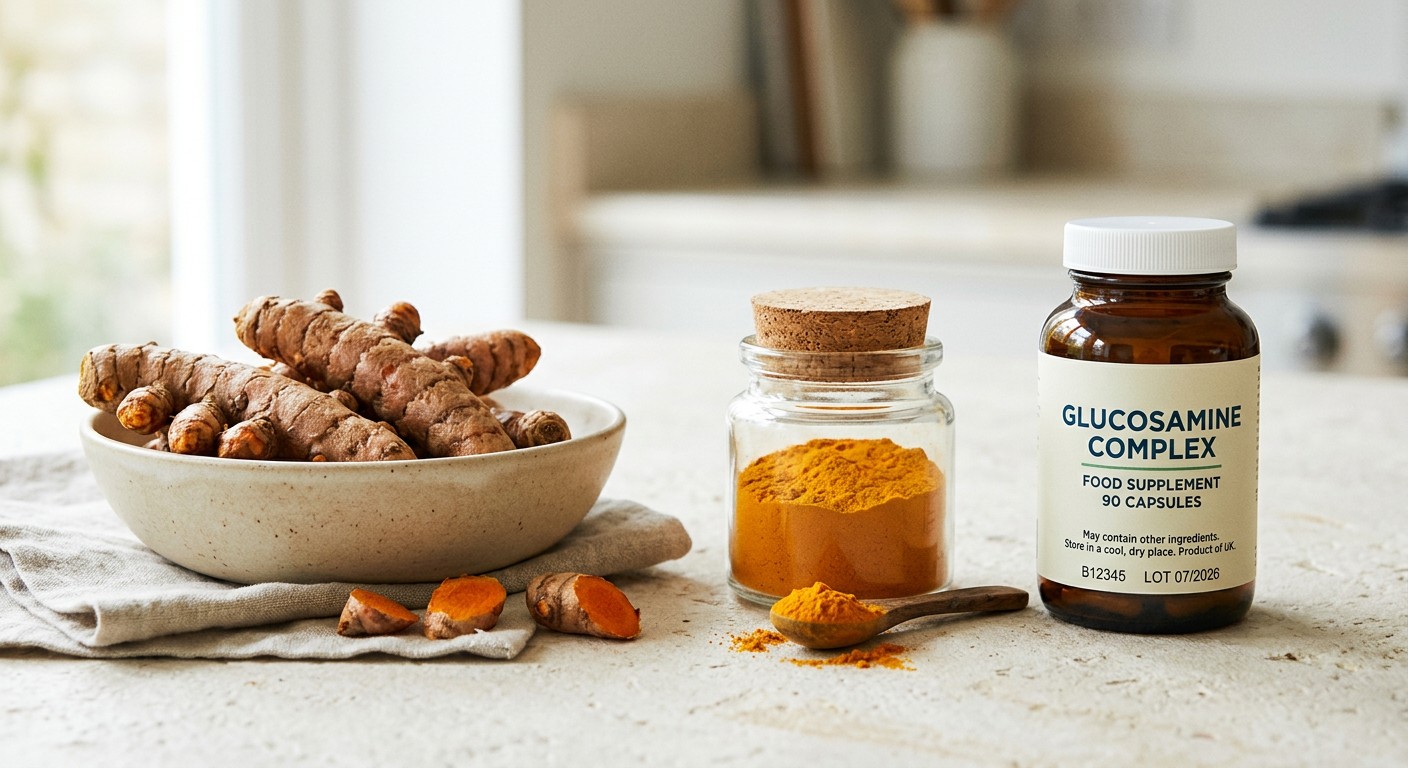
Turmeric root and powder alongside glucosamine capsules.
Frequently asked questions
Is turmeric better than glucosamine for joint pain?
There is no universal answer. Current evidence gives turmeric and curcumin some promising results for knee osteoarthritis pain and function, whereas evidence for glucosamine is more consistently uncertain or negative. However, turmeric is not proven to be superior in every person or for every type of joint pain.
Can you take turmeric and glucosamine together?
They are sometimes used together, but combining supplements is not automatically beneficial. Anyone taking prescription medicines, particularly medicines affecting blood clotting, should check with a doctor or pharmacist before starting supplements.
Does glucosamine rebuild cartilage?
There is not enough reliable evidence to say that glucosamine rebuilds damaged cartilage. Research examining joint structure has produced inconsistent findings, and evidence for glucosamine alone producing meaningful structural improvement is limited.
Does turmeric help osteoarthritis?
Some studies suggest turmeric or curcumin may reduce pain and improve function in people with knee osteoarthritis. However, studies use different preparations and doses, so the evidence does not establish one universally effective turmeric product or dose.
Which is better for osteoarthritis: turmeric or glucosamine?
Based on the current evidence, turmeric/curcumin has a more promising research signal for short-term knee osteoarthritis symptoms, while glucosamine has conflicting evidence and is not recommended for osteoarthritis by NICE. Neither should be considered a replacement for evidence-based osteoarthritis management.
Final summary
Turmeric and glucosamine are often compared because both are marketed for joint health, but they are fundamentally different supplements. Turmeric contains curcuminoids that have been investigated for anti-inflammatory and pain-related effects, while glucosamine is a naturally occurring compound associated with cartilage.
For knee osteoarthritis, turmeric and curcumin currently have some encouraging clinical evidence, although more research is needed to establish the most effective formulations. Glucosamine has been studied extensively, but results remain inconsistent and UK NICE guidance does not recommend it for osteoarthritis.
The most sensible choice depends on the individual rather than simply choosing the supplement with the strongest marketing claims. Evidence-based exercise, weight management where appropriate and professionally guided treatment remain important parts of managing osteoarthritis.
Always seek professional advice before starting, stopping or changing any medicine or supplement.
Further Reading, Information and Related Articles
1. Should You Take Glucosamine for Arthritis
2. Turmeric: Usefulness and Safety
Brief description: A comprehensive evidence-based overview from the U.S. National Center for Complementary and Integrative Health (NCCIH), part of the National Institutes of Health. It covers turmeric and curcumin, their traditional uses, research findings, and safety considerations. NCCIH notes that turmeric is widely studied for conditions including osteoarthritis, while also highlighting the limitations of the clinical evidence.
Published by: National Center for Complementary and Integrative Health (NCCIH), National Institutes of Health (NIH)
Direct article: Turmeric: Usefulness and Safety
3. Glucosamine and Chondroitin for Osteoarthritis: What You Need to Know
Brief description: An NIH/NCCIH resource specifically examining glucosamine and chondroitin in osteoarthritis. It discusses research into pain, joint structure and joint-space narrowing, noting that findings for glucosamine have been inconsistent and that its effect on joint structure remains uncertain.
Published by: National Center for Complementary and Integrative Health (NCCIH), National Institutes of Health (NIH)
Direct article: Glucosamine and Chondroitin for Osteoarthritis
4. Osteoarthritis: In Depth
Brief description: A broader NIH evidence review of osteoarthritis and complementary approaches to joint health. It provides particularly useful context for glucosamine and chondroitin, explaining that research has produced conflicting results regarding pain relief and joint structure.
Published by: National Center for Complementary and Integrative Health (NCCIH), National Institutes of Health (NIH)
Direct article: Osteoarthritis: In Depth
5. Therapeutic effects of turmeric or curcumin extract on pain and function for individuals with knee osteoarthritis: a systematic review
Brief description: A peer-reviewed systematic review examining 10 studies involving people with knee osteoarthritis. The review found improvements in pain and physical function with turmeric/curcumin, while noting that questions remain about optimal dosage, frequency and formulation.
Published by: BMJ Open Sport & Exercise Medicine
Direct article: Full article on PubMed
6. Effect of turmeric products on knee osteoarthritis: a systematic review and network meta-analysis
Brief description: A recent 2025 systematic review and network meta-analysis of 17 randomized controlled trials. It evaluated different turmeric preparations for knee osteoarthritis and reported reductions in osteoarthritis pain, but emphasised that the certainty of evidence was low to very low for many comparisons.
Published by: BMC Complementary Medicine and Therapies; indexed by PubMed and available through PubMed Central
Direct article: Article on PubMed
7. Nutritional Approaches for Musculoskeletal Pain and Inflammation
Brief description: An NIH/NCCIH clinical evidence summary covering nutritional supplements investigated for musculoskeletal pain and inflammation, including osteoarthritis. Its turmeric section explains the proposed anti-inflammatory properties of curcumin while cautioning that evidence is still insufficient to firmly support turmeric supplementation for inflammatory disorders.
Published by: National Center for Complementary and Integrative Health (NCCIH), National Institutes of Health (NIH)
Direct article: Nutritional Approaches for Musculoskeletal Pain and Inflammation
Medical disclaimer
This article is for general information only and is not medical advice or a substitute for professional healthcare advice. Evidence about turmeric, curcumin and glucosamine can be mixed and may change as new research becomes available.
Do not use this information to diagnose or treat a medical condition or replace prescribed treatment. Speak to a GP, pharmacist or qualified healthcare professional before taking supplements, particularly if you take medication, have a medical condition, are pregnant or breastfeeding, or are preparing for surgery.
Author
Written by J. Henderson
Health & Wellness Research Writer
J. Henderson writes evidence-based articles on nutrition, botanical supplements and everyday wellbeing. His work focuses on translating scientific research into clear, practical guidance that helps readers make informed decisions about natural health products.