Turmeric (Curcumin) Supplements: An Evidence-Based Guide
Quick Answer
Curcumin supplements provide concentrated amounts or specially formulated forms of curcumin, one of the main naturally occurring curcuminoids found in turmeric.
People commonly consider curcumin and turmeric supplements because of interest in joint health and inflammatory processes. Research into curcumin has produced some encouraging findings, particularly for symptoms associated with knee osteoarthritis, although the evidence is not conclusive and different formulations can produce different results.
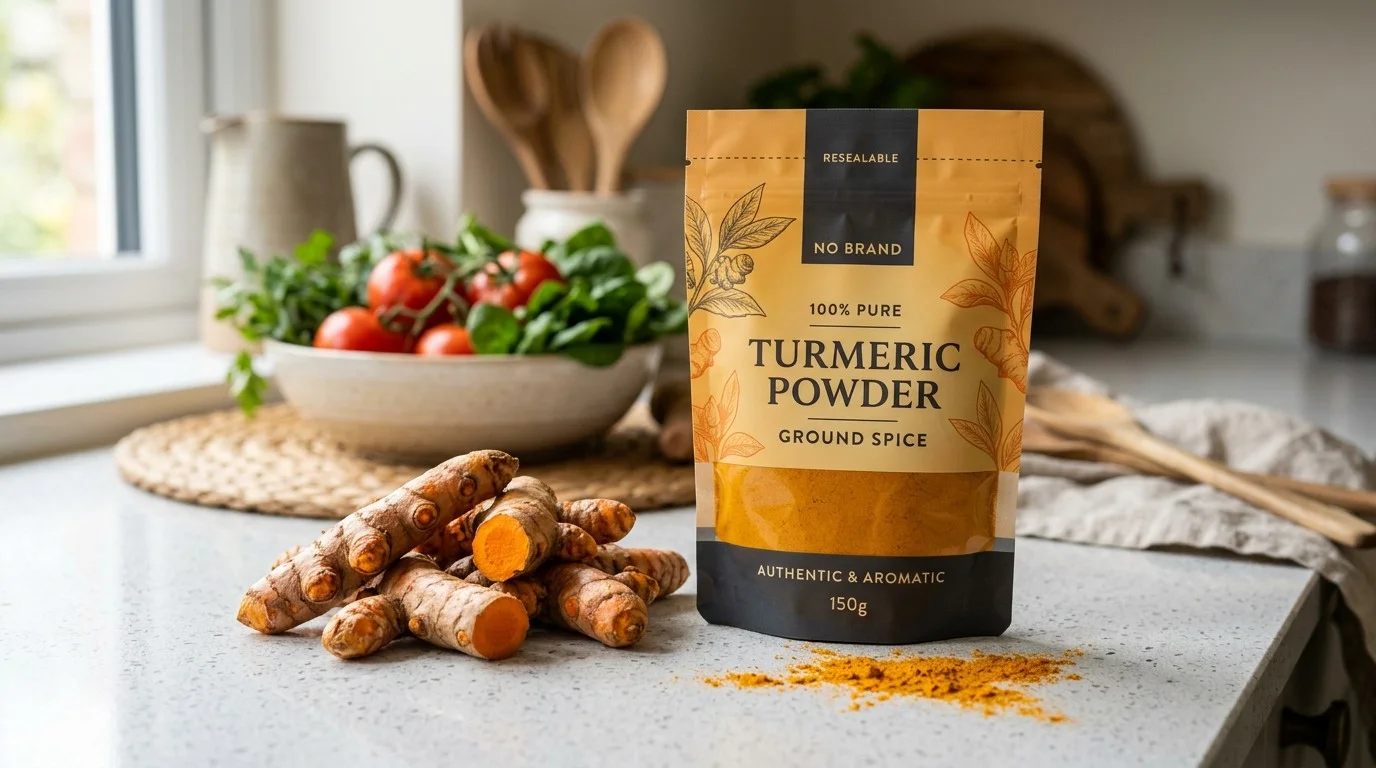
Turmeric and curcumin are not the same thing. Turmeric contains curcumin alongside many other naturally occurring compounds, while curcumin supplements are generally designed to provide more concentrated amounts of curcuminoids.
Absorption also matters. Curcumin is naturally poorly absorbed, which is why some supplements combine it with black pepper extract or use other formulations designed to improve bioavailability.
Key Points
- Curcumin is naturally found in turmeric.
- They are available as capsules, gummies, softgels, tablets and powders.
- Turmeric and curcumin are not the same thing.
- Joint health is one of the most researched potential uses.
- Different curcumin supplements can vary considerably.
- Curcumin is naturally poorly absorbed.
- Black pepper is sometimes added to improve absorption.
- The largest milligram number does not necessarily mean the best supplement.
Related Guides
Explore more about turmeric and your options:
- What Is Curcumin? — understanding the compound found in turmeric.
- Turmeric vs Curcumin — how turmeric differs from curcumin.
- Turmeric Extract — how extracts differ from culinary turmeric.
- Turmeric Capsules — understanding turmeric capsule formulations.
- How to Choose Turmeric Supplements — what to consider when comparing products.
Turmeric and Curcumin Supplements

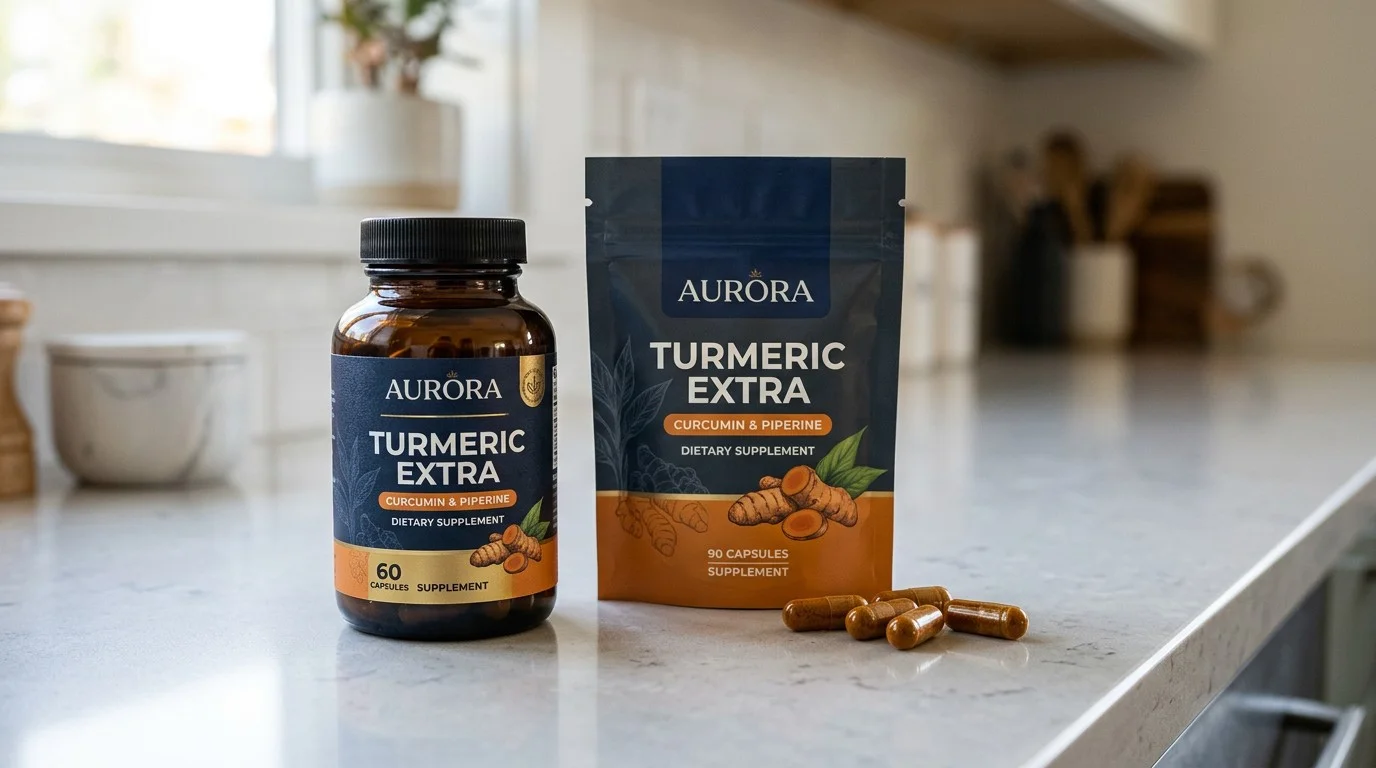
Turmeric and curcumin supplements can contain different ingredients, concentrations and formulations.
About Turmeric (Curcumin) Supplements
Who Might Consider a Curcumin Supplement?
People consider curcumin supplements for different reasons.
Joint health is one of the main areas of interest, particularly among people looking for nutritional approaches to joint discomfort or stiffness. Curcumin has been investigated in clinical research involving osteoarthritis, although results depend on the formulation and further high-quality research is still needed.
Other people may be interested in curcumin because of research into inflammatory and oxidative processes or simply because they want a more concentrated alternative to ordinary turmeric powder.
A curcumin supplement should not be viewed as a replacement for medical treatment for arthritis, persistent pain or another health condition.
What Are Curcumin Supplements?
Curcumin is one of a group of naturally occurring compounds in turmeric known as curcuminoids. Curcumin supplements come in many different types, such as curcumin capsules, tablets, softgels, gummies and powders.
Curcumin supplements typically contain turmeric extracts providing concentrated curcuminoids rather than simply ordinary ground turmeric powder.
However, products differ substantially. Some contain curcumin or standardised curcuminoid extracts, while others combine turmeric powder and extracts or use specialised formulations intended to improve absorption.
This makes the ingredient information more useful than the product name alone.
Where Can You Buy Curcumin Supplements?
Curcumin supplements are widely available from online retailers, health-food retailers and pharmacies.
They may be marketed as:
- Curcumin supplements
- Turmeric curcumin supplements
- Turmeric extract
- Curcumin capsules
- Curcumin tablets
- Curcumin Softgels and Gummies
- Turmeric and black pepper supplements
- They are also taken as mixers or sachets in drinks like Turmeric & Ginger shots.
Because the terminology varies, check what the product actually contains rather than relying only on the words on the front of the packaging.
When Should You Take Curcumin Supplements?
There is no single best time of day that applies to every curcumin supplement.
Different formulations have different serving instructions, so follow the manufacturer’s directions.
Some products are intended to be taken with food. If you take medicines or have a relevant health condition, check with a pharmacist, doctor or other appropriately qualified healthcare professional before using a concentrated supplement.
Why Do People Take Curcumin Supplements?
People often become interested in curcumin because they have heard about the potential benefits of turmeric but then discover that many scientific studies actually investigate curcumin or concentrated turmeric extracts rather than ordinary turmeric powder.
Joint health is one of the most studied areas. Research has investigated curcumin preparations for symptoms such as pain and stiffness associated with knee osteoarthritis.
Curcumin has also been extensively investigated for its effects on biological processes associated with inflammation and oxidative stress.
However, promising research does not mean that every curcumin supplement provides the same benefits. Formulation, amount, absorption and the health outcome being studied all matter.
How Can You Compare Curcumin Supplements?
Start by checking what form of curcumin the supplement contains.
Look for:
- Curcumin or curcuminoid content
- Type of turmeric extract
- Amount per serving
- Whether the extract is standardised
- Ingredients intended to improve absorption
- Black pepper or piperine where included
- Additional ingredients
- Serving instructions
- Safety information
- Manufacturing and quality information
Do not assume the supplement displaying the biggest milligram number is automatically the strongest or best choice.
If you are comparing different products, our guide to how to choose a turmeric supplement explains what to look for on supplement labels and how to compare the different options.
Turmeric Powder and Curcumin Supplements
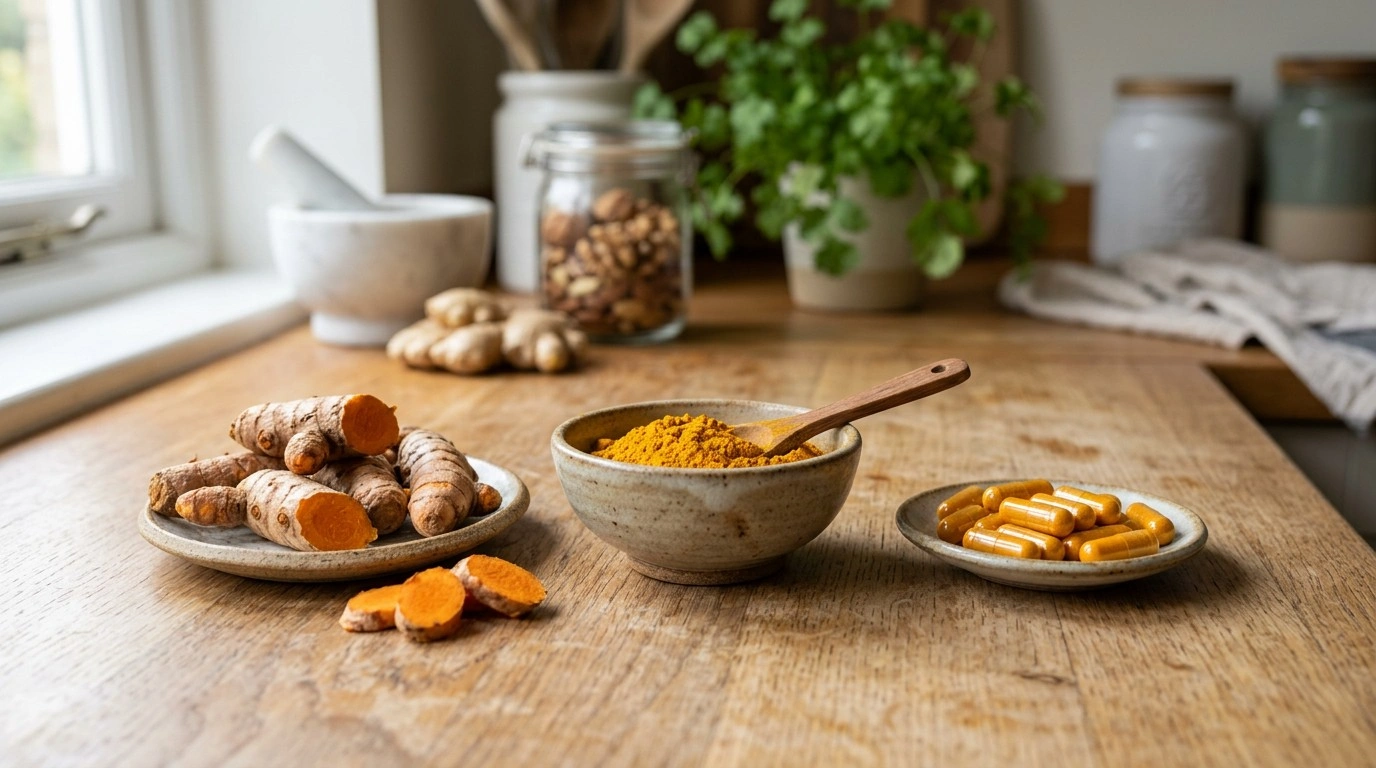
Curcumin occurs naturally in turmeric, while curcumin supplements may provide concentrated or specially formulated curcuminoids.
Table of Contents
- Is Curcumin the Same as Turmeric?
- What Are the Potential Benefits of Curcumin Supplements?
- Are Curcumin Supplements Good for Joint Health?
- What Does Curcumin Do in the Body?
- Do Curcumin Supplements Work?
- Why Is Curcumin Absorption Important?
- Curcumin and Black Pepper
- What Is the Best Form of Curcumin to Take?
- Curcumin vs Turmeric Supplements
- How Should You Choose a Curcumin Supplement?
- How Do You Take Curcumin Supplements?
- Can You Take Curcumin Every Day?
- Frequently Asked Questions
- What Are the Side Effects of Curcumin Supplements?
- Can Curcumin Supplements Interact with Medicines?
- Who Should Seek Medical Advice Before Taking Curcumin?
- Summary
- Sources and Further Information
Is Curcumin the Same as Turmeric?
No. Turmeric and curcumin are closely related, but they are not the same thing.
Turmeric is the rhizome of the Curcuma longa plant. It contains numerous naturally occurring compounds, including a group called curcuminoids.
Curcumin is one of those curcuminoids and is responsible for much of turmeric’s characteristic yellow colour.
This distinction becomes particularly important with supplements.
A turmeric powder supplement may contain ground turmeric rhizome, whereas a curcumin supplement may contain a concentrated turmeric extract providing substantially more curcuminoids.
That is why comparing two products simply by looking at the total number of milligrams can be misleading.
What Are the Potential Benefits of Curcumin Supplements?
Curcumin has attracted considerable scientific interest because of its potential biological effects.
Research has investigated curcumin in relation to:
- Joint health and osteoarthritis
- Inflammatory processes
- Oxidative stress
- Exercise-related muscle soreness
- Metabolic health
- Several other health conditions
However, the strength of evidence is not equal across these areas.
Joint health, particularly knee osteoarthritis, is one of the better researched applications. Even here, differences between studies, products and formulations mean further high-quality research is needed.
Research into a particular curcumin formulation also cannot automatically prove that every commercially available curcumin supplement will produce the same effect.
Curcumin Supplements and Joint Health

Joint health and osteoarthritis are among the most researched areas involving turmeric and curcumin supplements.
Are Curcumin Supplements Good for Joint Health?
Joint health is one of the main reasons people become interested in turmeric and curcumin supplements.
Several clinical trials and systematic reviews have investigated curcumin and turmeric preparations for knee osteoarthritis. Some have reported improvements in measures including pain, stiffness and physical function.
However, the research includes different formulations, amounts and study designs.
The most useful conclusion is therefore not that curcumin has been proven to treat arthritis, but that joint health is a promising and actively researched area where some clinical evidence exists.
Anyone experiencing persistent or severe joint pain should seek appropriate medical assessment rather than relying on a supplement.
What Does Curcumin Do in the Body?
Curcumin has been widely studied for its interactions with biological pathways associated with inflammation and oxidative stress.
Laboratory research has identified numerous possible mechanisms, but demonstrating a biological mechanism is not the same as proving that taking a curcumin supplement will produce a particular health benefit in people.
Human clinical studies are therefore more useful when considering whether a supplement might have meaningful effects.
Another important consideration is that conventional curcumin has relatively poor bioavailability, meaning only a limited amount may reach the bloodstream after being consumed.
This has led to considerable research into different ways of improving curcumin absorption.
Do Curcumin Supplements Work?
There isn’t a simple yes-or-no answer because curcumin supplements are not all the same.
Some clinical studies have reported promising results, particularly involving joint symptoms and osteoarthritis. For many other proposed uses, evidence remains limited, mixed or uncertain.
Results can also depend on:
- The curcumin formulation
- Amount used
- Bioavailability
- Length of the study
- Health condition being investigated
- Characteristics of the people participating
A study involving one specially formulated curcumin extract should not therefore be treated as proof that every turmeric or curcumin product works in the same way.
Why Is Curcumin Absorption Important?
Curcumin is naturally difficult for the body to absorb efficiently when taken orally in conventional forms.
It is also rapidly metabolised and eliminated.
For this reason, supplement manufacturers use different approaches intended to increase its bioavailability.
These may include:
- Combining curcumin with black pepper extract
- Using lipid or phospholipid-based formulations
- Other specialised delivery technologies
This means that two supplements containing the same headline amount of curcumin may not necessarily behave identically in the body.
Bioavailability is therefore one of the factors worth understanding when comparing curcumin supplements.
Curcumin and Black Pepper
Black pepper frequently appears in turmeric and curcumin supplements because it contains piperine.
Piperine has been studied for its effect on curcumin bioavailability.
A frequently cited human study found that taking 20 mg of piperine alongside 2 g of curcumin increased curcumin bioavailability by 2,000% under the specific conditions of that study.
That is an interesting finding, but it needs context.
It does not mean adding black pepper makes turmeric 2,000% more effective, nor does it demonstrate that every curcumin-and-black-pepper supplement provides 2,000% greater health benefits.
Bioavailability and clinical effectiveness are different things.
Our guide explaining whether black pepper increases turmeric absorption helps you understand more about the mechanics.
Curcumin and Black Pepper
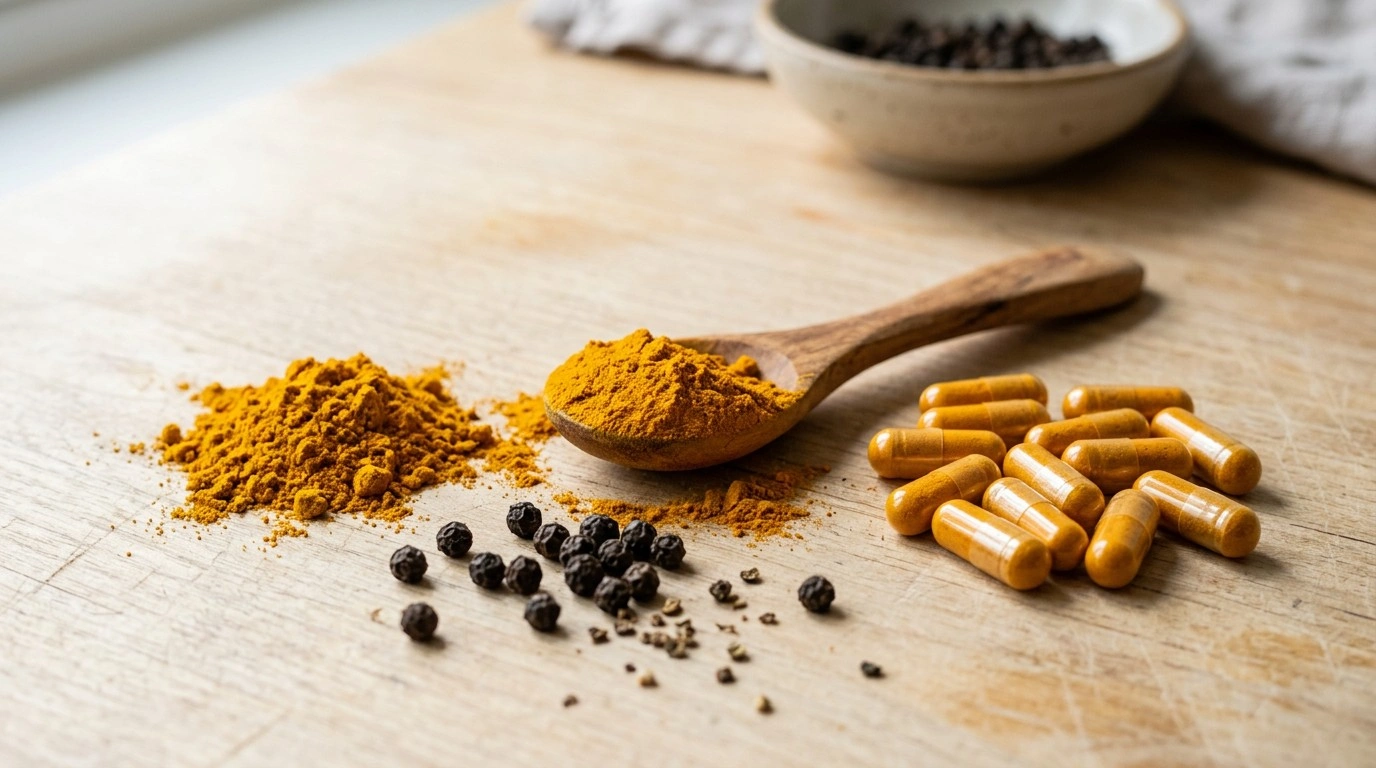
Piperine from black pepper is sometimes combined with curcumin to increase its bioavailability.
What Is the Best Form of Curcumin to Take?
There is no single curcumin formulation that can be described as best for everyone.
Products may contain conventional curcumin extracts, curcuminoid blends, curcumin combined with piperine or other formulations designed to alter absorption.
Rather than looking for one universally “best” product, compare:
- What form of curcumin is provided
- Curcuminoid content
- Evidence supporting the formulation
- Amount per serving
- Additional ingredients
- Bioavailability claims
- Safety information
- Product quality
A higher milligram figure does not automatically mean a better supplement.
Curcumin vs Turmeric Supplements
The terms are often used together, which can make choosing a supplement confusing.
A turmeric supplement might contain ordinary ground turmeric powder, turmeric extract or a mixture of ingredients.
A curcumin supplement generally focuses on providing concentrated curcumin or curcuminoids extracted from turmeric.
Neither description alone tells you whether a product is appropriate or effective.
The important information is on the ingredient panel: what form is present, how much is provided and how the formulation has been designed.
How Should You Choose a Curcumin Supplement?
Start with the ingredients rather than the marketing claims on the front.
Check:
- Curcumin or curcuminoid content
- Whether turmeric powder or extract is used
- Standardisation information
- Amount per serving
- Whether black pepper or piperine is included
- Whether another absorption-enhancing formulation is used
- Additional ingredients
- Recommended use
- Safety information
- Manufacturing and quality standards
Be cautious about comparing products using impressive-looking numbers alone.
For example, a large turmeric-equivalent figure and a stated amount of concentrated curcuminoids are not necessarily measuring the same thing.
Choosing a Curcumin Supplement

Check the curcumin content, formulation, additional ingredients and serving information when comparing supplements.
How Do You Take Curcumin Supplements?
Curcumin supplements are commonly available as capsules and tablets, although other formats exist.
Follow the instructions for the individual product because formulations and concentrations vary considerably.
Some products are designed to be taken alongside food, while others contain ingredients specifically intended to alter curcumin absorption.
Taking more than the recommended amount should not be assumed to produce greater benefits.
Can You Take Curcumin Every Day?
Many curcumin supplements are marketed for regular use, but that does not mean every formulation or amount is appropriate for every person indefinitely.
Safety depends partly on the formulation, amount, duration of use, individual health and medicines being taken.
Enhanced-bioavailability products deserve particular attention because changing absorption may also change exposure.
Follow the manufacturer’s instructions and seek professional advice when appropriate rather than assuming that a supplement is automatically safe simply because its ingredients are naturally derived.
Frequently asked questions
What is taking curcumin good for?
Curcumin has been researched for several potential health effects. Joint health and osteoarthritis are among the better studied areas, although evidence is not definitive and results vary between formulations.
Is it better to take turmeric or curcumin?
Neither is automatically better. Turmeric powder contains numerous naturally occurring compounds, including relatively small amounts of curcuminoids, whereas curcumin supplements generally provide more concentrated curcuminoids. The appropriate choice depends on why the product is being used and what it contains.
What happens when you take curcumin every day?
Effects vary between individuals and products. Some people take curcumin regularly without noticeable problems, while others may experience digestive side effects. Evidence about longer-term use also depends on the formulation and amount.
Does curcumin help with arthritis pain?
Research involving curcumin and turmeric preparations has produced some encouraging findings for knee osteoarthritis symptoms, including pain and stiffness. However, evidence is not conclusive and curcumin should not replace appropriate arthritis treatment.
Does curcumin need black pepper?
Not necessarily. Piperine from black pepper is one method used to increase curcumin bioavailability, but other formulations use different approaches. A curcumin supplement does not have to contain black pepper to be designed for improved absorption.
What is the downside of curcumin?
Potential disadvantages include poor natural bioavailability, digestive side effects, possible interactions with medicines and differences between formulations. Some enhanced-bioavailability products have also been associated with reports of liver injury.
What Are the Side Effects of Curcumin Supplements?
Curcumin supplements can cause side effects in some people.
Reported digestive effects include nausea, stomach upset, acid reflux, diarrhoea or constipation.
There have also been reports of liver injury associated with some turmeric and curcumin supplements, including products designed to increase bioavailability.
Stop taking a supplement and seek medical advice if you develop concerning symptoms.
Can Curcumin Supplements Interact with Medicines?
Turmeric, curcumin and ingredients added to curcumin supplements may interact with medicines.
This deserves particular consideration when a formulation contains piperine because piperine can influence the absorption or metabolism of other substances.
If you regularly take prescription medicines, check with a pharmacist or doctor before starting a concentrated curcumin supplement.
Do not stop or alter prescribed medication because of information about curcumin.
Who Should Seek Medical Advice Before Taking Curcumin?
Consider seeking professional advice before taking a curcumin supplement if you:
- Regularly take prescription medicines
- Have an existing medical condition
- Have liver or gallbladder problems
- Are pregnant or breastfeeding
- Are preparing for surgery
- Have previously experienced a reaction to turmeric or curcumin
A supplement should not be used as a substitute for appropriate medical diagnosis or treatment.
Summary
Curcumin is one of the principal naturally occurring curcuminoids found in turmeric, but turmeric and curcumin are not the same thing.
Curcumin supplements generally provide more concentrated curcuminoids than ordinary turmeric powder and may use different formulations designed to improve absorption.
People commonly become interested in curcumin because of its potential benefits, particularly research involving joint health and inflammatory processes. Some evidence involving knee osteoarthritis is encouraging, but research varies between products and stronger evidence is still needed.
When comparing supplements, look beyond the headline milligram number.
Check what form of curcumin is present, curcuminoid content, formulation, absorption strategy, additional ingredients, safety information and product quality.
Understanding those differences makes it considerably easier to compare turmeric and curcumin supplements realistically.
Sources and further information
Videos About Turmeric and Curcumin
Prefer to watch rather than read? We have also selected a few educational videos featuring qualified doctors, nutritional specialists and health professionals discussing turmeric and curcumin from different perspectives.
These videos are provided for further learning and do not replace medical advice or the scientific sources used throughout this guide.
1. Should You Take Turmeric Every Day? Here’s What Doctors Say
Doctors discuss the evidence, potential benefits and safety of taking turmeric regularly.
2. Turmeric is Good – Dr. Berg
Dr. Berg discusses how turmeric and curcumin can support areas of your health.
3. The Major Reason I Changed My Mind About Curcumin – Dr. Boz
Annette Bosworth, MD discusses her findings and thoughts about Curcumin.
4. Health reason turmeric needs black pepper (food or supplement) – Dr. Dhand
Dr. Suneel Dhand explains why black pepper is often combined with turmeric.
Further Reading
1. NCCIH — Turmeric: Usefulness and Safety
The National Center for Complementary and Integrative Health provides an evidence-based overview of turmeric and curcumin, including current research, bioavailability, potential uses and important safety considerations.
2. PubMed — Influence of Piperine on the Pharmacokinetics of Curcumin
This frequently cited 1998 study investigated how piperine affects the bioavailability of curcumin in animals and human volunteers. The human study is the source of the widely reported finding that 20 mg of piperine increased the bioavailability of 2 g of curcumin by 2,000% under the specific study conditions.
3. PubMed — Effect of Turmeric Products on Knee Osteoarthritis
This 2025 systematic review and network meta-analysis examined research into turmeric products for knee osteoarthritis, including their potential effects on pain and physical function.
4. PubMed — Curcumin for Knee Osteoarthritis
This 2025 critical review examined systematic reviews and meta-analyses of curcumin for knee osteoarthritis, considering both the potential benefits reported by previous research and limitations in the available evidence.
Medical Disclaimer
The information on this page is provided for general educational and informational purposes only. It is not intended to provide medical advice, diagnosis or treatment and should not replace advice from an appropriately qualified healthcare professional.
Turmeric and curcumin supplements can differ considerably in composition, concentration and bioavailability. Research involving one formulation may not apply to another.
If you take medicines, have a medical condition, are pregnant or breastfeeding, or are considering using curcumin for a health condition, seek appropriate professional advice before use.
Author
Written by J. Henderson
Health & Wellness Research Writer
J. Henderson writes evidence-based articles on nutrition, botanical supplements and everyday wellbeing. His work focuses on translating scientific research into clear, practical guidance that helps readers make informed decisions about natural health products.
- Written by J. Henderson
- Reviewed by Fiona Finlay
- Reviewed on the 03 September 2026