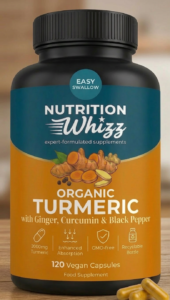
Turmeric and curcumin are often discussed as if they are the same thing, but they are not identical. Turmeric is a golden-yellow spice obtained from the root of the turmeric plant, while curcumin is one of the active compounds found within turmeric. Understanding the difference can help you make more informed choices when selecting foods, supplements, or natural health products.
For people researching inflammation, joint health, antioxidant support, or general wellbeing, knowing whether turmeric or curcumin is the better option can make a significant difference. This guide explains the key differences, benefits, absorption rates, and practical considerations in a clear and straightforward way.
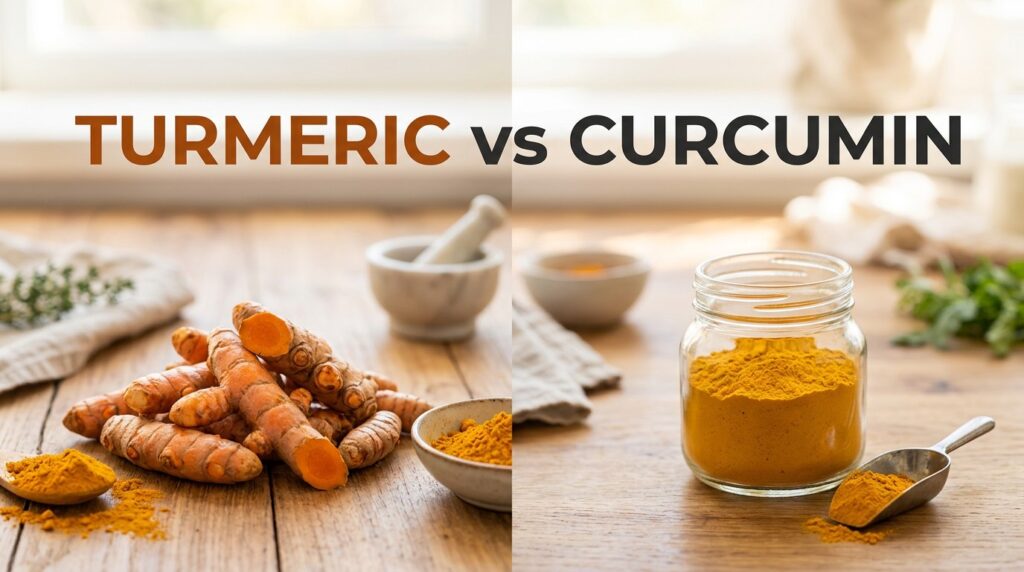
Turmeric is a flowering plant belonging to the ginger family. The root, or rhizome, is dried and ground into the bright yellow spice commonly used in cooking, particularly in South Asian and Middle Eastern cuisines.
Turmeric contains hundreds of naturally occurring compounds, including essential oils, antioxidants, and a group of substances known as curcuminoids. Curcumin is the most studied curcuminoid and is largely responsible for many of turmeric’s potential health benefits.
Although turmeric has been used traditionally for centuries, the concentration of curcumin in natural turmeric is relatively low. Most turmeric powder contains approximately 2% to 8% curcuminoids by weight.
Curcumin is a naturally occurring polyphenol found in turmeric. It is the primary active compound that researchers focus on when investigating turmeric’s potential effects on inflammation, oxidative stress, and overall health.
Supplement manufacturers often extract and concentrate curcumin from turmeric to create products containing significantly higher levels than those found naturally in the spice.
For example, a curcumin supplement may contain 500 mg to 1,000 mg of standardised curcumin extract, providing far more active curcumin than a typical serving of turmeric powder.
| Feature | Turmeric | Curcumin |
|---|---|---|
| What it is | Whole root spice | Active compound found in turmeric |
| Natural source | Turmeric plant | Extracted from turmeric |
| Culinary use | Common cooking ingredient | Rarely used directly in cooking |
| Research focus | Whole-food benefits | Most clinical studies |
| Potency | Lower | Higher |
| Absorption | Limited | Limited unless enhanced |
| Supplement form | Powder, capsules | Standardised extracts |
This simple comparison helps explain why turmeric and curcumin are often used for different purposes.
Curcumin is often described as more powerful because it represents the concentrated active component within turmeric.
To obtain the same amount of curcumin found in a standard supplement, a person would typically need to consume a much larger quantity of turmeric powder. This is one reason why many scientific studies use purified or concentrated curcumin extracts rather than whole turmeric.
However, potency is not always the only factor that matters. Some researchers believe that turmeric’s additional compounds may work together in ways that support overall effectiveness, a concept sometimes referred to as the “entourage effect” of plant compounds.
As a result, turmeric and curcumin should not necessarily be viewed as competitors. Instead, they represent different ways of accessing similar plant-derived compounds.
One of the biggest challenges associated with curcumin is bioavailability, which refers to how much of a substance the body can absorb and utilise.
Curcumin is known to have poor natural absorption. As a result, many supplement manufacturers combine it with ingredients designed to improve uptake.
Common absorption-enhancing ingredients include:
Turmeric also contains curcumin, but the amount absorbed from food alone is generally lower than from enhanced curcumin supplements. Consuming turmeric with healthy fats and black pepper may help improve absorption naturally.
Turmeric has long been valued as both a culinary ingredient and a traditional wellness food. Potential benefits associated with turmeric include:
Turmeric contains a variety of compounds that may help neutralise free radicals and support cellular health.
As part of a balanced diet, turmeric can contribute beneficial plant compounds without requiring supplementation.
Many cultures have historically used turmeric in cooking and wellness practices for generations.
Unlike isolated compounds, turmeric contains a broader range of naturally occurring constituents that may provide complementary effects.
Curcumin is the subject of a substantial body of scientific research. Areas commonly studied include:
Curcumin has been extensively researched for its interaction with inflammatory pathways within the body.
Research suggests curcumin may support the body’s natural antioxidant defences.
Many people use curcumin supplements as part of a broader approach to maintaining joint comfort and mobility.
Scientists continue to investigate curcumin’s potential role in supporting healthy ageing and cellular function.
While research is promising, individual results vary, and further studies are ongoing in many areas.
The answer depends largely on your goals.
Turmeric is usually the better choice. It is affordable, versatile, and easy to incorporate into meals, soups, curries, smoothies, and drinks.
A quality curcumin supplement may provide a significantly higher concentration of the active compound.
Turmeric offers a less processed option containing a broad range of naturally occurring plant compounds.
Many published studies focus specifically on standardised curcumin extracts because they provide consistent dosing.
For many people, incorporating turmeric into the diet while using a well-formulated curcumin supplement when appropriate can offer a balanced approach.
When comparing turmeric supplements and curcumin supplements, consider:
Products with clearly labelled active ingredient levels are generally easier to compare than products using proprietary blends.
Both turmeric and curcumin are generally considered well tolerated when consumed appropriately. Possible side effects may include:
People taking medications, particularly blood-thinning medicines, should seek professional medical advice before using high-strength supplements.
Pregnant individuals, those with gallbladder conditions, or people managing medical conditions should also consult a healthcare professional before beginning supplementation.
Turmeric and curcumin are closely connected but serve different purposes.
Turmeric is the whole spice, providing a wide range of naturally occurring compounds alongside smaller amounts of curcumin. Curcumin is the concentrated active ingredient that has attracted significant scientific interest due to its potential biological effects.
If your priority is adding a nutritious spice to meals, turmeric is an excellent choice. If your goal is achieving higher levels of the active compound studied in research, curcumin supplements may be more suitable.
Neither is universally better. The right option depends on your dietary preferences, health goals, and intended use.
This content is provided for educational and informational purposes only and should not be considered medical advice. Always consult a qualified healthcare professional before making decisions regarding supplements, medications, or health conditions.
Written and reviewed by the Nutrition Whizz Editorial Team.