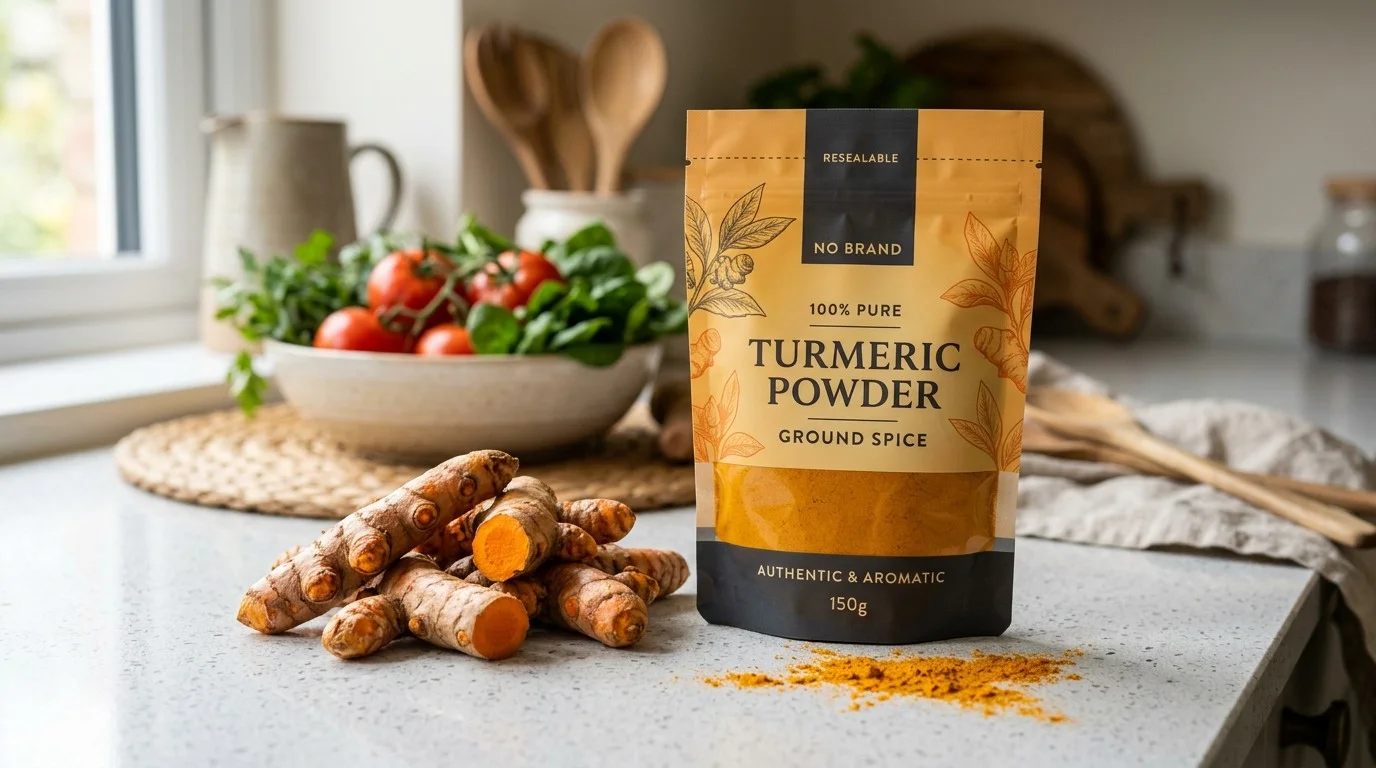
What Is the History of Turmeric?
Overview
Turmeric has been valued for thousands of years. Originally cultivated in South Asia, particularly India, it became an important ingredient in cooking, traditional medicine, religious ceremonies and textile dyeing. Over centuries, traders carried turmeric across Asia, the Middle East, Africa and eventually Europe, making it one of history’s most influential spices.
Today, turmeric is recognised worldwide not only as a culinary ingredient in turmeric recipes but also for its cultural significance and the growing scientific interest in compounds such as curcumin.
Simple Timeline
- Around 2500–2000 BCE – Early evidence of turmeric use in the Indian subcontinent.
- 1500–500 BCE – Mentioned in early Ayurvedic traditions.
- 1st century CE – Turmeric traded throughout Asia by merchants.
- 7th–13th centuries – Spread widely across China, Southeast Asia and the Middle East.
- 13th century – Marco Polo describes a spice resembling saffron.
- 1700s–1800s – European botanical study expands.
- 1900s – Scientific research begins investigating active compounds.
- 2000s onwards – Global popularity grows through nutrition and medical research.
History of Turmeric
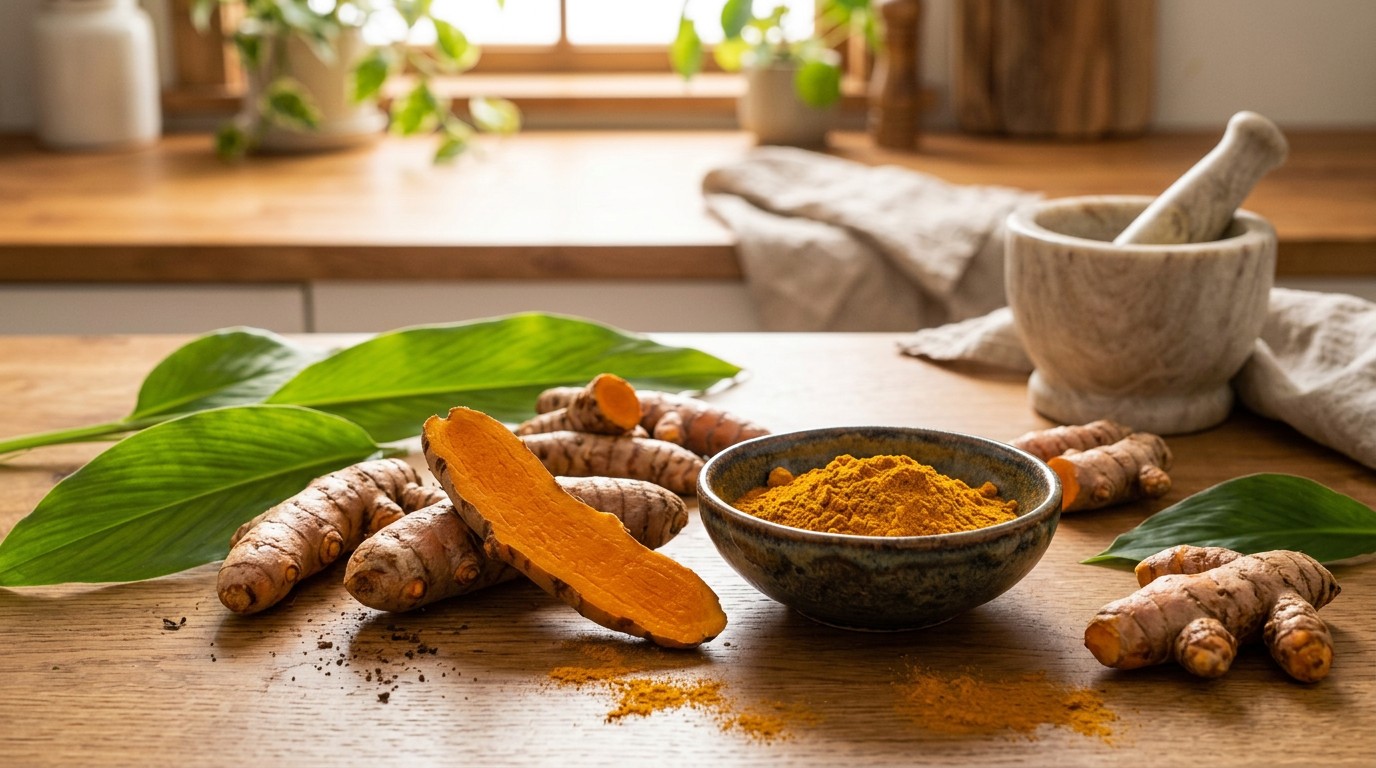
Fresh turmeric has been cultivated in South Asia for thousands of years.
Related Guides
Explore related turmeric guides:
- Where Does Turmeric Come From? — learning about turmeric’s origins.
- Turmeric in Traditional Medicine — a related question you may want to explore.
- Curcuma longa — a related question you may want to explore.
- What Is Turmeric? — a related question you may want to explore.
Table of Contents
- Introduction
- Where Turmeric Originated
- Turmeric in Ancient India
- Turmeric in Ayurveda
- Religious and Cultural Importance
- How Turmeric Spread Around the World
- Turmeric in Europe
- Modern Scientific Interest
- Why Turmeric Remains Popular Today
- Frequently Asked Questions
- Summary
- Related Articles
- References
- Disclaimer
Introduction
Turmeric is one of humanity’s oldest cultivated spices. Known scientifically as Curcuma longa, it belongs to the ginger family and produces the vibrant yellow-orange rhizome that has become famous throughout the world.
Although many people know turmeric as an ingredient in curries, its story stretches back several thousand years and connects agriculture, trade, medicine, religion and culture.
It’s remarkable journey helps explain why it remains one of the world’s most recognised botanical ingredients.
Where Did Turmeric Originate?
Most historians and botanists agree that turmeric originated in the Indian subcontinent, although it also grew naturally in neighbouring regions of Southeast Asia.
The warm tropical climate proved ideal for cultivation, and farmers soon recognised its value beyond food.
Unlike many spices that were used solely for flavour, turmeric became important because it could be used for:
- Food colouring
- Preserving foods
- Herbal preparations
- Religious ceremonies
- Textile dyeing
- Cosmetic applications
Its versatility helped ensure its widespread adoption across ancient societies.
Turmeric in Ancient India
India has the longest documented relationship with turmeric.
Archaeological evidence suggests turmeric was already being used more than 4,000 years ago during the Indus Valley Civilisation. Ancient households valued it for cooking, colouring cloth and ceremonial purposes.
Over time, turmeric became deeply woven into everyday life.
Ancient Sanskrit texts describe turmeric as both a sacred and practical plant. It featured in traditional celebrations, marriage customs and seasonal festivals.
Even today, many of these customs continue throughout India.
Ancient Turmeric Trade
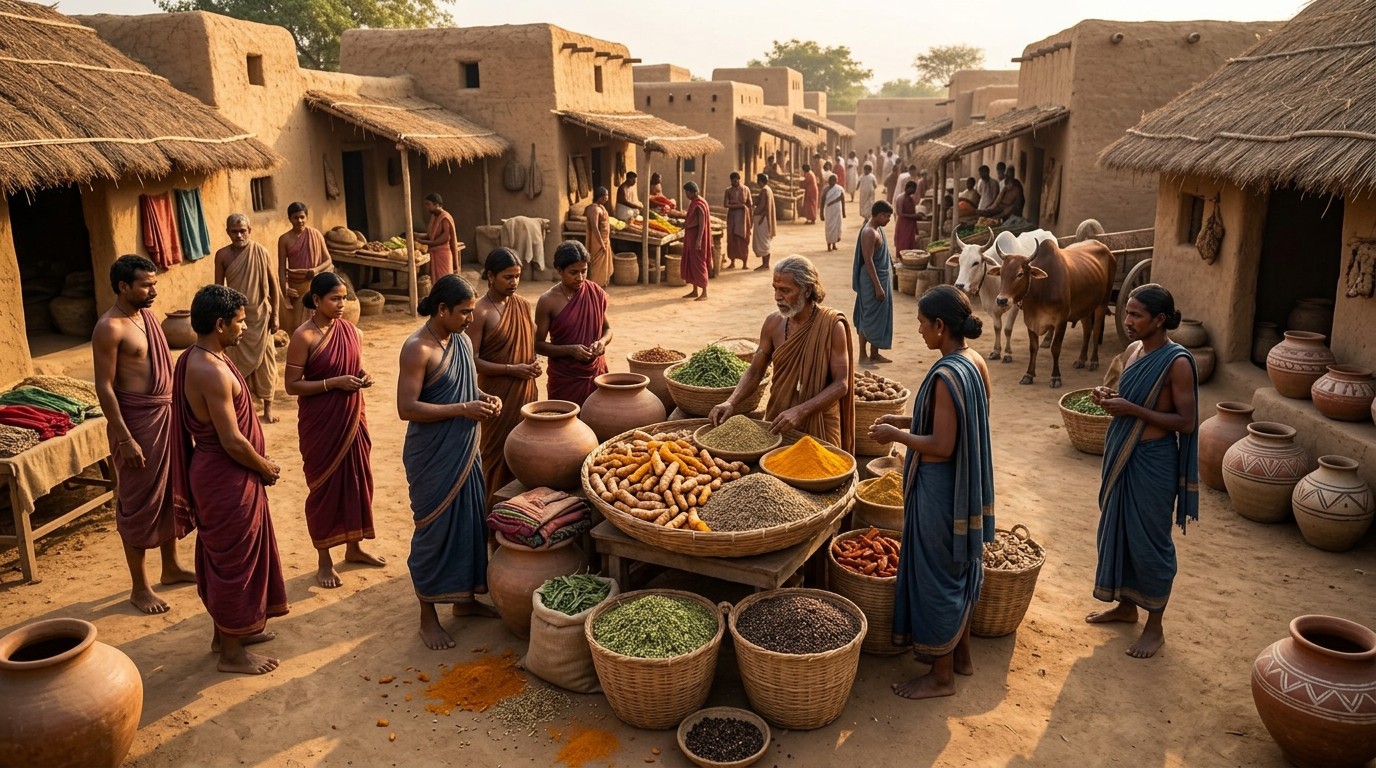
Ancient spice market from India trading turmeric.
Turmeric in Ayurveda
One of turmeric’s most important historical roles comes from Ayurveda, one of the world’s oldest traditional systems of healthcare.
Ayurvedic practitioners have used turmeric for centuries in preparations intended to support general wellbeing. Historical texts describe its use alongside numerous other herbs as part of broader dietary and lifestyle approaches.
Modern researchers continue to investigate turmeric’s naturally occurring compounds, particularly curcumin, although research remains ongoing and should not be interpreted as proof of medical effectiveness for every traditional use.
Religious and Cultural Importance
Turmeric has long symbolised prosperity, purity and protection.
Throughout South Asia it became associated with:
- Weddings
- Religious ceremonies
- Temple offerings
- Fertility traditions
- Blessing rituals
One of the best-known customs is the Haldi ceremony before Hindu weddings, where turmeric paste is traditionally applied to the bride and groom.
Because of its bright golden colour, turmeric also became associated with good fortune and positive beginnings.
How Turmeric Spread Around the World
As trade routes expanded, turmeric travelled far beyond India.
Merchants transported dried turmeric powder across the Indian Ocean and the Silk Road, introducing it to:
- Sri Lanka
- China
- Indonesia
- Malaysia
- Persia
- Arabia
- East Africa
Arab traders played a particularly important role in introducing turmeric to new markets during the medieval period.
As European exploration increased during the Age of Discovery, Portuguese traders helped expand turmeric’s availability even further.
Turmeric Trade Routes

Ancient trade routes helped spread turmeric around the world
Turmeric in China
Historical Chinese medical writings began recording turmeric several centuries after its widespread use in India.
Traditional Chinese Medicine incorporated various species related to turmeric into herbal practice, although their historical uses differed from those described in Ayurveda.
Trade between India and China helped encourage the exchange of botanical knowledge across Asia.
Turmeric Reaches Europe
Although European travellers encountered turmeric during the Middle Ages, it never achieved the same importance as spices such as pepper, cinnamon or cloves.
Marco Polo famously described a yellow spice resembling saffron, believed by many historians to have been turmeric.
By the eighteenth and nineteenth centuries, European botanists had formally classified turmeric and began documenting its cultivation and characteristics.
Scientific Interest in Turmeric
Interest in turmeric increased dramatically during the twentieth century and there has been many studies into the possible benefits of turmeric.
Scientists isolated curcumin, the primary natural pigment responsible for turmeric’s distinctive colour and now comes in different turmeric forms.
Since then, thousands of laboratory and clinical studies have explored turmeric and curcumin, examining areas such as:
- Antioxidant activity
- Inflammation
- Digestive health
- Bioavailability
- Food science
- Agriculture
While research continues to expand, health organisations generally advise interpreting findings carefully because many studies are preliminary or involve concentrated turmeric extracts rather than ordinary culinary turmeric.
Why Turmeric Remains Popular Today
Today turmeric is grown commercially across several countries including:
- India
- Bangladesh
- Indonesia
- Thailand
- China
- Myanmar
India remains the world’s largest producer, consumer and exporter.
Turmeric now appears in:
- Traditional cuisine
- Nutritional supplements
- Herbal teas and drinks such as Golden Milk
- Skincare products
- Functional foods
- Health research
Its enduring popularity reflects thousands of years of continuous cultural and culinary use.
Turmeric Cultivation
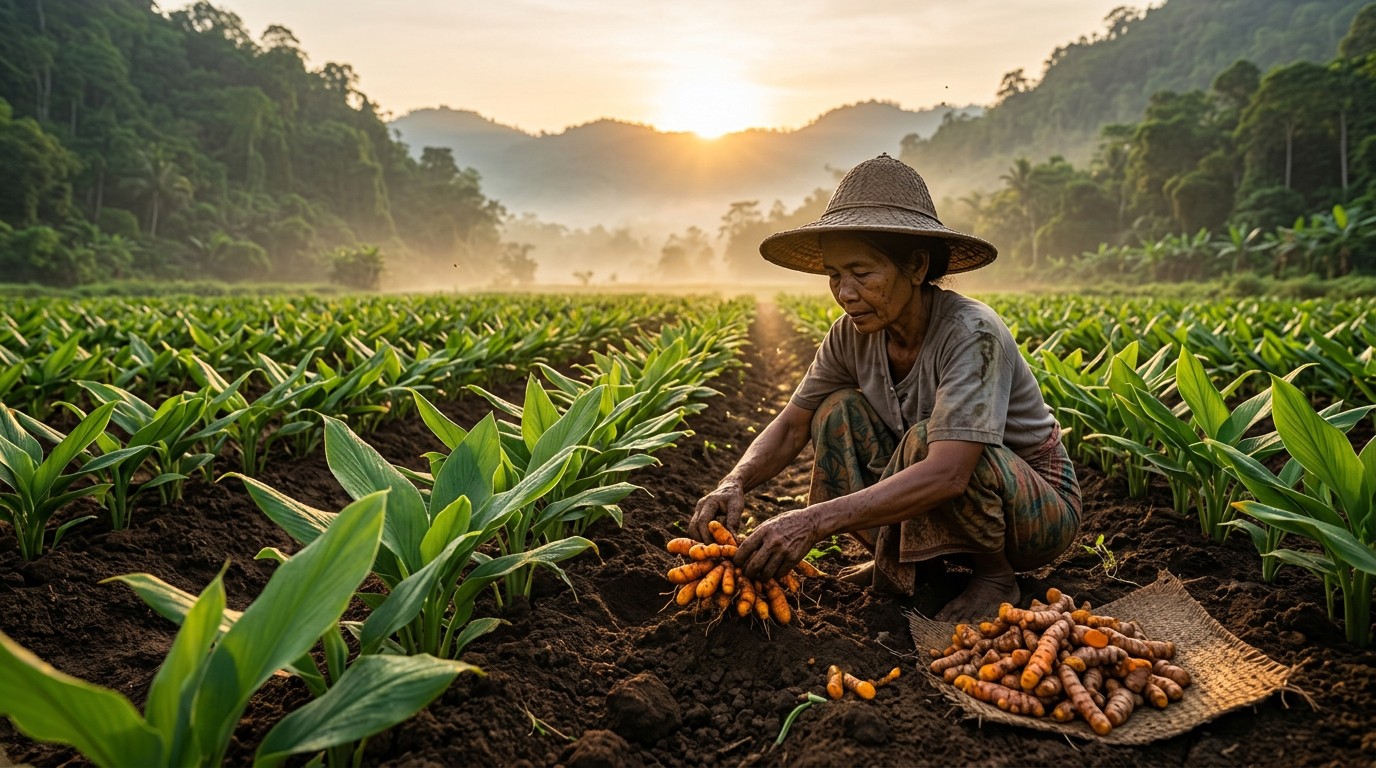
Turmeric thrives in warm, humid climates.
Frequently Asked Questions
How old is turmeric?
Current archaeological evidence suggests turmeric has been used for around 4,000 years, with some researchers proposing an even earlier history in South Asia.
Where was turmeric first discovered?
Turmeric is widely believed to have originated in the Indian subcontinent before spreading throughout Asia via ancient trade routes.
Why was turmeric so valuable historically?
Its versatility made it valuable as a spice, dye, ceremonial ingredient and component of traditional herbal practices.
Did ancient Egyptians use turmeric?
There is limited evidence suggesting turmeric may have reached ancient Egypt through trade, but historians generally agree its strongest historical roots remain in India and South Asia.
When did turmeric become popular in the Western world?
Turmeric gained widespread popularity in Europe and North America during the late twentieth and early twenty-first centuries as scientific research and interest in natural health increased.
Summary
Turmeric’s history spans thousands of years and reflects the movement of cultures, trade and scientific discovery. Beginning in ancient India, it evolved from a local agricultural crop into one of the world’s most recognised spices. Its influence extends far beyond cooking, encompassing religion, traditional medicine, textiles and modern scientific research. Although researchers continue to study turmeric’s properties, its historical importance alone secures its place among humanity’s most remarkable botanical plants.
Further Reading & Related Articles
1. Turmeric: History, Uses and Global Importance
Turmeric: Ancient Spice with Thousands of Years of History
This article provides an overview of turmeric’s origins, traditional uses, cultivation, cultural importance and its role as one of the world’s most recognised spices. It explains how turmeric developed from an ancient Asian crop into a globally important ingredient.
Published by: Encyclopaedia Britannica
2. Turmeric: Traditional Uses and Modern Scientific Research
Turmeric: Traditional Medicine, Curcumin and Current Evidence
This evidence-based article explores turmeric’s historical use in Indian Ayurvedic medicine, Chinese medicine and other traditional systems. It also explains what researchers currently know about turmeric’s active compounds, including curcumin.
Published by: National Center for Complementary and Integrative Health (NCCIH), National Institutes of Health (NIH)
References
Historical Sources
- Encyclopaedia Britannica – Turmeric
- Royal Botanic Gardens, Kew – Plants of the World Online
- National Center for Biotechnology Information (NCBI)
- World History Encyclopaedia
- Indian Council of Agricultural Research (ICAR)
Scientific Sources
- National Institutes of Health (NIH)
- National Center for Complementary and Integrative Health (NCCIH)
- Food and Agriculture Organization (FAO)
- World Health Organization (WHO)
- Journal of Ethnopharmacology
Author
Written by J. Henderson
Health & Wellness Research Writer
J. Henderson writes evidence-based articles on nutrition, botanical supplements and everyday wellbeing. His work focuses on translating scientific research into clear, practical guidance that helps readers make informed decisions about natural health products.
Disclaimer
This article is intended for educational and informational purposes only. Historical information has been compiled from reputable academic and historical sources, while scientific content reflects current evidence at the time of writing. It should not be considered medical advice, diagnosis or treatment. Always consult a qualified healthcare professional before using herbs or supplements to manage a health condition.