Organic Turmeric
Introduction
Organic turmeric is turmeric produced and processed according to recognised organic standards. The term refers primarily to how the turmeric is grown, handled and certified, rather than being a guarantee that it contains more curcumin or has greater health benefits than conventional turmeric.
For shoppers comparing different turmeric forms, organic turmeric can be an appealing choice, particularly if farming methods, certification and reducing exposure to certain pesticide residues are important considerations.
At a glance
- Organic turmeric is produced under defined organic farming and processing standards.
- Organic certification restricts the use of certain synthetic pesticides and fertilisers, although organic does not mean pesticide-free.
- Organic turmeric is available as fresh root, dried root, powder and an ingredient in some supplements and food products, such as pastes.
- Organic certification does not automatically mean higher curcumin content.
- Scientific research suggests organic food consumption can reduce exposure to pesticide residues, but the long-term health significance is less certain.
- In the UK, products marketed as organic must meet applicable organic production and certification requirements.
Organic Turmeric Root and Powder
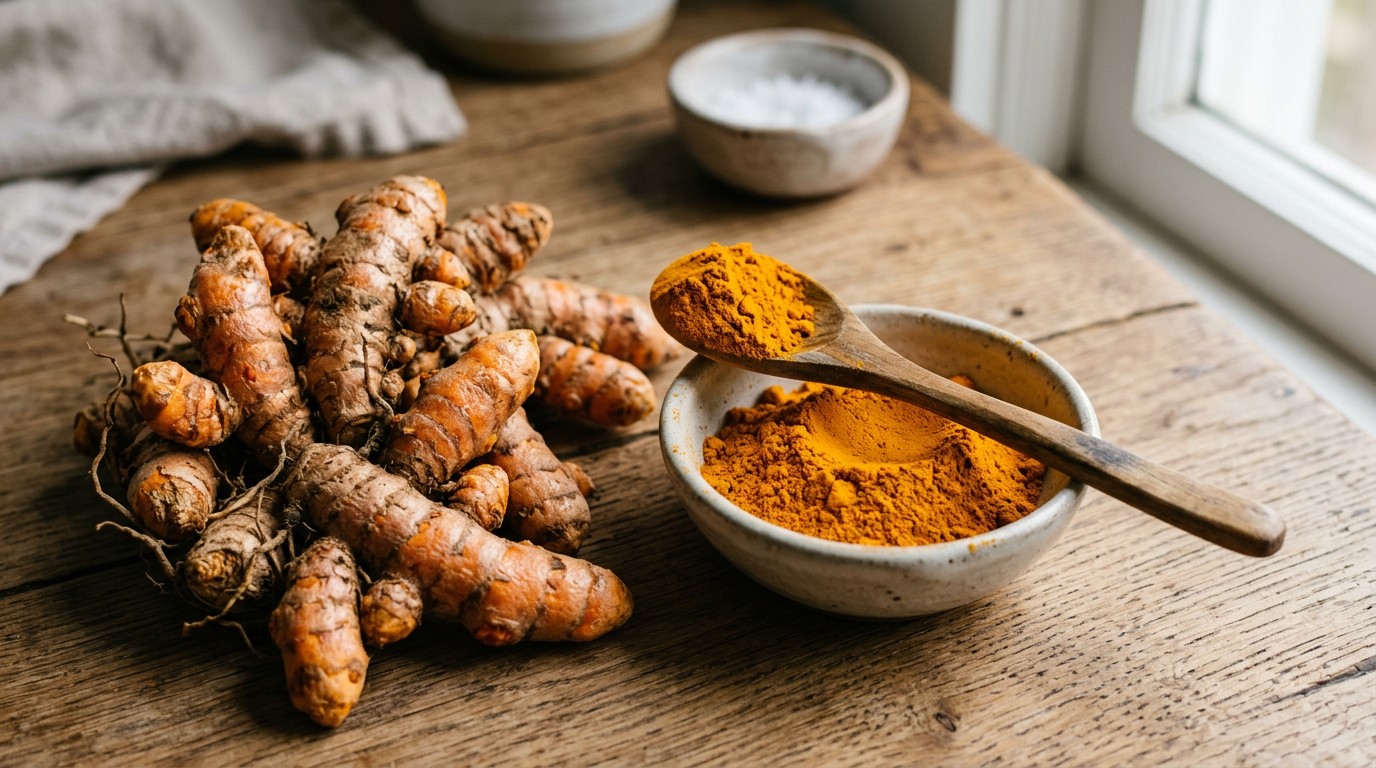
Fresh turmeric root alongside organic turmeric powder, showing two common forms of turmeric.
Table of Contents
- What is organic turmeric?
- What does organic mean?
- How is organic turmeric different from conventional turmeric?
- Organic turmeric advantages
- Organic turmeric disadvantages
- Does organic turmeric contain more curcumin?
- How to choose organic turmeric
- Is organic turmeric healthier?
- Frequently asked questions
- Summary
- Further Information and Related Articles
- Sources
- Medical disclaimer
What is organic turmeric?
Organic turmeric comes from the rhizome of the Curcuma longa plant and is produced using farming and handling methods that comply with an organic certification scheme.
Turmeric can be sold in several forms, including fresh turmeric root, dried turmeric, turmeric powder and processed products. The word “organic” describes the production method rather than a separate botanical variety of turmeric.
This distinction is important. Organic turmeric and conventional turmeric are still turmeric, and both can contain naturally occurring compounds such as curcuminoids and essential oils.
In other words, organic certification does not create a different type of turmeric. It provides information about how that turmeric was produced and handled.
Organic Turmeric Farming
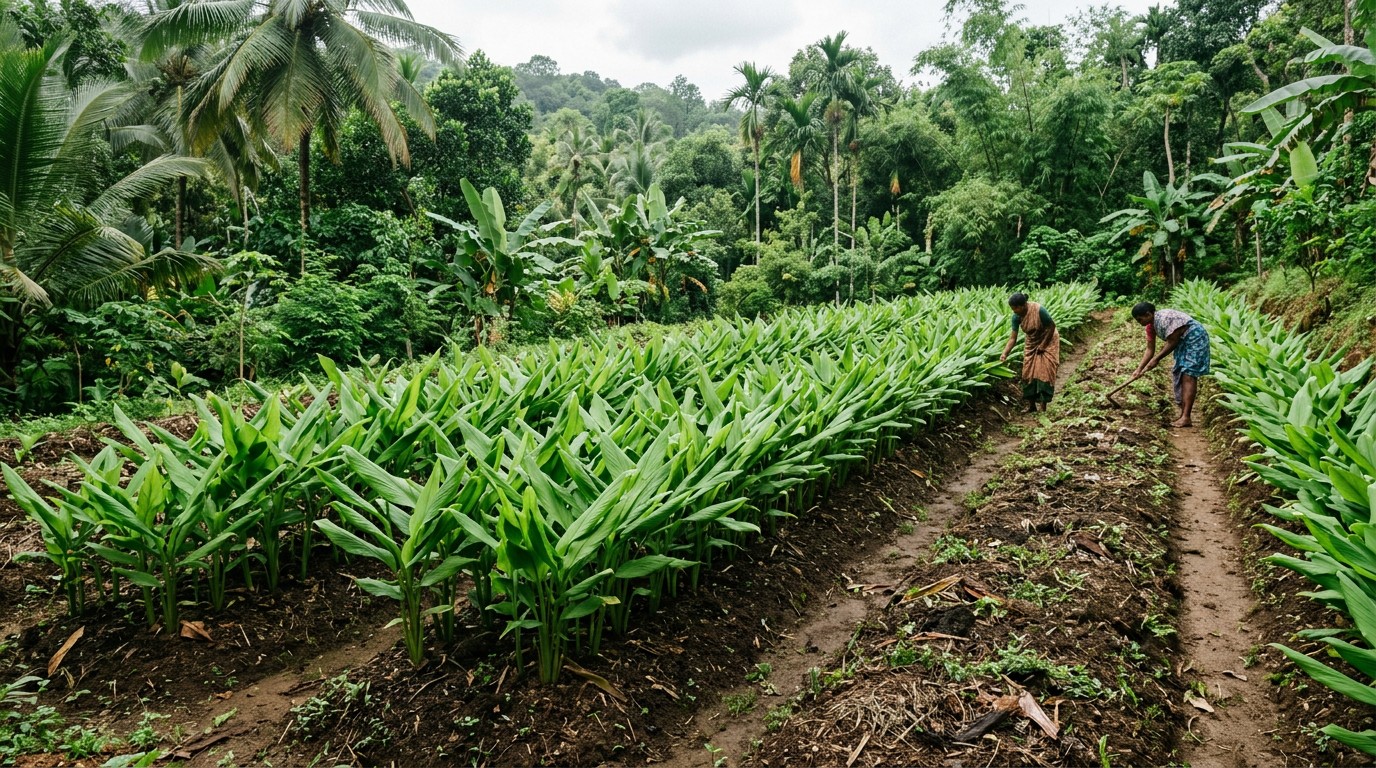
Turmeric plants growing in an agricultural field using organic farming practices.
What does organic mean?
The exact rules depend on the country and certification system, but organic farming generally places restrictions on certain inputs and requires producers to follow specified production, handling and inspection procedures.
In Great Britain, businesses producing, preparing, storing, importing, exporting, marketing or selling food as organic must be certified by an approved UK organic control body. Food labelled as organic generally needs at least 95% organic agricultural ingredients, subject to the applicable rules.
Organic production can involve crop rotation, soil management and biological or mechanical approaches to controlling pests and weeds. Approved substances can still be used where permitted by the relevant organic regulations.
This means “organic” should not be interpreted as “grown without any pesticides”. Rather, organic systems restrict which substances and methods can be used.
Certification is therefore an important part of the meaning of the organic label. It provides a way of checking that the producer and supply chain have followed the relevant standards.
Organic turmeric vs conventional turmeric
The main difference is the production system, not necessarily the appearance, flavour or nutritional profile of the finished turmeric.
| Comparison | Organic turmeric | Conventional turmeric |
| Farming method | Produced under organic standards | Produced under conventional agricultural standards |
| Certification | Certified under an applicable organic scheme | Does not require organic certification |
| Pesticide use | Certain substances and methods are restricted | A wider range of approved agricultural pesticides may be available |
| Curcumin | Not automatically higher | Not automatically lower |
| Environmental considerations | Organic systems can support biodiversity and soil-related objectives | Farming practices vary considerably between producers |
| Price | Often more expensive | Often less expensive |
| Availability | Widely available but varies by form and retailer | Generally, very widely available |
Organic Turmeric vs Conventional Turmeric
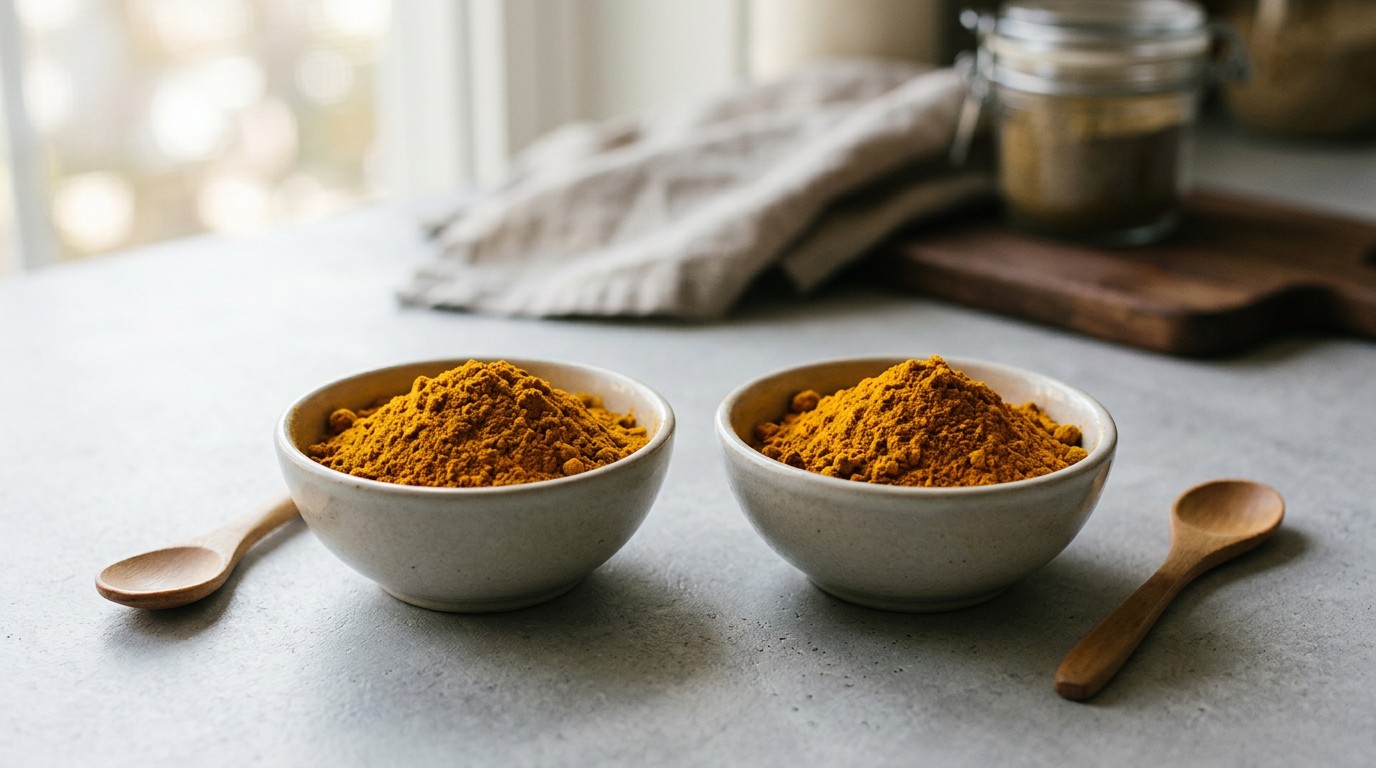
A neutral visual comparison of organic and conventional turmeric as food products.
Research comparing organic and conventional foods suggests that organic production can be associated with lower pesticide-residue exposure, while evidence for major nutritional differences is much less consistent.
It is also worth remembering that “conventional” covers a wide range of agricultural practices. A responsibly produced conventional turmeric product is not necessarily the same as every other conventional product.
Main advantages of organic turmeric
1. Restricted use of certain agricultural chemicals
One potential advantage is that organic production restricts the use of certain synthetic pesticides and fertilisers. Research on organic diets has generally found lower pesticide exposure biomarkers compared with conventional diets.
However, this should not be presented as proof that eating organic turmeric prevents disease. The evidence is stronger for differences in exposure than for specific long-term health outcomes.
2. Greater transparency through certification
Certified organic products provide consumers with additional information about the production system. In the UK, organic operators are inspected and certified by approved control bodies, and organic labelling is subject to specific rules.
For people who want to know more about how their food was produced, this can be a useful purchasing consideration.
Potential environmental benefits
Organic farming has been associated in research with higher biodiversity in many agricultural settings. A meta-analysis of studies comparing organic and conventional farming found increased species richness under organic farming, although the size of the effect varied according to the crop, organism and farming landscape.
This does not mean every organic turmeric farm has a lower environmental impact in every respect. Farming systems involve trade-offs, including land use, yields, transport and processing.
From Turmeric Root to Turmeric Powder
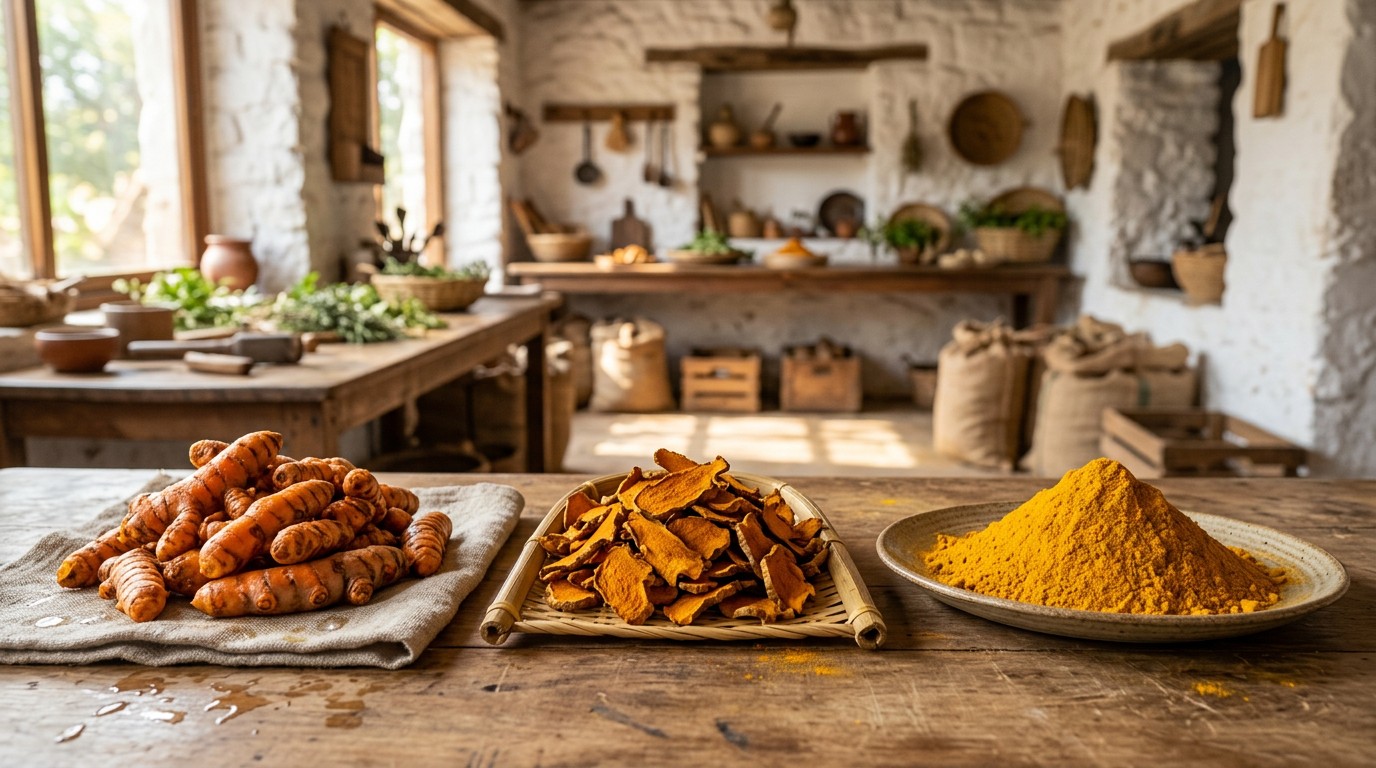
Turmeric rhizomes and ground turmeric illustrating the different forms in which turmeric is commonly sold.
Main disadvantages of organic turmeric
1. It can cost more
Organic turmeric may have a higher retail price because certification, production requirements, supply and processing can increase costs. Whether the premium represents good value depends on what matters most to the individual buyer.
2. Organic does not guarantee higher curcumin or better health benefits
There is no sound basis for assuming that organic turmeric automatically contains more curcumin or will provide greater therapeutic benefits.
Research into organic foods has found some compositional differences, but these do not consistently translate into clinically meaningful health advantages.
Does organic turmeric contain more curcumin?
Not necessarily.
Curcumin is one of the best-known compounds in turmeric, but turmeric naturally contains several curcuminoids and other constituents. The amount can vary according to the turmeric variety, growing conditions, harvest, processing and storage.
Organic certification does not set a universal curcumin level.
This is particularly important when comparing organic turmeric powder with turmeric supplements. A food-grade organic turmeric powder and a concentrated curcumin supplement are not equivalent products. Supplements may use extracts or formulations designed to provide substantially different amounts of curcuminoids.
Consequently, someone choosing organic turmeric for cooking should not assume that an organic label means it has the same composition as a concentrated curcumin product.
Is organic turmeric healthier?
There is not enough evidence to say that organic turmeric itself is definitively healthier than conventional turmeric.
Studies of organic food consumption have found lower exposure to pesticide residues, but research into broader health outcomes remains mixed and is affected by factors such as diet, lifestyle and socioeconomic differences. A 2023 systematic review found a beneficial association between organic food intake and reduced pesticide exposure, while evidence for individual diseases was more limited.
Turmeric and curcumin are also being researched for a variety of health-related purposes. However, the evidence should not be confused with proof that turmeric treats or prevents medical conditions. The US National Center for Complementary and Integrative Health notes that evidence for many proposed uses remains insufficient, while oral turmeric can cause gastrointestinal side effects and some higher-bioavailability curcumin products have been associated with liver injury.
For everyday cooking, turmeric is commonly used as a spice. Supplement use is a different consideration because the dose and formulation can be much higher.
How to choose organic turmeric
If you want to buy organic turmeric, look beyond the word “organic” and consider the whole product.
Look for:
- A recognised organic certification or control-body mark.
- Clear information about the country of origin.
- A simple ingredient list if buying turmeric powder.
- A sealed package that protects the powder from moisture and contamination.
- A batch or lot number and appropriate best-before information.
- A reputable supplier with clear product information.
- Independent quality testing where a supplement is involved.
For products sold in Great Britain, organic labels must include relevant certification and agricultural-origin information.
Quality also matters because turmeric products can vary. A recent review of botanical products reported evidence of adulteration or mislabelling in turmeric samples, although the authors stressed important limitations in estimating the true prevalence across the market.
Organic Turmeric Quality and Certification
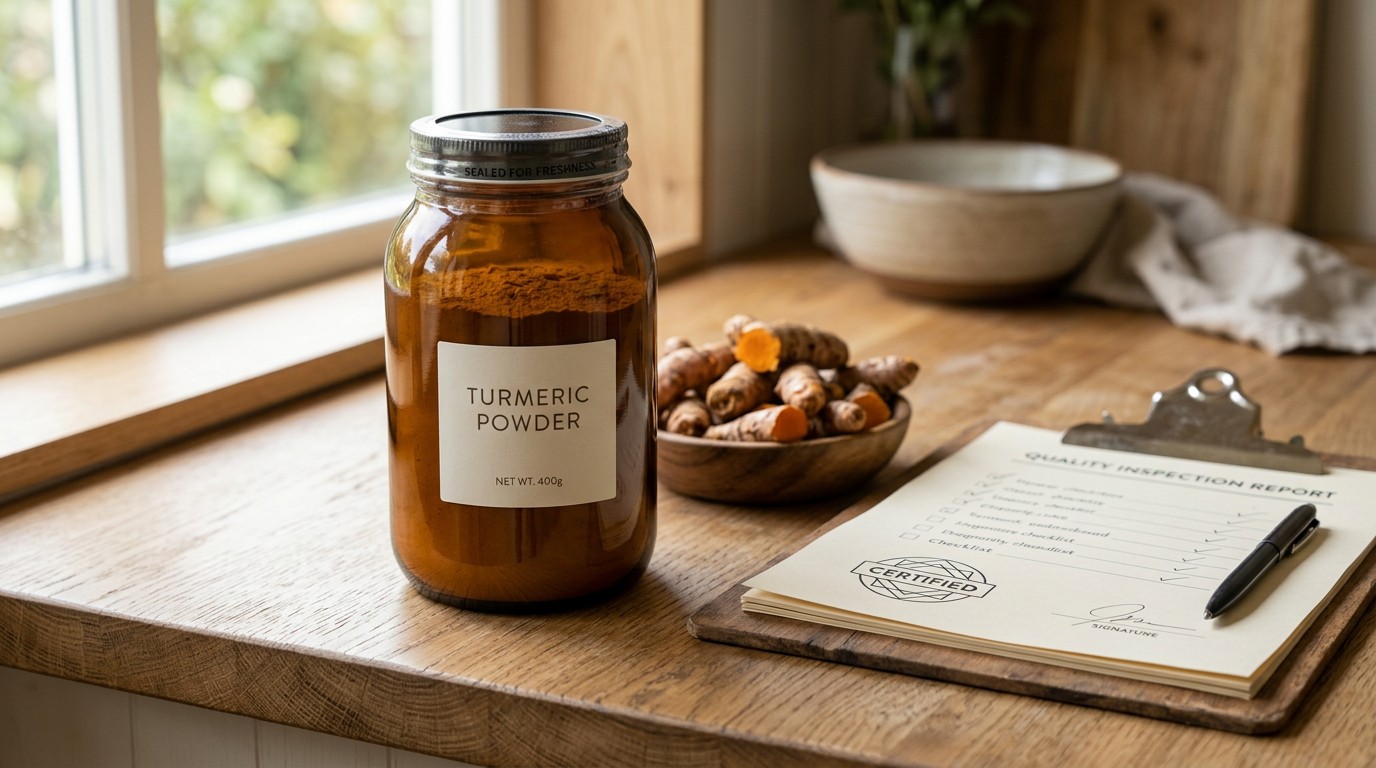
Organic turmeric powder with neutral quality and certification cues.
Frequently asked questions
What is organic turmeric?
Organic turmeric is turmeric produced and handled according to recognised organic standards. It can be sold as fresh root, dried turmeric, powder or as an ingredient in other products.
Is organic turmeric better than regular turmeric?
Not necessarily. Organic turmeric has been produced under different farming and certification requirements, but there is not enough evidence to say that it is universally healthier or nutritionally superior to conventional turmeric.
Is organic turmeric pesticide-free?
No. Organic farming restricts certain pesticides and other agricultural inputs, but permitted substances can still be used under organic rules. “Organic” should therefore not be treated as synonymous with “pesticide-free”.
Does organic turmeric have more curcumin?
There is no general rule that organic turmeric contains more curcumin. Curcumin levels vary according to several factors, including the turmeric itself and how it is processed and stored.
Is organic turmeric good for inflammation?
Turmeric and curcumin have been investigated for their possible anti-inflammatory effects, but evidence varies by condition and formulation. Organic certification itself does not establish an anti-inflammatory benefit.
Is organic turmeric safe to take every day?
Turmeric used as a culinary spice is different from taking concentrated turmeric or curcumin supplements every day, and many people ask the question, how much turmeric can I take per day? Higher doses can cause gastrointestinal side effects, and some enhanced-bioavailability products have been linked with liver injury. Anyone considering regular supplementation should discuss it with a doctor or other qualified healthcare professional.
Final summary
Organic turmeric is primarily about production standards, certification and farming methods — not a guarantee of higher curcumin content or greater health benefits.
The strongest practical reasons for choosing organic turmeric are the restrictions placed on agricultural inputs, the additional certification and traceability requirements, and the environmental principles associated with organic farming. Research also indicates that organic food consumption can reduce exposure to pesticide residues.
However, organic turmeric can cost more, and there is currently no good reason to assume that an organic label automatically makes turmeric more nutritious or medically effective.
For most consumers, the best choice comes down to personal priorities: certification, farming practices, price, provenance, product quality and intended use. Whether choosing organic or conventional turmeric, a reputable supplier and a clearly labelled, appropriately stored product are sensible priorities.
Further Information and Related Articles
1. How to make organic turmeric powder at home |Turmeric powder from roots
2. Curcumae longae rhizoma – herbal medicinal product
Brief description: A detailed assessment of turmeric (Curcuma longa) from the European Medicines Agency (EMA). It explains what turmeric preparations are, their traditional medicinal uses, the available evidence, potential side effects, and how turmeric herbal medicines are evaluated in the EU. This is particularly useful for understanding turmeric as an herbal medicinal product rather than simply as a food ingredient.
Published by: European Medicines Agency (EMA)
Read the EMA guide
3. Herbal remedy
Brief description: This article discusses growing and using organic herbs, contrasting supermarket-grown herbs with home-grown varieties. It highlights the flavour and abundance of organically grown herbs and provides practical guidance on cultivating them in Britain.
Published by: The Guardian (UK) — written by Monty Don.
Read “Herbal remedy” on The Guardian
4. Nutritional Approaches for Musculoskeletal Pain and Inflammation
Brief description: This NCCIH guide examines nutritional and natural approaches to inflammation and musculoskeletal pain, including turmeric (Curcuma longa) and curcumin. It summarizes the research evidence and cautions that evidence for turmeric supplementation remains insufficient for some proposed uses.
Published by: National Center for Complementary and Integrative Health (NCCIH), NIH
Read the NCCIH guide
5. A Guide to Herbal Remedies
Brief description: A practical guide to herbal products and remedies, covering how herbal supplements differ from medicines, issues surrounding regulation and labeling, potential safety concerns, and considerations when deciding whether an herbal product is appropriate. This is a good general reference for evaluating products marketed as “organic” or “natural.”
Published by: MedlinePlus, U.S. National Library of Medicine (NIH)
Read the MedlinePlus guide
6. Dietary Supplement Fact Sheets – Turmeric
Brief description: The NIH Office of Dietary Supplements’ directory identifies its turmeric fact sheet and points readers to NCCIH’s authoritative information on turmeric. This is useful as a starting point for researching turmeric dietary supplements, including evidence and safety considerations.
Published by: Office of Dietary Supplements (ODS), National Institutes of Health (NIH)
View the NIH Dietary Supplement Fact Sheets directory
Sources
- GOV.UK — Organic food: labelling and advertising rules. UK government guidance covering certification, organic claims, labelling and agricultural-origin statements.
- GOV.UK — Organic food tests and inspections. Information about inspection, sampling, testing and handling suspected non-compliance.
- GOV.UK — Organic farming: certification and funding. Information about organic production methods and certification in Great Britain.
- Mie A, et al. (2017), Environmental Health — Human health implications of organic food and organic agriculture: a comprehensive review.
- Brantsæter AL, et al. (2017), Annual Review of Public Health — Organic Food in the Diet: Exposure and Health Implications.
- Dahm CC, et al. (2023), Nutrition Reviews — The effects of organic food on human health: a systematic review and meta-analysis of population-based studies.
- Smith-Spangler C, et al. (2012), Annals of Internal Medicine — Are organic foods safer or healthier than conventional alternatives?
- Tuck SL, et al. (2014), Journal of Applied Ecology — Land-use intensity and the effects of organic farming on biodiversity: a hierarchical meta-analysis.
- National Center for Complementary and Integrative Health — Turmeric: Usefulness and Safety. Current evidence and safety information relating to turmeric and curcumin.
- National Center for Complementary and Integrative Health — Nutritional Approaches for Musculoskeletal Pain: What the Science Says. Summary of evidence relating to turmeric and curcumin.
- Miller LG, et al. (2024), Journal of Dietary Supplements — Estimating the extent of adulteration of popular herbs including turmeric.
Medical disclaimer
This page is provided for general educational and informational purposes only. It is not medical advice and should not be used to diagnose, treat, cure or prevent any medical condition. Turmeric and curcumin products can have side effects and may interact with medicines or be unsuitable for some people. Always consult your medical doctor or another appropriately qualified healthcare professional before taking turmeric or curcumin supplements, particularly if you are pregnant, breastfeeding, have an existing medical condition, are taking medication, or are considering turmeric for a specific health problem. Never use this information as a substitute for professional medical advice.
Author
Written by J. Henderson
Health & Wellness Research Writer
J. Henderson writes evidence-based articles on nutrition, botanical supplements and everyday wellbeing. His work focuses on translating scientific research into clear, practical guidance that helps readers make informed decisions about natural health products.