What Is Turmeric Good For?
Overview
Turmeric is good for supporting joint health, helping the body’s natural inflammatory response, providing antioxidant protection and supporting general wellbeing. Its active ingredient, curcumin, has been widely researched and may help reduce inflammation linked to osteoarthritis while also supporting heart, digestive and immune health. Although turmeric isn’t a cure or treatment for disease, adding it to a healthy, balanced diet may provide several long-term health benefits.
Related Guides
Explore related turmeric guides:
- Turmeric Benefits — the wider picture of potential turmeric benefits.
- Turmeric for Joint Pain and Arthritis — understanding turmeric and joint discomfort.
- Turmeric for Digestion — exploring turmeric and digestion.
- Turmeric Heart Health — exploring turmeric and cardiovascular health.
- Turmeric Antioxidants — exploring antioxidant research.
Table of Contents
Fresh Turmeric with Healthy Cooking Ingredients

Fresh turmeric root alongside healthy ingredients ginger, garlic, herbs and olive oil.
What Is Turmeric?
Turmeric is a bright yellow spice made from the root of the Curcuma longa plant, which belongs to the ginger family. It has been used in Indian, South Asian and Middle Eastern cooking for thousands of years and has a long history in traditional herbal practices.
Today, turmeric is popular worldwide because of its potential health benefits. The natural compound responsible for most of these benefits is called curcumin. Curcumin has antioxidant and anti-inflammatory properties, making it one of the most researched plant compounds in nutrition.
Although turmeric naturally contains curcumin, the amount is fairly small. That’s why many turmeric supplements contain concentrated curcumin extracts, often combined with black pepper extract (piperine), which helps the body absorb curcumin more effectively.
What Is Turmeric Good For? Top 7 Benefits
Modern research suggests that turmeric benefits may include supporting several aspects of overall health. While research is still ongoing, current studies indicate that the following are the turmeric benefits backed by the strongest scientific evidence.
1. Supporting Healthy Joints
Joint health is where turmeric has been studied the most.
Research suggests curcumin may help reduce inflammation associated with osteoarthritis, potentially easing joint discomfort and improving mobility in some people. While turmeric shouldn’t replace prescribed medication, many people choose it as part of a wider approach that includes regular exercise, maintaining a healthy weight and following medical advice.
2. Helping the Body’s Natural Inflammatory Response
Inflammation is the body’s normal way of protecting itself after injury or infection. However, long-term inflammation has been linked with several chronic health conditions.
Curcumin appears to influence several inflammatory pathways within the body. This is why using turmeric for inflammation as one of the most popular reasons why people looking to support their body’s normal inflammatory response.
3. Providing Antioxidant Protection
Turmeric is naturally rich in antioxidants. Antioxidants help protect healthy cells from damage caused by free radicals. These unstable molecules are produced naturally during normal body processes and can also result from pollution, smoking and UV exposure.
Eating foods that contain antioxidants may contribute to overall health and healthy ageing.
4. Supporting Digestive Health
Turmeric has traditionally been used to support digestion. Some people find that adding turmeric to meals helps reduce occasional bloating or feelings of heaviness after eating. Although more scientific studies are needed, turmeric remains a popular ingredient in digestive health supplements and herbal remedies.
5. Supporting Heart Health
Healthy blood vessels play an important role in maintaining good circulation.
Some studies suggest curcumin may support blood vessel function while also helping manage inflammation that may affect cardiovascular health. However, turmeric should always be viewed as part of a healthy lifestyle rather than a substitute for prescribed medication, exercise or a balanced diet.
6. Supporting Brain Health
Scientists continue to investigate whether curcumin may help support memory and cognitive function.
Because curcumin has antioxidant and anti-inflammatory properties, researchers believe it could play a role in healthy brain ageing. More high-quality studies are still needed before firm conclusions can be made.
7. Supporting the Immune System
Turmeric contains natural plant compounds that may help support normal immune function by helping the body respond to inflammation and oxidative stress.
Although turmeric won’t prevent infections or replace medical treatment, including it in a balanced diet may contribute to overall wellbeing.
Curcumin and Black Pepper Healthy Ingredients

The main healthy ingredient in turmeric comes from a group of natural compounds called curcuminoids, with curcumin being the most important and well-studied. It’s worth noting that curcumin is poorly absorbed by the body on its own. Many supplements combine it with black pepper extract (piperine) to improve absorption.
How to Use Turmeric
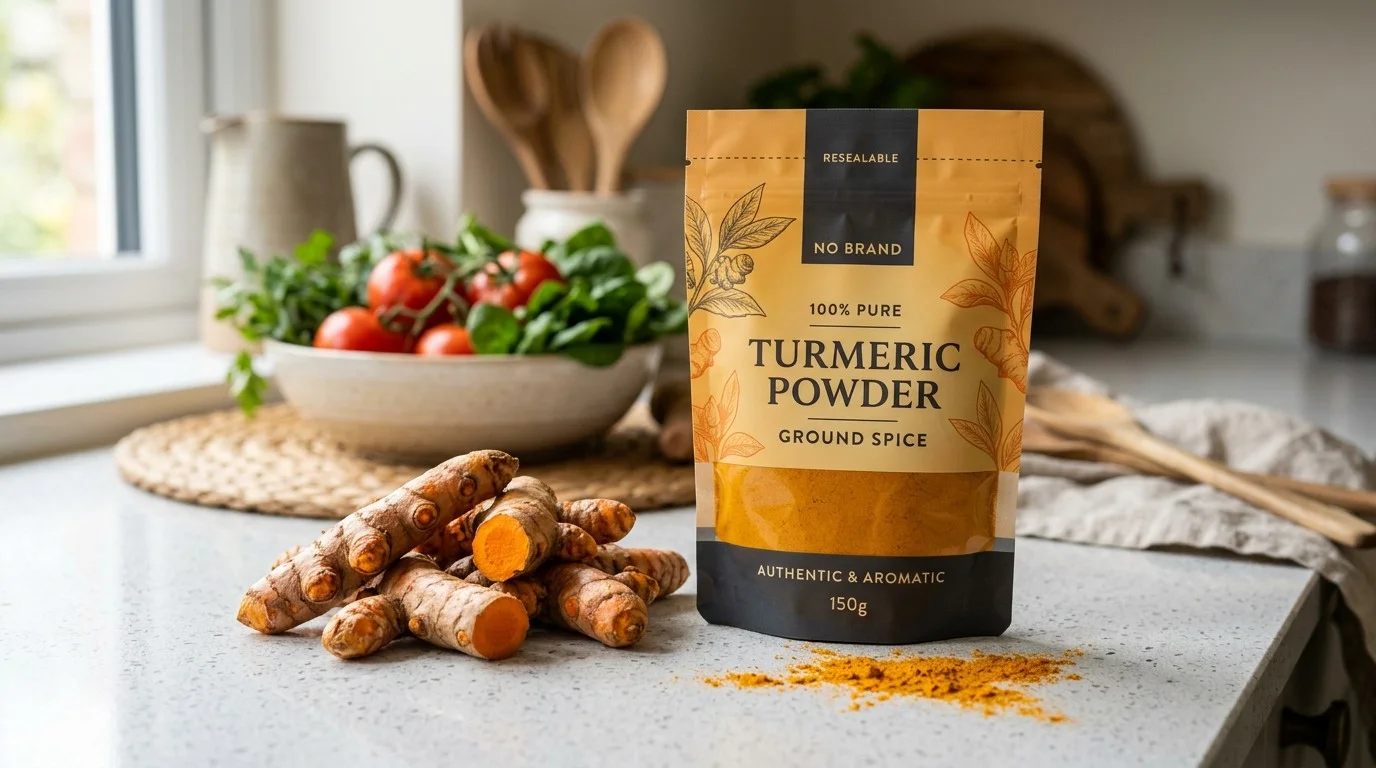
Turmeric is one of the easiest spices to include in everyday cooking and popular turmeric forms include fresh turmeric root and powder.
Popular ways to use it include:
- Adding it to turmeric recipes such as curries and casseroles.
- Mixing it into soups.
- Stirring it through rice.
- Roasting vegetables with turmeric.
- Blending ground turmeric powder into smoothies.
- Making a golden milk recipe.
- Adding it to scrambled eggs.
- Taking a curcumin or turmeric supplement if recommended by a healthcare professional.
Curcumin is absorbed more effectively when eaten alongside black pepper, which contains piperine. Healthy fats, such as olive oil or avocado, may also help improve absorption.
Are There Any Side Effects?
Using turmeric in cooking is considered safe for most people.
High-strength supplements may occasionally cause:
- Upset stomach
- Feeling sick
- Diarrhoea
- Acid reflux
Turmeric supplements may also interact with blood-thinning medicines, diabetes medication and some medicines that affect blood clotting.
If you’re pregnant, breastfeeding, have gallbladder disease or take prescription medication, it’s sensible to speak to a healthcare professional before using turmeric supplements.
Frequently Asked Questions
Is turmeric good for inflammation?
Yes. Research suggests curcumin may help support the body’s natural inflammatory response, particularly in people with osteoarthritis.
Is turmeric good for arthritis?
Some clinical studies suggest turmeric may help with arthritis or reduce joint discomfort linked to osteoarthritis. It should complement, not replace, medical treatment.
Can you take turmeric every day?
Most people can safely eat turmeric every day as part of a healthy diet. Supplements should always be taken according to the manufacturer’s instructions.
How long does turmeric take to work?
Benefits usually develop gradually over several weeks rather than immediately. Results vary depending on the individual and the amount consumed.
Is fresh turmeric better than powdered turmeric?
Both provide beneficial plant compounds. Fresh turmeric has a stronger flavour, while powdered turmeric is easier to store and use regularly.
Why is black pepper added to turmeric?
Black pepper contains piperine, which can significantly increase the body’s ability to absorb curcumin.
Final Thoughts
Turmeric has become one of the world’s most popular natural health ingredients because of its potential to support healthy joints, help the body’s natural inflammatory response and provide antioxidant protection. While research continues, current evidence is most convincing for joint health and inflammation support.
Adding turmeric to everyday meals is an easy way to enjoy both its flavour and potential health benefits. If you’re considering a concentrated supplement, choose a reputable product and seek professional advice if you have an existing medical condition or take prescription medicines.
Trusted Sources
NHS – Vitamins, Minerals and Supplements
Trusted UK advice on supplements, healthy eating and when to seek professional medical advice.
https://www.nhs.uk/live-well/eat-well/food-types/vitamins-and-minerals/
National Center for Complementary and Integrative Health (NCCIH) – Turmeric
Evidence-based information on turmeric, curcumin, current research, potential health benefits and safety.
https://www.nccih.nih.gov/health/turmeric
Harvard T.H. Chan School of Public Health – Turmeric
A science-based overview of turmeric, its nutritional value and what current research says about its health benefits.
Disclaimer
The information on this page is provided for general educational purposes only and should not be considered medical advice. While every effort has been made to ensure the information is accurate and based on reputable sources, turmeric is not a substitute for professional medical diagnosis, treatment or advice. Always consult your GP, pharmacist or another qualified healthcare professional before taking turmeric supplements, particularly if you are pregnant, breastfeeding, have an existing medical condition or take prescription medication.