
Turmeric and curcumin may affect some factors associated with cardiovascular health, but turmeric has not been proven to prevent or treat heart disease.
Research has investigated possible effects on blood pressure, cholesterol, inflammation, oxidative stress and blood-vessel function. Some results are encouraging, while others are mixed or uncertain.
Turmeric should therefore be viewed as a food ingredient — and curcumin as an extensively researched plant compound — rather than as a replacement for proven cardiovascular treatments or prescribed medicines.
Explore other areas of turmeric and health:

Turmeric can form part of a healthy lifestyle, alongside a balanced diet and regular physical activity.
Turmeric can be part of a healthy lifestyle, but it cannot compensate for an unhealthy one.
A balanced diet, regular physical activity, maintaining a healthy weight, not smoking and limiting alcohol remain much more important foundations for heart health. Turmeric should be considered one small part of the bigger picture, not a shortcut to a healthy heart.
People may become interested in turmeric after hearing that it could support the heart or circulation.
Others may be looking for information because they have been told they have high blood pressure or high cholesterol, or because they already take turmeric supplements and want to understand how they could affect cardiovascular health.
This distinction matters because someone with a diagnosed cardiovascular condition or taking prescribed medication has different considerations from someone simply adding turmeric to their diet.
Most cardiovascular research focuses on curcumin, rather than assuming ordinary culinary turmeric has the same effects as a concentrated supplement.
Researchers have investigated several areas, including:
These outcomes are related to cardiovascular health, but changing a risk marker does not automatically mean preventing heart disease.
Research studies generally investigate turmeric or curcumin over a period of time rather than expecting an immediate cardiovascular effect.
The results can depend on the dose, duration, formulation and health of the participants.
This is one reason claims that turmeric will quickly “improve your heart” should be treated cautiously.
Turmeric contains a family of compounds called curcuminoids. The best known is curcumin.
Curcumin has been studied for several biological effects that could be relevant to cardiovascular health, including its relationship with inflammation, oxidative stress and the function of blood vessels.
However, turmeric contains considerably less curcumin than concentrated curcumin extracts used in many clinical trials.
Curcumin gives researchers a specific compound that can be studied at controlled doses.
A large 2024 systematic review and meta-analysis covering 103 randomised controlled trials and 7,216 participants found effects on several health markers, including some lipid, inflammatory, oxidative and metabolic measures.
However, the certainty of evidence varied substantially between outcomes and the researchers called for larger, better-designed long-term trials.
That makes the evidence more complicated than simply saying turmeric is “good for the heart”.
Turmeric can be consumed as:
These forms can provide very different amounts of curcumin, so research involving a concentrated supplement cannot automatically be applied to turmeric used in cooking.
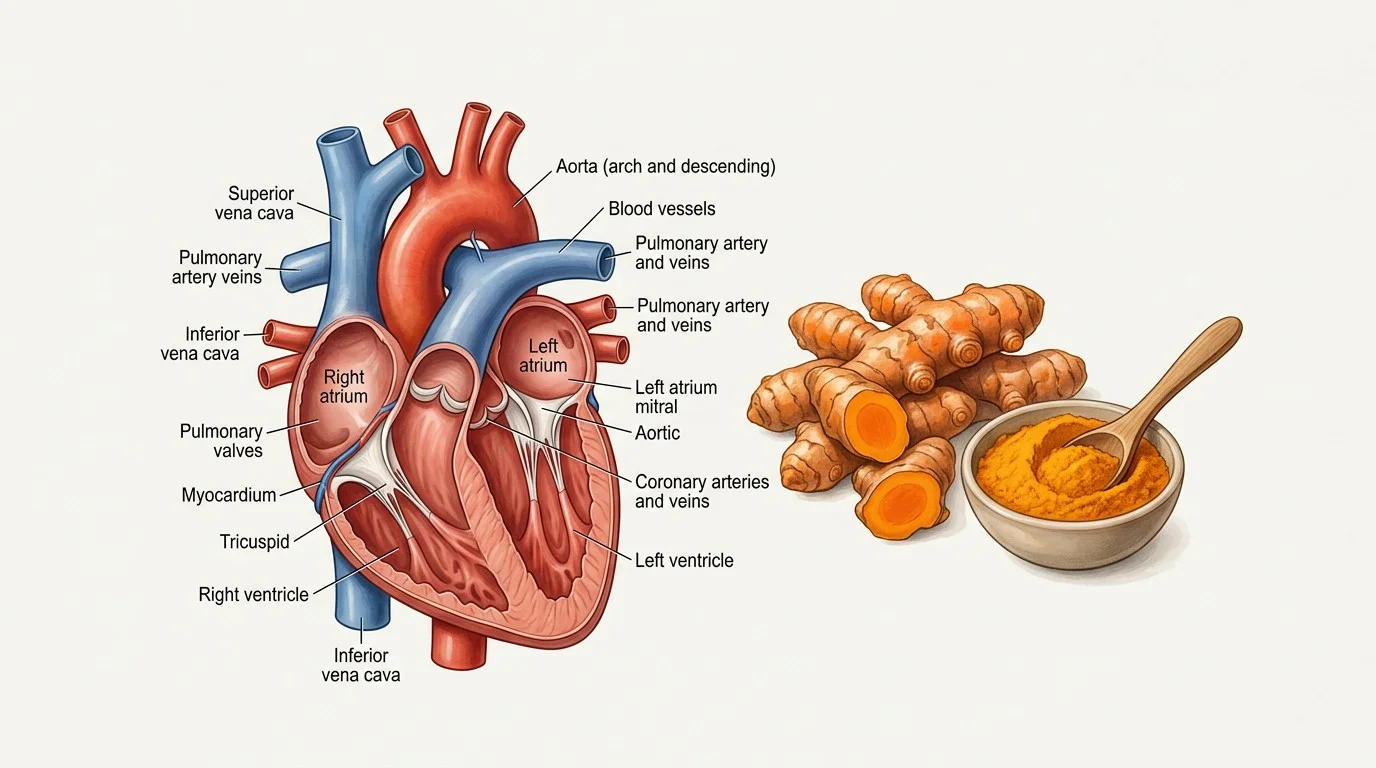
Researchers are studying curcumin in relation to several factors associated with cardiovascular health.
| Area | What the Research Suggests |
| Blood pressure | Possible small effects, but findings are mixed |
| Cholesterol | Some studies report improvements in blood lipids |
| Blood vessels | Curcumin may support endothelial function |
| Inflammation | Curcumin has demonstrated anti-inflammatory activity |
| Oxidative stress | Curcumin has antioxidant activity |
| Heart disease prevention | Not proven |
| Medication safety | Some supplements may interact with medicines |
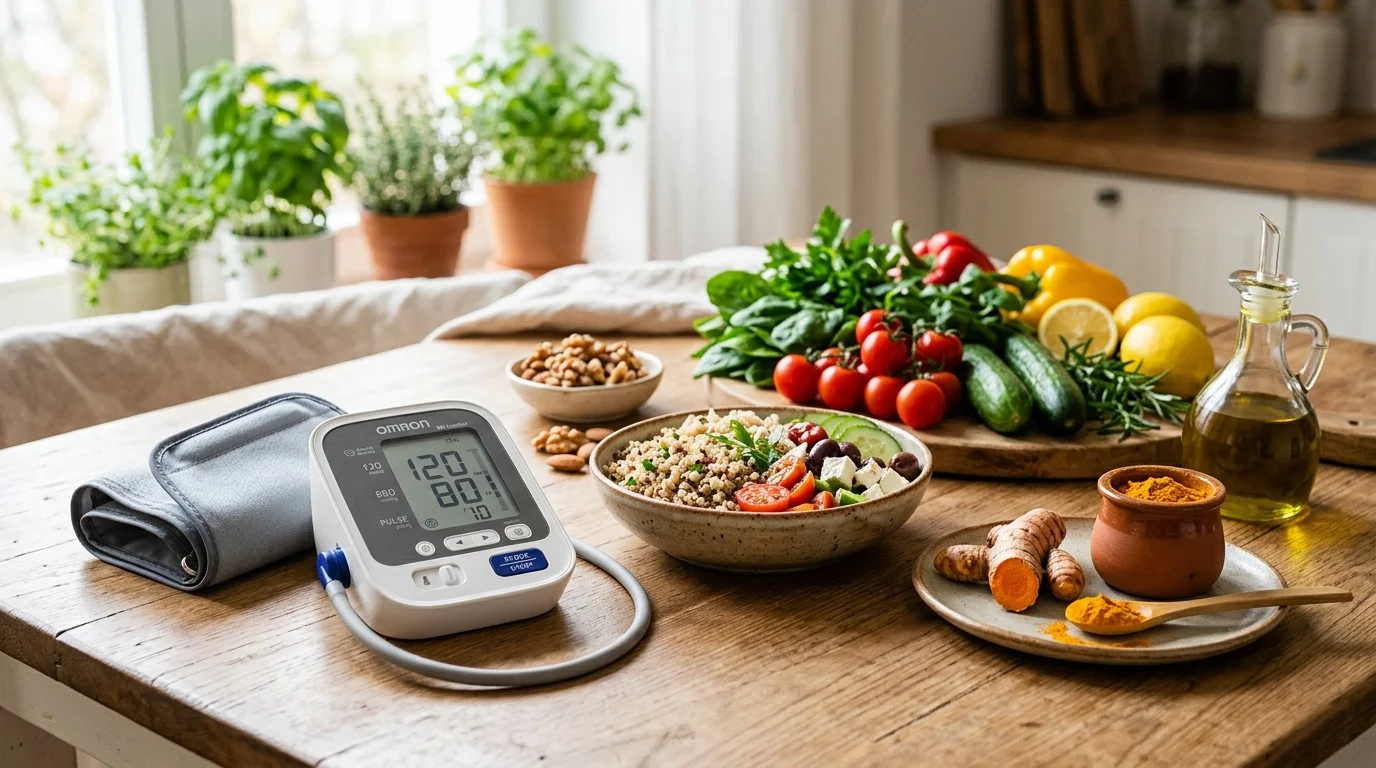
Blood pressure and cholesterol are important cardiovascular risk factors studied in turmeric and curcumin research.
Research into turmeric and curcumin has identified several potentially useful effects, but there are also important limitations to consider.
| Potential Advantages | Potential Disadvantages |
| May support healthy blood-vessel function | Evidence is still mixed |
| May affect some cholesterol levels | Not proven to prevent heart disease |
| May have modest effects on blood pressure | Can interact with some medicines |
| Curcumin has anti-inflammatory activity | Supplement formulations vary widely |
| Curcumin has antioxidant activity | Research doses may differ from dietary turmeric |
To learn more about turmeric, read our complete guide for a comprehensive overview.
Heart health is influenced by many factors, including blood pressure, cholesterol, smoking, physical activity, diet, body weight, blood sugar and genetics.
Researchers have become interested in curcumin because it may influence some biological processes connected with cardiovascular health.
These include inflammation, oxidative stress and endothelial function.
The endothelium is the thin layer of cells lining the inside of blood vessels. Healthy endothelial function helps blood vessels widen and contract appropriately and contributes to normal circulation.
Research has found possible effects of curcumin supplementation on measures of endothelial function, although findings across cardiovascular studies are not completely consistent.
This is one of the most common questions people ask about turmeric and heart health — and the research is mixed.
A 2023 systematic review and meta-analysis involving 17 studies and 1,377 participants found no significant overall reduction in either systolic or diastolic blood pressure. Some subgroup results suggested possible effects after longer supplementation or in particular groups.
Another systematic review and meta-analysis published in 2024, which included 35 randomised controlled trials, reported small reductions in both systolic and diastolic blood pressure as well as improvements in some measures of endothelial function.
The sensible conclusion is therefore not that turmeric lowers blood pressure, but that turmeric and curcumin are being investigated for possible effects on blood pressure and the results depend partly on the population and research analysed.
Blood pressure is a substantial subject in its own right and deserves more detailed coverage in a separate guide.
Turmeric and curcumin have also been studied for their effects on blood lipids.
A systematic review and meta-analysis of 64 randomised controlled trials reported statistically significant changes in total cholesterol, triglycerides, LDL cholesterol and HDL cholesterol following turmeric or curcumin supplementation.
However, there was considerable variation between studies, and factors such as formulation, dose and participant characteristics complicate interpretation.
A broader 2024 analysis of curcumin trials also found evidence for effects on some lipid measurements, while emphasising that the certainty of evidence differs substantially across health outcomes.
This does not mean turmeric should be used instead of statins or other prescribed cholesterol treatments.
Cholesterol is substantial enough to warrant its own evidence-based guide, rather than attempting to answer the entire subject here.
Curcumin has been studied for possible effects on the endothelium, the lining of blood vessels.
Some research has reported improvements in flow-mediated dilation, a measurement researcher’s use to assess how effectively blood vessels widen in response to increased blood flow.
That provides a possible reason for scientific interest in turmeric and circulation.
However, it does not mean turmeric has been proven to treat poor circulation, blocked arteries or vascular disease.
Symptoms of poor circulation can also have important medical causes and should not simply be treated with supplements without appropriate medical advice.
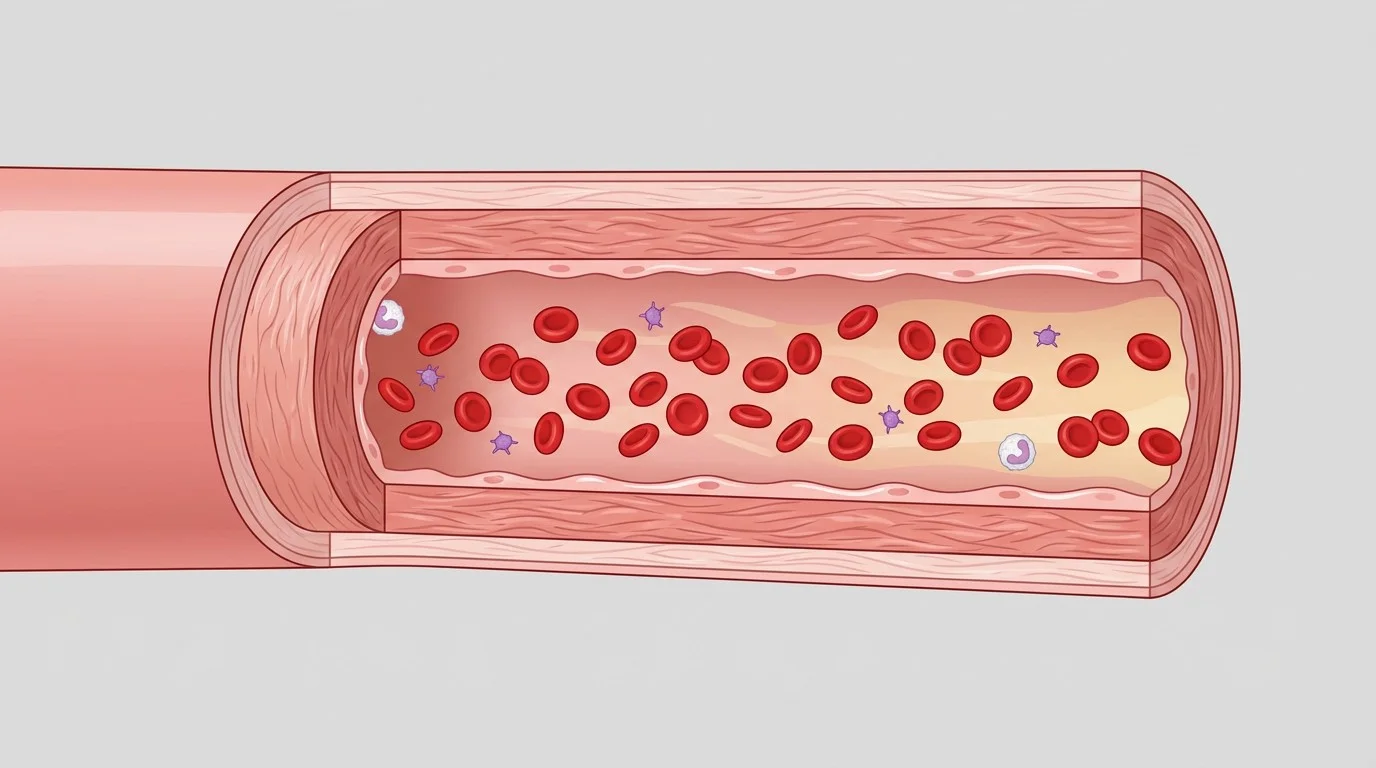
The endothelium lines the inside of blood vessels and plays an important role in healthy circulation.
Inflammation and oxidative stress are both involved in cardiovascular biology.
Curcumin has been widely researched for its potential anti-inflammatory and antioxidant activity, which is one reason it appears frequently in cardiovascular research.
However, reducing an inflammatory or oxidative-stress marker in a clinical trial is not the same as demonstrating that someone will avoid a heart attack or cardiovascular disease.
We explore these subjects separately in our guides to turmeric and inflammation and turmeric and antioxidants.
There is currently not enough evidence to conclude that taking turmeric or curcumin prevents heart disease.
Clinical studies frequently measure cardiovascular risk factors or biological markers rather than major long-term outcomes such as heart attacks, strokes or cardiovascular mortality.
This distinction is important.
An improvement in cholesterol, blood pressure or another marker may be scientifically interesting without proving that turmeric prevents cardiovascular disease.
This needs particular care because people often describe turmeric as a “natural blood thinner”.
Curcumin has been studied for effects related to platelet activity and blood clotting, and concentrated turmeric or curcumin supplements may be important for people taking anticoagulant or antiplatelet medicines.
However, describing turmeric simply as a substitute “blood thinner” can be misleading.
Turmeric should not be used as a replacement for prescribed anticoagulant or antiplatelet medication.
Because this question is primarily about safety, bleeding and medicine interactions, it deserves a separate detailed guide rather than being buried inside a general heart-health page.
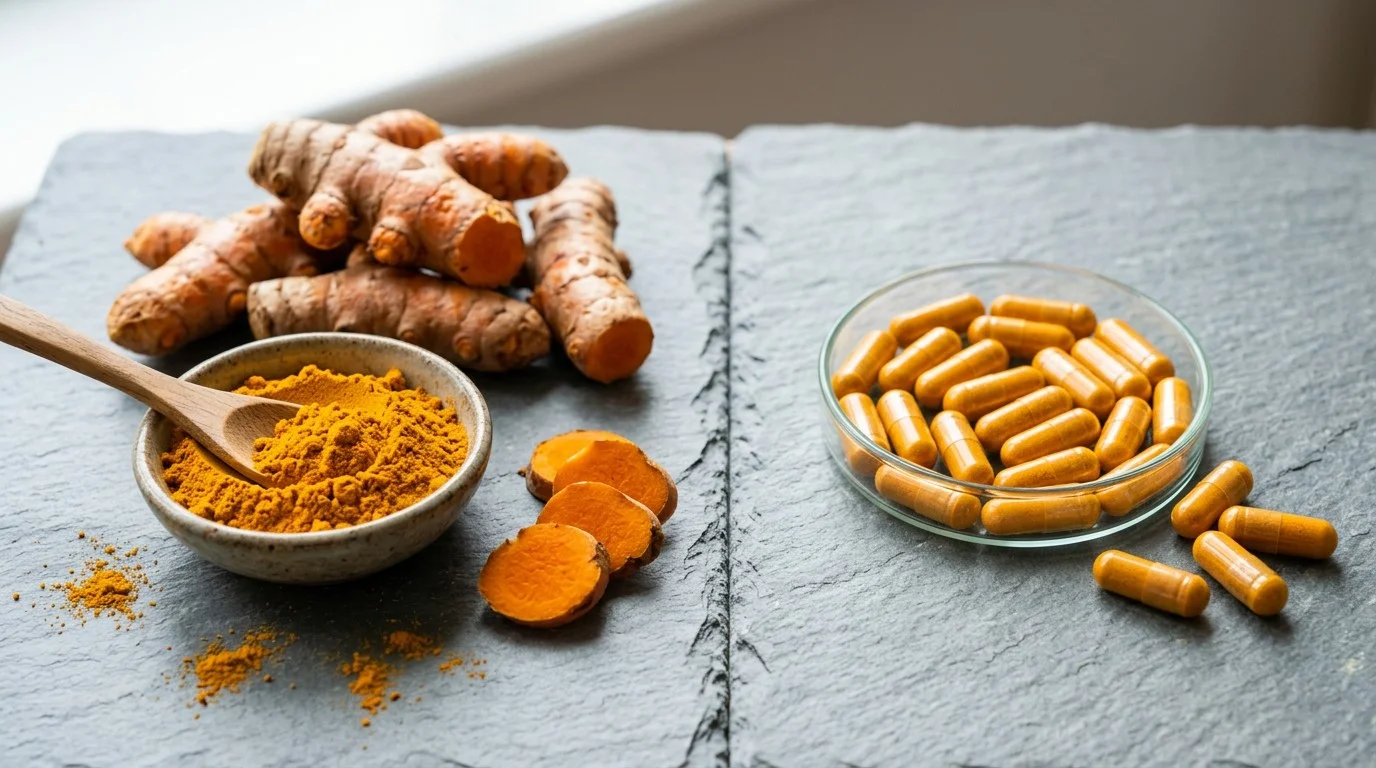
Turmeric used in food and concentrated turmeric or curcumin supplements can provide very different amounts of active compounds.
Using turmeric as a spice is very different from taking a concentrated supplement.
A meal containing turmeric typically provides much smaller amounts of curcuminoids than some extracts used in research.
Supplements may contain:
That makes it difficult to translate the results of a clinical trial directly into advice about ordinary culinary turmeric.
Turmeric and curcumin are being researched for effects on cardiovascular risk factors including blood pressure, cholesterol, inflammation and blood-vessel function.
Some findings are encouraging, but there is not enough evidence to say that turmeric prevents or treats heart disease.
The answer depends partly on whether turmeric is being eaten as food or taken as a concentrated supplement.
Turmeric used in food is generally consumed in much smaller amounts. Supplements can provide substantially larger quantities of turmeric extracts or curcumin and may therefore have different effects and safety considerations.
Turmeric or curcumin should not be regarded as an NHS-recommended replacement for established cardiovascular treatments.
People with cardiovascular conditions or those taking medicines should discuss supplements with an appropriate healthcare professional rather than stopping or changing prescribed treatment.
Turmeric used normally in food is generally different from taking concentrated turmeric or curcumin supplements.
Supplements may cause side effects and are not suitable for everyone. Safety can also depend on the formulation, dose, existing health conditions and medicines being taken.
Turmeric and curcumin supplements can cause digestive side effects in some people, including stomach discomfort, nausea or diarrhoea.
The likelihood and type of side effects can vary according to the product, dose and individual.
Yes, turmeric or curcumin supplements may interact with some medicines.
Particular care may be needed with anticoagulant or antiplatelet medicines and other medications used for cardiovascular or metabolic conditions.
Anyone taking prescribed medication should speak to a doctor or pharmacist before starting a concentrated curcumin or turmeric supplement.
Turmeric or curcumin supplements may not be suitable for everyone.
Extra care may be necessary for people taking certain medicines, those with existing medical conditions, people who are pregnant or breastfeeding, and people preparing for medical procedures.
No.
Turmeric or curcumin should not be used as a replacement for medicines prescribed to control blood pressure, cholesterol, blood clotting or cardiovascular disease.
Do not stop or change prescribed medication because of information about turmeric or supplements online.
Turmeric and curcumin are being studied for several aspects of cardiovascular health, including blood pressure, cholesterol, blood-vessel function, inflammation and oxidative stress.
Some clinical studies and meta-analyses have reported changes in cardiovascular risk markers, but the evidence is not strong enough to conclude that turmeric prevents or treats heart disease.
Turmeric may form part of a healthy diet, but heart health depends far more on the overall lifestyle — including diet, physical activity, smoking, alcohol, weight and appropriate management of blood pressure, cholesterol and other health conditions.
For people with cardiovascular conditions or those taking prescribed medication, turmeric supplements should be discussed with an appropriate healthcare professional.
The following videos and independent sources provide further information about turmeric, curcumin and heart health. They are included for informational purposes only and should not be considered medical advice.
Dr Rupy Aujla discusses turmeric alongside other spices and explains how they may fit within a healthy diet and lifestyle.
This video provides a doctor-led discussion of taking turmeric regularly, including its potential benefits, limitations and important safety considerations.
The British Heart Foundation explains the evidence surrounding turmeric supplements and heart health, including blood pressure, cholesterol, medicine interactions and the use of turmeric as part of a healthy diet.
The National Center for Complementary and Integrative Health provides an independent overview of turmeric and curcumin research, formulations and important safety considerations.
This large systematic review and meta-analysis examined 103 randomised controlled trials involving 7,216 participants, including lipid, inflammatory, metabolic and oxidative outcomes.
This systematic review and meta-analysis examined randomised controlled trials investigating blood pressure and blood-vessel function.
This systematic review and meta-analysis examined 64 randomised controlled trials involving cholesterol, triglycerides and other lipid measurements.
The information on this page is provided for general informational purposes only and is not intended to diagnose, treat, cure or prevent any disease or medical condition.
Turmeric and curcumin supplements may not be suitable for everyone and may cause side effects or interact with medicines. Always read and follow the manufacturer’s label and instructions before using any supplement.
If you are pregnant or breastfeeding, take medication, have an existing medical condition or are considering changing an existing treatment, speak to a doctor, pharmacist or other appropriately qualified healthcare professional.
Do not stop or change prescribed medication based on information provided on this website.
Written by J. Henderson
Health & Wellness Research Writer
J. Henderson writes evidence-based articles on nutrition, botanical supplements and everyday wellbeing. His work focuses on translating scientific research into clear, practical guidance that helps readers make informed decisions about natural health products.