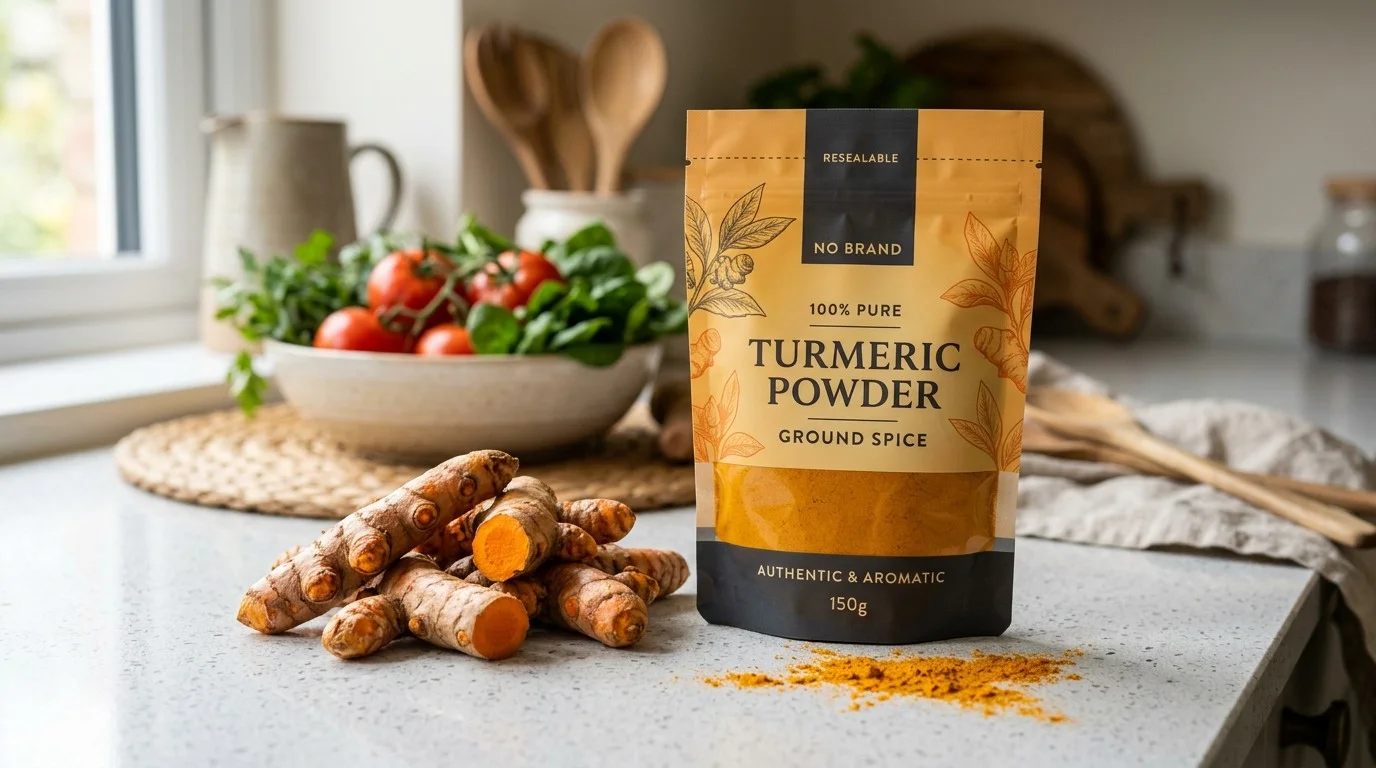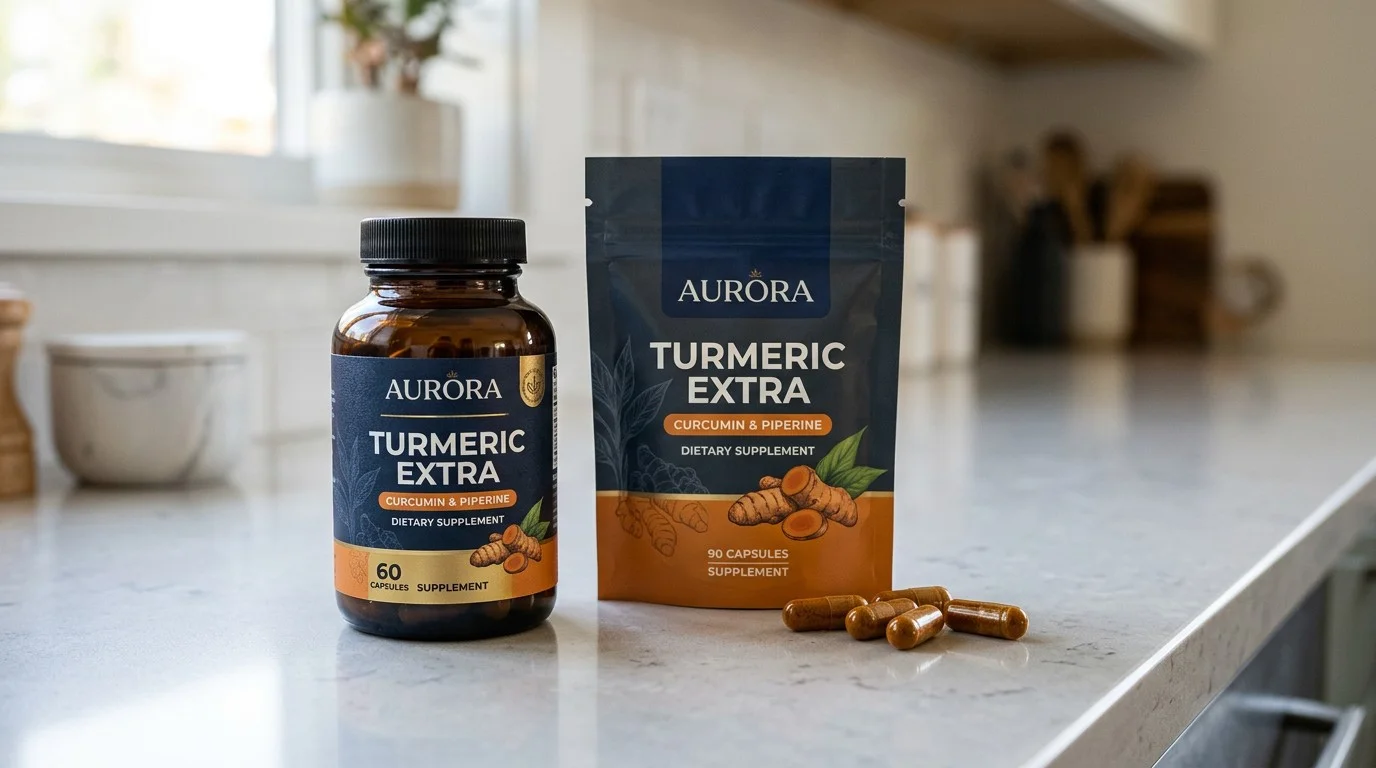
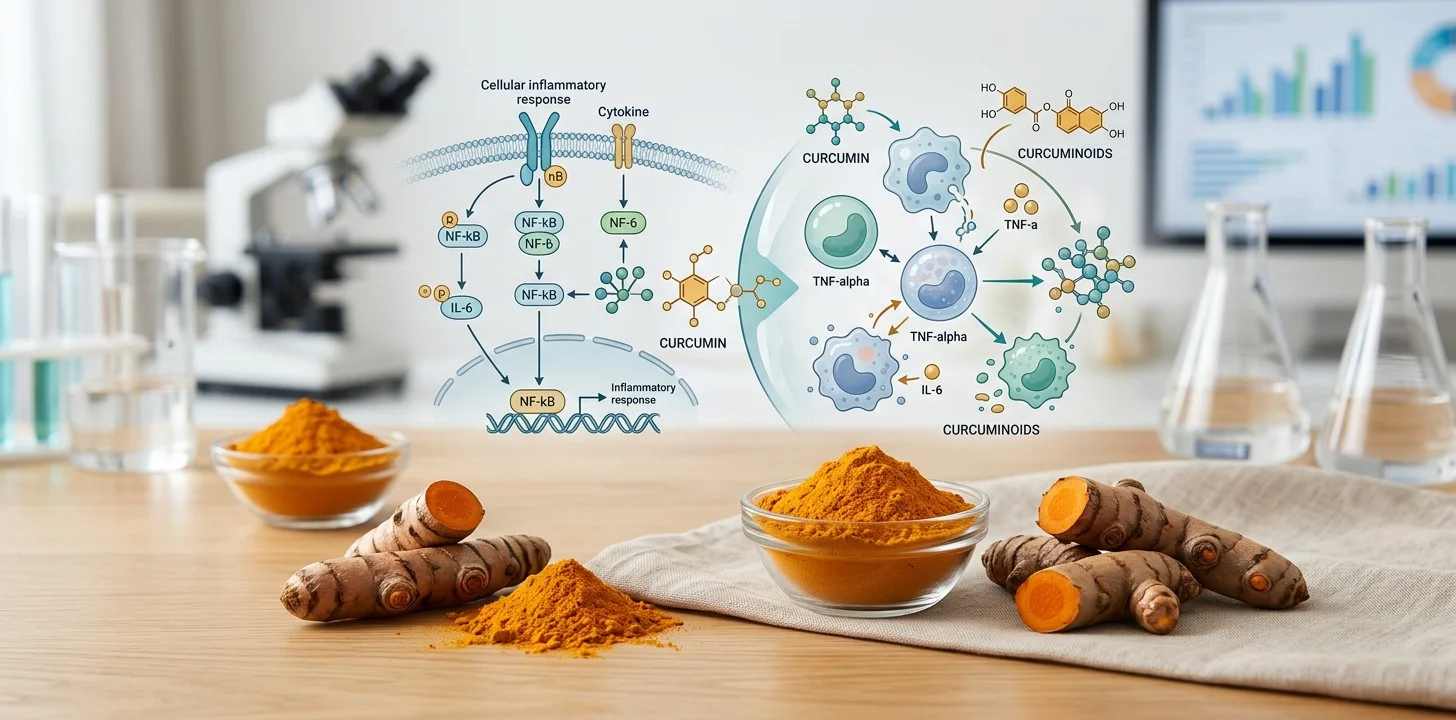
Turmeric is often described as an anti-inflammatory spice, largely because it contains curcuminoids, including curcumin. Curcumin has been widely studied for its potential effects on inflammation and inflammatory processes in the body.
Research suggests that curcumin and some turmeric extracts may influence inflammatory markers. However, this does not mean that ordinary turmeric is a proven treatment for inflammation or inflammatory diseases.
The evidence varies depending on the formulation, dose, duration of use and people being studied.
Turmeric contains curcumin and other curcuminoids that have been studied for anti-inflammatory effects. Human research suggests that curcumin supplementation may reduce some markers of inflammation, including C-reactive protein (CRP), although results are not consistent across every study or inflammatory marker.
Much of the clinical research uses curcumin, curcuminoids or concentrated turmeric extracts, rather than the turmeric powder normally used in cooking.
Explore other areas of turmeric and health:

Turmeric is widely associated with inflammation, but much of the scientific research focuses on curcumin and concentrated turmeric extracts.
People may use turmeric in food or take turmeric and curcumin supplements because of their potential anti-inflammatory properties.
Some people are interested in turmeric for general wellbeing, while others investigate it because they have conditions associated with inflammation.
Having an inflammatory medical condition is different from simply adding turmeric to a healthy diet. Persistent symptoms should be properly assessed rather than self-treated with a supplement.
Inflammation is part of the body’s normal immune response.
Acute inflammation occurs in response to problems such as an injury or infection and is an important part of healing.
Chronic inflammation lasts longer and can be associated with various health conditions. It is much more complex than simply having “too much inflammation”.
Researchers can measure substances associated with inflammatory activity in the body. These include markers such as C-reactive protein (CRP), interleukin-6 (IL-6) and tumour necrosis factor-alpha (TNF-α).
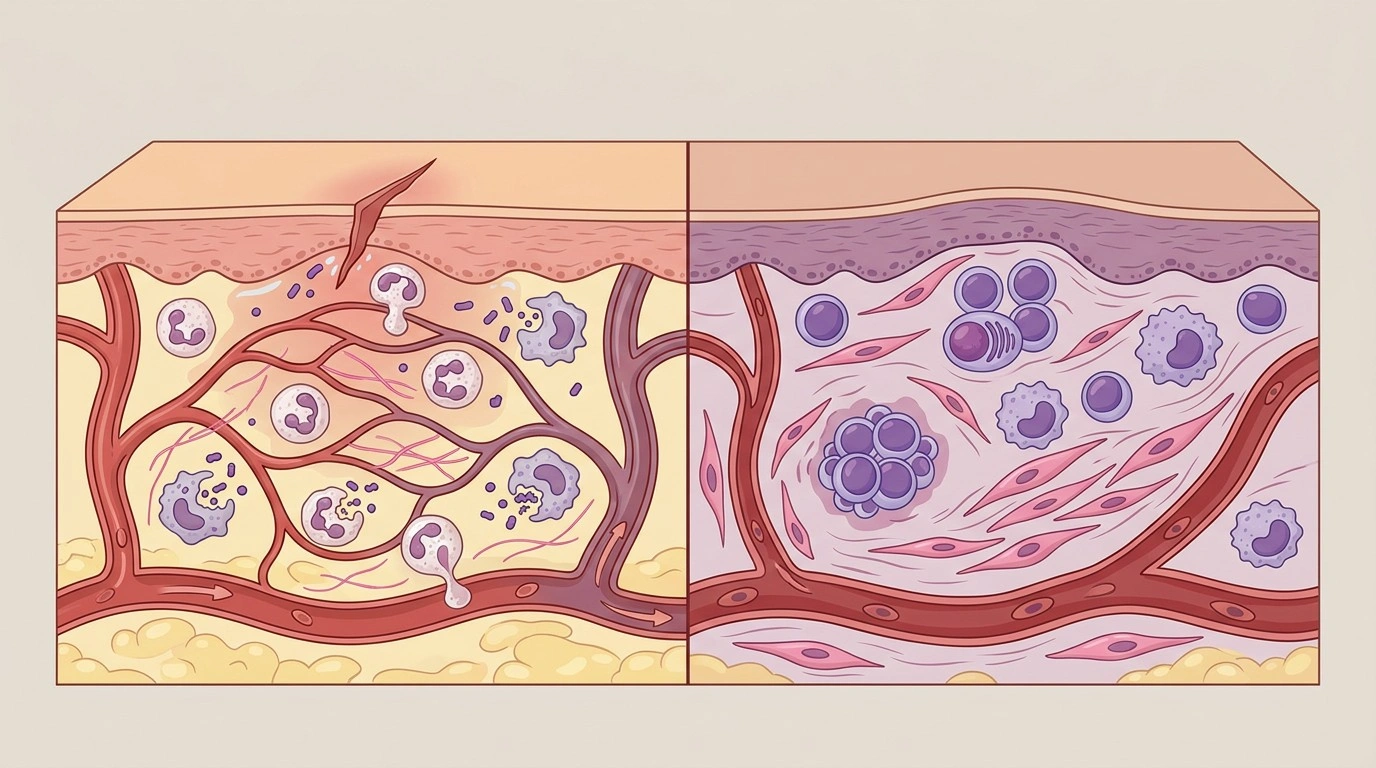
Acute inflammation is part of the body’s normal response to injury or infection, while chronic inflammation can persist over a longer period.
Turmeric has a long history of culinary and traditional use. Today, turmeric and curcumin are also widely available as dietary supplements.
Scientific studies generally investigate their effects over weeks rather than expecting an immediate response. Research examining inflammatory markers has used different durations, doses and formulations, which makes it difficult to define one expected timeframe.
Turmeric comes from the plant Curcuma longa and contains a group of natural compounds called curcuminoids.
Curcumin is the best-known and most extensively studied of these compounds.
This distinction matters because much of the research associated with turmeric and inflammation has actually investigated curcumin, mixtures of curcuminoids or concentrated turmeric extracts.
Laboratory and human research suggests that curcumin can interact with biological pathways involved in inflammation.
Researchers therefore investigate whether taking curcumin or turmeric extracts can affect measurable inflammatory markers or symptoms associated with particular health conditions.
These biological effects are interesting, but showing that a compound affects an inflammatory pathway is not the same as proving that turmeric treats an inflammatory disease.
Turmeric can be consumed as:
These forms are not equivalent. A concentrated curcumin supplement used in a clinical study may be very different from the turmeric used in cooking.
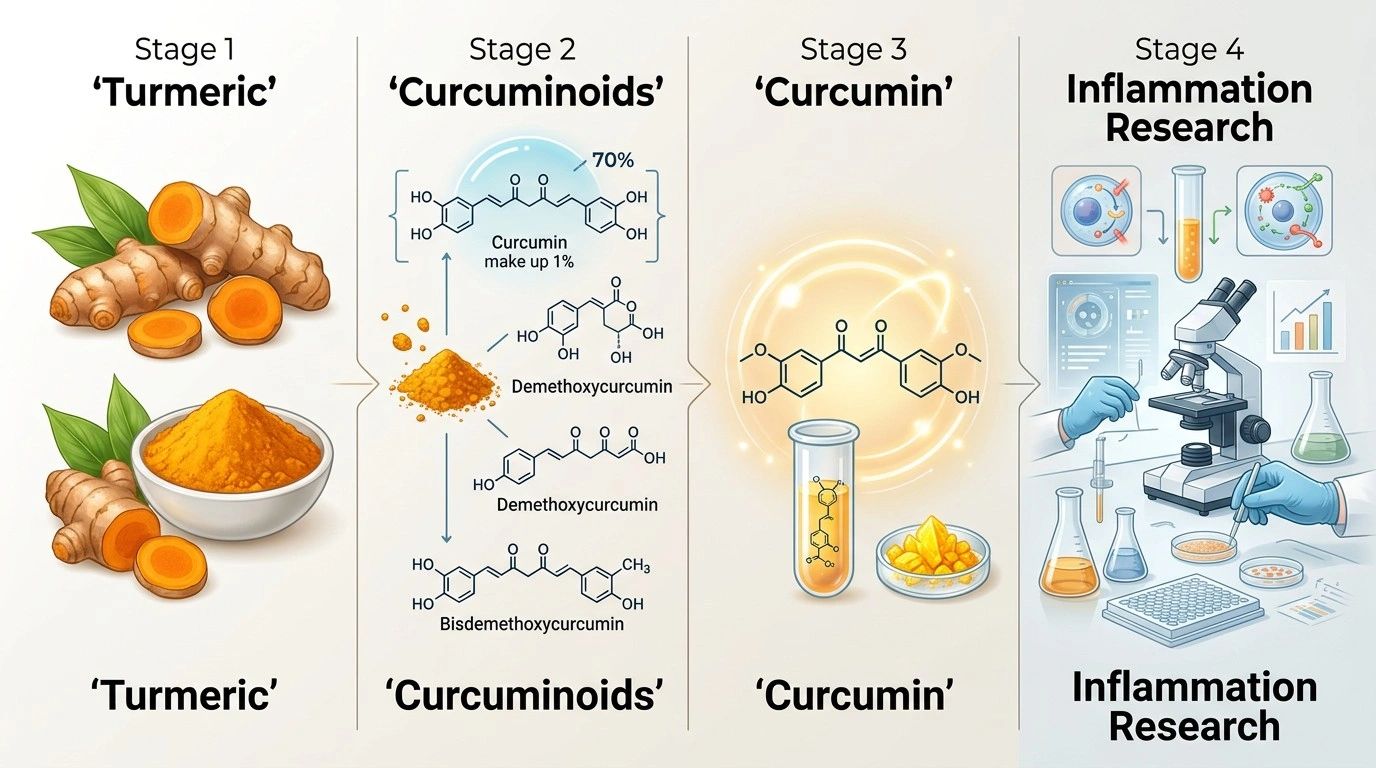
Turmeric contains curcuminoids, including curcumin, which is the compound most extensively studied in research relating to inflammation.
Turmeric is commonly described as having anti-inflammatory properties, but the answer needs some context.
Turmeric contains many naturally occurring compounds. The compounds receiving most attention in inflammation research are curcuminoids, particularly curcumin.
Human trials and systematic reviews have investigated whether supplementation can change inflammatory biomarkers.
Several reviews have reported reductions in markers such as CRP, IL-6 and TNF-α. However, studies vary considerably in their participants, doses, formulations and duration, and not every review has found significant effects across these markers.
It is therefore more accurate to say that turmeric and particularly curcumin have demonstrated potential anti-inflammatory effects in research, rather than describing turmeric as a proven treatment for inflammation.
Curcumin is the most extensively studied curcuminoid in turmeric in relation to inflammation.
Turmeric contains several curcuminoids as well as many other naturally occurring compounds. Curcumin is responsible for much of turmeric’s characteristic yellow colour and has become the main focus of research into its potential biological effects.
This explains an apparent contradiction in the way turmeric is discussed.
People commonly search for and talk about turmeric for inflammation, but scientific studies frequently investigate curcumin or concentrated curcuminoid extracts.
That doesn’t make turmeric and curcumin the same thing.
It means that when interpreting claims about turmeric’s anti-inflammatory properties, it is important to ask what researchers actually tested.
Inflammation involves a complex network of cells, signalling molecules and chemical pathways.
Laboratory research suggests that curcumin can interact with several pathways involved in inflammatory responses.
Human studies have therefore investigated whether these effects translate into measurable changes in inflammatory biomarkers.
However, the body absorbs conventional curcumin relatively poorly. Researchers have consequently studied different formulations designed to improve its bioavailability.
This is one reason why results from one curcumin product cannot automatically be applied to every turmeric supplement.
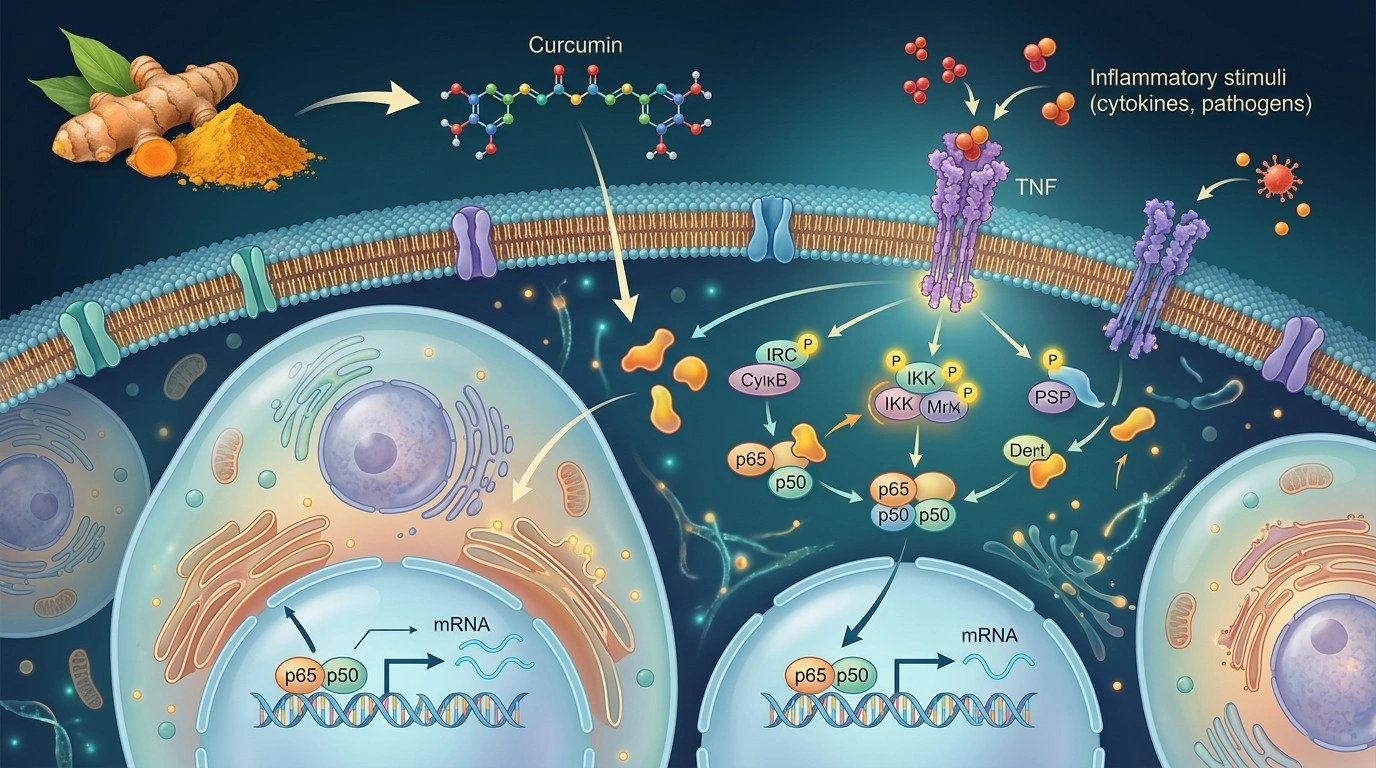
Researchers study how curcumin interacts with biological pathways involved in inflammatory responses and whether this produces measurable effects in humans.
The overall research is promising but not completely consistent.
A 2023 systematic review and meta-analysis incorporating 66 randomised controlled trials reported reductions in several inflammatory markers, including CRP, TNF-α and IL-6, following turmeric or curcumin supplementation.
An umbrella meta-analysis published the same year also reported reductions in CRP, IL-6 and TNF-α following curcumin supplementation.
Earlier research has been less conclusive. A systematic review of 19 randomised trials involving people with chronic inflammatory diseases did not find statistically significant reductions across several major inflammatory markers and reported considerable variation between studies.
This illustrates why individual studies should not be viewed in isolation.
Differences can include:
The US National Center for Complementary and Integrative Health (NCCIH) concludes that there is currently not enough evidence to determine definitively whether turmeric or curcumin is beneficial for health purposes.
So there is evidence of biological and potentially anti-inflammatory effects, but that is not the same as evidence that turmeric can treat every condition involving inflammation.
Inflammatory markers are substances that researchers can measure to help understand inflammatory activity in the body.
Three commonly studied examples are:
C-reactive protein (CRP)
A protein produced by the liver that can increase when inflammation is present.
Interleukin-6 (IL-6)
A signalling protein involved in immune and inflammatory responses.
Tumour necrosis factor-alpha (TNF-α)
Another signalling protein involved in inflammation and immune regulation.
Studies examining turmeric and curcumin frequently measure changes in these markers.
A reduction in an inflammatory marker can be scientifically interesting, but it does not automatically mean that someone will experience a noticeable health benefit or that an underlying disease has been treated.
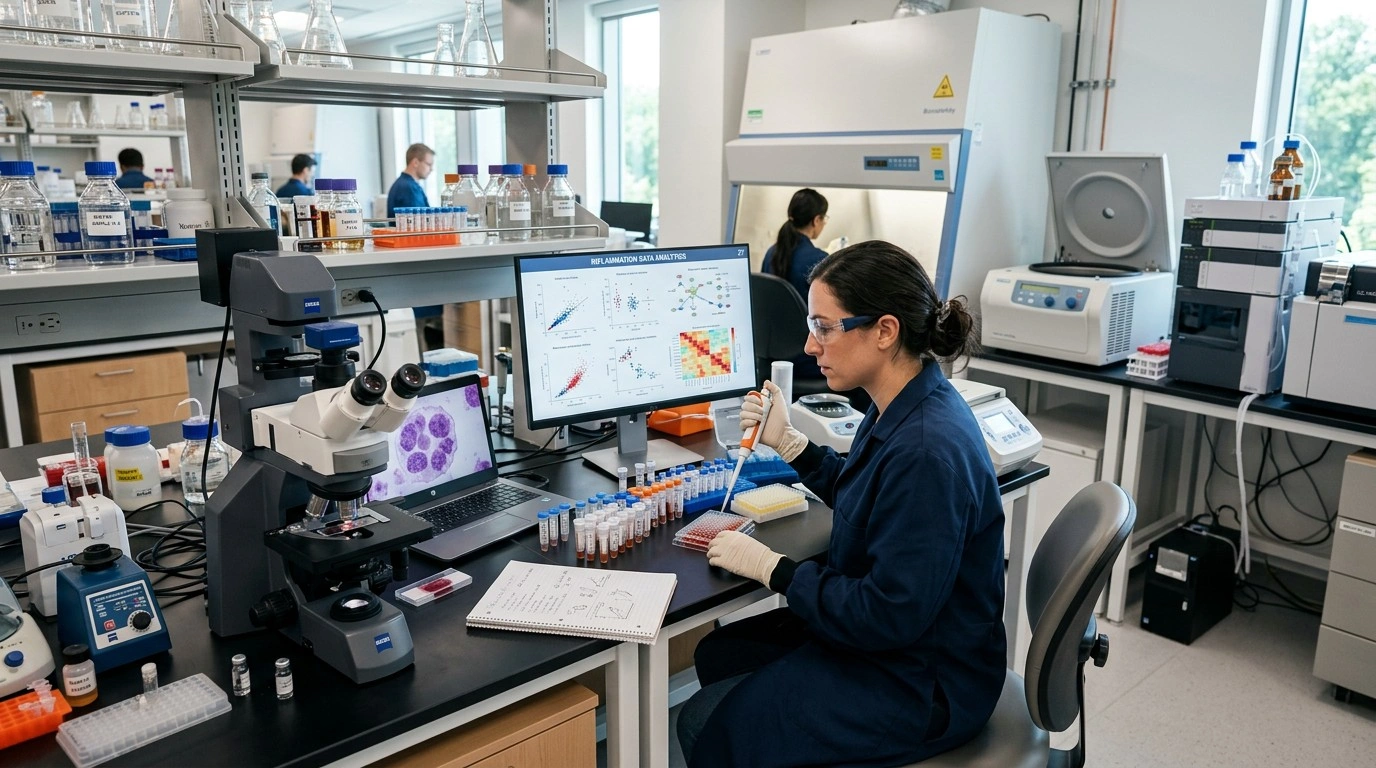
Researchers can measure inflammatory markers such as CRP, IL-6 and TNF-α when investigating potential effects of turmeric and curcumin.
Turmeric and curcumin are related, but they are not interchangeable.
Turmeric is the whole plant material used as a spice, food ingredient and supplement.
Curcumin is one of the curcuminoids naturally found within turmeric.
Most culinary turmeric contains much less curcumin than concentrated extracts used in many clinical studies.
Therefore, evidence from a study using a concentrated curcumin formulation should not automatically be interpreted as showing that ordinary turmeric powder will produce the same effect.
For a fuller explanation, see our guide to Turmeric vs Curcumin.
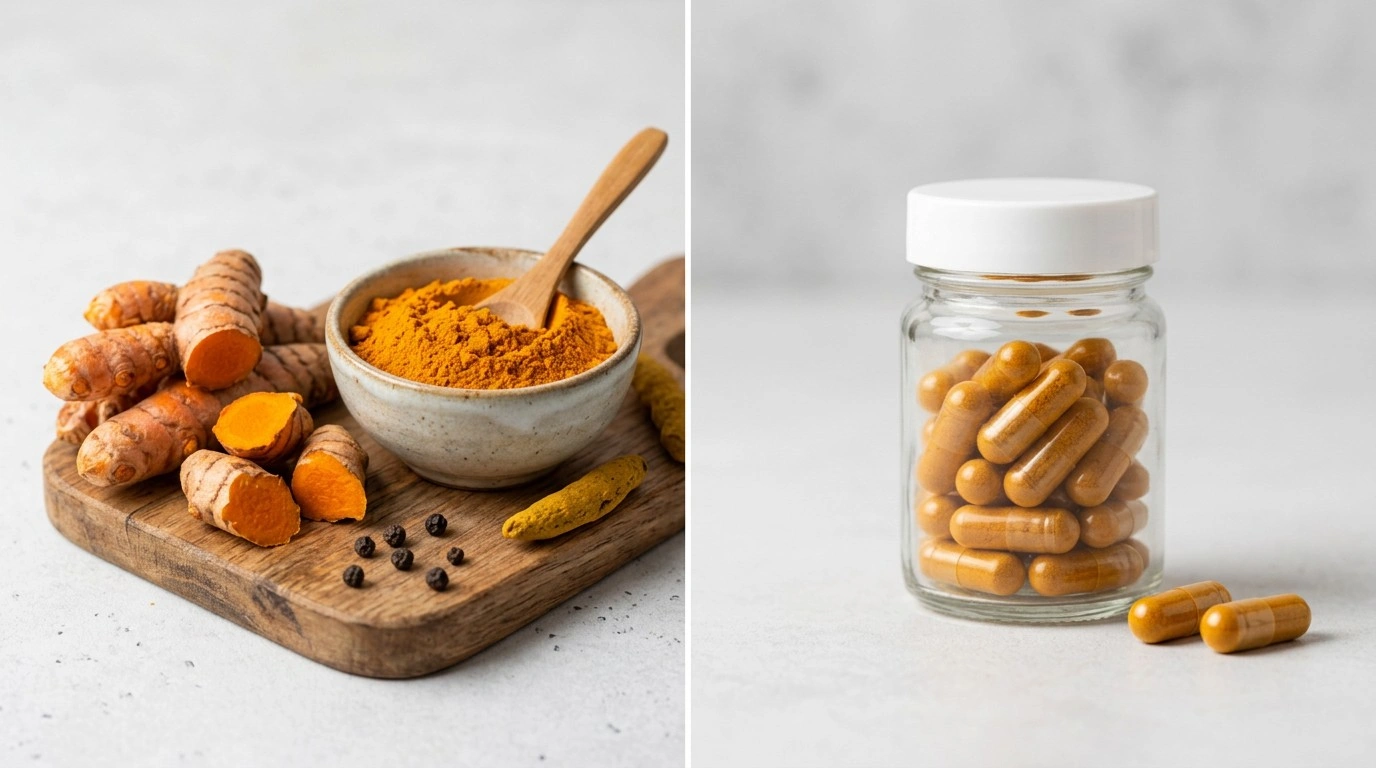
Turmeric used in food is different from the concentrated curcumin and curcuminoid extracts commonly investigated in clinical research.
Yes.
Research has used many different turmeric and curcumin preparations, including:
This makes comparisons difficult.
NCCIH notes that oral curcumin products differ in how much curcumin they contain and may also contain ingredients such as piperine.
A supplement labelled “turmeric” is therefore not necessarily equivalent to the product used in a clinical trial.
Black pepper contains piperine, a compound that can increase the bioavailability of curcumin.
For this reason, some turmeric and curcumin supplements combine the two ingredients.
Improving absorption means that more curcumin may become available to the body. It does not automatically mean that the supplement will provide greater anti-inflammatory benefits or better health outcomes.
Different approaches are also used to increase curcumin bioavailability, so black pepper is not the only formulation method.
Read more in our guide to whether black pepper increases turmeric absorption.
There is no universally established dose of turmeric or curcumin for reducing inflammation.
Clinical trials have used widely differing doses and formulations. This makes it difficult to translate research into a single amount suitable for everyone.
The amount of turmeric used in cooking is also very different from the concentrated extracts commonly investigated in clinical trials.
More is not necessarily better.
Higher-dose or enhanced-absorption products can also increase exposure to curcumin and may carry different safety considerations.
If you are considering a supplement because of an existing health condition, discuss the product and dose with a doctor, pharmacist or other appropriately qualified healthcare professional.
Turmeric and curcumin should not be considered immediate anti-inflammatory treatments.
Research generally investigates supplementation over several weeks or longer, rather than looking for an effect within hours or days.
For example, one systematic review of trials involving chronic inflammatory diseases reported study durations ranging from four to sixteen weeks.
That does not mean turmeric will “work” within that timeframe for an individual.
The effect may depend on the condition being studied, the supplement formulation, dose, duration and the individual taking it.
There is therefore no reliable universal answer for how quickly turmeric reduces inflammation.
There is no single best way to take turmeric for everyone.
Turmeric can simply form part of the diet as a spice or food ingredient. Supplements provide a more concentrated amount and may contain turmeric extracts, curcuminoids or curcumin.
If choosing a supplement, useful things to check include:
A formulation with greater absorption should not automatically be assumed to be better.
NCCIH reports that liver injury has occurred in some people taking highly bioavailable curcumin formulations, which is another reason not to treat maximum absorption as the only measure of quality.

Turmeric can be used as an everyday food ingredient, while concentrated turmeric and curcumin supplements are quite different from culinary amounts.
Research suggests that turmeric and particularly curcumin supplementation may reduce some inflammatory markers, but results differ between studies.
This provides evidence of potential anti-inflammatory activity, but does not prove that turmeric will reduce inflammation in every person or treat every inflammatory condition.
Curcumin has been investigated in people with several conditions associated with chronic inflammation.
Research suggests possible effects on inflammatory markers, but evidence varies considerably between conditions and products.
Anyone with persistent or unexplained symptoms should seek medical advice rather than relying on turmeric to manage the underlying cause.
There is not enough evidence to say that one is universally better.
Turmeric is the whole plant material, whereas curcumin is one of its most studied compounds. Much of the clinical research into inflammation uses curcumin, curcuminoids or concentrated turmeric extracts rather than culinary turmeric.
There is no established time of day when turmeric or curcumin has been shown to be most effective for inflammation.
If taking a supplement, follow the manufacturer’s directions and consider any instructions about taking it with food.
Turmeric is commonly consumed with food.
Supplements are more concentrated and require greater care. NCCIH states that conventionally formulated oral turmeric or curcumin is likely safe in recommended amounts for up to two or three months, but evidence about longer-term supplemental use is more limited.
Turmeric consumed as a normal food ingredient is generally different from taking concentrated supplements.
Supplement safety depends on factors including the dose, formulation, duration of use, medicines being taken and the individual’s health.
Highly bioavailable curcumin formulations have also been associated with reports of liver injury.
Oral turmeric and curcumin can cause side effects including stomach upset, nausea, vomiting, acid reflux, diarrhoea or constipation.
Stop taking a supplement and seek appropriate medical advice if you develop concerning symptoms.
Turmeric and curcumin supplements may not be appropriate alongside some medicines or for people with particular health conditions.
If you regularly take medication, have a medical condition, are pregnant or breastfeeding, or are preparing for surgery, speak to a doctor or pharmacist before taking a turmeric or curcumin supplement.
Turmeric contains curcuminoids, including curcumin, which have been extensively investigated for potential anti-inflammatory effects.
Human research suggests that turmeric or curcumin supplementation may reduce some inflammatory markers, including CRP, IL-6 and TNF-α. However, findings vary between studies and not every trial or review has produced the same results.
Much of the research involves concentrated curcumin, curcuminoids or turmeric extracts rather than ordinary culinary turmeric.
There is no universally established dose or timeframe for using turmeric to reduce inflammation, and turmeric should not be considered a replacement for appropriate diagnosis or medical treatment.
This video provides an accessible overview of turmeric and curcumin, including the research into their potential effects on inflammation and pain.
The following independent sources provide further information about turmeric, curcumin and inflammation. They are included for informational purposes only and should not be considered medical advice.
A UK perspective on inflammation, diet and foods associated with anti-inflammatory effects, including turmeric, with useful context about the limitations of supplement and extract research.
An independent overview of the current evidence for turmeric and curcumin, including important information about supplement safety and bioavailability.
A systematic review and meta-analysis examining the effects of turmeric and curcumin supplementation on inflammatory and oxidative-stress markers.
The information on this page is provided for general informational purposes only and is not intended to diagnose, treat, cure or prevent any disease or medical condition.
Turmeric and curcumin supplements may not be suitable for everyone and may cause side effects or interact with medicines. If you have an inflammatory condition or another medical condition, are pregnant or breastfeeding, take medication or are considering changing an existing treatment, speak to a doctor, pharmacist or other appropriately qualified healthcare professional.
Do not stop or change prescribed medication based on information provided on this website.
Written by J. Henderson
Health & Wellness Research Writer
J. Henderson writes evidence-based articles on nutrition, botanical supplements and everyday wellbeing. His work focuses on translating scientific research into clear, practical guidance that helps readers make informed decisions about natural health products.