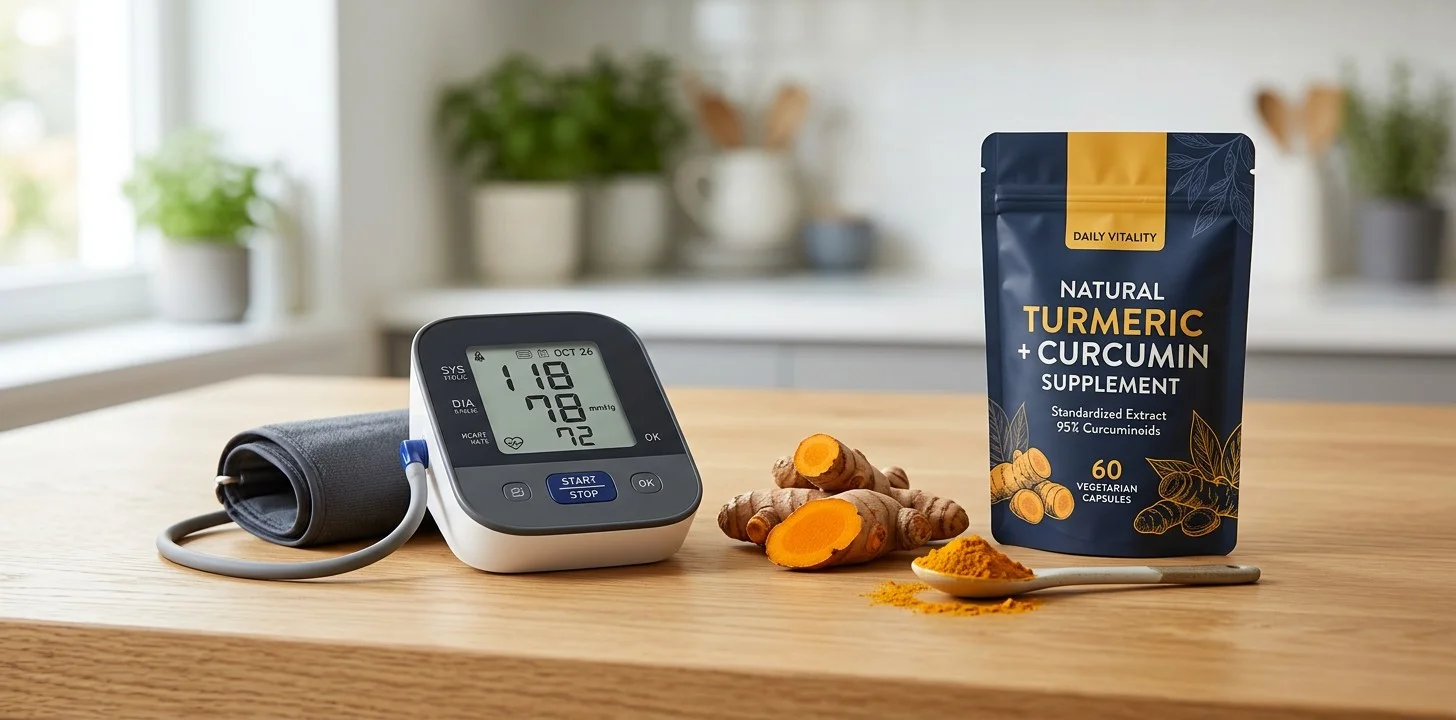
Turmeric and curcumin may have a small effect on blood pressure in some people, but the scientific evidence is mixed.
Some studies have reported modest reductions in blood pressure, particularly systolic blood pressure, while others have found little or no significant effect.
Most research has investigated turmeric or curcumin supplements rather than the amounts of turmeric normally used in food.
Turmeric should not be considered a treatment for high blood pressure or used as a replacement for prescribed blood pressure medicine.
Anyone with high blood pressure who is considering a turmeric or curcumin supplement should speak to their doctor or pharmacist, particularly if they take medication.
Explore other areas of turmeric and health:

Turmeric can form part of a healthy diet and lifestyle, but it should not replace established approaches to managing high blood pressure.
Blood pressure is the force of blood pushing against the walls of your blood vessels as your heart pumps blood around your body.
A blood pressure reading contains two numbers.
The systolic pressure is the higher number and measures the pressure when your heart pumps.
The diastolic pressure is the lower number and measures the pressure when your heart relaxes between beats.
High blood pressure, also called hypertension, means your blood pressure remains higher than recommended.
According to the NHS, blood pressure is usually considered high at 140/90 mmHg or above when measured by a healthcare professional, or 135/85 mmHg or above when measured at home.
High blood pressure often causes no obvious symptoms, which is why having it measured is important.
People may investigate turmeric because they have high blood pressure, want to support their cardiovascular health or have seen claims that turmeric or curcumin can lower blood pressure.
Some may already be taking blood pressure medication, making supplement safety and possible interactions particularly important.
Turmeric contains naturally occurring compounds called curcuminoids, the best known of which is curcumin.
Curcumin has been investigated for several biological effects, including its potential influence on inflammation, oxidative stress and blood-vessel function.
However, evidence that a compound affects a biological process does not automatically mean that taking it will produce a meaningful reduction in blood pressure.
Research has generally investigated turmeric or curcumin taken regularly over a period of time rather than expecting an immediate effect after one meal or supplement.
Study duration, dosage, formulation and participant health vary considerably, making it difficult to give a reliable timeframe.
Most of the evidence comes from clinical trials investigating turmeric or curcumin supplements.
Researchers have combined these trials in systematic reviews and meta-analyses, but the conclusions have not been completely consistent.
This is one reason turmeric should not be regarded as an established treatment for high blood pressure.
Researchers have investigated several possible mechanisms, including effects on blood-vessel function, inflammation and oxidative stress.
These remain areas of research.
For someone with high blood pressure, the important question is not simply whether curcumin affects a biological process, but whether taking it produces a meaningful and reliable improvement in blood pressure and health.
| Question | Current Evidence |
| Can turmeric lower blood pressure? | Possibly slightly in some people, but evidence is mixed |
| Is the effect large? | Reported average effects are generally small |
| Is systolic pressure affected? | Some studies report modest reductions |
| Is diastolic pressure affected? | Evidence is less consistent |
| Is turmeric a hypertension treatment? | No |
| Can turmeric replace medication? | No |
| Can supplements interact with medicines? | Yes, interactions are possible |
| Is turmeric in food the same as a supplement? | No, supplements can provide much more concentrated amounts |
Interest in turmeric and blood pressure centres mainly on curcumin, one of the principal curcuminoids found naturally in turmeric.
Curcumin has antioxidant and anti-inflammatory activity and has also been investigated for possible effects on the lining and function of blood vessels.
Healthy blood vessels need to expand and contract appropriately as blood moves around the body. Researchers have therefore investigated whether curcumin could influence vascular function and, in turn, blood pressure.
This provides a plausible reason for research, but it does not prove that turmeric lowers blood pressure enough to treat hypertension.
The British Heart Foundation says that although some studies have reported positive effects from turmeric supplements on high blood pressure and cholesterol, findings have varied and there is currently no strong evidence that turmeric supplements improve heart health.
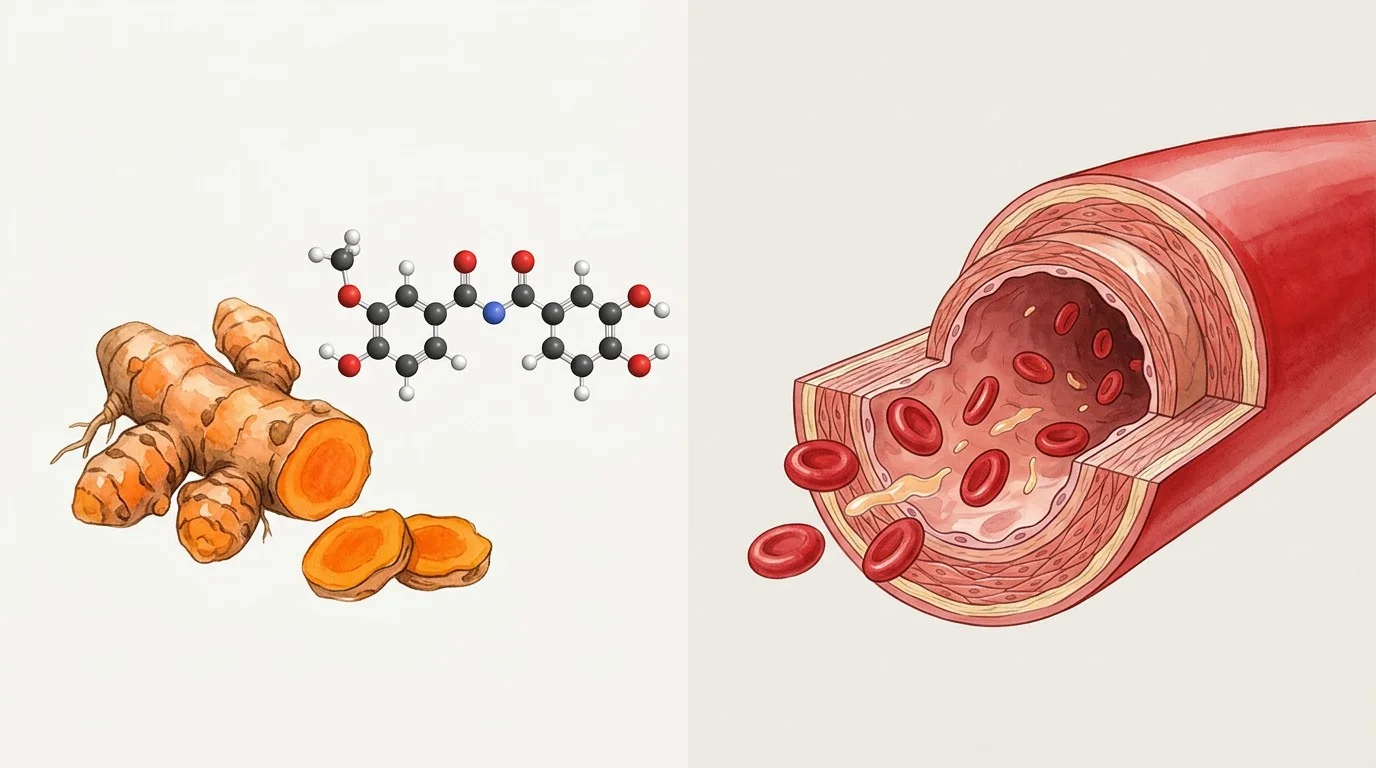
Researchers are investigating whether curcumin may influence blood-vessel function and blood pressure.
Research into turmeric, curcumin and blood pressure has produced mixed results.
Some clinical trials have reported reductions in blood pressure, while others have found little or no significant change.
A systematic review and meta-analysis of 35 randomised controlled trials found average reductions of approximately 2.0 mmHg in systolic blood pressure and 0.8 mmHg in diastolic blood pressure. The researchers concluded that further research was still needed.
More recent research has also examined particular populations rather than everybody with high blood pressure. A meta-analysis of 15 randomised controlled trials involving 855 adults with prediabetes or type 2 diabetes reported an average reduction of about 2.7 mmHg in systolic blood pressure, but no statistically significant overall reduction in diastolic pressure.
These results should not be interpreted as meaning turmeric will lower everyone’s systolic blood pressure by two or three points. They are averages from particular research populations using different products and study designs.
Differences between studies can include:
This makes it difficult to predict how a particular turmeric supplement will affect an individual person’s blood pressure.
| Potential Advantages | Potential Disadvantages |
| May have a small effect on blood pressure | Evidence is mixed |
| May support healthy blood-vessel function | Effects appear modest |
| Curcumin has been widely researched | Studies use different formulations and doses |
| Turmeric can add flavour to healthy foods | Supplements can cause side effects |
| Using spices may help reduce reliance on salt | Supplements may interact with medicines |
Where reductions have been reported, they have generally been small rather than dramatic.
For example, the 35-trial meta-analysis reported average reductions of approximately 2.0 mmHg in systolic pressure and less than 1 mmHg in diastolic pressure.
A newer analysis involving people with prediabetes or type 2 diabetes found a reduction of approximately 2.7 mmHg in systolic pressure. Because this involved a particular population, it should not be assumed that the same effect would occur in everybody with high blood pressure.
This distinction matters.
A statistically significant result in a research study does not necessarily mean turmeric will produce a noticeable or clinically meaningful reduction for an individual.
Some people may experience no measurable effect at all.

A blood pressure reading contains systolic and diastolic measurements representing different stages of the heartbeat.
Possibly.
Systolic blood pressure is the first and higher number in a blood pressure reading. It measures the pressure when the heart pumps blood around the body.
Diastolic blood pressure is the second and lower number. It measures the pressure when the heart relaxes between beats.
Some research has found a larger or more consistent effect on systolic blood pressure than diastolic blood pressure.
For example, the recent analysis involving people with prediabetes or type 2 diabetes found a reduction in systolic blood pressure but no statistically significant overall reduction in diastolic pressure.
However, findings vary between studies.
Neither effect is sufficiently predictable to make turmeric an established treatment for hypertension.
There is no reliable timeframe for turmeric to lower blood pressure.
Research studies generally investigate regular supplementation over weeks or months rather than treating turmeric as a fast-acting way of reducing blood pressure.
Differences between study durations, formulations, doses and participants make it difficult to say that turmeric will lower someone’s blood pressure after a particular number of days or weeks.
Someone with high blood pressure should therefore not wait for turmeric to work instead of seeking appropriate medical advice or taking prescribed medication.
Research into “turmeric” does not necessarily mean researchers simply give participants ordinary turmeric powder.
Clinical trials may investigate:
This distinction is important.
Curcumin is naturally difficult for the body to absorb, and supplement manufacturers use different formulations and ingredients to try to increase its bioavailability.
NCCIH notes that oral curcumin products vary in their curcumin content and may contain other ingredients, such as piperine from black pepper, making the available evidence difficult to compare.
The amount and form of curcumin used in research can therefore be very different from the turmeric someone adds to food.

Turmeric used as a food ingredient is different from concentrated turmeric or curcumin supplements used in many studies.
Using turmeric in cooking and taking a concentrated turmeric or curcumin supplement are not the same thing.
Turmeric is widely used as a spice and can form part of a healthy balanced diet.
Herbs and spices can also add flavour to food while reducing the need to add as much salt. This is particularly relevant to blood pressure because excessive salt consumption can contribute to high blood pressure.
Turmeric supplements may contain concentrated turmeric extracts, curcuminoids or curcumin.
Products can also differ substantially in their formulation and how well their curcumin is absorbed.
NCCIH says that many curcumin products designed to increase bioavailability are now available and that liver damage has been reported in some people consuming highly bioavailable formulations.
A supplement therefore should not be assumed to have the same effects or safety profile as turmeric used normally in food.
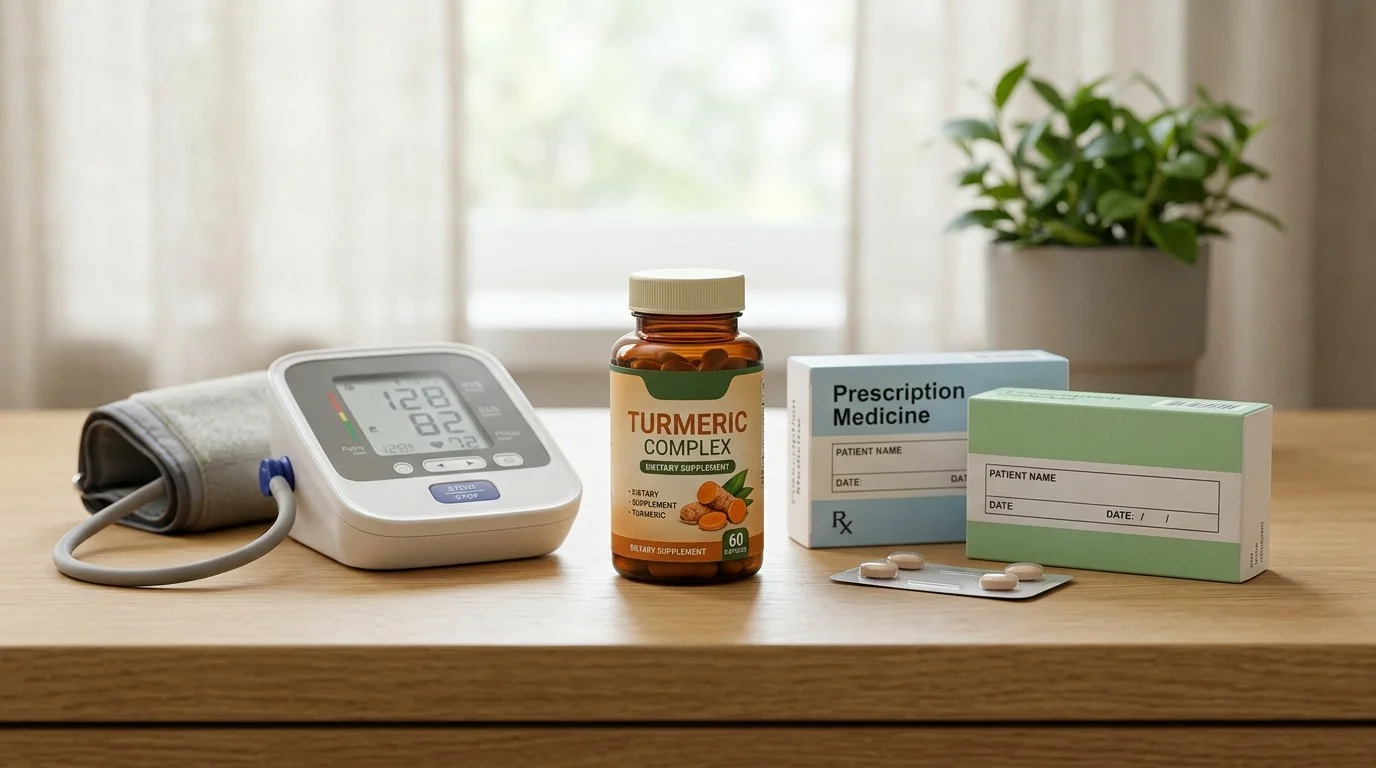
People taking blood pressure or other prescription medicines should check with a doctor or pharmacist before using concentrated turmeric supplements.
People taking medicine for high blood pressure should speak to their doctor or pharmacist before adding a turmeric or curcumin supplement.
This does not mean turmeric is proven to interact with every blood pressure medicine. The potential for an interaction depends on the supplement, medication and individual.
However, supplements can affect prescribed medicines, and the British Heart Foundation specifically advises people taking heart medicines to tell their doctor or pharmacist about supplements they use.
There is another important distinction.
Some people with high blood pressure may also take anticoagulant or antiplatelet medicines. The British Heart Foundation advises that high doses of turmeric may have blood-thinning effects and could increase bleeding risk when combined with anticoagulants such as warfarin or direct oral anticoagulants (DOACs).
That is a separate issue from whether turmeric lowers blood pressure, but it is an important safety consideration for some people reading this page.
Turmeric can be used as a food ingredient by most people, but there is not strong enough evidence to recommend taking a turmeric supplement specifically to treat high blood pressure.
If you have hypertension and want to use a turmeric or curcumin supplement, discuss it with your doctor or pharmacist, particularly if you take medication.
This depends on the medicine, supplement and individual.
People taking blood pressure tablets should check with their doctor or pharmacist before taking concentrated turmeric or curcumin supplements.
Do not stop or alter prescribed blood pressure medication in order to take turmeric.
There is no simple list that applies safely to everyone.
Possible interactions depend on the medicine and turmeric or curcumin product being used.
Particular caution is appropriate for people taking medicines that affect blood clotting. The British Heart Foundation warns that high-dose turmeric could increase bleeding risk when combined with anticoagulants such as warfarin or DOACs.
Anyone taking prescription medicine should tell their doctor or pharmacist about supplements they are considering.
This does not mean the NHS says nobody can consume turmeric. Turmeric is commonly used as a food ingredient.
It means turmeric supplements are not part of established NHS treatment for hypertension.
Research suggests turmeric or curcumin may produce a small reduction in blood pressure in some people, but results vary.
There is no guarantee that taking turmeric regularly will lower an individual’s blood pressure.
There is no established timeframe.
Research generally examines supplementation over weeks or months, and results vary between studies.
Turmeric should not be treated as a quick way to lower high blood pressure.
The way to determine whether blood pressure has changed is to measure it correctly rather than relying on how you feel.
High blood pressure usually has no symptoms, and many people do not realise they have it.
People being treated for hypertension should follow the monitoring advice provided by their healthcare professional.
Turmeric supplements are tolerated by many people, but they are not risk-free.
NCCIH reports that oral turmeric can cause nausea, vomiting, acid reflux, stomach upset, diarrhoea or constipation. Liver damage has also been reported in some people taking certain highly bioavailable curcumin formulations.
Safety can also depend on medication, medical conditions, dose and formulation.
Possible side effects of oral turmeric or curcumin include:
More serious reactions appear to be less common, but liver injury has been reported with some products formulated to increase curcumin absorption.
Yes, turmeric supplements may interact with some medicines.
NCCIH recommends that people taking medicines talk to their healthcare provider before using herbal products because some herbs and medicines can interact in harmful ways.
This is particularly important for people taking several medicines or medicines where changes in their effects could have serious consequences.
No.
Turmeric or curcumin should not be used as a replacement for prescribed blood pressure medication.
The NHS recommends lifestyle changes and, when necessary, medicines to manage high blood pressure and reduce the risk of associated health problems.
Anyone considering changing or stopping prescribed medication should speak to their doctor.
Turmeric should be viewed as one small part of a healthy diet and lifestyle, not as a treatment for high blood pressure.
Managing high blood pressure normally involves measures such as a balanced diet, regular physical activity, maintaining a healthy weight, limiting salt and excessive alcohol, and not smoking. Some people also need prescribed medication.
Turmeric can add flavour to food, but it should not replace proven lifestyle measures, blood pressure monitoring or medical treatment.
Turmeric and curcumin have been investigated for their possible effects on blood pressure, but current evidence remains mixed.
Some studies suggest small reductions, particularly in systolic blood pressure, while the size and consistency of the effect vary between studies and populations.
Research also differs considerably in the turmeric or curcumin formulations used, their dosage, absorption and study duration.
For someone with high blood pressure, turmeric can form part of a healthy diet, but it should not be regarded as a treatment for hypertension or a replacement for prescribed medication.
Anyone taking blood pressure medicine, anticoagulants or other prescription medication should speak to a doctor or pharmacist before using a concentrated turmeric or curcumin supplement.
The following video and independent sources provide further information about turmeric, blood pressure, supplements and healthy living. They are included for informational purposes only and should not be considered medical advice.
This video discusses one doctor’s personal perspective on supplements and the importance of approaching them as part of a broader healthy lifestyle.
The views expressed are those of the individual presenter and should not be regarded as medical advice or as evidence that turmeric can prevent or treat high blood pressure.
The British Heart Foundation provides a useful overview of the evidence surrounding turmeric supplements, cardiovascular health and blood pressure, including important considerations for people taking certain medicines.
For a broader understanding of hypertension, the NHS explains high blood pressure, its health risks and how it is managed, including lifestyle measures, blood pressure monitoring and medication.
The National Center for Complementary and Integrative Health provides an evidence-based overview of turmeric and curcumin, including what is currently known about their uses, possible side effects and supplement safety.
For readers interested in the research itself, this systematic review and meta-analysis of 35 randomised controlled trials examined the effects of curcumin and turmeric supplementation on blood pressure and endothelial function.
A more recent systematic review and meta-analysis of 15 randomised controlled trials involving 855 participants examined the effects of turmeric supplementation on blood pressure specifically in adults with prediabetes or type 2 diabetes.
This content is provided for informational purposes only and is not intended to diagnose, treat, cure or prevent any disease or medical condition.
It should not replace advice from a doctor, pharmacist or other qualified healthcare professional.
If you have high blood pressure, take prescription medicines, are pregnant or breastfeeding, or have an existing medical condition, speak to an appropriate healthcare professional before taking turmeric or curcumin supplements.
Do not stop or change prescribed blood pressure medication without medical advice.
Always read and follow the manufacturer’s label and instructions before using any supplement
Written by J. Henderson
Health & Wellness Research Writer
J. Henderson writes evidence-based articles on nutrition, botanical supplements and everyday wellbeing. His work focuses on translating scientific research into clear, practical guidance that helps readers make informed decisions about natural health products.