Curcumin Supplements
Evidence-Based Guide to Curcumin Supplements, Formulations and Absorption
Published: 11 September 2026
Updated: 5 October 2026
Quick Answer
What Are Curcumin Supplements?
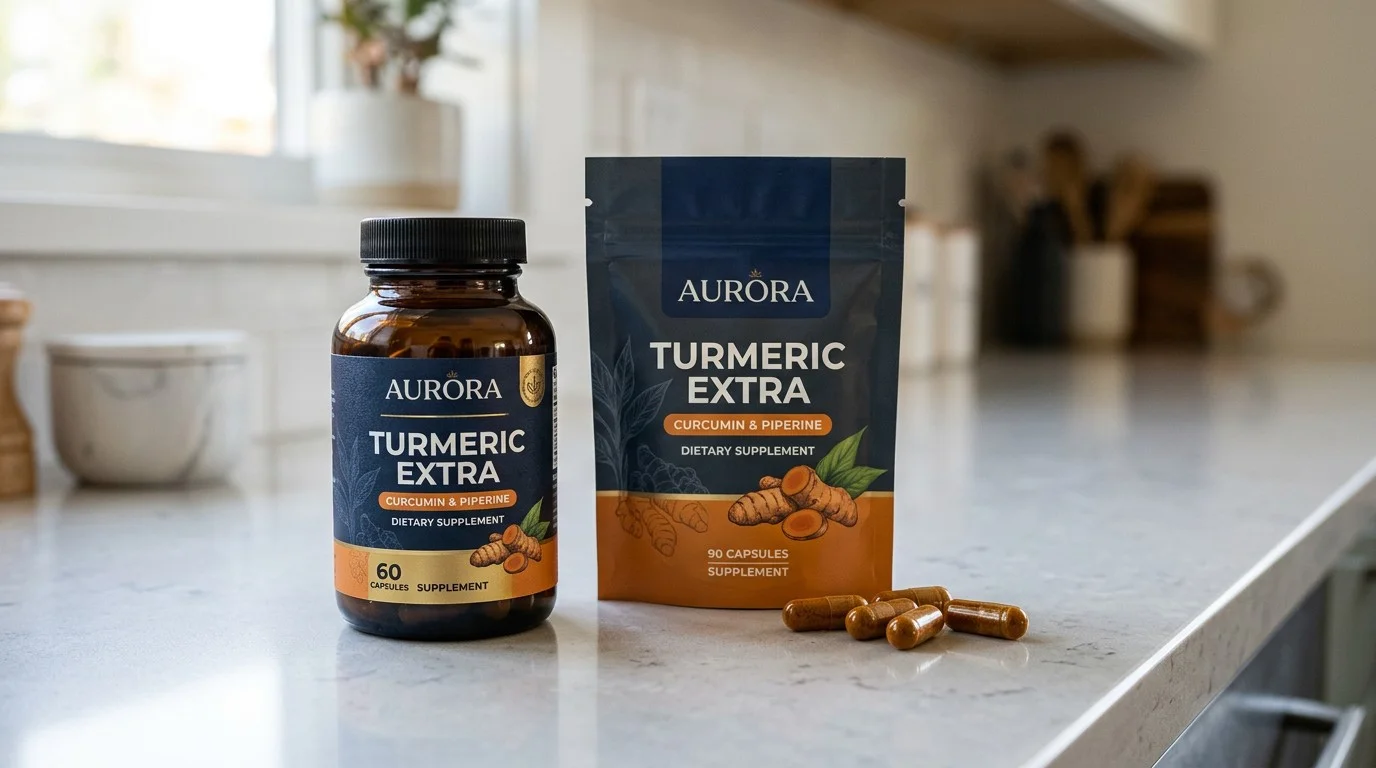
Curcumin supplements provide concentrated curcumin or curcuminoids, naturally occurring compounds found in turmeric.
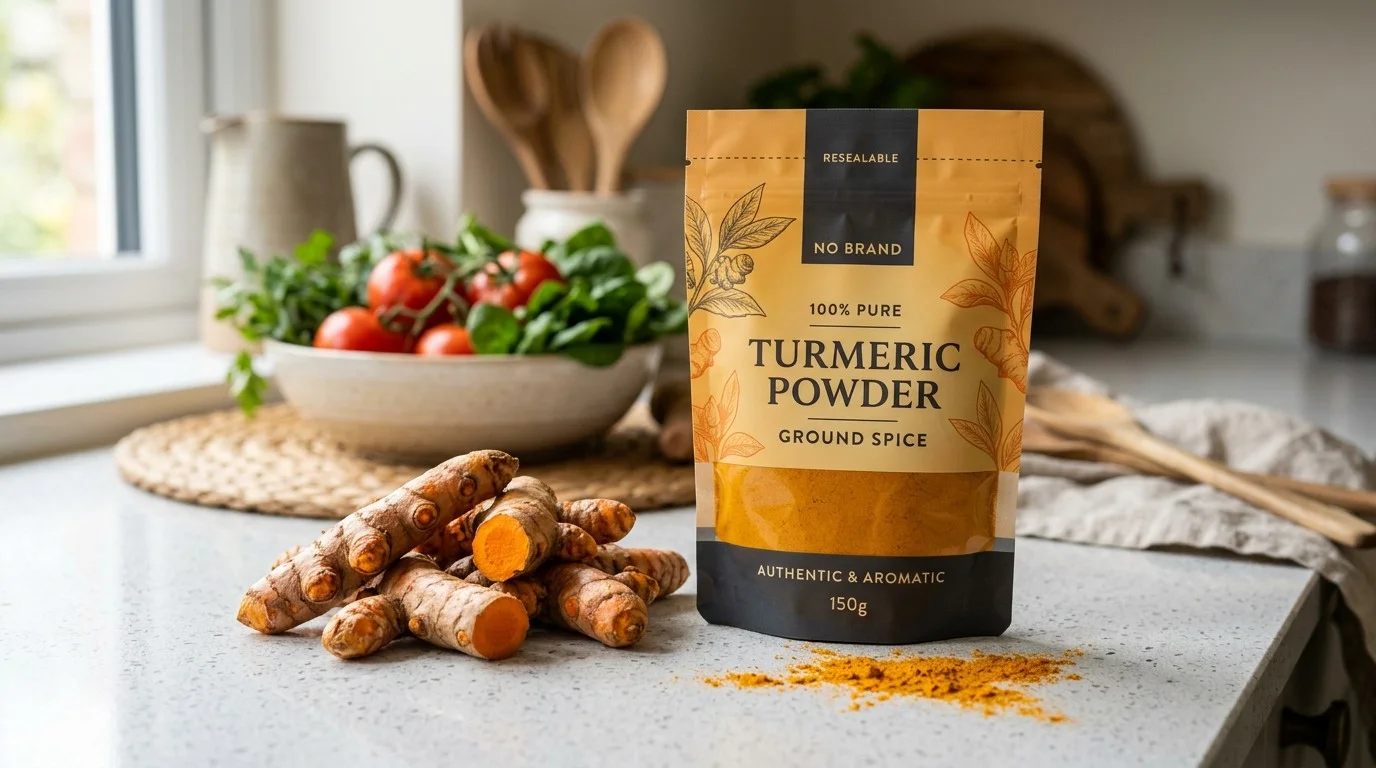
They are different from ordinary turmeric powder. Some contain standardised turmeric extracts, while others combine curcumin with black pepper or use specialised formulations designed to improve absorption.
You may see terms such as 95% curcuminoids, high absorption, liposomal, phytosome or micellar curcumin. These describe different types of formulations and do not all mean the same thing.
Research has investigated curcumin for several potential health effects, particularly joint health and processes involving inflammation and oxidative stress. However, evidence varies according to the condition and formulation studied.
When comparing curcumin supplements, it is more useful to understand what the product contains and how it is formulated than to rely on one large number or claim on the front of the packet.
Curcumin Supplements — Key Points
- Curcumin comes from turmeric: It is one of a group of naturally occurring compounds called curcuminoids.
- Curcumin supplements are concentrated: They are different from using turmeric as a food or spice.
- Formulations vary: Products may contain standardised extracts, black pepper or specialised delivery systems.
- Absorption can differ: Some formulations are designed to increase curcumin bioavailability.
- More is not necessarily better: A larger milligram number does not automatically mean a better supplement.
- Check the label: Look at the curcumin or curcuminoid content, formulation and serving size.
- Safety matters: Curcumin supplements can cause side effects and may interact with medicines.
Related Guides
Explore more about turmeric and your options:
- What Is Curcumin? — understanding the compound found in turmeric.
- Turmeric vs Curcumin — how turmeric differs from curcumin.
- Turmeric Extract — how extracts differ from culinary turmeric.
- Turmeric Capsules — understanding turmeric capsule formulations.
- How to Choose Turmeric Supplements — what to consider when comparing products.
Curcumin Supplement Options
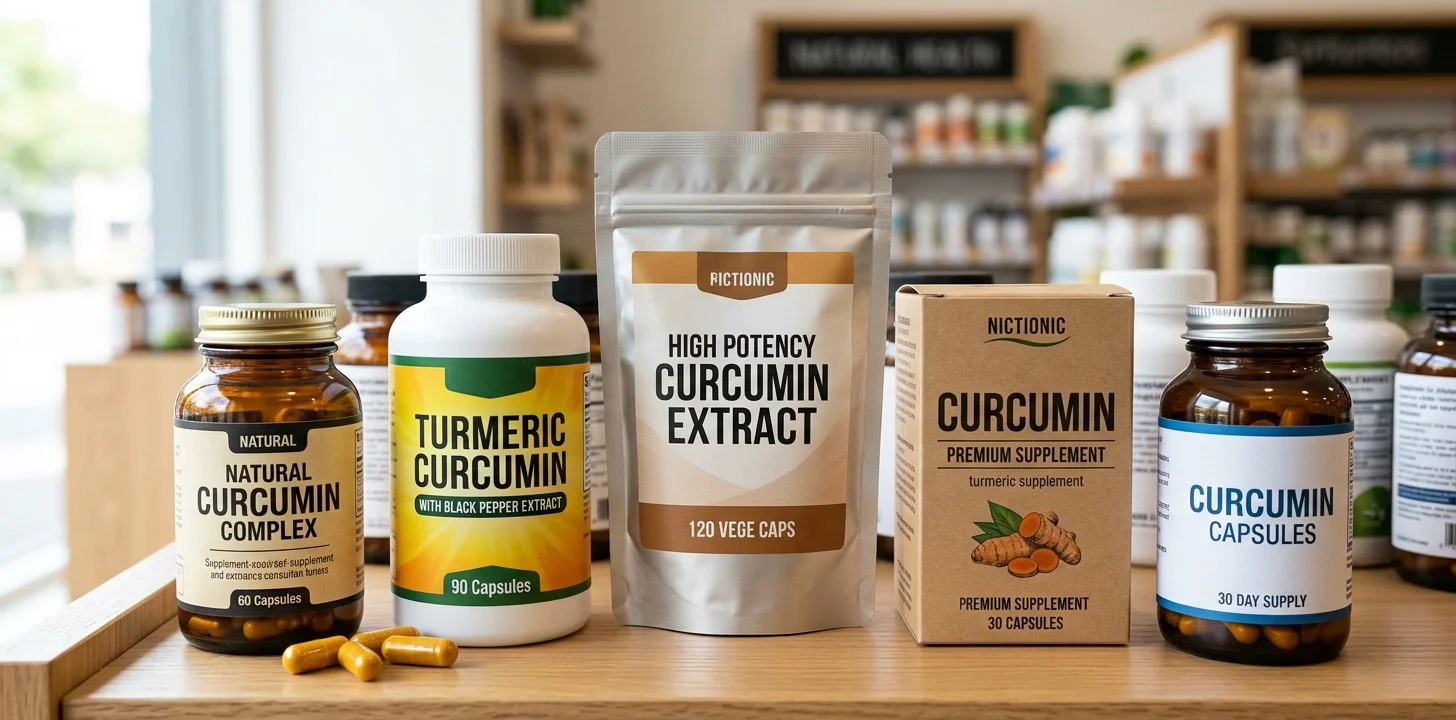
Curcumin supplements are available in different concentrations and formulations, so it is useful to check the ingredients and product label.
About Curcumin Supplements
What are they? Curcumin supplements contain concentrated curcumin or related curcuminoids, usually obtained from turmeric extracts.
Who might consider them? People comparing turmeric and curcumin supplements or looking for a more concentrated source of curcuminoids than ordinary turmeric powder provides.
Why are there different types? Curcumin on its own has relatively low oral bioavailability, so manufacturers use different ingredients and formulation technologies intended to influence absorption.
When are they taken? Directions vary between products and formulations, so supplements should be taken according to the manufacturer’s instructions.
Where are they available? Curcumin supplements are widely sold by pharmacies, health-food shops, supplement retailers and online stores.
How do they differ? Products can vary in curcumin concentration, standardisation, serving size and absorption approach. Some contain black pepper or piperine, while others use formulations such as liposomal, phytosome or micellar curcumin.
Why Do Curcumin Supplements Differ?
| Difference | What It Means |
| Curcumin concentration | Products can provide different amounts or percentages of curcumin or curcuminoids. |
| Standardisation | Some extracts are standardised to provide a specified percentage of curcuminoids. |
| Absorption approach | Products may use black pepper, lipids or other formulation technologies intended to influence bioavailability. |
| Serving size | The amount shown on the label may refer to one capsule or several capsules per serving. |
Curcumin Supplement Formulations
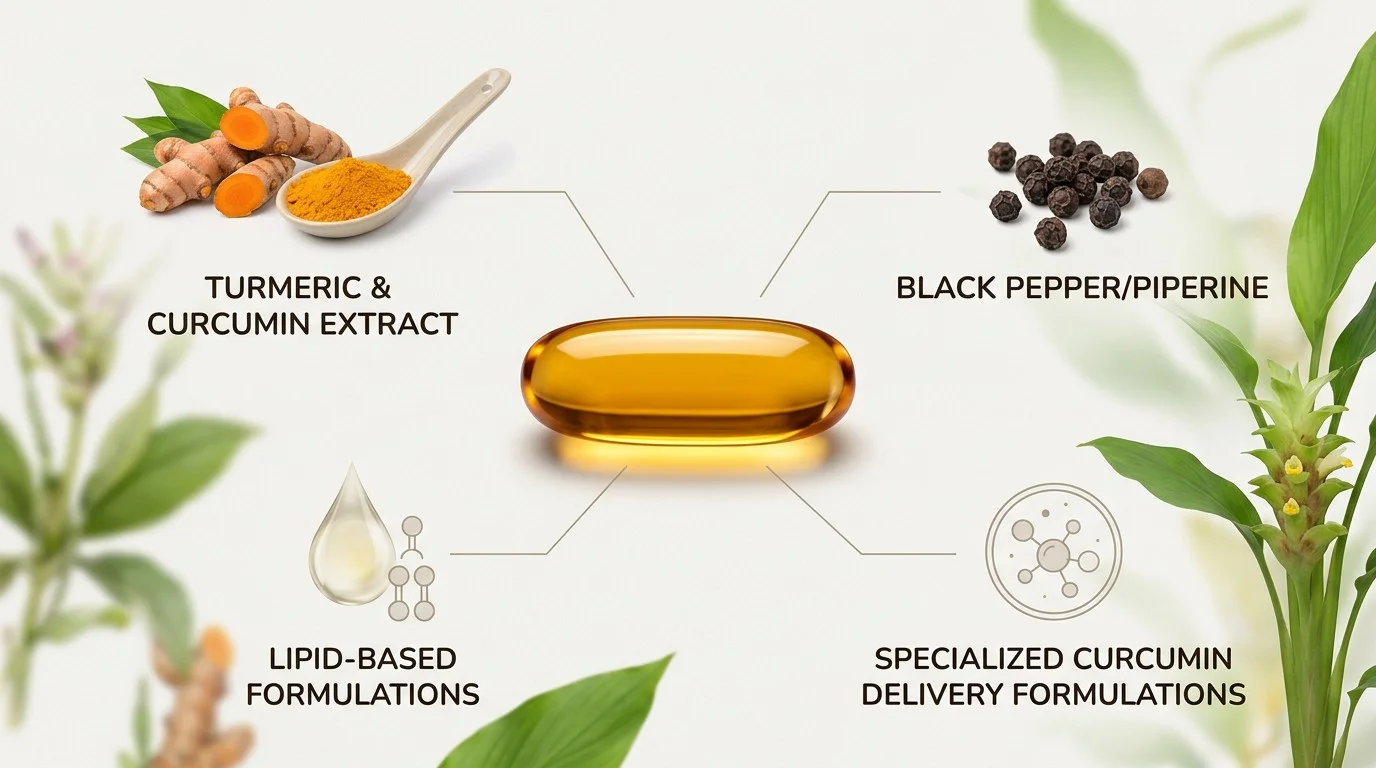
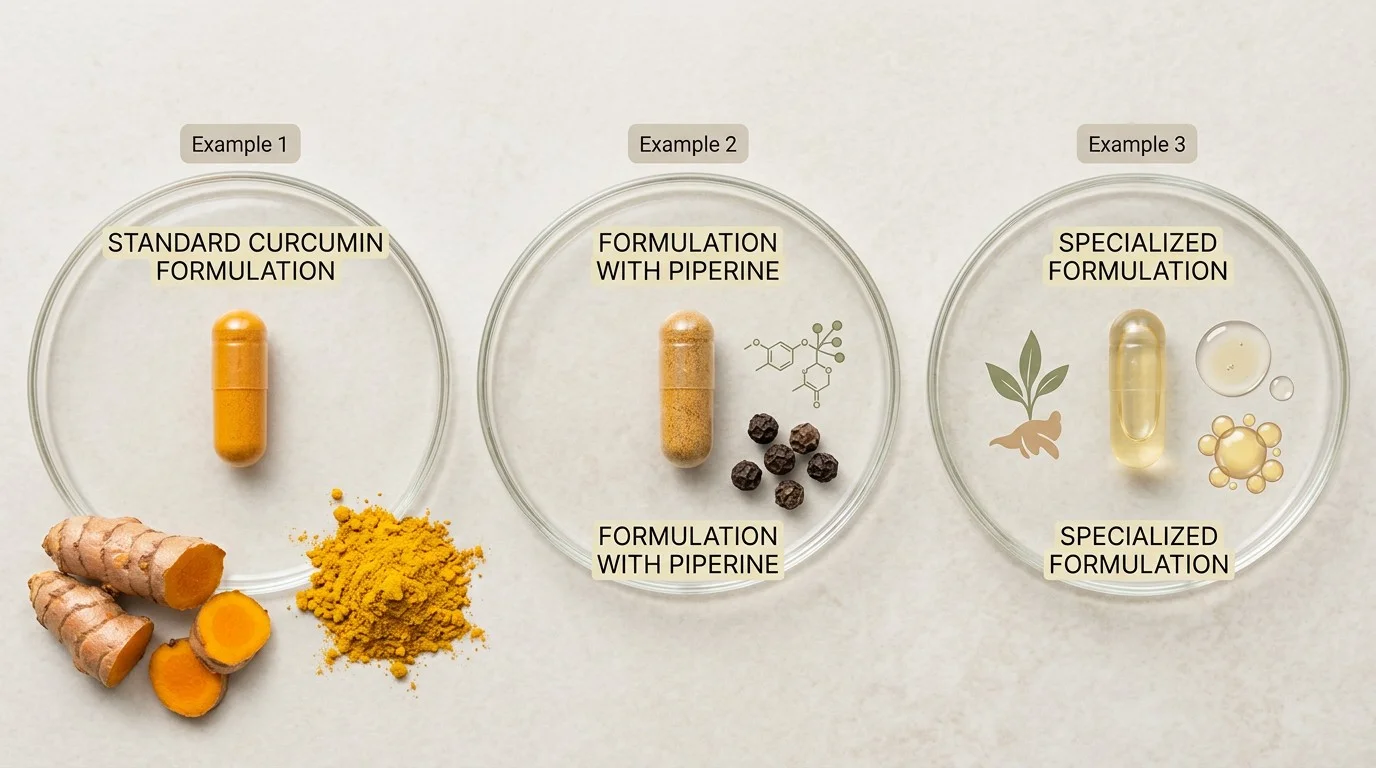
Curcumin supplements can use different extracts, ingredients and formulation approaches intended to influence how curcumin is delivered and absorbed.
Table of Contents
- What Are Curcumin Supplements?
- What Is the Difference Between Turmeric and Curcumin?
- What Types of Curcumin Supplements Are Available?
- What Does 95% Curcuminoids Mean?
- Why Is Curcumin Absorption Important?
- What Are the Potential Benefits of Curcumin Supplements?
- Curcumin and Joint Health
- Curcumin and Inflammation
- Curcumin and Antioxidant Activity
- How Do You Compare Curcumin Supplements?
- What Should You Look for on a Curcumin Supplement Label?
- How Much Curcumin Should You Take?
- When Should You Take Curcumin?
- Can You Take Curcumin Every Day?
- Frequently Asked Questions
- Are Curcumin Supplements Safe?
- What Are the Possible Side Effects of Curcumin Supplements?
- Can Curcumin Supplements Interact with Medicines?
- Summary
- Related Guides
- Further Information and Reading
- Medical Disclaimer
What Are Curcumin Supplements?
Curcumin supplements contain concentrated compounds obtained from turmeric (Curcuma longa).
Turmeric naturally contains a group of compounds known as curcuminoids. Curcumin is the best known and most extensively studied of these compounds.
This is where supplement labels can become confusing.
A product described as a curcumin supplement might contain:
- curcumin extract
- standardised curcuminoids
- turmeric extract containing curcuminoids
- curcumin combined with black pepper or piperine
- curcumin in a specialised absorption formulation
- combinations of turmeric and concentrated curcumin
This means two products carrying the word “curcumin” can contain quite different formulations.
The amount stated on the front of a packet therefore does not always tell you everything you need to know about what is inside.
What Is the Difference Between Turmeric and Curcumin?
Turmeric is the plant; curcumin is one of the naturally occurring compounds found within it.
Turmeric root contains many different naturally occurring substances, including a group of compounds called curcuminoids.
Curcumin is the principal curcuminoid and is responsible for much of turmeric’s characteristic yellow colour.
A turmeric supplement may contain whole turmeric powder, turmeric extract or a combination of ingredients.
A curcumin supplement usually focuses more specifically on concentrated curcumin or curcuminoids.
This distinction matters because 500 mg of ground turmeric powder is not equivalent to 500 mg of concentrated curcumin extract.
For a more detailed explanation, read our guide to turmeric vs curcumin.
What Types of Curcumin Supplements Are Available?
Types of Curcumin Supplements
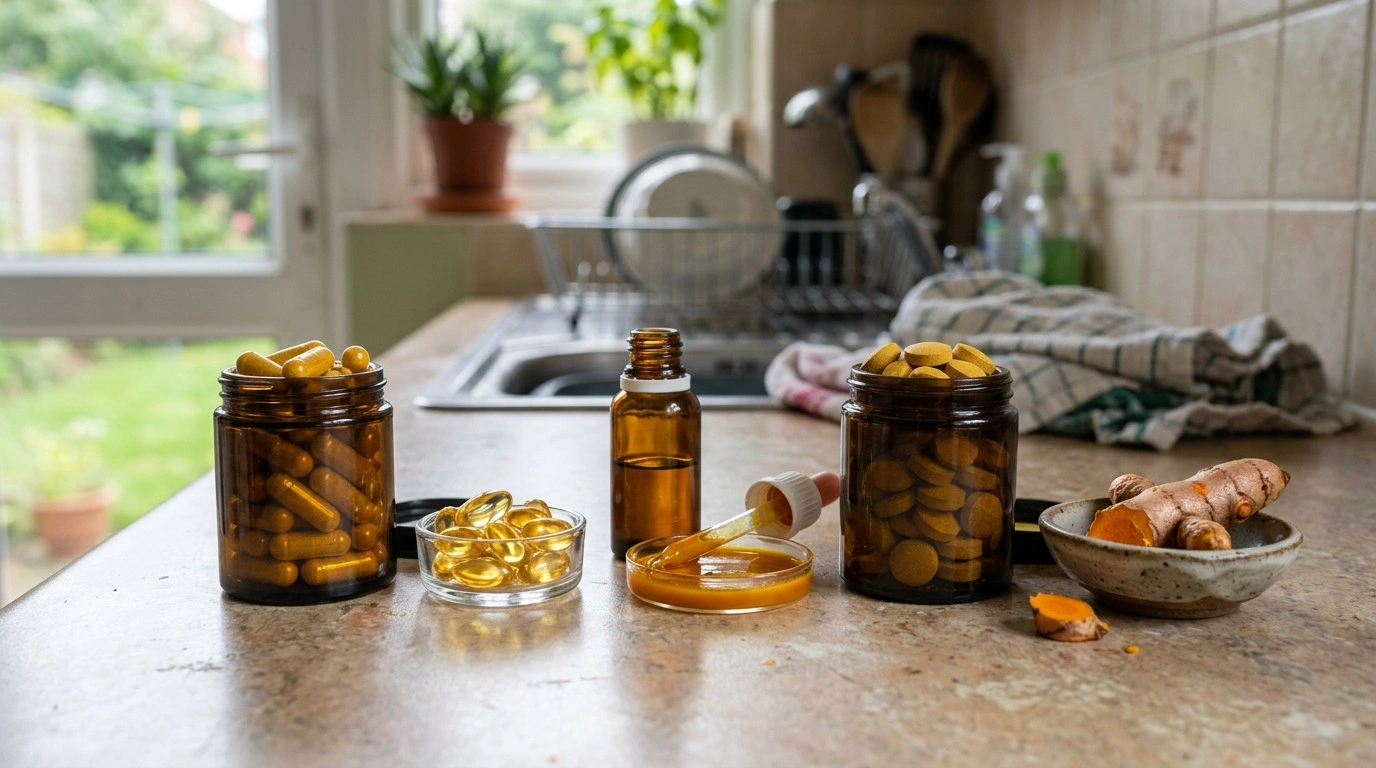
Curcumin supplements can use standard extracts, black pepper and specialised formulations designed to influence absorption.
Curcumin supplements are available in several different formulations.
The differences are not simply about whether the product comes as a capsule or tablet. Manufacturers can also change the concentration, ingredients and delivery system.
Standard Curcumin Extracts
Many products contain an extract of turmeric that has been standardised to provide a specified amount or percentage of curcuminoids.
Standardisation helps show how much of the specified compounds the extract contains.
This can make it easier to compare products than simply looking at a large turmeric-equivalent number on the front of a packet.
Curcumin with Black Pepper or Piperine
Some curcumin supplements, such as capsules, tablets and gummies, contain black pepper extract or piperine, a naturally occurring compound found in black pepper.
Piperine has been studied because it can increase the bioavailability of curcumin.
However, adding black pepper does not automatically make a supplement suitable for everyone. Piperine can also affect the way some substances are processed in the body, which makes medicine interactions an important consideration.
For a broader explanation, read our guide to black pepper and turmeric absorption.
High-Absorption Curcumin
Some products are described as high absorption, high-strength, enhanced absorption or highly bioavailable curcumin.
Rather than relying only on black pepper, these products may use specialised formulations designed to improve curcumin’s solubility, stability or absorption.
The term “high absorption” itself does not describe one single formulation, so the ingredient list still matters.
Liposomal Curcumin
Liposomal formulations use lipid-based structures to carry curcumin.
The aim is to improve the way curcumin is delivered and absorbed compared with conventional unformulated curcumin.
The presence of the word “liposomal”, however, does not by itself tell you how much curcumin the product contains or whether it is appropriate for your needs.
Phytosome Curcumin
Phytosome formulations combine curcumin with phospholipids, which are fat-like substances.
This is another approach designed to improve bioavailability.
Some proprietary curcumin ingredients use phytosome technology, but a brand name should not replace checking the actual formulation and amount provided.
Micellar Curcumin
Micellar formulations use very small structures called micelles to help disperse curcumin and improve its availability for absorption.
These formulations may appear as liquids, capsules or other supplement formats.
Research confirms that different formulation technologies can produce substantial differences in curcumin bioavailability, but comparisons are complicated because studies use different products, methods and ways of measuring curcumin.
Learn about the main types of curcumin and turmeric supplements, how formulations differ and what to consider when comparing them.
What Does 95% Curcuminoids Mean?
You may see supplements described as containing “95% curcuminoids” or a similar percentage.
Curcuminoids are a family of related compounds naturally present in turmeric, including curcumin, demethoxycurcumin and bisdemethoxycurcumin.
When an extract is standardised to a particular percentage of curcuminoids, the percentage describes the concentration of these compounds within that extract.
It does not mean that 95% of a turmeric capsule is necessarily curcumin.
For example, a product could contain several ingredients, with only one ingredient being a standardised curcuminoid extract.
That is why it is useful to check:
- how much extract is provided
- the percentage of curcuminoids
- the serving size
- other ingredients in the formulation
A percentage only becomes useful when you understand what the percentage refers to.
Curcumin Absorption and Black Pepper
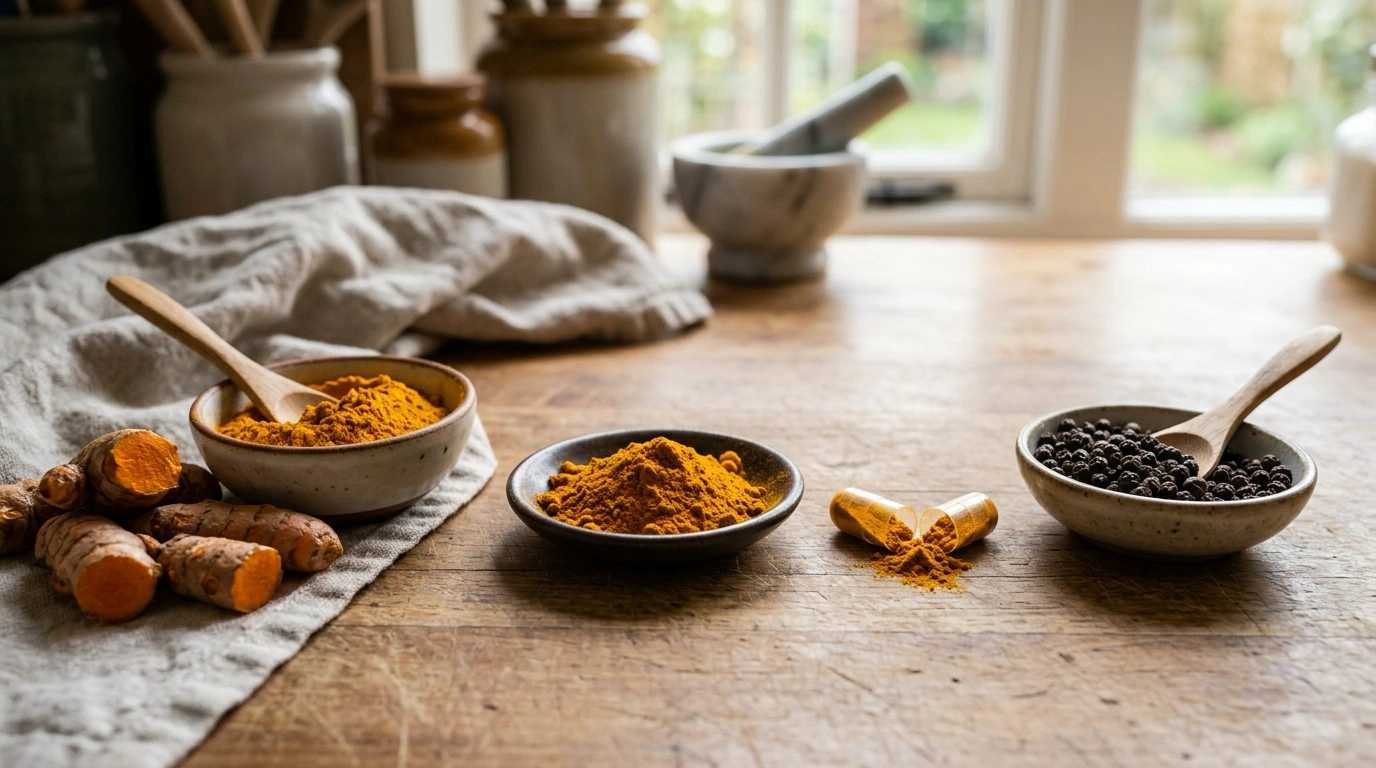
Black pepper or piperine is used in some curcumin supplements to influence curcumin bioavailability.
Why Is Curcumin Absorption Important?
Conventional curcumin is not readily absorbed by the body when taken orally.
It has relatively low water solubility and is also rapidly metabolised and eliminated. This is one reason researchers and manufacturers have developed different formulations intended to improve its bioavailability.
Bioavailability broadly describes how much of a substance becomes available to the body after it is consumed.
Approaches used with curcumin include:
- combining it with piperine
- phospholipid or phytosome formulations
- liposomal formulations
- micellar formulations
- other specialised delivery systems
This does not mean that the formulation with the biggest absorption claim is automatically the best supplement.
A 2024 analysis of systematic reviews found that curcumin bioavailability is recognised as important but is often inadequately accounted for when clinical evidence is combined. This makes simple comparisons between formulations difficult.
What Are the Potential Benefits of Curcumin Supplements?
Curcumin has been studied for a wide range of potential biological and health effects.
Much of the interest comes from laboratory research showing that curcumin can influence processes associated with inflammation and oxidative stress.
Human research has investigated curcumin in areas including:
- joint health and osteoarthritis
- inflammatory processes
- antioxidant activity
- metabolic health
- digestive and liver-related conditions
- several other areas of health
However, biological activity in laboratory research does not automatically mean that taking a curcumin supplement will produce a meaningful health benefit in people.
The results of human studies vary according to the condition studied, dose, formulation, duration and quality of the research.
NCCIH currently concludes that there is not enough evidence to definitively determine whether turmeric or curcumin is beneficial for any health purpose.
For a broader explanation of the research surrounding turmeric and curcumin, read our guide to the potential benefits of turmeric.
Curcumin Supplements and Healthy Living

Curcumin has been researched in several areas of health, but supplements should be considered as part of the wider picture rather than as a treatment or quick solution.
Curcumin and Joint Health
Joint health is one of the most extensively researched areas for curcumin supplements.
Clinical trials and reviews have investigated turmeric and curcumin in people with osteoarthritis, particularly symptoms involving the knee.
Some analyses have reported improvements in measures such as pain, stiffness and physical function, but study quality and formulations vary.
NCCIH describes the initial evidence as positive but says higher-quality research is needed before firm conclusions can be reached.
Curcumin supplements should therefore not be considered a replacement for diagnosis or established treatment for arthritis or persistent joint pain.
Curcumin and Inflammation
Curcumin has attracted considerable scientific interest because of its effects on biological pathways involved in inflammatory processes.
This has contributed to research across numerous health conditions.
However, “inflammation” is a broad biological process rather than a single disease.
Evidence that curcumin influences inflammatory markers or mechanisms does not mean that a curcumin supplement has been proven to treat every condition involving inflammation.
This distinction is important when interpreting supplement claims.
Curcumin and Antioxidant Activity
Curcumin has also been studied for its antioxidant properties.
Antioxidants are substances that can interact with processes involving free radicals and oxidative stress.
Laboratory research has identified antioxidant activity associated with curcumin, but translating these biological effects into specific health outcomes in people is more complicated.
For consumers, the important point is that an antioxidant claim should not be interpreted as proof that a supplement prevents or treats disease.
How Do You Compare Curcumin Supplements?
Curcumin supplements can look surprisingly similar on the front of the packet while containing very different formulations inside.
When comparing products, look at:
- what form of curcumin is used
- how much curcumin or curcuminoid extract is provided
- whether the extract is standardised
- the percentage of curcuminoids
- serving size
- whether black pepper or piperine is included
- whether an enhanced-absorption formulation is used
- additional ingredients
- manufacturer’s directions
Try not to compare products using one number alone.
A product containing a smaller amount of a particular formulated curcumin cannot necessarily be compared directly with a larger amount of a different extract.
For a broader explanation of comparing supplement ingredients and formulations, read our guide on how to choose a turmeric supplement.
Comparing Curcumin Supplement Labels
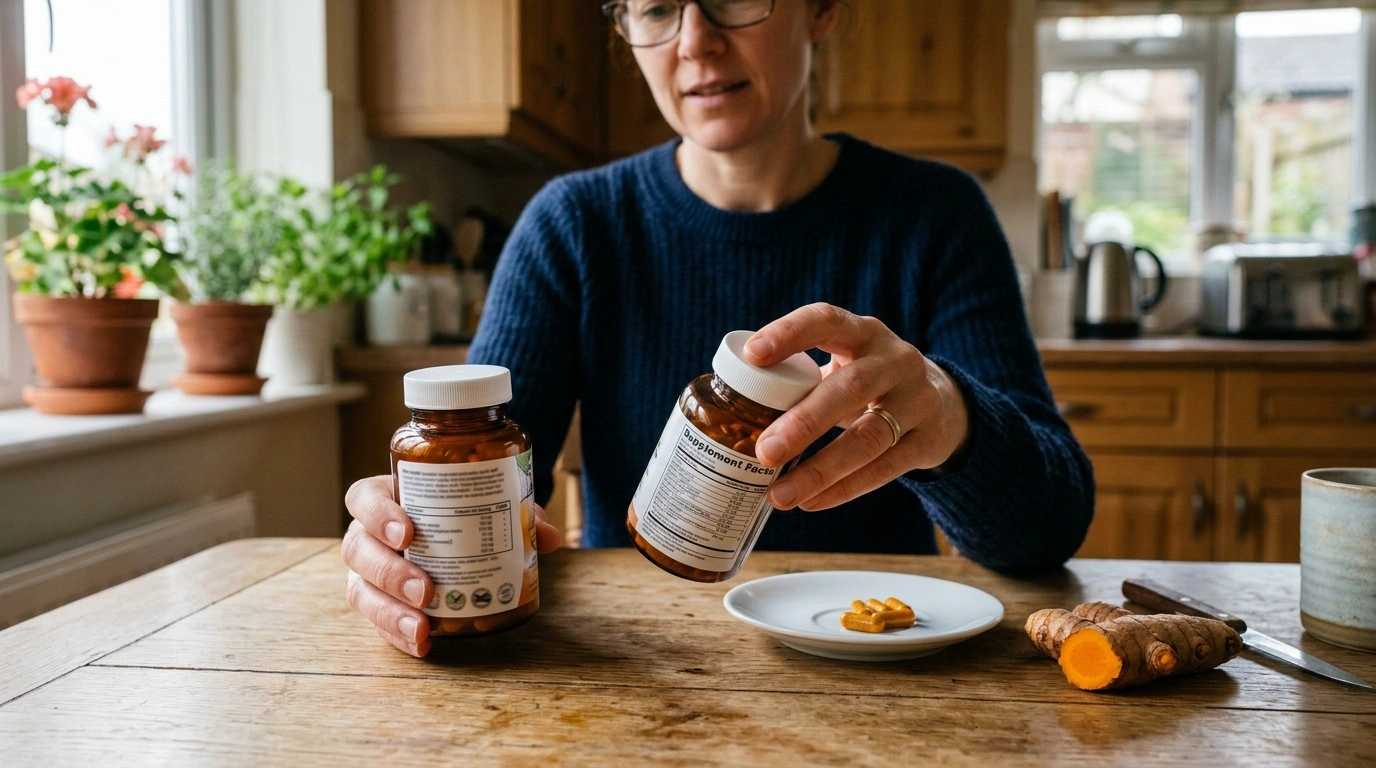
Compare the curcumin or curcuminoid content, formulation, serving size and additional ingredients rather than relying on one front-of-pack number.
What Should You Look for on a Curcumin Supplement Label?
The label should help you understand what you are actually taking.
Start by identifying whether the product contains:
- turmeric powder
- turmeric extract
- curcumin or curcuminoids
- a standardised extract
- black pepper or piperine
- a specialised absorption formulation
Then look at how much is supplied per capsule, tablet or serving.
Pay attention to the difference between the amount of ingredient physically present and any larger “equivalent to” amount shown for an extract.
Also check the recommended serving size. A figure shown prominently on the front of the packet may refer to several capsules rather than one capsule.
Finally, check other ingredients and any warnings or suitability information supplied by the manufacturer.
The biggest number on the label is not necessarily the most useful number.
How Much Curcumin Should You Take?
There is no single curcumin amount that is appropriate for everyone or every formulation.
Research studies have used different amounts and different types of curcumin, making it difficult to translate one study dose into a universal supplement recommendation.
This becomes even more complicated with formulations designed to increase bioavailability because the same milligram amount may not result in the same exposure.
Follow the manufacturer’s instructions unless a suitably qualified healthcare professional has advised otherwise.
Taking more than the recommended amount does not necessarily provide greater benefit and may increase the risk of side effects.
When Should You Take Curcumin?
There is no universally established best time of day to take curcumin.
Instructions can vary according to the formulation.
Some products may be recommended with food, while others have different manufacturer directions.
Rather than assuming morning or evening is inherently better, check the instructions for the specific supplement you are using.
If you take medicines, timing should not be used as a substitute for checking whether an interaction is possible.
Can You Take Curcumin Every Day?
Many curcumin supplements are marketed for regular use, but daily use does not automatically mean that a product is appropriate for everyone or suitable indefinitely.
Safety can depend on:
- the amount taken
- formulation
- duration of use
- other ingredients
- medicines
- existing health conditions
- individual tolerance
NCCIH states that conventionally formulated oral turmeric or curcumin is likely safe in recommended amounts for up to two or three months, while also noting safety concerns associated with some highly bioavailable formulations.
If you are considering longer-term supplementation, particularly for a specific health problem, discuss it with an appropriately qualified healthcare professional.
Frequently asked questions
Is Curcumin the Same as Turmeric?
No. Turmeric is the plant, while curcumin is one of the naturally occurring compounds found within turmeric.
Turmeric contains many other substances in addition to curcumin.
Is Curcumin Better Than Turmeric?
Neither is automatically “better”.
They are different materials.
Whole turmeric contains a wider range of naturally occurring plant compounds, while curcumin supplements generally provide a more concentrated source of curcumin or curcuminoids.
Which is appropriate depends on why someone is using it, the formulation and individual circumstances.
What Is the Best Form of Curcumin to Take?
There is no single form of curcumin that can be described as best for everyone.
Some formulations can substantially increase bioavailability compared with conventional curcumin, but increased absorption does not automatically mean greater clinical benefit or greater suitability for every person.
Compare the formulation, evidence, ingredients, amount and safety considerations rather than relying on a “best” claim.
How Long Does Curcumin Take to Work?
There is no reliable universal timeframe.
Clinical studies use different curcumin formulations, amounts, treatment periods and health outcomes.
If curcumin is being considered for a specific medical problem, it is better to discuss the evidence and appropriate treatment with a healthcare professional than to rely on a fixed number of days or weeks.
Curcumin Supplements and Everyday Use

Curcumin supplement suitability can depend on the formulation, amount taken, medicines and individual circumstances.
Are Curcumin Supplements Safe?
Curcumin supplements can be tolerated by many people, but concentrated supplements are different from using normal amounts of turmeric in food.
Safety can depend on the formulation, amount, duration of use, medicines being taken and individual health circumstances.
NCCIH also notes reports of liver injury in some people consuming highly bioavailable curcumin products.
Extra caution may be appropriate for people who:
- take prescription medicines
- have an existing medical condition
- have gallbladder or digestive problems
- are pregnant or breastfeeding
- are preparing for surgery
- are considering curcumin for a diagnosed health condition
If you are unsure whether a curcumin supplement is suitable for you, speak to a GP, pharmacist or other appropriately qualified healthcare professional.
What Are the Possible Side Effects of Curcumin Supplements?
Curcumin and turmeric supplements can cause side effects in some people.
Possible digestive effects can include:
- stomach discomfort
- nausea
- diarrhoea
- indigestion
- acid reflux
- constipation
NCCIH lists gastrointestinal effects including nausea, vomiting, acid reflux, stomach upset, diarrhoea and constipation. It also highlights reports of liver injury associated with some highly bioavailable curcumin formulations.
Stop taking the supplement and seek medical advice if you develop concerning symptoms.
Symptoms such as yellowing of the skin or eyes, dark urine, unusual fatigue, nausea or loss of appetite require prompt medical attention because they can be associated with liver problems.
Can Curcumin Supplements Interact with Medicines?
Curcumin supplements may interact with medicines or affect biological processes relevant to some medical conditions.
The potential for interactions can also depend on other ingredients in the supplement. For example, some curcumin formulations contain piperine from black pepper specifically because it changes bioavailability.
If you take prescription medicines, check with a GP or pharmacist before starting a concentrated curcumin supplement, particularly if the product contains additional absorption-enhancing ingredients.
Do not stop or alter prescribed medication because you are considering taking curcumin or turmeric.
Summary
Curcumin supplements provide concentrated forms of curcumin or related curcuminoids found naturally in turmeric.
They are available in several formulations, including standardised extracts, curcumin with black pepper, liposomal, phytosome and micellar products.
One of the biggest differences between products is how the curcumin is formulated and absorbed, which means milligram amounts alone do not always provide a useful comparison.
Research into curcumin includes joint health, inflammatory processes and other areas, but evidence varies and many proposed health benefits remain uncertain.
When comparing supplements, look beyond front-of-pack claims and check what the product contains, how much is provided, the serving size, formulation and additional ingredients.
Curcumin supplements can also cause side effects and interact with medicines, so they may not be suitable for everyone.
Further Information and Reading
The following videos and independent health and scientific resources provide additional information about curcumin, turmeric, absorption, research and safety.
1. Dr Boz — The Major Reason I Changed My Mind About Curcumin
Dr Annette Bosworth discusses curcumin, how it is absorbed and why the formulation can matter when considering curcumin supplements.
2. Talking With Docs — Should You Take Turmeric Every Day? Here’s What Doctors Say
Talking with Docs provides an accessible discussion of turmeric and curcumin, potential benefits, everyday use and important considerations when taking supplements.
3. NCCIH — Turmeric: Usefulness and Safety
An independent overview of turmeric and curcumin research, potential health effects, side effects and safety considerations.
4. PubMed — Bioavailable Curcumin Formulations
A scientific review examining different curcumin formulations and the approaches used to improve curcumin bioavailability.
5. PubMed — Curcumin Formulations for Better Bioavailability
A detailed scientific review covering curcumin absorption and different formulation technologies developed to improve bioavailability.
Medical Disclaimer
The information on this page is provided for general educational and informational purposes only and is not intended as medical advice, diagnosis or treatment.
Research into turmeric and curcumin continues to develop, and evidence can vary depending on the health condition, dose and formulation studied.
Curcumin and turmeric supplements may cause side effects or interact with medicines and may not be suitable for everyone.
If you have a medical condition, take prescription medicines, are pregnant or breastfeeding, are preparing for surgery or are considering a curcumin supplement for a specific health concern, speak to a GP, pharmacist or other appropriately qualified healthcare professional.
Author
Written by J. Henderson
Health & Wellness Research Writer
J. Henderson writes evidence-based articles on nutrition, botanical supplements and everyday wellbeing. His work focuses on translating scientific research into clear, practical guidance that helps readers make informed decisions about natural health products.