
Turmeric Tea Recipe: An Easy Homemade Guide for a Warming, Flavourful Drink
Turmeric Tea Recipe
A simple cup of turmeric tea is one of the easiest herbal drinks you can make at home. Using fresh turmeric root or ground turmeric with ingredients such as ginger, lemon, black pepper and honey creates a warming, naturally caffeine-free drink that can be enjoyed throughout the year.
Whether you’re making it to relax in the evening or simply enjoy its earthy flavour, this recipe is quick, inexpensive and easy to customise.
Quick Answer – How to Make Turmeric Tea
To make turmeric tea, gently simmer 2 cups of water with 1 teaspoon of ground turmeric (or 1 tablespoon grated fresh turmeric), 1 teaspoon grated ginger and a pinch of black pepper for around 8–10 minutes. Strain into a mug, add fresh lemon juice and honey to taste, then serve warm. Black pepper is commonly added because it helps improve the absorption of curcumin, turmeric’s main natural compound.
At a Glance
- Ready in around 10 minutes
- Naturally caffeine free
- Made from everyday ingredients
- Easy to customise
- Suitable for most diets
Easy Homemade Turmeric Tea Recipe
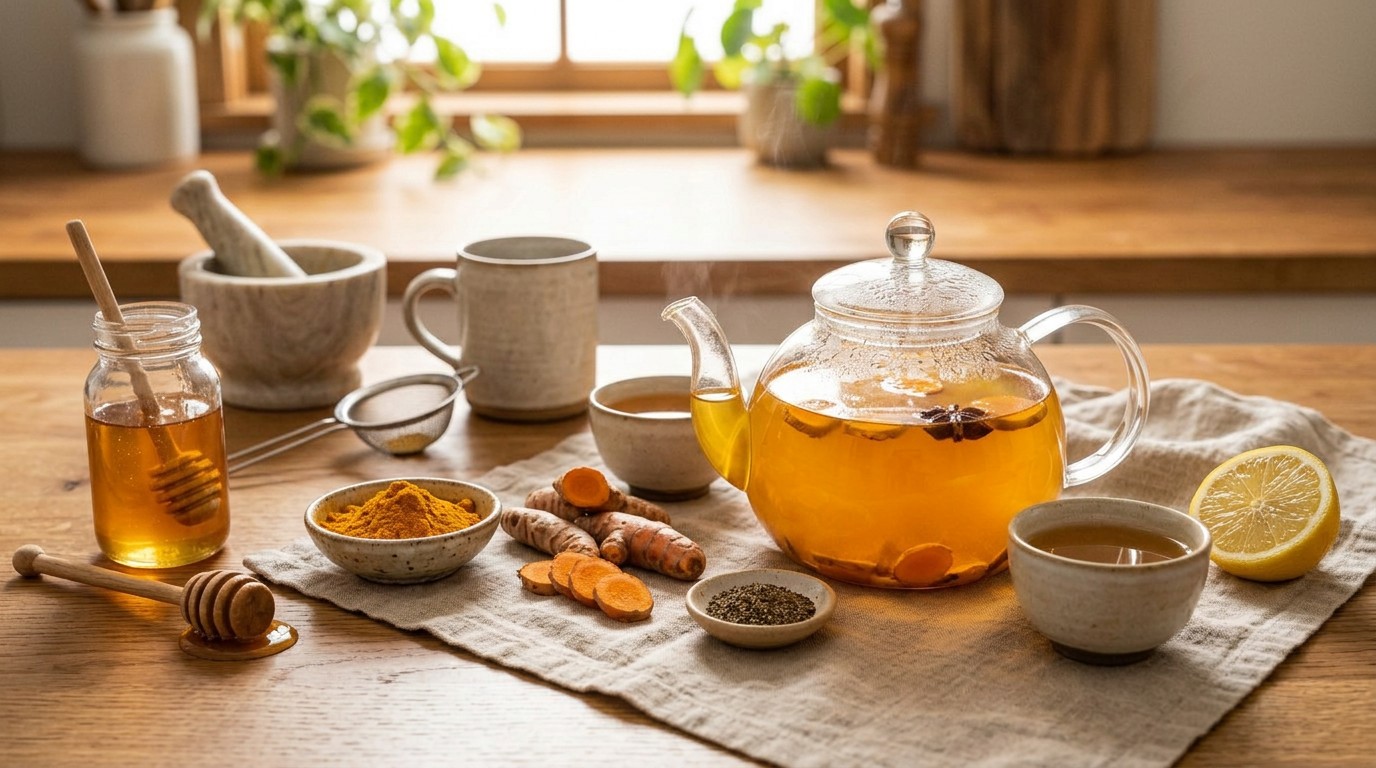
A freshly prepared mug of turmeric tea made with ginger, lemon and fresh turmeric.
Table of Contents
- Quick Answer – How to Make Turmeric Tea
- What is Turmeric Tea?
- Why Make Turmeric Tea?
- What Makes Turmeric Tea So Popular?
- Easy Turmeric Tea Recipe
- Recipe Variations
- Helpful Items for Making Turmeric Tea
- Tips for the Best Results
- What are the Potential Benefits of Turmeric Tea?
- Frequently Asked Questions
- Summary
- Recommended Further Reading
What Is Turmeric Tea?
Turmeric tea is a warm herbal drink made from the bright yellow root of the turmeric plant (Curcuma longa). It has been enjoyed for centuries in many parts of Asia and is now popular around the world among people looking for natural ways to support a healthy lifestyle.
The distinctive golden colour comes from naturally occurring plant compounds known as curcuminoids, with curcumin being the most widely studied. While turmeric has a long history of traditional use, modern research continues to investigate its potential role in supporting general wellbeing.
Unlike ordinary tea, turmeric tea contains no caffeine, making it suitable at any time of the day. Some people enjoy it on its own, while others add ingredients such as ginger, lemon, honey or black pepper to help with absorption and for extra flavour.
Its earthy, warming taste makes it especially popular during colder months, although many people drink it throughout the year as part of their daily routine.
How to Make Turmeric Tea for a Healthy Daily Routine
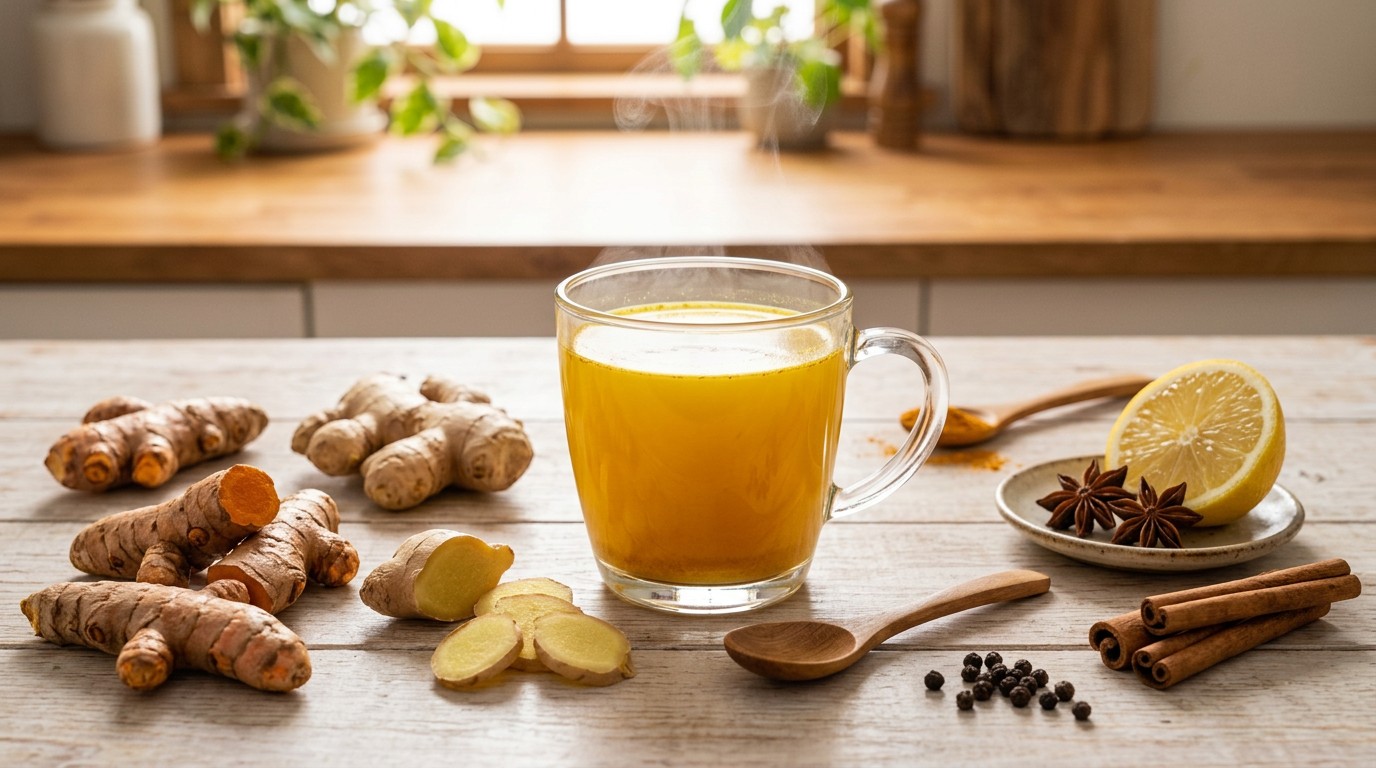
Preparing homemade turmeric tea with simple ingredients including turmeric, ginger and lemon.
Why Make Turmeric Tea?
Turmeric tea has been enjoyed for generations across South Asia and has become increasingly popular worldwide. It’s warm, slightly peppery flavour pairs perfectly with ginger, lemon, cinnamon and honey.
Many people enjoy it because it is:
- Naturally warming
- Easy to prepare
- Caffeine free
- Made with affordable ingredients
- Easy to adapt to personal taste
- Potential health benefits
What Makes Turmeric Tea So Popular?
Interest in natural wellness has grown considerably in recent years, leading many people to ask, what is turmeric good for? Known for its potential health benefits, turmeric has become a popular natural remedy, and turmeric tea is now one of the best-known herbal drinks enjoyed for its wellness-supporting properties.
Several factors contribute to its popularity:
- It is made from a traditional botanical ingredient.
- It has a distinctive golden appearance.
- It is simple to prepare.
- It pairs well with ingredients like ginger and cinnamon.
- It contains no caffeine.
- It can be enjoyed hot or chilled.
Many people also appreciate that turmeric tea offers a comforting ritual, encouraging a few quiet moments during a busy day.
Turmeric Tea Ingredients
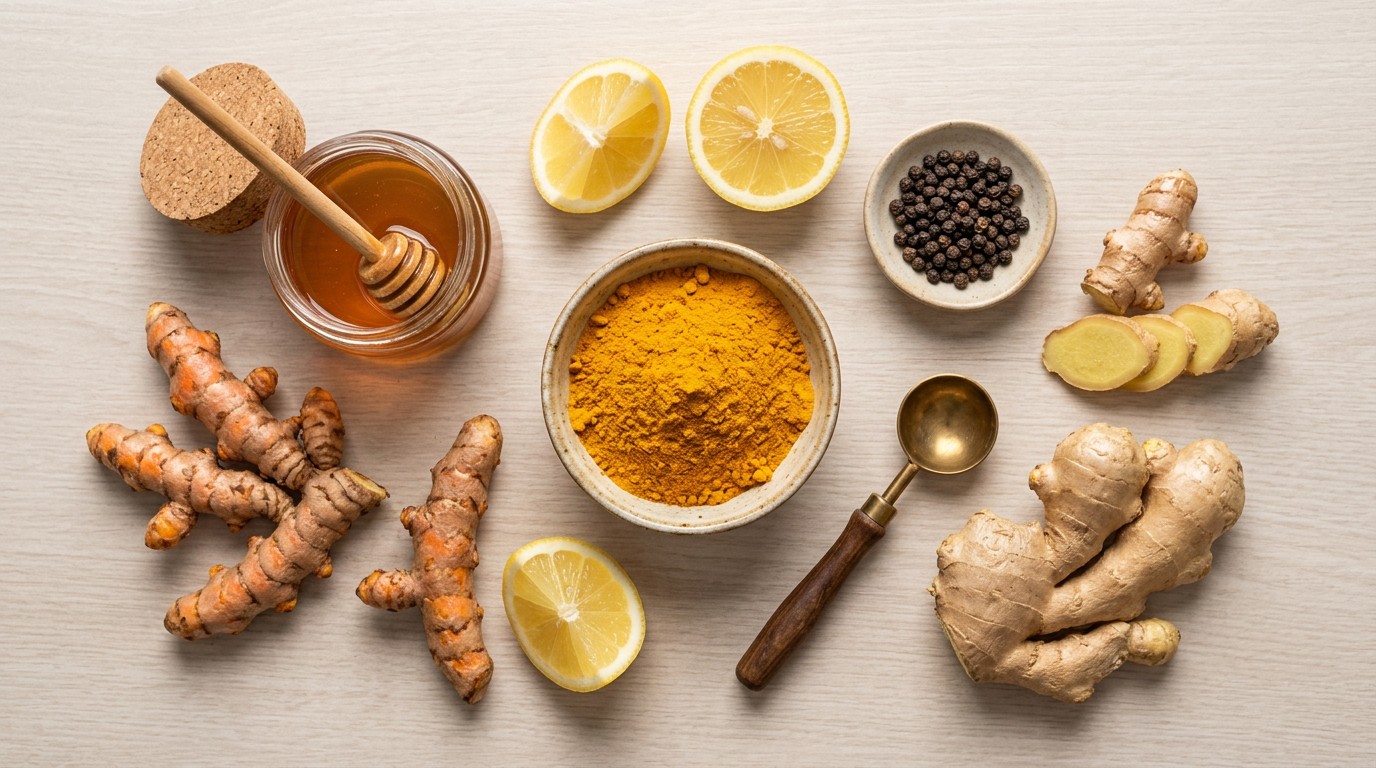
Everything needed to prepare homemade turmeric tea.
Easy Turmeric Tea Recipe
Ingredients
- 2 cups water
- 1 teaspoon ground turmeric or 1 tablespoon freshly grated turmeric
- 1 teaspoon grated fresh ginger
- Pinch of freshly ground black pepper
- 1 teaspoon honey (optional)
- Juice of half a lemon
Method
- Bring the water to a gentle boil.
- Add turmeric and ginger.
- Stir in the black pepper.
- Simmer gently for 8–10 minutes.
- Strain into a mug.
- Add lemon juice.
- Stir in honey if preferred.
- Serve immediately.
Preparation time: 5 minutes
Cooking time: 10 minutes
Serves: 2
Difficulty: Easy
Recipe Variations
Golden Turmeric Tea
Replace half of the water with oat, almond or dairy milk for a creamier drink.
Lemon Turmeric Tea
Increase the amount of fresh lemon juice for a brighter citrus flavour.
Spiced Turmeric Tea
Add:
- Cinnamon stick
- Cardamom pods
- Cloves
- Fresh orange peel
Ginger Turmeric Tea
Double the ginger for a warming kick.
Iced Turmeric Tea
Allow the tea to cool before serving over ice with slices of lemon.
How to Make Turmeric Tea
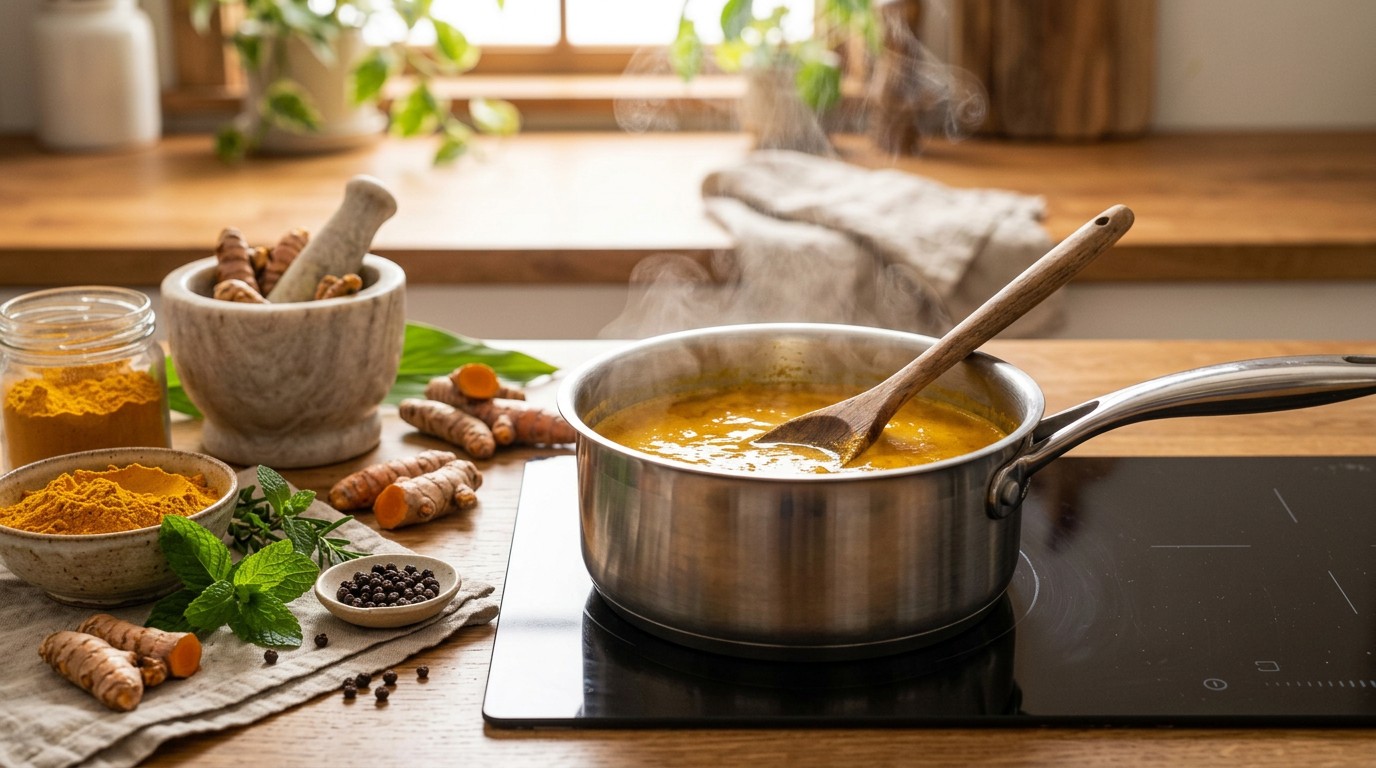
The turmeric tea simmering gently before serving.
Helpful Items for Making Turmeric Tea
Good equipment and quality ingredients can improve both flavour and convenience.
Useful items include:
- Fresh turmeric root
- Organic ground turmeric
- Fresh ginger
- Whole black peppercorns
- Raw honey
- Fresh lemons
- Stainless steel saucepan
- Fine mesh tea strainer
- Glass teapot
- Reusable tea infuser
- Citrus juicer
- Measuring spoons
- Double-walled glass mugs
- Electric kettle
Tips for the Best Results
- Fresh turmeric produces a brighter flavour.
- Wear gloves when handling fresh turmeric as it stains easily.
- Don’t boil aggressively; a gentle simmer is enough.
- Add black pepper for improved curcumin absorption.
- Honey should be stirred in after cooking rather than boiled.
What are the Potential Benefits of Turmeric Tea?
Turmeric tea is a popular homemade drink enjoyed for its warming flavour, comforting qualities and traditional use in many cultures. Made with turmeric, ginger, lemon, black pepper and other natural ingredients, it is an easy way to include turmeric as part of a balanced diet.
While turmeric tea is not a medicine and should not be used to treat health conditions, many people drink it to enjoy the potential turmeric health benefits. This is because turmeric contains curcumin, a naturally occurring compound that has been widely studied for its antioxidant and anti-inflammatory properties.
- Contains Natural Antioxidants
Turmeric Antioxidant Support comes from curcumin, the active compound in turmeric, which has antioxidant properties that help protect cells from oxidative stress caused by unstable molecules called free radicals. Adding ingredients such as ginger and lemon can also provide additional plant-based compounds, making turmeric tea an even more nourishing drink.
- May Support a Healthy Inflammatory Response
Curcumin has been researched for its role in supporting the body’s normal inflammatory processes. If you’re searching for information about turmeric for inflammation, turmeric tea is one of the most popular and enjoyable ways to include turmeric in your diet as part of an overall healthy lifestyle that includes a balanced diet and regular physical activity. While research into curcumin is ongoing, turmeric tea should not be considered a substitute for medical advice or treatment
- A Warm and Comforting Drink
Many people enjoy turmeric tea as a relaxing beverage, especially during colder months. The combination of warming spices, ginger and honey creates a soothing drink that can be enjoyed in the morning or as part of an evening routine.
- Naturally Caffeine Free
Unlike traditional tea or coffee, turmeric tea made with herbs and spices does not naturally contain caffeine. This makes it a popular choice for people looking for a warm drink without the stimulating effects of caffeinated beverages.
- Supports Digestive Comfort
Turmeric and ginger have traditionally been used in various cultures as ingredients in drinks and foods associated with digestive wellbeing. A warm cup of turmeric tea after meals is a popular choice for those who enjoy its gentle, spicy flavour.
- Easy Way to Add More Plant-Based Ingredients
Making turmeric tea at home allows you to combine several natural ingredients in one drink, including turmeric, ginger, lemon and spices. It is also easy to adjust the recipe depending on your taste preferences.
Turmeric Tea in an Active Lifestyle

Turmeric tea enjoyed after light exercise as part of a balanced and healthy daily routine.
Getting the Most from Turmeric Tea
For the best flavour and traditional benefits associated with turmeric, many recipes include:
- Black pepper – commonly added because piperine in black pepper may help increase curcumin absorption.
- Healthy fats – ingredients such as milk, coconut milk or plant-based alternatives are often used because curcumin is fat-soluble.
- Fresh ingredients – fresh ginger, lemon and turmeric root can provide a brighter flavour compared with dried alternatives.
Important Note
Turmeric tea can be a healthy addition to a varied diet, but it should not replace medical advice or prescribed treatments. People taking blood-thinning medication, preparing for surgery, pregnant individuals, or those with certain health conditions should speak with a healthcare professional before regularly consuming large amounts of turmeric.
Frequently Asked Questions
Can I use ground turmeric instead of fresh turmeric?
Yes. Ground turmeric works extremely well and is available in most supermarkets. Use approximately 1 teaspoon for every 2 cups of water.
Why is black pepper added to turmeric tea?
Black pepper contains piperine, which significantly improves the body’s ability to absorb curcumin from turmeric.
Can I drink turmeric tea every day?
Most healthy adults can enjoy turmeric tea as part of a balanced diet. If you are pregnant, have gallbladder disease, or take blood-thinning medication, seek advice from a healthcare professional before consuming large amounts of turmeric regularly.
Does turmeric tea contain caffeine?
No. Traditional turmeric tea is naturally caffeine free.
Should turmeric tea be made with milk or water?
Both work well. Water creates a lighter herbal infusion, while milk produces a richer “golden milk” style drink.
Summary
Turmeric tea is an easy homemade drink requiring only a handful of ingredients and around 10 minutes to prepare. If you’re wondering what is the best way to consume turmeric, enjoying it as a freshly made cup of turmeric tea is a simple and popular option. Whether you use fresh turmeric root or ground turmeric, the recipe can be adapted with ginger, lemon, honey or warming spices to suit your taste. It is inexpensive, naturally caffeine free and ideal for enjoying throughout the year..
Recommended Further Reading
These are among the best-known turmeric tea recipe resources available online for further reading.
BBC Good Food – Turmeric Tea
Publisher: BBC Good Food
Description: A simple UK-focused recipe using turmeric, ginger and orange zest.
URL: https://www.bbcgoodfood.com/recipes/turmeric-tea
Healthline – Turmeric Tea: Benefits, Types to Try, and How to Make It
Publisher: Healthline Media
Description: Covers several preparation methods using fresh and ground turmeric alongside evidence-based health information.
URL: https://www.healthline.com/nutrition/turmeric-tea-benefits
Tesco Real Food – Turmeric Tea with Lemon and Ginger
Publisher: Tesco Real Food
Description: A straightforward recipe featuring lemongrass, ginger, lemon and turmeric.
URL: https://realfood.tesco.com/recipes/turmeric-tea-with-lemon-and-ginger.html
Veg Recipes of India – Turmeric Tea Recipe and Benefits
Publisher: Veg Recipes of India
Description: Traditional Indian-inspired turmeric tea with detailed instructions and recipe variations.
Scientific References
Curcumin: A Review of Its Effects on Human Health
Description: One of the most widely cited review papers on curcumin, summarising evidence for its antioxidant, anti-inflammatory and overall health benefits, including how it may help protect against oxidative stress.
Published by: Foods (MDPI), a peer-reviewed, open-access scientific journal.
Reference: Hewlings SJ, Kalman DS. Foods. 2017;6(10):92.
URL: https://www.mdpi.com/2304-8158/6/10/92
Turmeric (Curcuma longa)
Description: An evidence-based overview covering turmeric’s traditional uses, scientific research, potential health benefits, safety and current evidence for its antioxidant properties.
Published by: National Center for Complementary and Integrative Health (NCCIH), part of the U.S. National Institutes of Health (NIH).
Author
Written by J. Henderson
Health & Wellness Research Writer
J. Henderson writes evidence-based articles on nutrition, botanical supplements and everyday wellbeing. His work focuses on translating scientific research into clear, practical guidance that helps readers make informed decisions about natural health products.
Disclaimer
The information provided on this turmeric tea recipe page is for general informational purposes only and is not intended to replace professional medical advice, diagnosis or treatment. Turmeric tea is a traditional food and beverage enjoyed by many people, but individual results may vary.
If you have a medical condition, are pregnant, preparing for surgery, or take prescription medication, especially blood-thinning medication, speak with a qualified healthcare professional before regularly consuming turmeric in larger amounts.
Always use high-quality ingredients and enjoy turmeric tea as part of a balanced diet and healthy lifestyle.