What Does Turmeric Smell Like?
Quick answer: What does turmeric smell like?
Turmeric usually smells earthy, warm, woody and mildly spicy, sometimes with peppery or ginger-like notes. Fresh turmeric generally has a brighter, fresher aroma, whereas dried turmeric powder tends to smell warmer, deeper and more earthy.
Key points
- Turmeric smells earthy, warm and mildly spicy.
- Woody and ginger-like notes can also occur.
- Fresh turmeric usually has a brighter aroma.
- Ground turmeric tends to smell warmer and earthier.
- Volatile oils create much of turmeric’s scent.
- Turmerones are important turmeric volatile compounds.
- Processing can alter turmeric’s aromatic profile.
Related Guides
Explore related turmeric guides:
- What Does Turmeric Taste Like? — understanding turmeric’s flavour.
- Turmeric Root — using fresh turmeric root in everyday life.
- Ground Turmeric Powder — understanding the familiar ground spice.
- Turmeric Recipes — simple ways to use turmeric in food.
- What Is Turmeric? — a related question you may want to explore.
What Does Turmeric Smell Like?
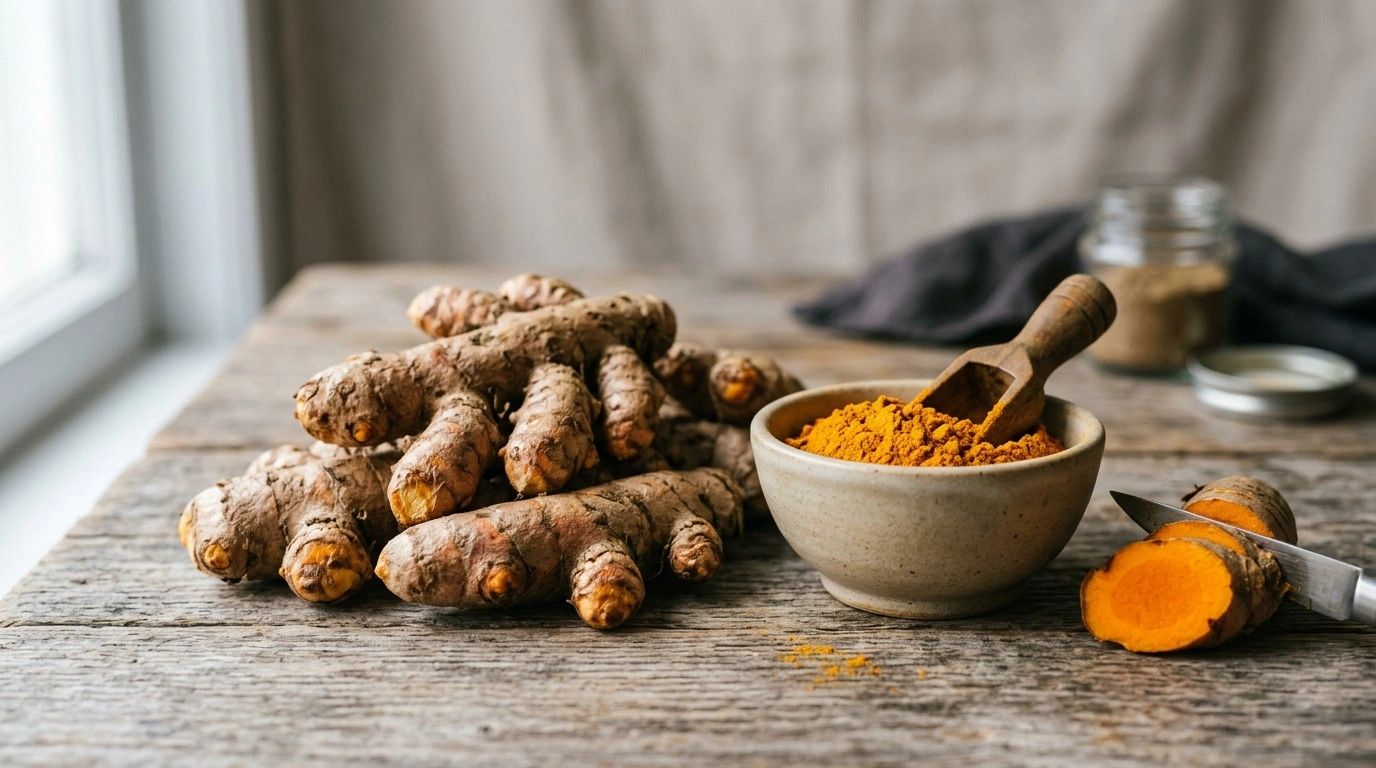
Turmeric has a distinctive earthy, warm and mildly spicy aroma.
Overview – What does turmeric smell like?
Turmeric has a distinctive earthy, warm and mildly spicy smell, with woody and sometimes slightly ginger-like notes. The aroma comes from volatile compounds naturally present in the rhizome of Curcuma longa, the plant used to produce fresh and ground turmeric.
The smell should not be confused with turmeric’s colour or taste. Curcumin is best known as a yellow-orange pigment, while much of turmeric’s characteristic aroma comes from its volatile oil, which contains numerous aromatic compounds.
Research analysing turmeric’s aroma shows that no single compound creates the entire smell. Instead, combinations of odour-active compounds contribute to its overall aroma.
Turmerones are important constituents, alongside other volatile compounds found naturally in turmeric.
Turmeric does not always smell exactly the same. Fresh turmeric root usually smells brighter and fresher than ground turmeric, while variety, origin, processing and storage can all influence the volatile compounds that reach your nose.
Smell can provide useful clues about a spice, but aroma alone cannot confirm turmeric’s quality, purity or safety. Natural variation is normal, and an unusual smell should be considered alongside its appearance, storage conditions and any signs of deterioration.
Turmeric Smell and Aroma Profile
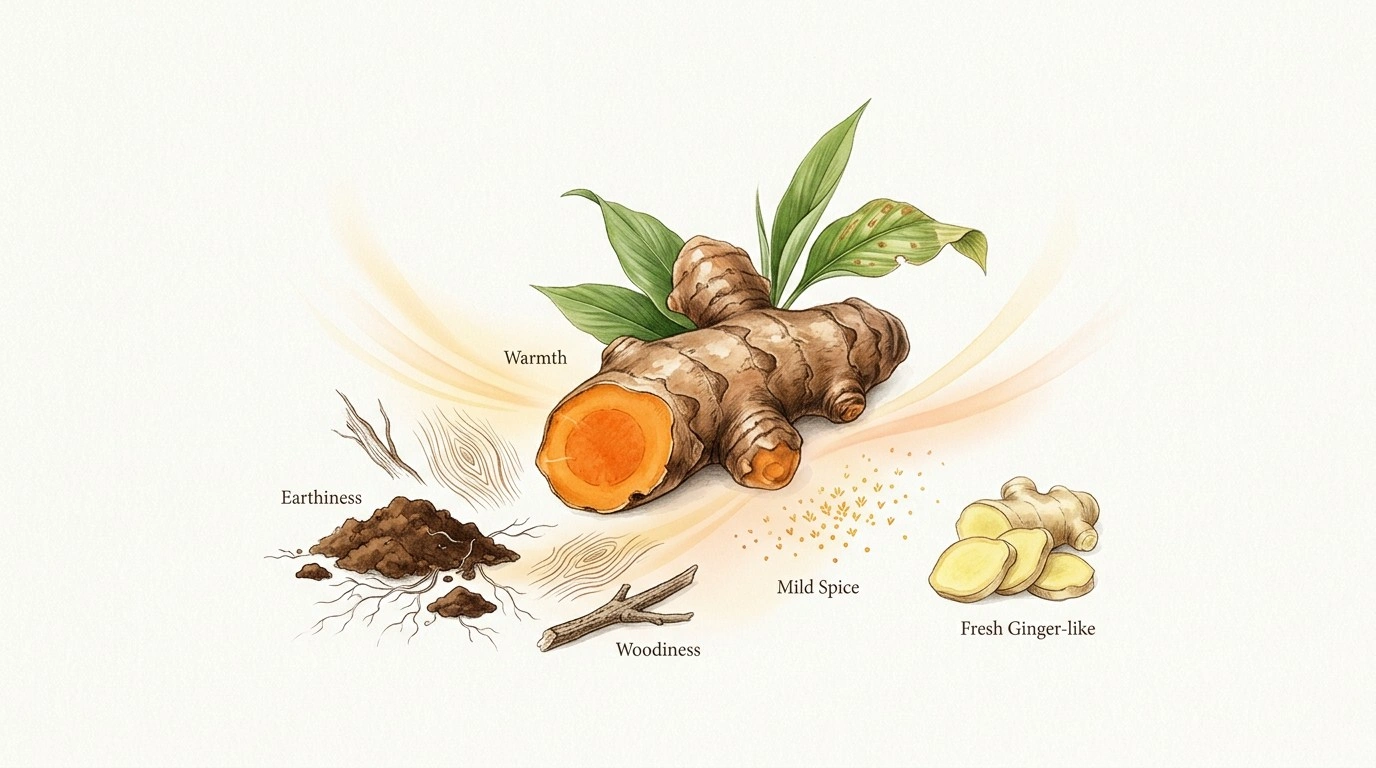
Turmeric’s aroma is commonly described using earthy, warm, woody and mildly spicy characteristics.
Table of Contents
Turmeric smell at a glance
| Type | Typical smell | Character |
| Fresh turmeric | Earthy, fresh, aromatic | Brighter |
| Ground turmeric | Warm, earthy, woody | Deeper |
| Dried rhizome | Earthy, mildly spicy | Drier |
| Turmeric essential oil | Strong, concentrated | Intense |
How would you describe turmeric’s smell?
Smell is subjective, so there is no single description that everyone will perceive in exactly the same way.
However, earthy is probably the simplest description of turmeric’s aroma.
Other characteristics you may notice include:
- Warm
- Woody
- Root-like
- Mildly spicy
- Slightly peppery
- Ginger-like
- Faintly resinous
Turmeric is not normally sharp in the way that fresh chilli can be, nor does it have the obvious sweetness associated with cinnamon.
Freshly cut turmeric can have a particularly noticeable root-like freshness. Ground turmeric tends to have a warmer, drier character.
What gives turmeric its smell?
Turmeric’s aroma comes largely from volatile compounds within its essential oil.
Scientific analysis has identified numerous volatile constituents in turmeric. Important examples include ar-turmerone and other turmerones, as well as compounds such as zingiberene and sesquiphellandrene.
One study specifically investigating turmeric aroma concluded that its characteristic odour depends on combinations of groups of odour constituents rather than one compound acting alone.
Modern analytical research continues to demonstrate just how chemically complex turmeric’s aroma can be. A 2023 study examining turmeric volatile oil detected 97 volatile components and identified 64 of them.
What about curcumin?
Curcumin is not what primarily gives turmeric its characteristic smell.
Curcumin is one of turmeric’s curcuminoids and is particularly associated with its intense yellow-orange colour.
This distinction is useful because turmeric contains several different groups of natural compounds. The substances responsible for its colour, aroma and other characteristics are not necessarily the same.
What Gives Turmeric Its Smell?
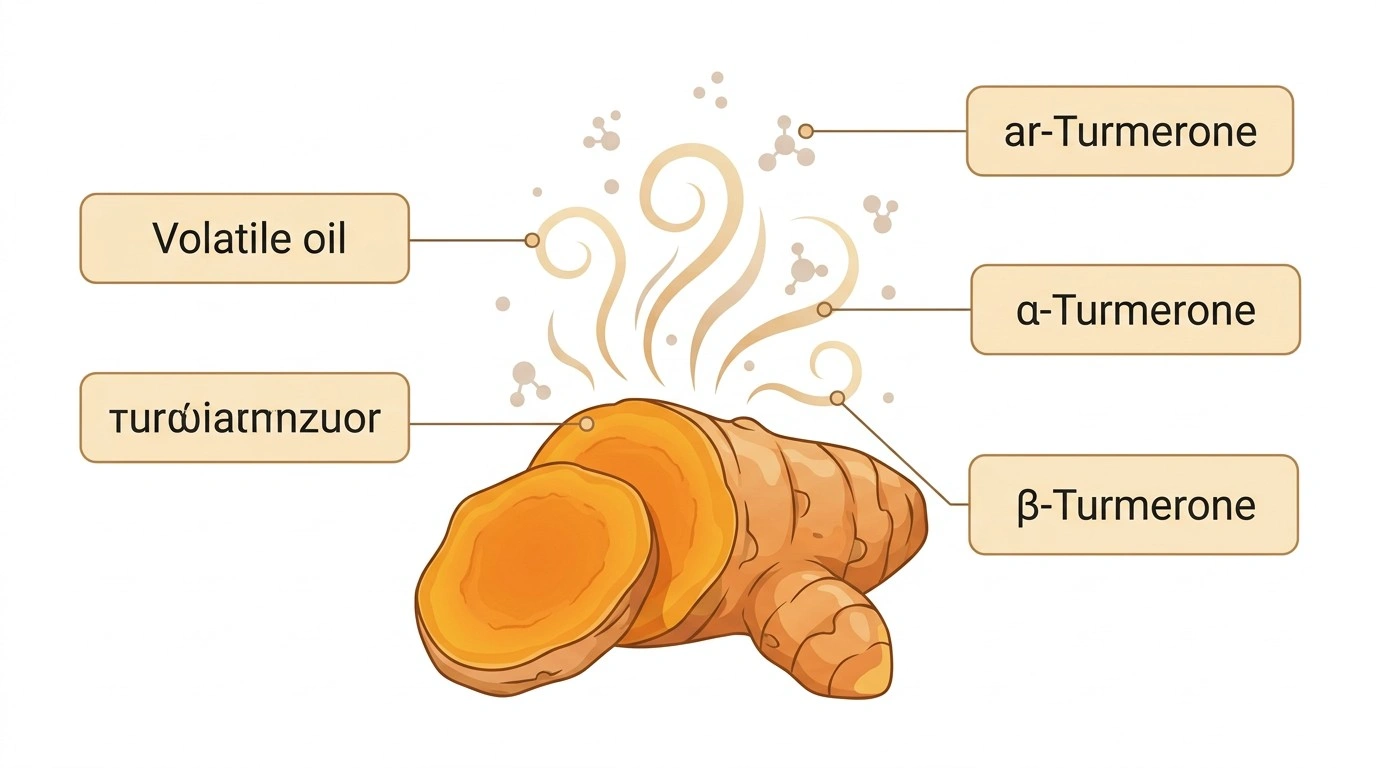
Much of turmeric’s characteristic aroma comes from volatile oils containing turmerones and other aromatic compounds.
Fresh turmeric vs ground turmeric
Fresh and ground turmeric come from the same plant, but they do not necessarily smell identical.
Fresh turmeric generally has a brighter and livelier aroma. When the rhizome is cut or grated, its freshly exposed surfaces release aromatic compounds.
Ground turmeric powder usually has a:
- Warmer aroma
- Drier character
- Deeper earthiness
- Less obvious fresh-root smell
Processing helps explain some of the difference.
Turmeric rhizomes are normally processed before becoming the familiar yellow powder. Drying, grinding and subsequent storage can influence volatile compounds, meaning the aroma of the finished spice can differ from that of a freshly cut rhizome.
Research also shows that processing can measurably alter turmeric’s volatile profile. For example, analytical research into turmeric volatile oil has demonstrated that processing treatments can change the relative amounts of volatile substances.
Fresh vs Ground Turmeric
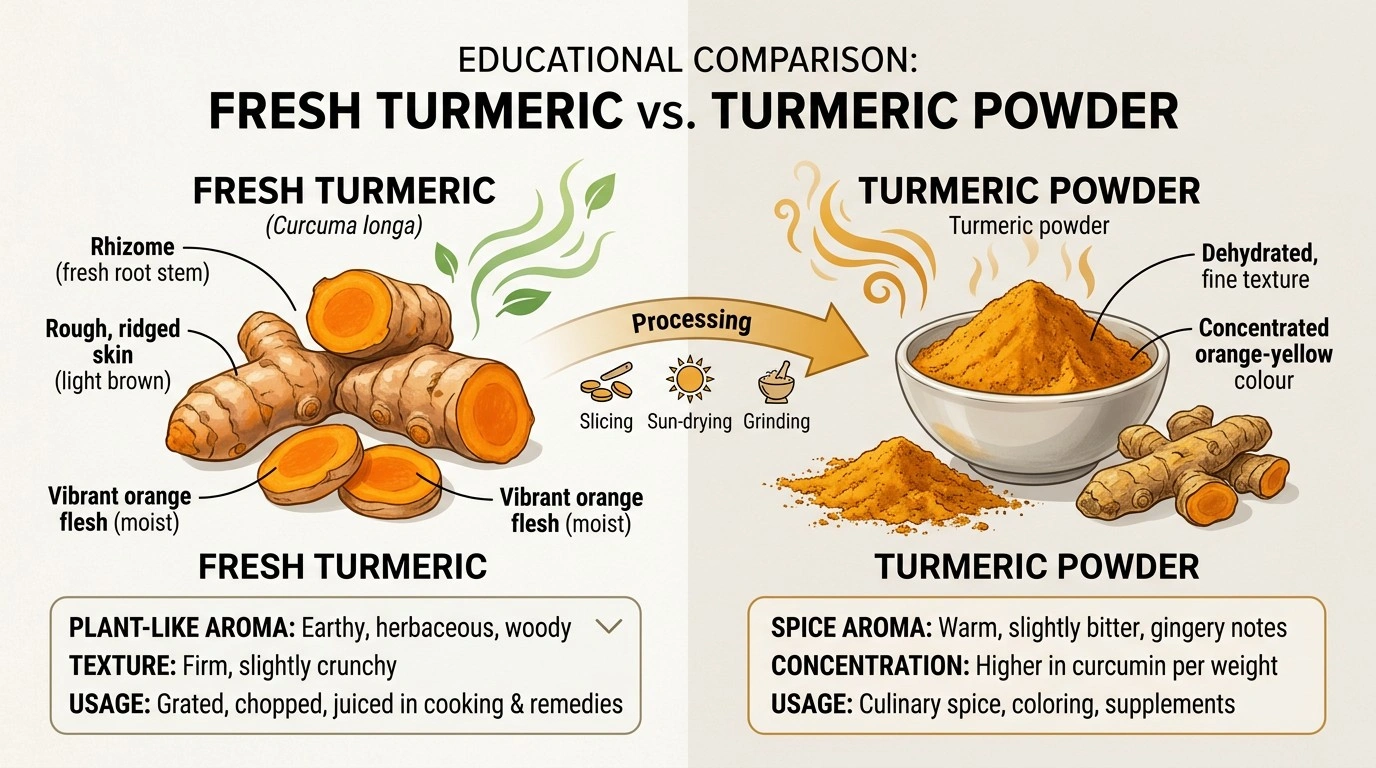
Fresh turmeric generally has a brighter aroma, while ground turmeric tends to smell warmer and earthier.
Does turmeric smell like ginger?
Turmeric can smell slightly like ginger, particularly when fresh, but the two have clearly different aromas.
The similarity makes botanical sense. Turmeric (Curcuma longa) and ginger (Zingiber officinale) belong to the same plant family, Zingiberaceae.
Fresh ginger generally has a sharper, brighter and more pungent aroma.
Turmeric is usually more:
- Earthy
- Woody
- Warm
- Root-like
Turmeric also contains volatile compounds such as zingiberene, which contribute to its complex aromatic profile.
So while there is a family resemblance, most people would not mistake freshly cut turmeric for freshly cut ginger.
Read our related article about the differences between Turmeric and Ginger.
Comparison of Turmeric, Ginger and Curry Powder
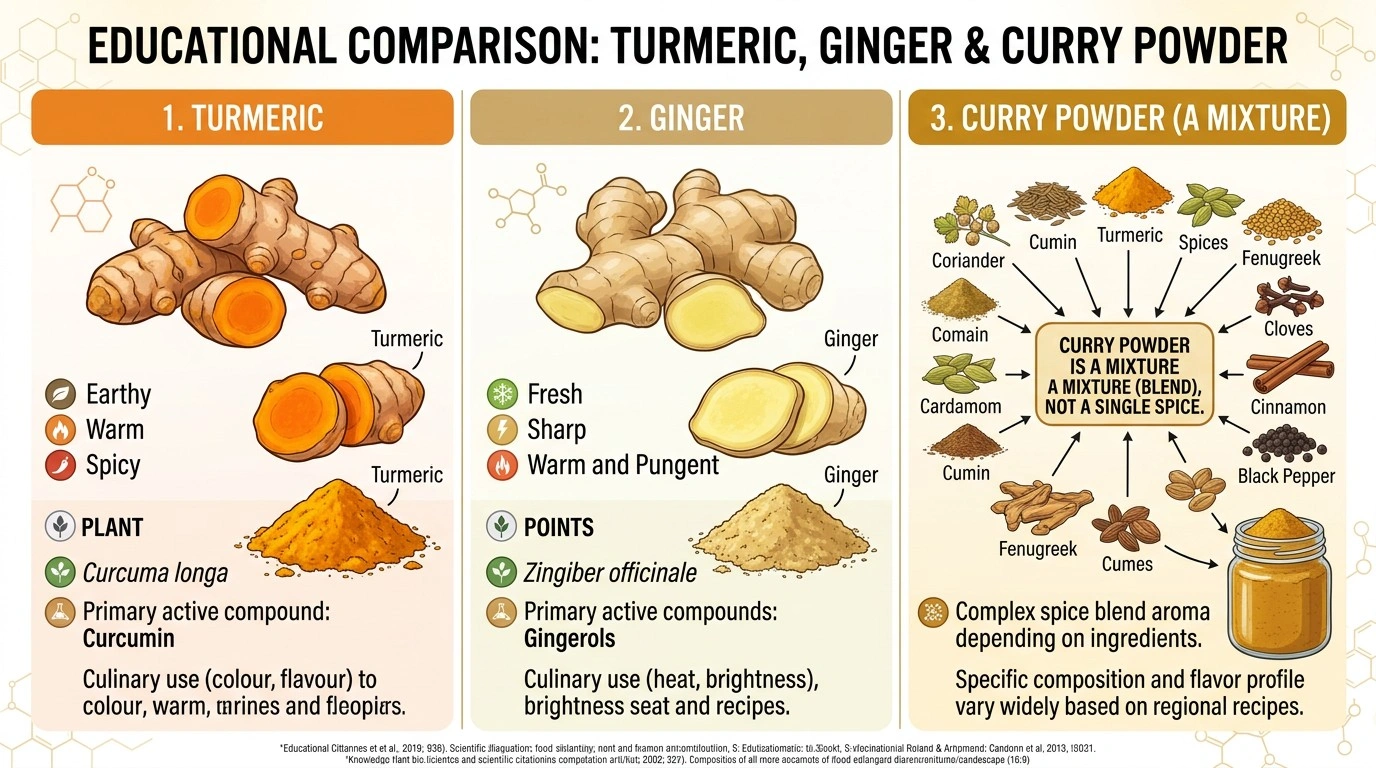
Turmeric and ginger are botanical relatives, although turmeric generally has a more earthy and woody aroma, which is different when compared to curry powder.
Why can turmeric smell different?
Two genuine turmeric products do not necessarily smell exactly the same.
Natural and processing differences can alter turmeric’s aroma.
Possible influences include:
- Plant variety
- Geographical origin
- Growing conditions
- Harvesting
- Drying
- Grinding
- Processing
- Storage
- Age
The volatile fraction of turmeric is chemically complex, so changes in the amounts of individual compounds can alter the overall aroma.
Processing effects can also be detected analytically. Research examining turmeric volatile oil found that treatment conditions changed the concentrations of volatile substances even where many of the same compounds remained present.
This means a slight difference in smell does not automatically indicate that one turmeric product is better or worse than another.
What affects turmeric’s smell?
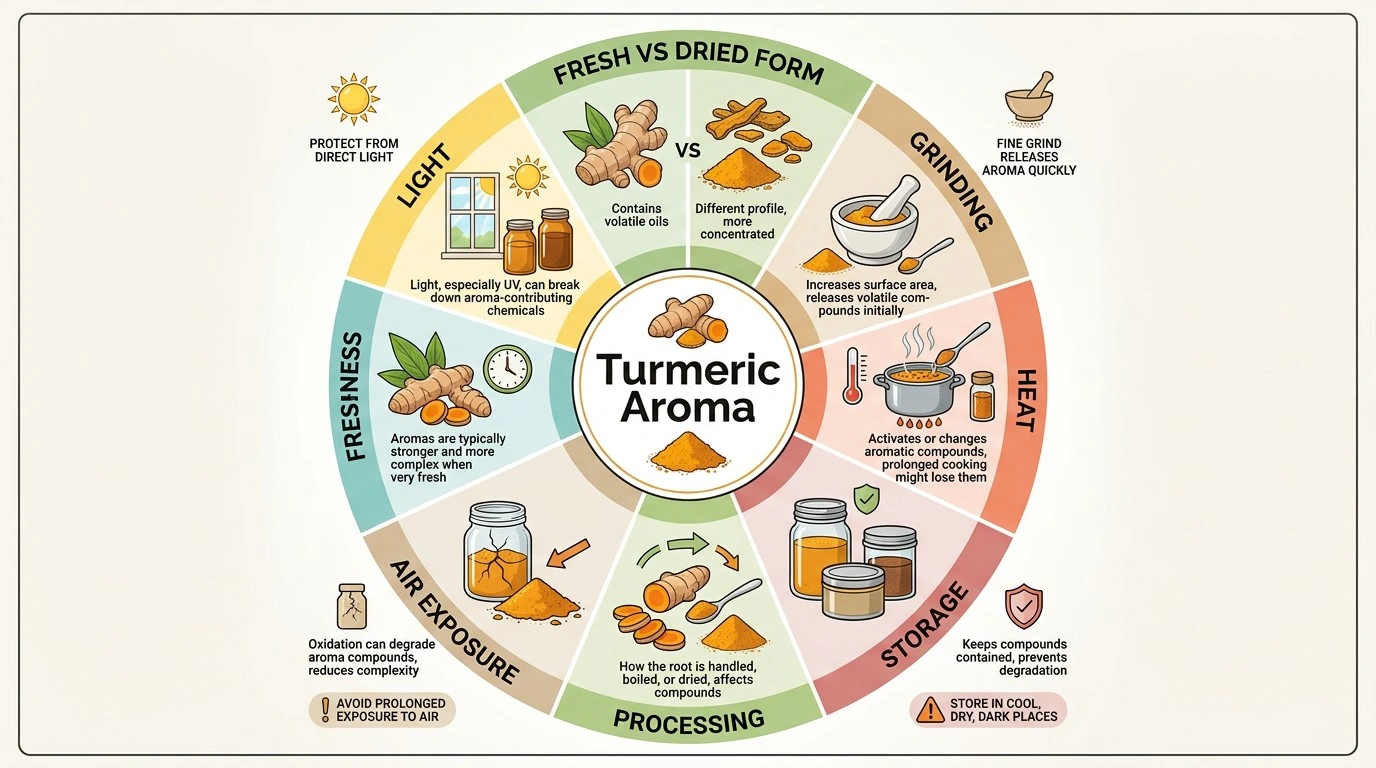
Turmeric aroma can vary with its form, processing, age and storage conditions
Can smell tell you whether turmeric is fresh?
Smell can provide clues, but you cannot reliably judge turmeric quality from aroma alone.
Ground turmeric that has been stored for a long time may have a weaker aroma because volatile compounds can diminish.
That does not automatically make it unsafe.
Conversely, a strong smell does not prove that turmeric is pure, authentic or high quality.
Store ground turmeric in a tightly sealed container, protected from excessive heat, moisture and direct light.
If turmeric has become damp, visibly mouldy or developed an obviously abnormal musty smell, it is sensible not to use it.
Frequently asked questions
Does turmeric have a strong smell?
Turmeric has a recognisable aroma, but ground turmeric is not usually overwhelmingly strong. Freshly cut turmeric can smell more aromatic, while turmeric essential oil is considerably more concentrated.
Does turmeric smell like curry?
Not exactly. Turmeric is only one of the spices commonly found in curry powder. Curry blends may also contain cumin, coriander, fenugreek, chilli and other spices, creating a more complex aroma.
Why does turmeric smell like ginger?
Turmeric and ginger belong to the same botanical family and have some similarities in their aromatic chemistry. Fresh turmeric can therefore have ginger-like notes, although turmeric generally smells more earthy and woody. Read our related comparison page Turmeric vs Ginger.
Does fresh turmeric smell different from turmeric powder?
Yes. Fresh turmeric generally has a brighter, fresher and more root-like aroma. Ground turmeric usually smells warmer, drier and earthier because drying, grinding and storage can alter its volatile profile.
What should good turmeric smell like?
Turmeric would normally be expected to have an earthy, warm and aromatic smell, sometimes with woody, mildly spicy or ginger-like notes. However, smell alone cannot reliably establish freshness, authenticity or quality.
Summary
Turmeric smells earthy, warm, woody and mildly spicy, sometimes with subtle peppery or ginger-like characteristics.
Fresh turmeric tends to have a brighter, fresher and more root-like aroma, whereas ground turmeric generally smells warmer, drier and earthier.
Its characteristic smell comes largely from a complex mixture of volatile compounds in turmeric’s essential oil. Turmerones are important components, but research indicates that turmeric’s overall aroma results from combinations of different odour-active compounds rather than one substance alone.
Natural differences in the plant and changes caused by processing and storage mean that not every turmeric sample will smell identical.
For a simple description:
Fresh turmeric: earthy, fresh, slightly ginger-like.
Ground turmeric: earthy, warm and woody.
Related guides
If you want to explore turmeric further, useful related pages include:
About this information
This page is for general educational and informational purposes. It has been written using published scientific research and authoritative reference material.
Descriptions of smell are partly subjective. Scientific research can identify turmeric’s volatile compounds and investigate its aroma, but individuals may perceive and describe smells differently.
Further Information and Reading
1. Healthy Turmeric Chicken Recipe — Jamie Oliver
Jamie Oliver demonstrates a practical way of using turmeric as part of a chicken recipe, showing how turmeric can be incorporated into everyday cooking.
2. Turmeric, Ginger and Cinnamon: Everyday Medicine in Your Kitchen — Simon Mills, The Doctor’s Kitchen
Simon Mills discusses turmeric, ginger and cinnamon and their traditional and everyday uses, providing broader background on turmeric beyond its use purely as a culinary spice.
3. Aroma of Turmeric: Dependence on the Combination of Groups of Several Odor Constituents
Hasegawa T, Nakatani K, Fujihara T & Yamada H. Published in Natural Product Communications (2015). This study specifically investigated the compounds contributing to turmeric’s characteristic aroma and concluded that combinations of groups of odour constituents are important. Read the article:
4. Evaluation of 60Co Irradiation on Volatile Components of Turmeric (Curcumae Longae Rhizoma) Volatile Oil with GC-IMS
He Y et al. Published in Foods (2023). Researchers detected 97 volatile components and identified 64, while demonstrating that processing treatment could alter concentrations of turmeric’s volatile substances. Read the article.
5. Could the Aroma of Spices Produce a Cross-Modal Enhancement of Food Saltiness and Contribute to Reducing Salt Intake?
Published in the Journal of the Science of Food and Agriculture (2024). Includes sensory and olfactometric investigation of turmeric and its odour-active compounds. Read the article:
Author
Written by J. Henderson
Health & Wellness Research Writer
J. Henderson writes evidence-based articles on nutrition, botanical supplements and everyday wellbeing. His work focuses on translating scientific research into clear, practical guidance that helps readers make informed decisions about natural health products.
- Written by J. Henderson
- Reviewed by Fiona Finlay
- Reviewed on the 10 September 2026