What is turmeric
Turmeric is a bright yellow-orange spice made from the dried and ground rhizome, or underground stem, of Curcuma longa, a perennial plant in the ginger family, Zingiberaceae. It is widely used as a culinary spice, food colouring and traditional ingredient, particularly across South Asia and other parts of Asia.
Turmeric contains naturally occurring compounds called curcuminoids, including curcumin, which have been extensively studied for their biological effects. However, turmeric as a food and concentrated turmeric or curcumin supplements are not the same thing, and evidence for health benefits varies depending on the condition and preparation.
Turmeric has a long history of use in food and traditional medicine. Today, it is commonly found as fresh or dried root, powdered spice, teas, extracts and dietary supplements. This guide explains what turmeric is, where it comes from, how the turmeric plant grows, how it is used and what current research says about its potential health effects and safety.
What Is Turmeric? Curcuma longa Rhizome
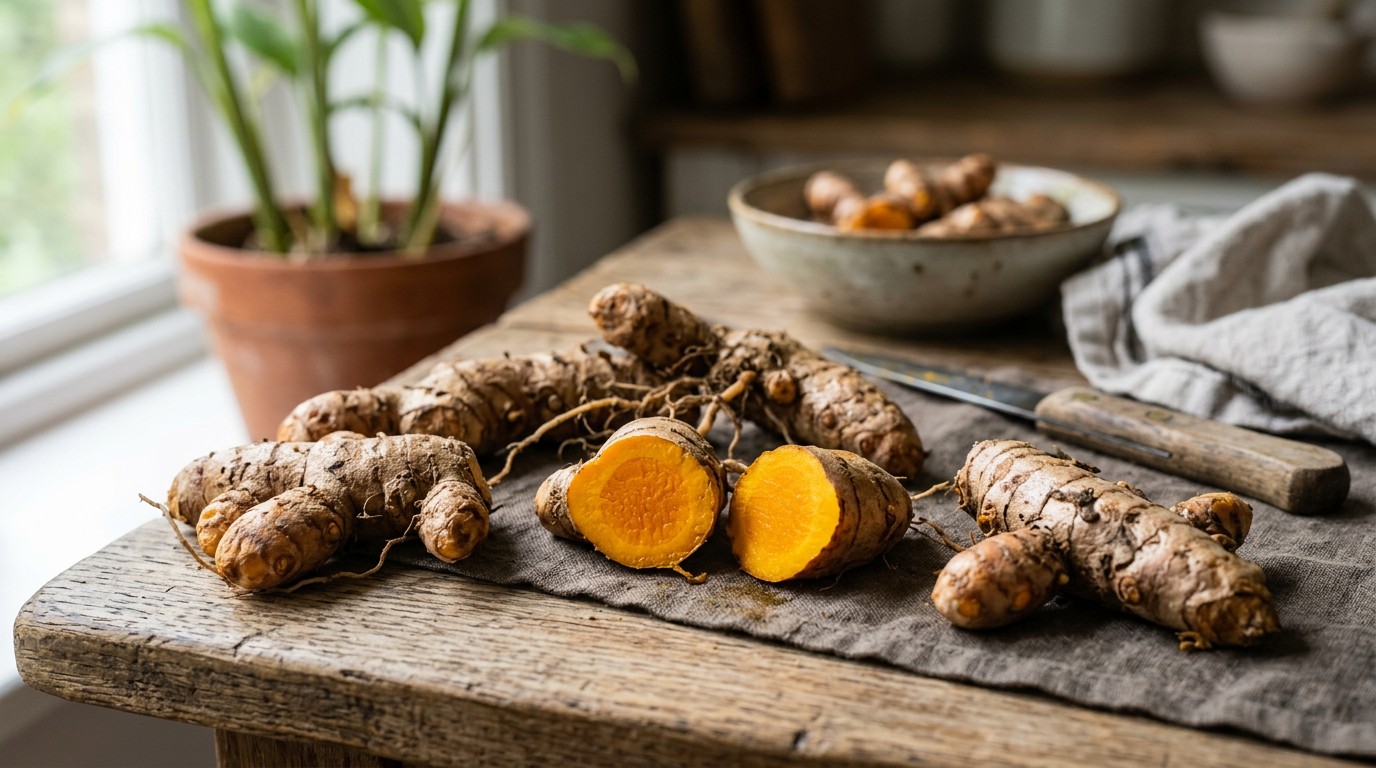
Fresh turmeric rhizomes from Curcuma longa, the plant used to produce turmeric spice.
Quick answer: what is turmeric?
Turmeric is the rhizome of the plant Curcuma longa. It belongs to the same botanical family as ginger and is best known for its intense yellow colour, earthy flavour and use as a spice.
Key Points
- Scientific name: Curcuma longa L.
- Plant family: Zingiberaceae, the ginger family
- Part used: Rhizome, an underground stem
- Main traditional use: Food, colouring and traditional medicine preparations
- Key compounds: Curcuminoids, including curcumin
- Colour: Yellow to orange-yellow
- Historical roots: South and Southeast Asia
- Common form: Dried turmeric and ground turmeric powder
- Largest producer: India
- Important distinction: Culinary turmeric and concentrated curcumin supplements should not be treated as equivalent
Turmeric has been used for thousands of years, but traditional use does not by itself prove that turmeric can prevent or treat a disease. Modern clinical research is still investigating which effects, if any, are meaningful in humans.
At a glance
| Feature | Turmeric |
| Botanical name | Curcuma longa |
| Plant family | Ginger family |
| Plant part | Rhizome |
| Main culinary role | Spice, flavouring and colouring |
| Main colour compounds | Curcuminoids |
| Best-known compound | Curcumin |
| Native history | Associated with South and Southeast Asia |
| Common turmeric forms | Fresh rhizome, dried root, powder, tea and extracts |
| Traditional uses | Food, dye and traditional medicine |
| Modern research | Particularly focused on curcumin and inflammation-related conditions |
Table of Contents
- What is the turmeric plant?
- Where does turmeric come from?
- What does turmeric look like?
- How is turmeric made into a spice?
- What is curcumin?
- What is turmeric used for?
- What does the research say about turmeric benefits?
- Turmeric as a food versus a supplement
- Is turmeric safe?
- Frequently asked questions
- Summary
- Sources and further information
- Medical disclaimer
What is the turmeric plant?
Turmeric comes from Curcuma longa, a perennial herb belonging to the ginger family. The part people normally call the turmeric root is botanically a rhizome rather than a true root. A rhizome is an underground stem that stores nutrients and produces new shoots.
The turmeric plant can grow to around 1 metre tall and has large, elongated green leaves. Its flowers grow on a spike and can have pale yellow or white colouring. The underground rhizomes are thick, branched and characteristically yellow-orange inside.
Unlike many plants grown from seed, Curcuma longa is normally propagated through pieces of rhizome. Kew describes cultivated turmeric as effectively sterile, with the plant reproducing vegetatively rather than producing viable seed.
The rhizome is harvested when the plant has matured. It can be used fresh or processed into the familiar dried turmeric spice.
Turmeric Plant (Curcuma longa)
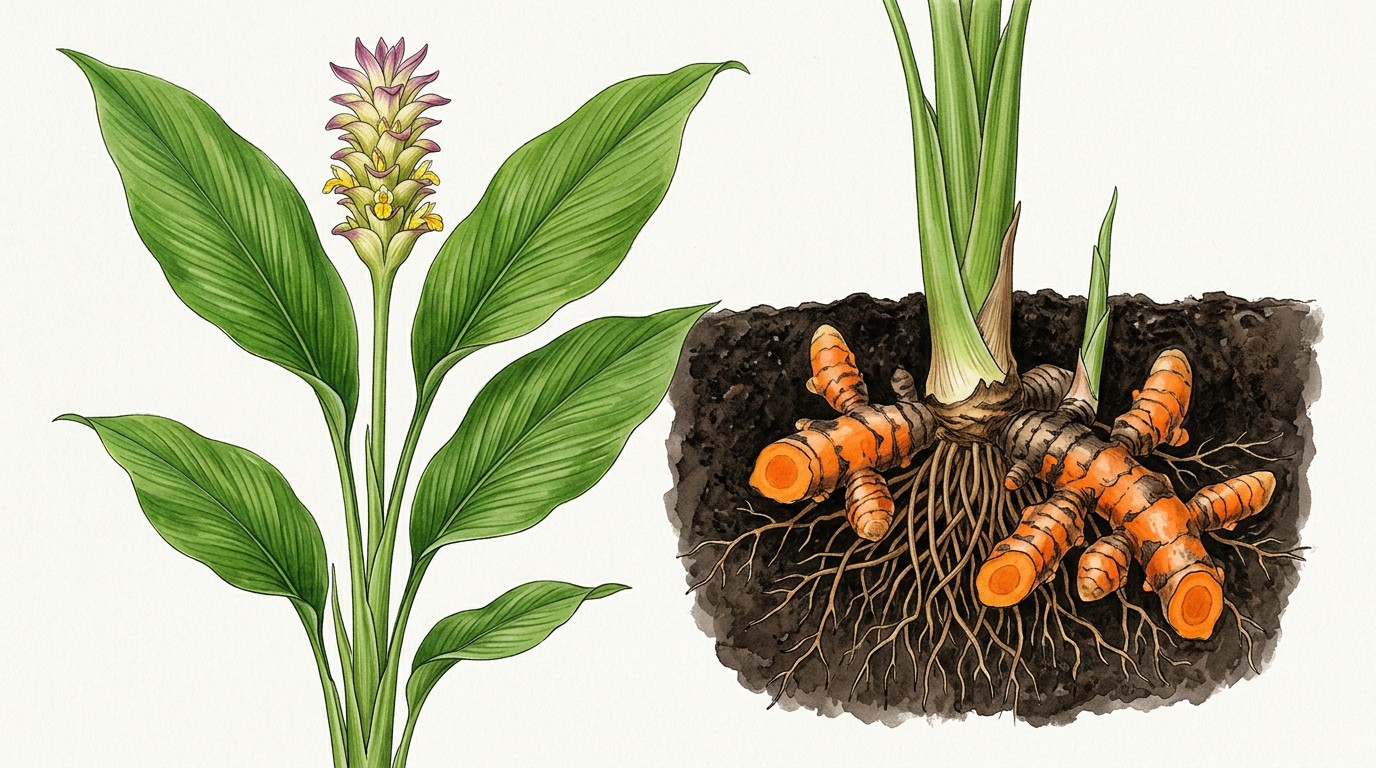
The turmeric plant is a perennial herb in the ginger family with large green leaves and underground rhizomes.
Where does turmeric come from?
Turmeric has deep historical connections with South Asia and Southeast Asia. The exact original geographical origin of cultivated Curcuma longa is not completely certain because the plant is known primarily as a cultivated species rather than a wild plant.
Kew’s Plants of the World Online identifies Curcuma longa as a cultivated plant associated with southwestern India and notes that its precise origin is uncertain, with South or Southeast Asia proposed as its broader area of origin.
Turmeric has been used in India for at least 2,500 years according to Kew’s historical account. Historical records also describe its use in China and its later spread into other parts of Asia and beyond.
India remains particularly important to the turmeric industry and is the world’s largest producer, consumer and exporter. Turmeric is also widely cultivated in countries including Bangladesh, China, Thailand, Cambodia, Malaysia, Indonesia and the Philippines.
Its long history is not limited to cooking. Turmeric has been used as a colouring material, in cultural practices and in traditional medicine systems, including Ayurveda and traditional Chinese medicine. These historical uses are important cultural and botanical facts, but they should not automatically be interpreted as evidence that turmeric treats modern medical conditions.
What does turmeric look like?
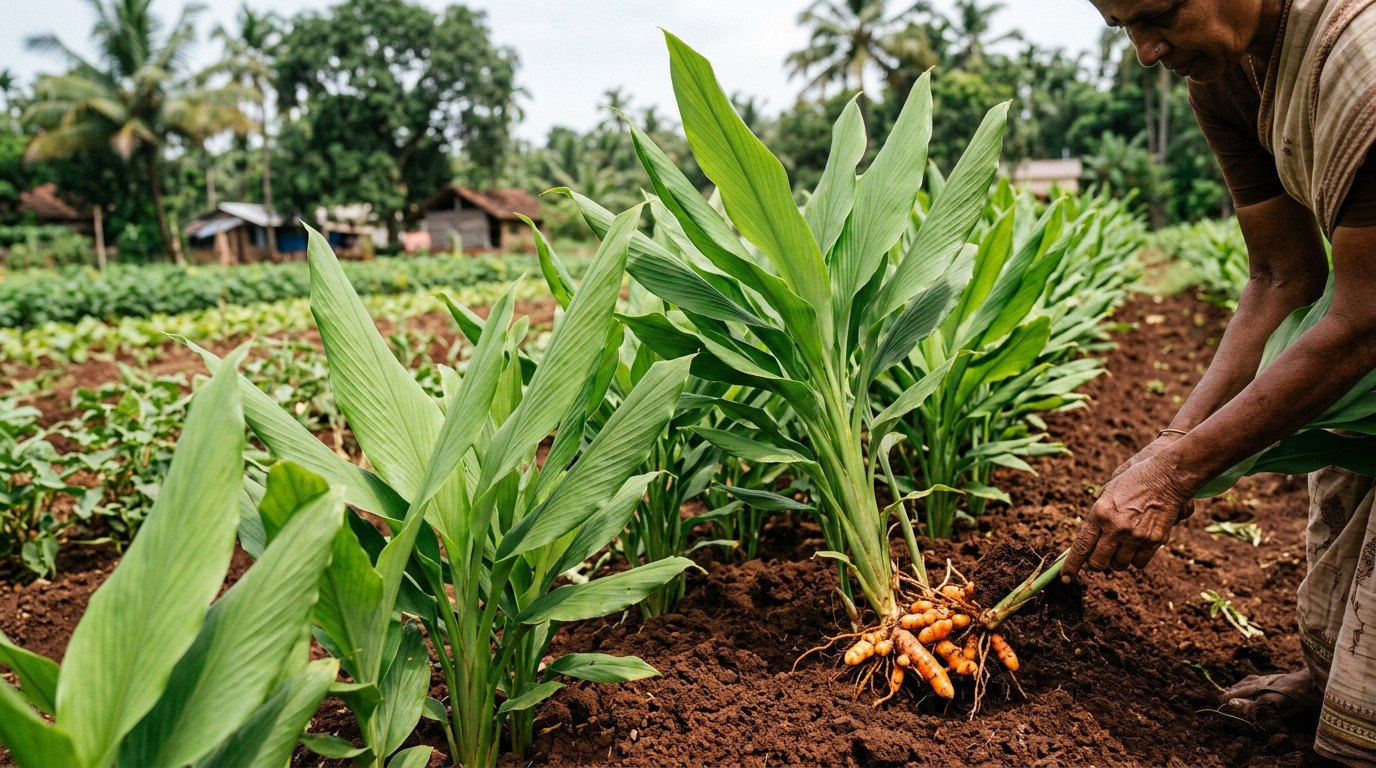
Turmeric is a leafy tropical plant with long green leaves and underground rhizomes that develop into the familiar turmeric root.
The turmeric plant is quite different from the powdered spice found in a kitchen cupboard.
Above ground, it has:
- Large, green, elongated leaves
- An upright, leafy growth habit
- Pale flowers growing from a central flowering structure
- A tropical and subtropical appearance
Below ground, the plant produces its distinctive rhizomes. Fresh turmeric rhizomes are usually firm, knobbly and orange-yellow inside.
After harvesting, the rhizomes are cleaned and traditionally cooked or otherwise processed before being dried. The dried turmeric material can then be polished, sold whole or ground into powder. Kew notes that processing helps develop turmeric’s characteristic colour and aroma.
How is turmeric made into a spice?
The process generally begins with harvesting mature rhizomes. The leafy parts are removed and the rhizomes are cleaned to remove soil.
Traditionally, the cleaned rhizomes are cooked, dried and then polished. Once completely dry, they can be sold as whole dried turmeric or ground into a fine yellow powder.
This turmeric powder is what most people recognise as turmeric spice. It is used in curry dishes, sauces, rice dishes, soups, marinades, drinks and many other foods.
Turmeric’s strong colour also makes it useful as a natural colouring ingredient. Its flavour is earthy, warm and slightly bitter rather than strongly hot.
How Turmeric Becomes Turmeric Powder
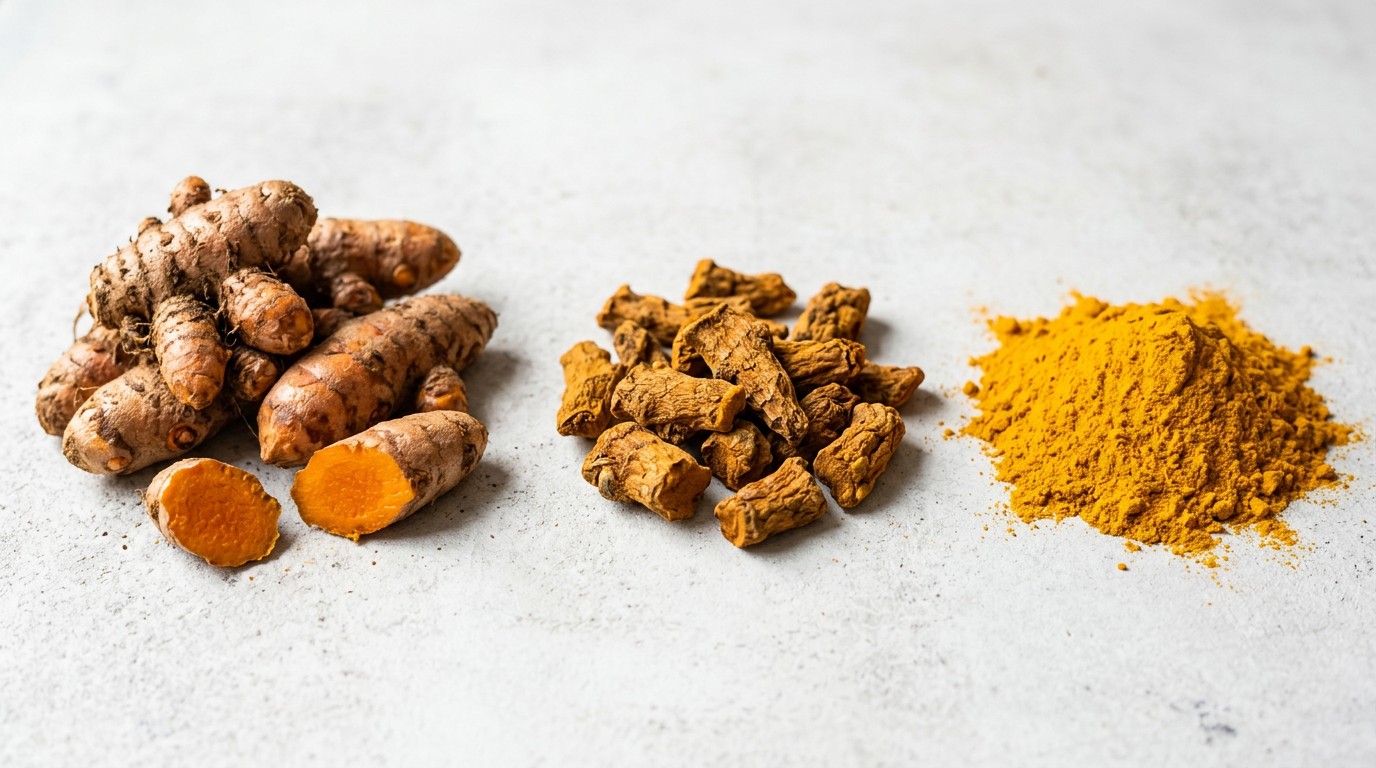
Turmeric rhizomes are harvested, cleaned, dried and ground to produce the familiar yellow turmeric powder.
What is curcumin?
Curcumin is a naturally occurring compound found in turmeric. It belongs to a group of compounds called curcuminoids and contributes substantially to turmeric’s characteristic yellow colour.
The terms turmeric and curcumin are sometimes used interchangeably, but they are not the same thing.
Turmeric is the whole plant material, normally referring to the rhizome or products made from it. Curcumin is one chemical constituent of turmeric. Turmeric also contains other curcuminoids and numerous other compounds.
Turmeric and Curcumin Explained
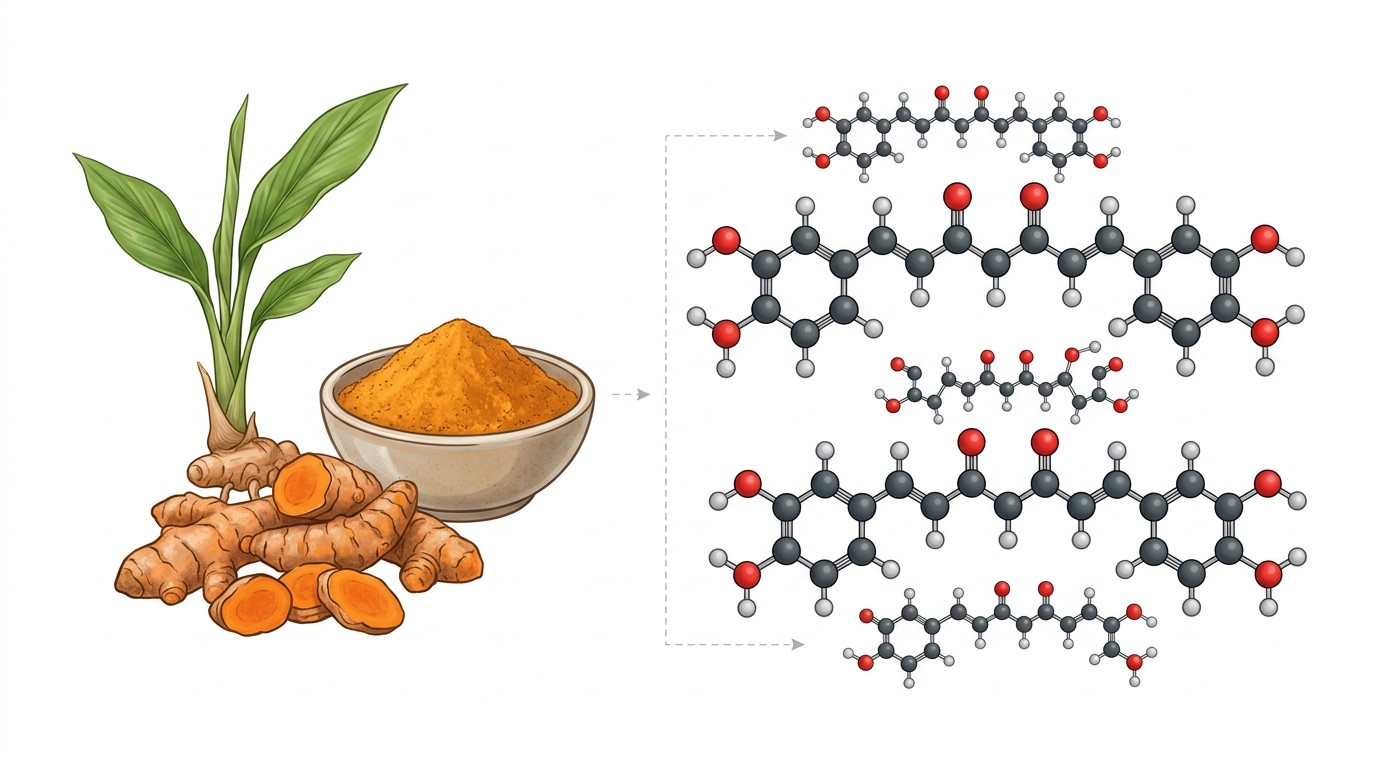
Turmeric is the whole rhizome; curcumin is one of its naturally occurring curcuminoid compounds.
This distinction matters when reading research. A clinical study using a concentrated curcumin extract cannot automatically be used to claim that ordinary amounts of turmeric powder have the same effect.
Another issue is bioavailability. Curcumin is poorly absorbed in its conventional form, which has led researchers to investigate different formulations and combinations intended to increase absorption. Piperine, a compound found in black pepper, is one example that has been studied for this purpose.
Higher absorption is not automatically the same as greater safety, however. Some highly bioavailable turmeric and curcumin supplements have been associated with rare cases of liver injury.
What is turmeric used for?
Turmeric has two broad areas of use: food and traditional or complementary health practices.
Culinary uses
As a spice, turmeric is used to add colour, aroma and flavour to food. It is a familiar ingredient in South Asian cooking and is also used internationally.
Common culinary uses include:
- Curries and spice blends
- Rice and grain dishes
- Soups and stews
- Sauces and marinades
- Pickles
- Drinks
- Baked or savoury foods
Turmeric can also be used simply as a natural yellow colouring ingredient or taken as a supplement with food.
Common Culinary Uses of Turmeric
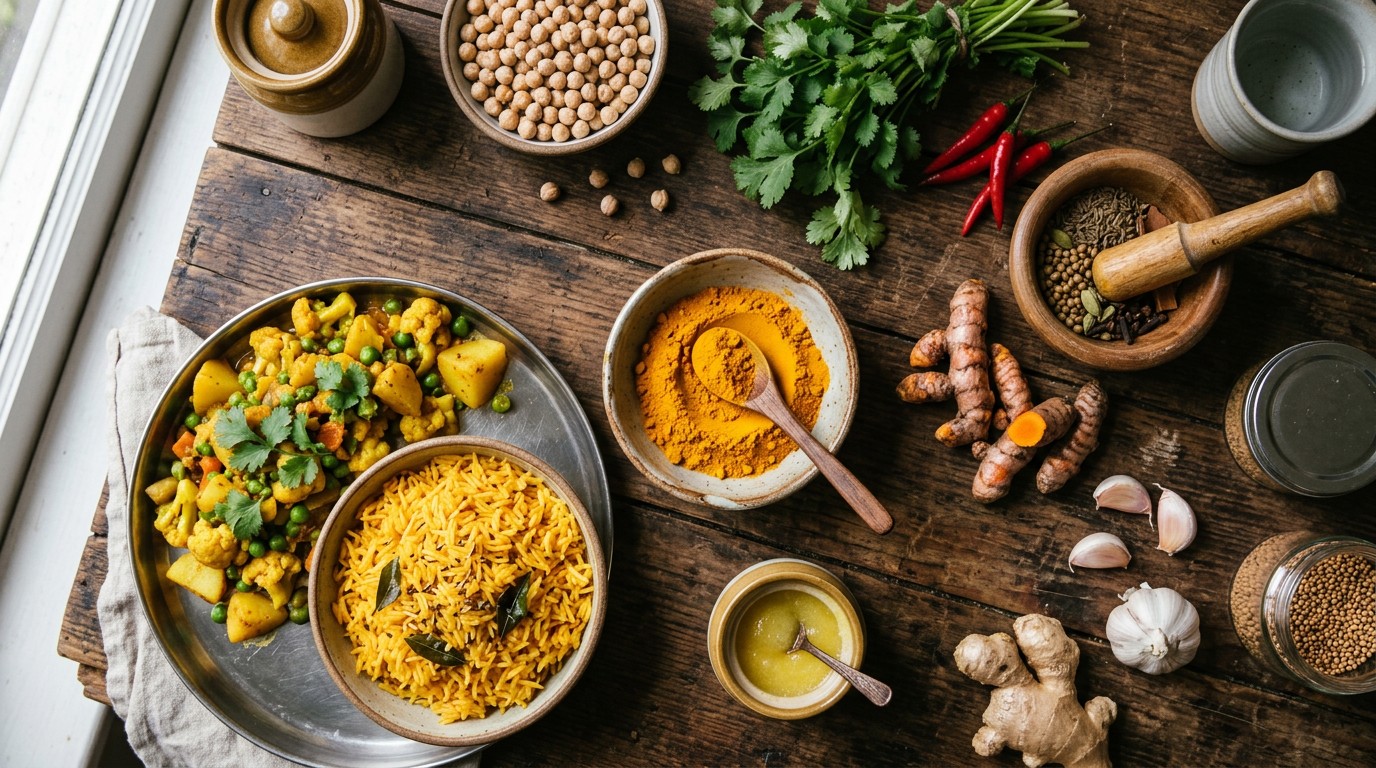
Turmeric is widely used as a spice and natural colouring ingredient in cooking.
Traditional uses
Turmeric has a long history in traditional medicine, particularly in South Asian traditions. Historical records describe its use for a wide range of purposes.
Modern scientific research has investigated turmeric and curcumin in areas including inflammation, osteoarthritis, metabolic health and other conditions. The strength of evidence differs considerably between these areas, and laboratory findings should not be confused with proven clinical benefits.
What does research say about turmeric benefits?
Turmeric and curcumin are among the most extensively researched plant compounds, but it is important to separate promising research from established medical evidence.
Research has focused particularly on curcumin’s biological activity, including possible anti-inflammatory and antioxidant effects. NCCIH notes, however, that evidence is still insufficient to support turmeric supplementation as a treatment for inflammatory disorders generally.
1. Turmeric and joint health
Osteoarthritis is one area where human research has produced relatively encouraging results.
Several systematic reviews and meta-analyses of randomised controlled trials have reported improvements in pain and physical function among people with knee osteoarthritis taking turmeric extracts or curcumin compared with placebo. However, the studies have limitations, including differences in products, doses, study duration and research quality.
This means turmeric or curcumin may have potential as an area of further research, but it should not be presented as a proven replacement for prescribed treatment.
2. Turmeric and inflammation
Curcumin has demonstrated anti-inflammatory activity in laboratory research, which is one reason it has attracted so much scientific attention.
However, evidence from laboratory experiments does not necessarily predict what will happen in people. NCCIH currently describes the evidence supporting turmeric supplementation for inflammatory disorders as insufficient.
3. Turmeric and other health conditions
Curcumin has also been studied for cancer, cardiovascular health, metabolic conditions and other diseases. Much of this research remains preliminary or involves small clinical trials, laboratory experiments or specific formulations.
For example, NCCIH states that there is not enough evidence to recommend curcumin products for treating cancer.
The most accurate conclusion is therefore that turmeric is scientifically interesting and actively researched, but not a proven treatment for a broad range of diseases.
Turmeric as a food versus a supplement
One of the most important distinctions when discussing turmeric is the difference between eating it as a spice and taking a concentrated supplement.
| Form | Typical characteristics | Evidence and safety context |
| Fresh turmeric | Whole rhizome | Primarily a food ingredient |
| Turmeric powder | Dried, ground rhizome | Common culinary form |
| Turmeric tea | Turmeric prepared as a drink | Composition varies considerably |
| Turmeric extract | Concentrated plant preparation | May contain substantially more curcuminoids |
| Curcumin supplement | Concentrated curcumin or curcuminoids | Often formulated to increase absorption |
| Curcumin with piperine | Curcumin combined with black pepper compound | Increased absorption can also change the safety profile |
The safety concerns around medicinal-dose supplements should not be used to suggest that normal culinary use is inherently dangerous. The Australian Therapeutic Goods Administration states that the rare liver-injury risk associated with medicinal turmeric or curcumin products does not appear to relate to typical dietary amounts of turmeric as food.
Turmeric Food and Curcumin Supplements Compared
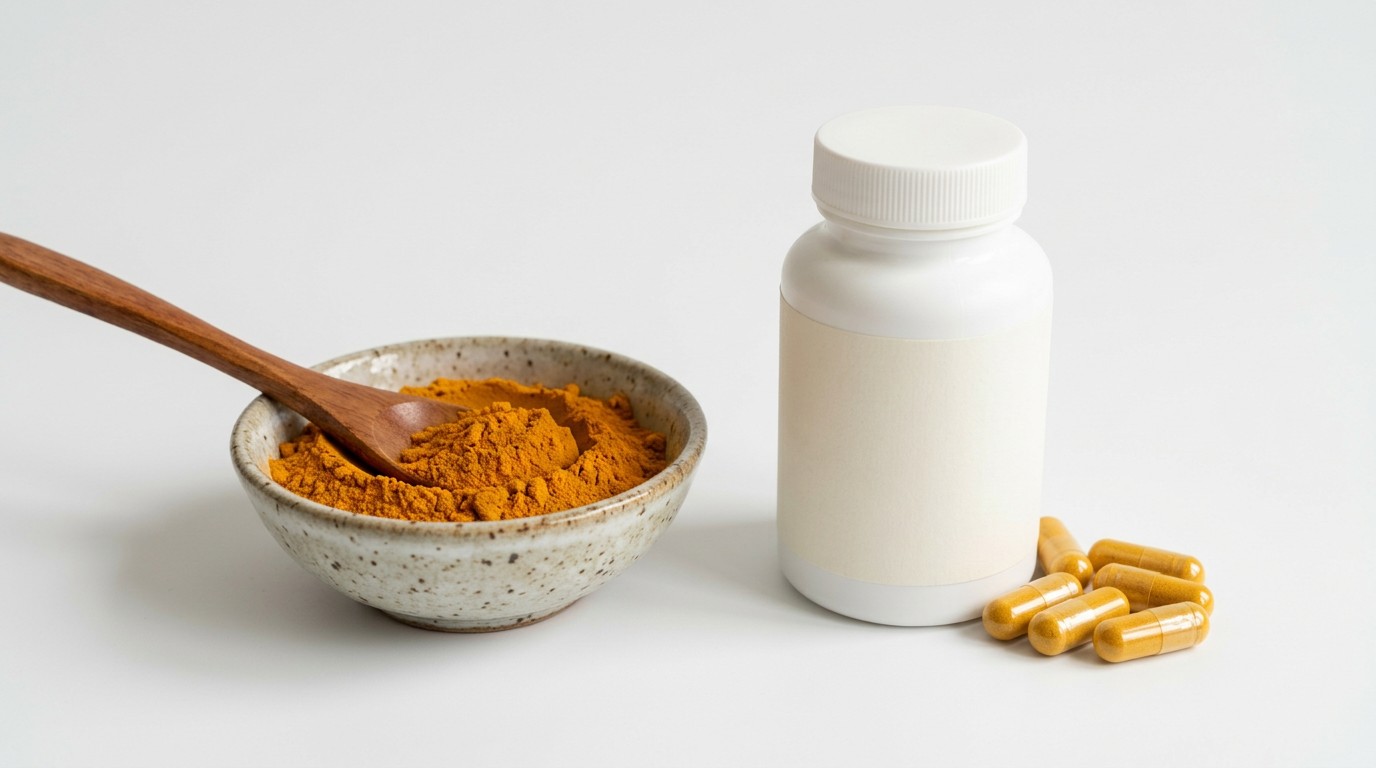
Culinary turmeric and concentrated curcumin supplements can differ substantially in composition and dose.
Is turmeric safe?
Turmeric used as a food is generally considered different from concentrated medicinal products. However, turmeric and curcumin supplements can cause side effects and, in rare cases, have been associated with clinically significant liver injury.
Possible mild side effects can include digestive upset, nausea or diarrhoea, particularly with higher doses.
UK government information also highlights concerns about liver injury associated with turmeric and curcumin supplements. The Committee on Toxicity has identified the possibility of adverse liver effects from supplement-level exposure, including in some people consuming relatively low concentrations.
People taking concentrated turmeric or curcumin products should therefore discuss them with a doctor or pharmacist, particularly if they have liver or gallbladder problems, take regular medicines, are pregnant or breastfeeding, or are considering long-term or high-dose use.
Anyone taking a turmeric or curcumin supplement who develops symptoms such as yellowing of the skin or eyes, dark urine, unusual tiredness, nausea, vomiting, abdominal pain or loss of appetite should stop the product and seek medical advice promptly.
Frequently asked questions
What exactly is turmeric?
Turmeric is the dried or fresh rhizome of Curcuma longa, a perennial plant belonging to the ginger family. It is widely used as a spice, food colouring and traditional ingredient.
Is turmeric a root or a spice?
Turmeric is commonly called a root, but botanically the part used is a rhizome, which is an underground stem. Once harvested and dried, the rhizome can be ground into the spice known as turmeric.
Is turmeric the same as curcumin?
No. Turmeric is the whole rhizome or a preparation made from it. Curcumin is one of the principal curcuminoid compounds found in turmeric. Concentrated curcumin supplements can therefore be very different from ordinary turmeric powder.
Where does turmeric come from?
Turmeric has historical roots in South and Southeast Asia. Kew identifies Curcuma longa as a cultivated plant associated with southwestern India, while noting that its precise original geographical origin is uncertain. India is currently the world’s largest producer and exporter.
What is turmeric commonly used for?
Turmeric is most commonly used as a culinary spice and colouring ingredient. It also has a long history of use in traditional medicine. Modern researchers have investigated curcumin and turmeric extracts for several health conditions, particularly inflammation and osteoarthritis.
Does turmeric have proven health benefits?
Some clinical research, particularly research involving certain turmeric or curcumin preparations and knee osteoarthritis, has reported potential benefits. However, the evidence is not strong enough to conclude that turmeric prevents or treats a wide range of diseases. Different products and formulations also make results difficult to compare.
Is turmeric safe to take every day?
Turmeric used in normal food quantities is different from taking a concentrated supplement every day. High-dose or concentrated turmeric and curcumin products can cause side effects and have been linked to rare cases of liver injury. Anyone considering regular supplementation should discuss it with a doctor or pharmacist first.
Summary – What is turmeric?
So, what is turmeric? Turmeric is the rhizome of Curcuma longa, a tropical plant in the ginger family. It is best known as a yellow-orange culinary spice, but it also has a long history of use as a colouring material and in traditional medicine.
Turmeric Plant Flower and Rhizome
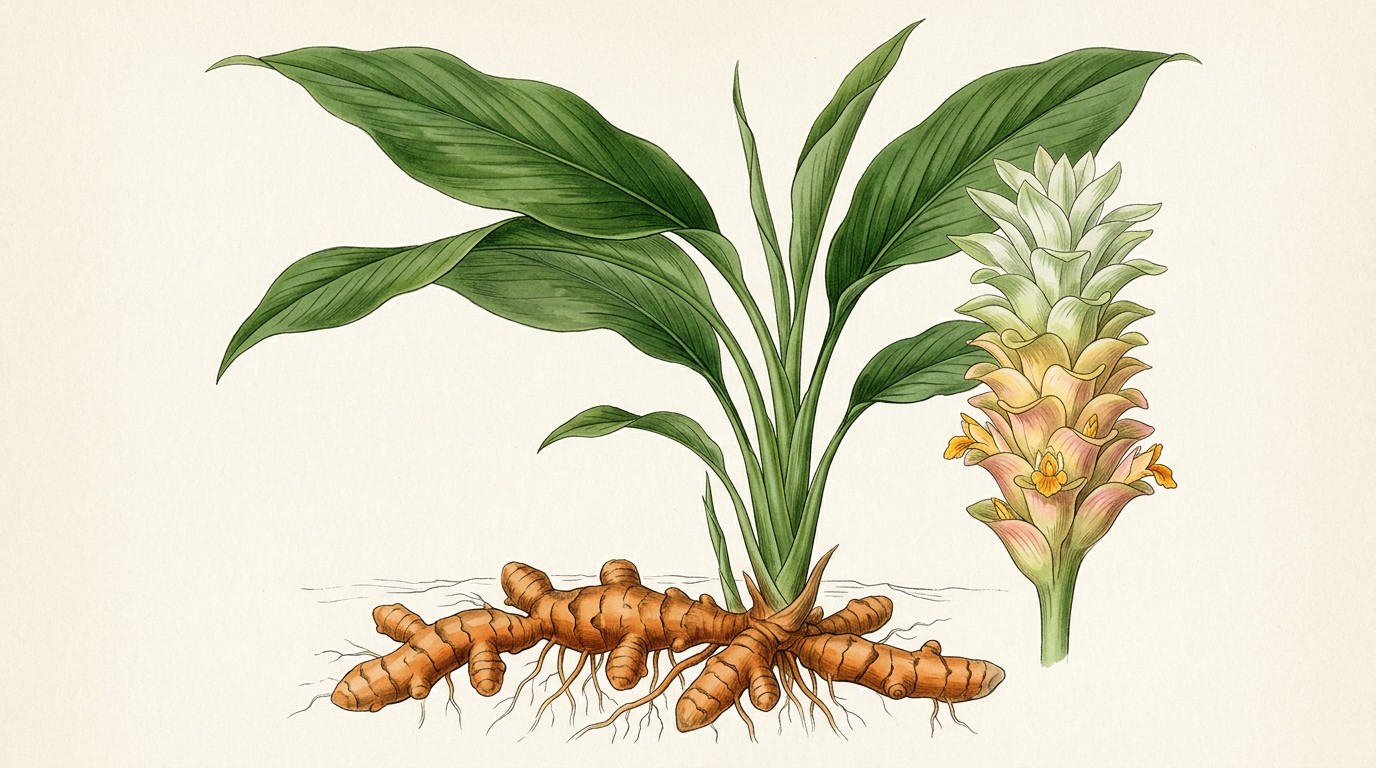
Curcuma longa produces leafy shoots above ground and distinctive underground rhizomes.
The compound most often associated with turmeric research is curcumin, a naturally occurring curcuminoid. Scientific studies have investigated curcumin for its anti-inflammatory and other biological effects, with some evidence of potential benefits for symptoms associated with knee osteoarthritis. However, the overall evidence varies by condition and product, and turmeric should not be regarded as a proven treatment for disease.
For most people, the simplest distinction is useful: turmeric is a food and spice; curcumin is one of its principal compounds; and concentrated supplements are not equivalent to ordinary culinary turmeric.
Safety is also important. Rare liver injuries have been associated with medicinal-dose turmeric and curcumin supplements, particularly some formulations designed to increase absorption. This is one reason evidence-based information should distinguish everyday food use from concentrated supplementation.
Sources and further information
1. Should You Take Turmeric Every Day? Here’s What Doctors Say
2. The 3 Amazing Spices to Reduce Joint Pain, Inflammation & Repair the Body | Dr. Rupy Aujla
3. What TURMERIC Really Does to Your BODY – Dr. Suneel Dhand
4. Tips How to Grow Turmeric plant in Just 3 Square Feet Garden Bed
5. What Exactly Is Turmeric? It’s Not Just a Spice! – A History of Simple Things
6. Kew Science — Plants of the World Online: Curcuma longa L.
Publisher: Royal Botanic Gardens, Kew.
A botanical reference covering the accepted scientific name, classification, plant description, distribution, cultivation, history and uses of Curcuma longa.
Kew Science — Plants of the World Online
7. NCCIH — Nutritional Approaches for Musculoskeletal Pain and Inflammation: What the Science Says
Publisher: National Center for Complementary and Integrative Health, National Institutes of Health.
Provides an evidence-based overview of turmeric and curcumin research, including potential anti-inflammatory effects and safety considerations.
NCCIH — Nutritional Approaches for Musculoskeletal Pain and Inflammation
8. NCCIH — Myth-Busting Popular Natural Products Marketed for Disease Prevention and Wellness
Publisher: National Center for Complementary and Integrative Health, National Institutes of Health.
Explains the distinction between promising laboratory research and evidence from human clinical studies involving turmeric and curcumin.
NCCIH — Myth-Busting Popular Natural Products
9. PubMed — The efficacy and safety of Curcuma longa extract and curcumin supplements on osteoarthritis: a systematic review and meta-analysis
Publisher: U.S. National Library of Medicine, National Institutes of Health.
Reviews randomised controlled trials investigating turmeric and curcumin supplements for osteoarthritis.
PubMed — Turmeric, curcumin and osteoarthritis systematic review
10. PubMed — Efficacy and Safety of Turmeric Extracts for the Treatment of Knee Osteoarthritis
Publisher: U.S. National Library of Medicine, National Institutes of Health.
Systematic review and meta-analysis examining randomised controlled trials of turmeric extracts for knee osteoarthritis.
PubMed — Turmeric extracts and knee osteoarthritis
11. LiverTox — Turmeric
Publisher: National Institute of Diabetes and Digestive and Kidney Diseases and National Library of Medicine, NIH.
Clinical reference covering turmeric and curcumin, including evidence concerning adverse effects and rare drug-induced liver injury. Updated June 2025.
LiverTox — Turmeric
12. Therapeutic Goods Administration — Medicines containing turmeric or curcumin: risk of liver injury
Publisher: Australian Government Department of Health and Aged Care, Therapeutic Goods Administration.
Safety advisory describing the rare risk of liver injury associated with medicinal turmeric and curcumin products and distinguishing these products from typical dietary use.
TGA — Turmeric or curcumin and risk of liver injury
13. UK Government Committee on Toxicity — Herb Induced Liver Injury
Publisher: UK Government, Committee on Toxicity of Chemicals in Food, Consumer Products and the Environment.
Discusses herb-induced liver injury and includes current UK information concerning turmeric and curcumin supplements.UK Government — Herb Induced Liver Injury
Medical disclaimer
This page is provided for general educational and informational purposes only. It is not medical advice and does not diagnose, prevent or treat any disease or medical condition.
Turmeric used as a food is different from concentrated turmeric or curcumin supplements, and individual risks can vary. If you are considering taking turmeric or curcumin supplements, particularly if you are pregnant or breastfeeding, have a medical condition, have a history of liver or gallbladder problems, or take prescription or over-the-counter medicines, speak to your doctor or another suitably qualified healthcare professional first.
If you develop concerning symptoms after taking a turmeric or curcumin supplement, seek medical advice promptly. Never use information on this page as a substitute for advice from your doctor.
Author
Written by J. Henderson
Health & Wellness Research Writer
J. Henderson writes evidence-based articles on nutrition, botanical supplements and everyday wellbeing. His work focuses on translating scientific research into clear, practical guidance that helps readers make informed decisions about natural health products.