
Turmeric Tablets
Quick Answer
Turmeric tablets are supplements containing turmeric, turmeric extracts or curcumin in tablet form. Products can differ considerably in their ingredients and concentration. Research has investigated potential benefits, particularly for osteoarthritis, but the evidence varies and turmeric tablets should not be assumed to provide proven health benefits.
Key Points
- Turmeric tablets can contain different formulations.
- Turmeric and curcumin are not the same.
- Potential benefits depend on the evidence.
- Osteoarthritis research is encouraging but not definitive.
- Some tablets contain black pepper for absorption.
- Higher milligrams do not necessarily mean better.
- Side effects and interactions are possible.
Turmeric Tablets
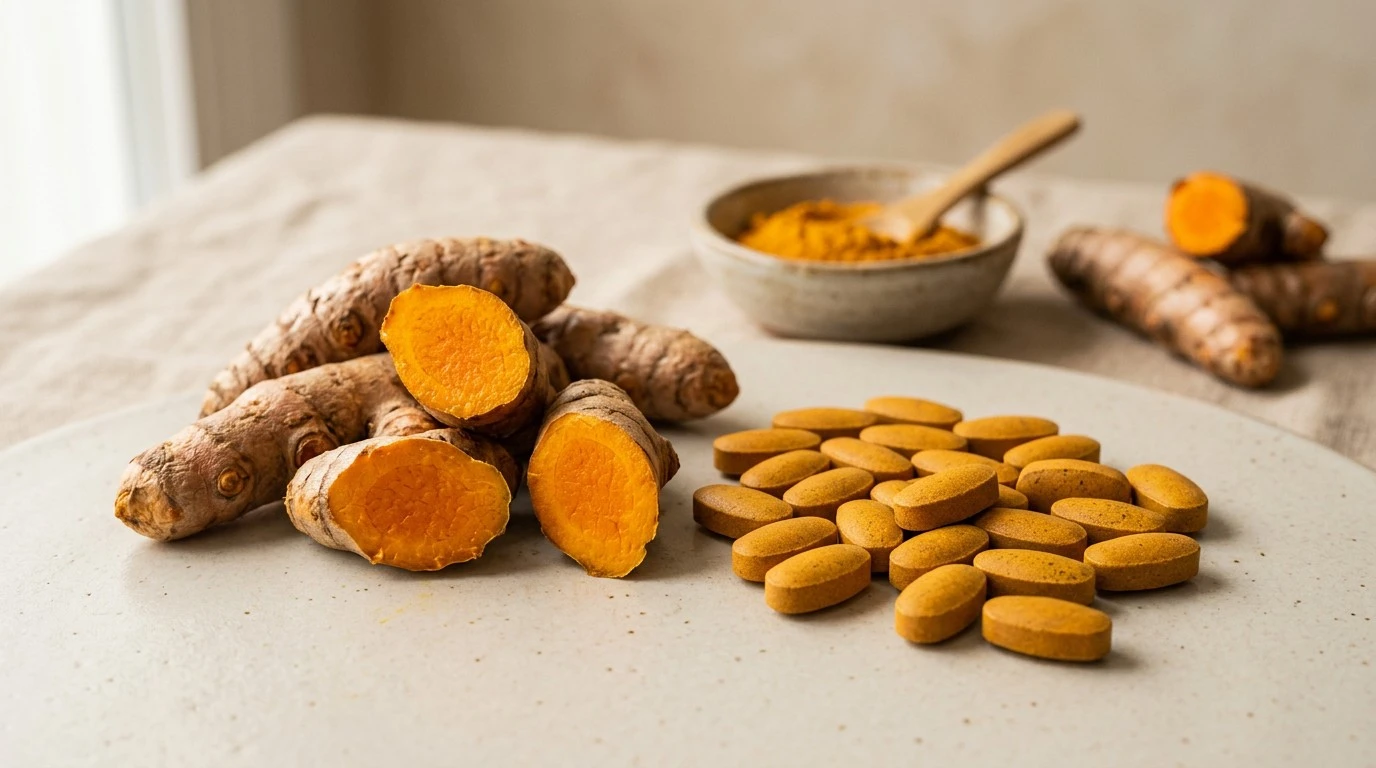
Turmeric tablets can contain turmeric powder, extracts or concentrated curcuminoids, depending on the formulation.
About Turmeric Tablets
Who Might Consider Turmeric Tablets?
People may consider turmeric tablets if they want a convenient way to take turmeric or curcumin. Some are particularly interested in potential effects on joint health, although benefits depend on the formulation and available evidence.
What Do Turmeric Tablets Contain?
Turmeric tablets can contain ground turmeric, turmeric extracts, curcuminoids or concentrated curcumin. Some also contain black pepper extract or other ingredients intended to improve absorption.
Where Can You Buy Turmeric Tablets?
Turmeric tablets are widely available from pharmacies, health shops and online retailers. Look for products from reputable manufacturers that clearly state their ingredients, amounts, directions and relevant safety information.
When Should You Take Turmeric Tablets?
There is no single best time that applies to every turmeric tablet. Follow the instructions for the particular product, and check with a pharmacist or healthcare professional if you take medicines or have relevant health conditions.
Why Choose Tablets Instead of Turmeric Powder?
Tablets provide a convenient, pre-measured way of taking turmeric or curcumin and avoid turmeric’s distinctive taste. However, tablets are not necessarily more effective than other forms; what the product contains is generally more important than whether it comes as a tablet.
How Can You Compare Turmeric Tablets?
Check the type of turmeric or curcumin, amount per serving, curcuminoid content where stated, additional ingredients and safety information. Don’t assume the product with the largest milligram number is automatically the best choice.
Person Comparing Turmeric Tablets

Comparing turmeric tablets can help you understand differences in ingredients, formulations and serving information.
Table of Contents
- What are turmeric tablets?
- What do turmeric tablets contain?
- What are turmeric tablets good for?
- Potential benefits of turmeric tablets
- What does the scientific evidence say?
- Turmeric and black pepper tablets
- Advantages and disadvantages of turmeric tablets
- Turmeric tablets vs capsules and powder
- How to choose turmeric tablets
- When should you take turmeric tablets?
- Turmeric tablet side effects and safety
- Turmeric tablets and medicines
- Frequently asked questions
- Summary
- Sources and further information
What are turmeric tablets?
Turmeric tablets are one way of taking turmeric or its constituents as a dietary supplement.
Unlike ordinary turmeric used as a culinary spice, tablets may contain ground turmeric, concentrated turmeric extracts, standardised curcuminoids, curcumin or combinations of these ingredients.
The tablet itself is simply the delivery format.
This means the words “turmeric tablet” tell you relatively little about what is actually inside the product.
One tablet might contain dried powdered turmeric rhizome.
Another might contain a concentrated turmeric extract.
Another could provide a specified amount of curcuminoids or curcumin.
Some also contain black pepper extract, while others use different formulation technologies intended to improve absorption.
Understanding these differences is more useful than comparing products based only on the number of milligrams printed on the front of the packet.
What do turmeric tablets contain?
There is no single standard formulation for every turmeric tablet.
Depending on the product, ingredients from the different forms of turmeric can include:
- Ground turmeric
- Turmeric extract
- Curcuminoids
- Curcumin
- Black pepper extract or piperine
- Other absorption-enhancing ingredients
- Ingredients needed to manufacture the tablet
This distinction matters when reading scientific studies.
Research investigating a concentrated curcumin formulation cannot automatically tell us what will happen when someone takes a tablet containing ordinary turmeric powder.
When comparing tablets, therefore, look at what the stated amount actually refers to rather than simply choosing the largest number.
What Do Turmeric Tablets Contain?
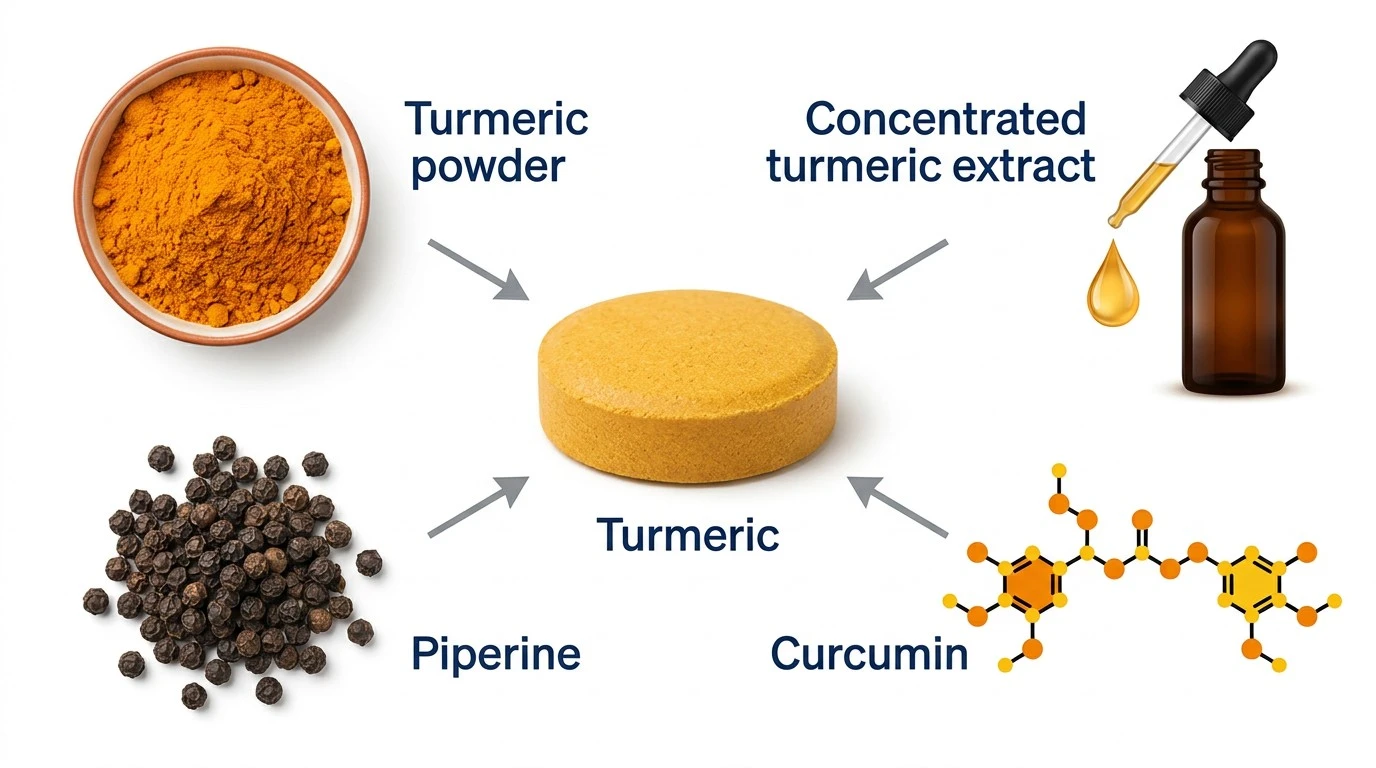
Turmeric tablets can contain different forms and concentrations of turmeric, curcuminoids and additional ingredients.
What are turmeric tablets good for?
Turmeric tablets are mainly used by people who want a convenient way to consume turmeric or curcumin in supplemental form.
People may take them because they are interested in areas including:
- Joint health
- Osteoarthritis
- Inflammation
- General health and wellbeing
However, there is an important difference between why people take turmeric tablets and what they have been proven to do.
Turmeric and curcumin have been investigated extensively, but evidence varies considerably between proposed health effects.
A supplement being marketed for a particular purpose does not itself demonstrate that the benefit has been established scientifically.
What are the potential benefits of turmeric tablets?
Research into turmeric supplements frequently focuses on curcumin and turmeric extracts rather than the tablet format itself.
The tablet is simply how the ingredients are delivered.
Joint health and osteoarthritis
Osteoarthritis is one of the better-studied areas of turmeric and curcumin supplementation.
Systematic reviews and meta-analyses of randomised controlled trials have reported encouraging findings for measures including pain, stiffness and physical function in people with osteoarthritis.
More recent evidence reviews have also found potentially favourable effects.
However, studies have used different formulations, doses and treatment periods, and research quality varies.
The evidence should therefore be described as promising rather than definitive.
Inflammation
Curcumin has been extensively investigated for its effects on biological processes associated with inflammation.
This has helped create the widespread description of turmeric as “anti-inflammatory”.
However, demonstrating effects on inflammatory pathways or biomarkers is not the same as proving that turmeric tablets treat an inflammatory disease.
The clinical evidence for the particular condition or outcome still needs to be considered.
Other proposed benefits
Turmeric and curcumin have been investigated across numerous areas of health.
That does not mean every proposed benefit is established.
For someone considering turmeric tablets for a particular health reason, the most useful approach is to examine human evidence for that specific outcome and formulation rather than assuming that general turmeric claims apply to every tablet.
Potential Benefits of Turmeric Tablets

Turmeric and curcumin supplements have been studied for several potential health effects, although the strength of evidence varies.
What does the scientific evidence say?
Research into turmeric and curcumin is extensive, but there is still considerable uncertainty.
Different clinical trials may investigate:
- Whole turmeric
- Turmeric extracts
- Curcumin
- Curcuminoid mixtures
- Curcumin combined with piperine
- Special formulations designed to improve absorption
These differences make broad claims about “turmeric tablets” difficult.
Evidence concerning osteoarthritis is among the more encouraging areas, but even here questions remain about the most appropriate formulation, dose and duration.
This is why it’s important to consider the product, formulation and health outcome separately when discussing evidence.
A positive result involving one curcumin preparation should not automatically be applied to every turmeric tablet on the market.
What are turmeric and black pepper tablets?
Some turmeric tablets contain black pepper extract because piperine can increase curcumin bioavailability.
Bioavailability describes how much of a substance becomes available to the body after it is consumed.
Conventional curcumin has relatively low oral bioavailability, which has led manufacturers and researchers to investigate ways of increasing its absorption.
Piperine, a constituent of black pepper, is one such approach.
However:
Greater bioavailability does not automatically mean greater clinical benefit.
It tells us that exposure to curcumin can be increased. Whether this results in a more useful health outcome requires appropriate clinical evidence.
Increased-bioavailability formulations also deserve particular attention when considering safety.
Turmeric and Black Pepper Tablets
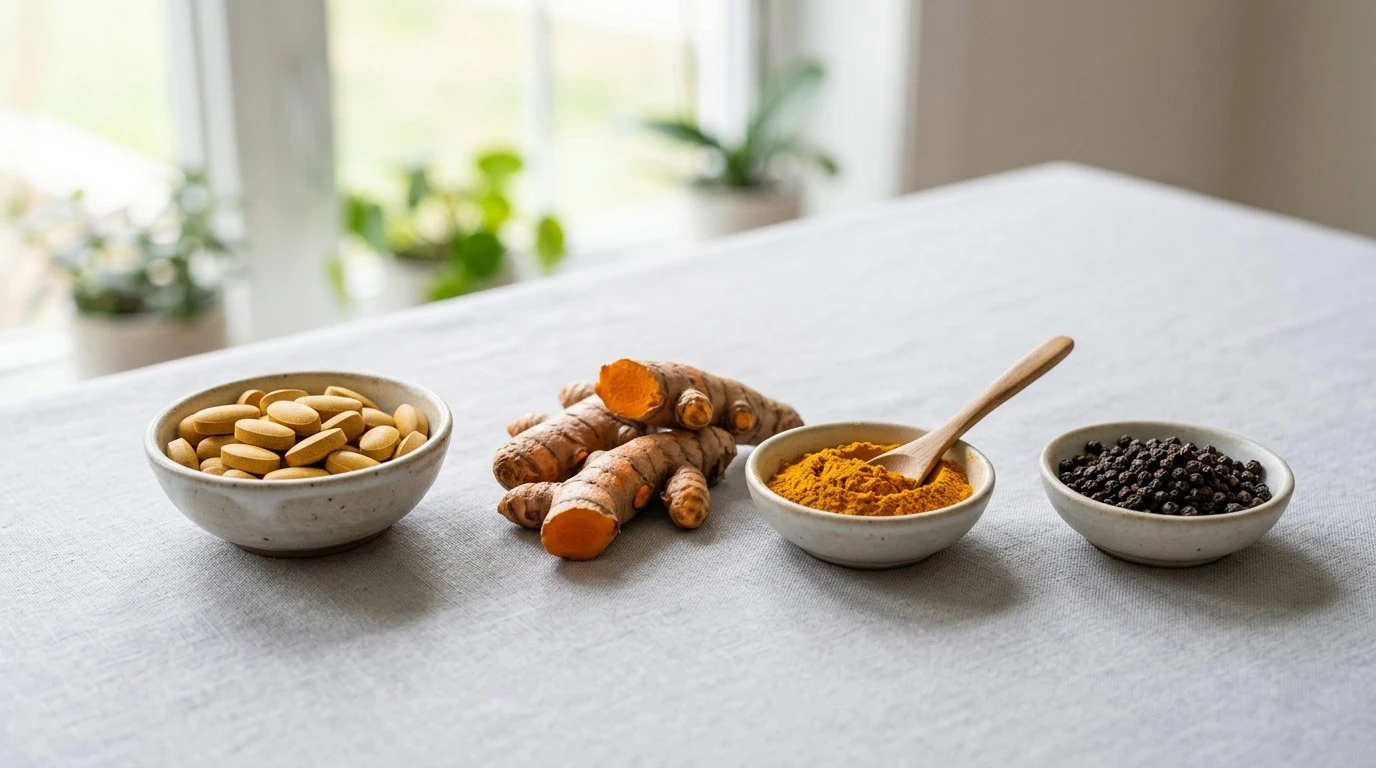
Some turmeric tablets contain black pepper extract because piperine can increase curcumin bioavailability.
Advantages and disadvantages of turmeric tablets
Tablets can be convenient, but they are not automatically the best form for everyone.
Potential advantages
- Convenient: easy to include in a routine.
- Pre-measured: each tablet provides a stated amount.
- Portable: easier to carry than powders.
- Little taste: useful for people who dislike turmeric’s flavour.
- Product choice: many formulations are available.
Potential disadvantages
- Products vary: formulations are difficult to compare.
- Fixed amounts: less flexible than loose powder.
- Additional ingredients: tablets require manufacturing ingredients.
- Swallowing: some people find tablets difficult to take.
- Interactions: supplements may not suit some medicines.
- Side effects: concentrated products are not risk-free.
The most important point is that tablet format is a practical choice rather than evidence of superior effectiveness.
Turmeric tablets vs capsules vs powder
Different forms may suit different people.
| Form | Main characteristic | Potential consideration |
| Tablets | Compressed, pre-measured supplement | Convenient but can be harder to swallow |
| Capsules | Ingredients enclosed in a capsule shell | Easy to use; formulations vary |
| Supplement powder | Loose turmeric or extract | Flexible amounts but less convenient |
| Culinary turmeric powder | Ground turmeric spice | Useful in food; not equivalent to concentrated extracts |
The more important distinction is often what the product contains, rather than whether it comes as a tablet or capsule.
A turmeric tablet and turmeric capsule containing comparable formulations may have more in common with each other than two different turmeric tablets.
Turmeric Tablets vs Capsules vs Powder
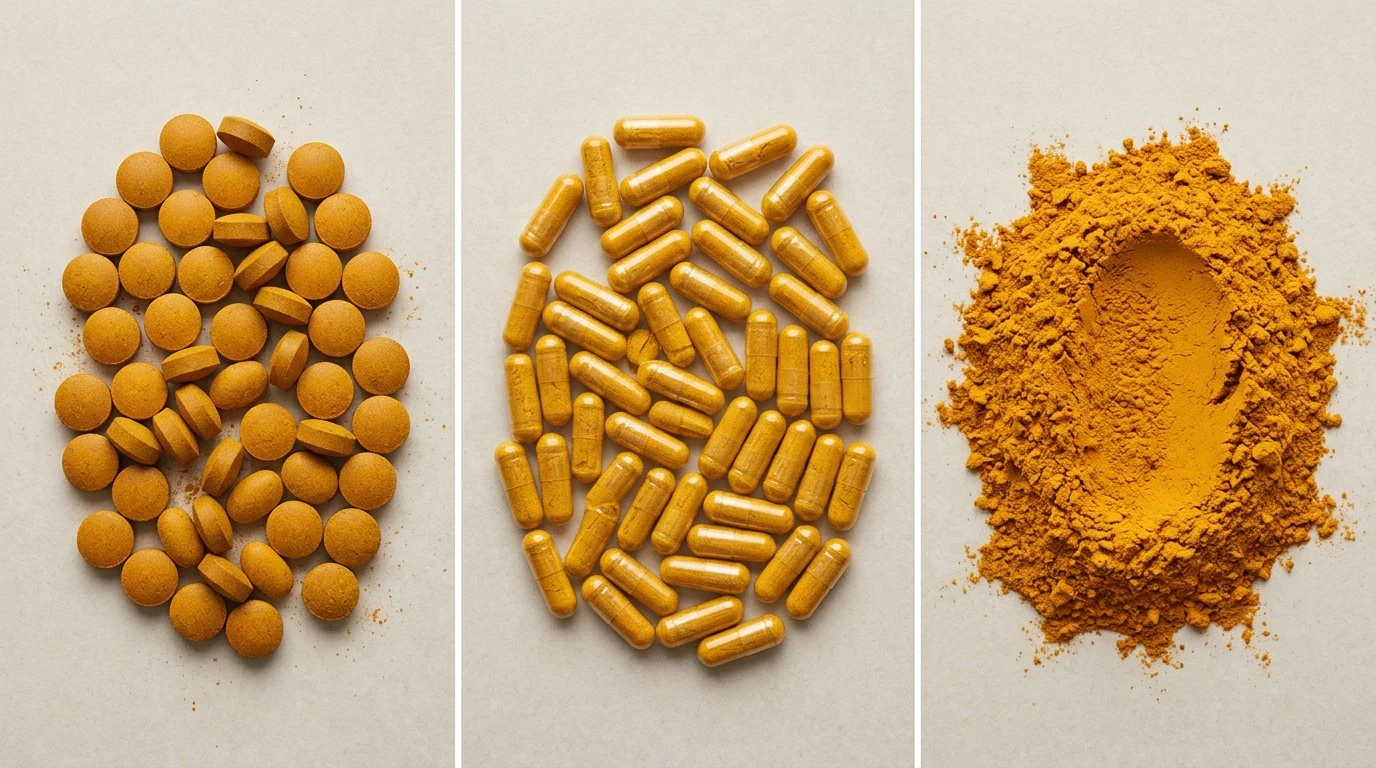
Tablets, capsules and powders offer different ways of taking turmeric supplements, but the formulation inside is usually more important than the format.
How to choose turmeric tablets
Start with the ingredients rather than the claims on the front of the packet.
Start with the ingredients rather than the claims on the front of the packet.
The same principles used when deciding how to choose a turmeric supplement can help when comparing different turmeric tablets. Consider:
What type of turmeric does it contain?
Look for whether the product contains:
- Turmeric powder
- Turmeric extract
- Curcuminoids
- Curcumin
These are not necessarily interchangeable.
How much does it contain?
Check what the stated milligram amount actually measures.
A large amount of turmeric powder cannot automatically be compared with a smaller quantity of concentrated extract.
More milligrams does not necessarily mean a better turmeric tablet.
Does it state the curcuminoid content?
Some products provide information about the amount or percentage of curcuminoids.
This can make the formulation easier to understand than a product that simply lists a large quantity of “turmeric”.
Does it contain black pepper?
Black pepper extract or piperine is sometimes included to increase curcumin bioavailability.
Other products use different approaches to absorption.
This should be treated as information about the formulation rather than proof that the product will provide greater health benefits.
Are the instructions clear?
Look for clear information about:
- Ingredients
- Amount per tablet
- Recommended use
- Allergens
- Warnings
- Manufacturer or supplier
Avoid assuming that words such as “premium”, “maximum strength” or “high potency” demonstrate clinical effectiveness.
How to Choose Turmeric Tablets – Check the Label
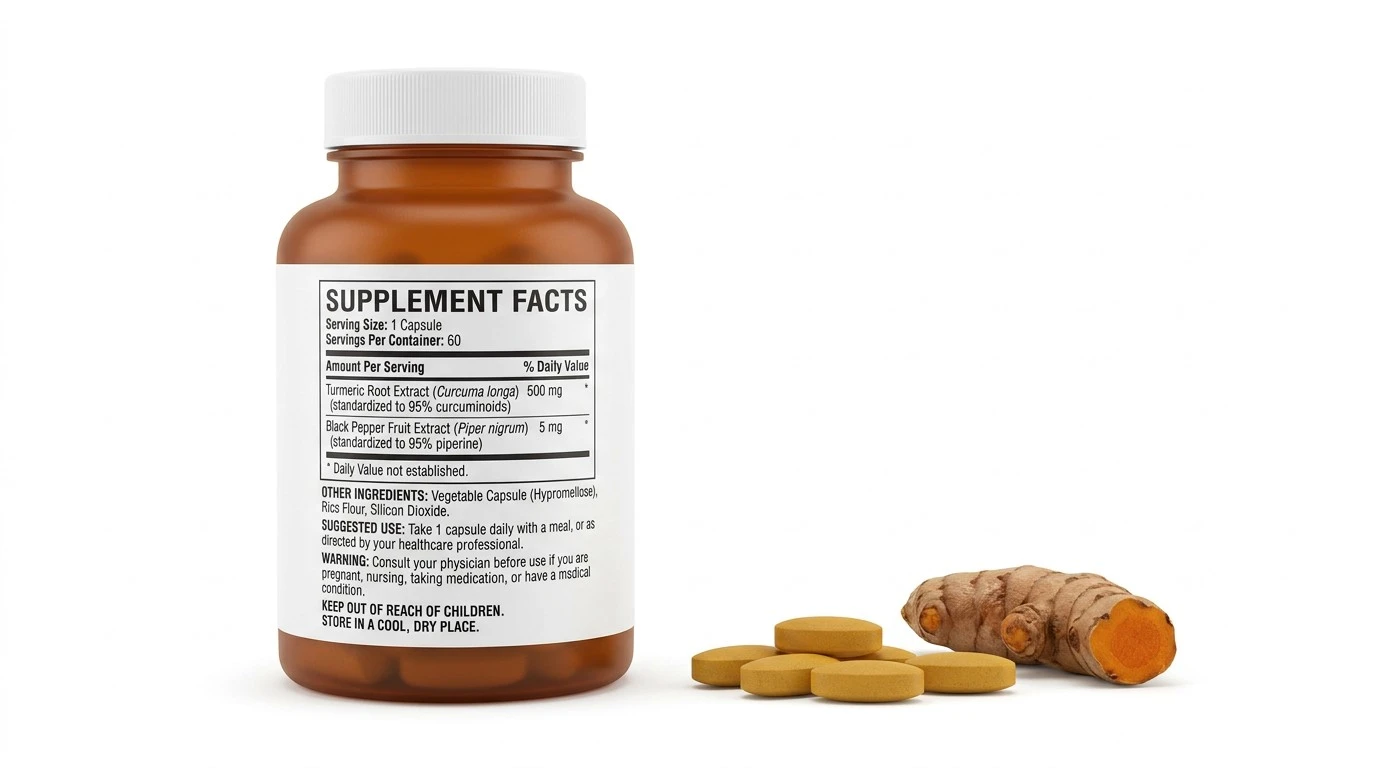
Check what type of turmeric the product contains, the amount provided, additional ingredients, instructions and safety information.
When is the best time to take turmeric tablets?
There is no single best time of day established for every turmeric tablet.
The appropriate way to take a product can depend on its formulation and ingredients.
Follow the manufacturer’s directions unless a doctor, pharmacist or other appropriately qualified healthcare professional has advised otherwise.
Taking a supplement consistently according to its instructions is generally more relevant than whether it is taken at a particular hour of the day.
People taking medicines should check for possible interactions rather than changing the timing themselves in an attempt to avoid one.
Taking Turmeric Tablets

There is no single best time to take every turmeric tablet; follow the directions for the particular product and seek advice where appropriate.
What are the side effects of turmeric tablets?
Turmeric and curcumin supplements can cause side effects, although many people tolerate them without serious problems.
Reported gastrointestinal effects can include:
- Nausea
- Stomach upset
- Acid reflux
- Diarrhoea
- Constipation
An important but uncommon safety issue is turmeric-associated liver injury.
Cases of clinically apparent acute liver injury have been reported with turmeric and curcumin products. Some have involved products formulated to increase curcumin bioavailability.
The overall occurrence appears to be rare, but the possibility is important enough that supplement users should be aware of it.
Symptoms that may indicate a liver problem can include unusual tiredness, nausea, poor appetite, dark urine or yellowing of the skin or eyes.
Anyone experiencing concerning symptoms should stop the supplement and seek medical advice.
Can you take turmeric tablets with medicines?
Do not assume that a turmeric supplement is safe to combine with a medicine simply because turmeric is natural.
Supplements can interact with medicines or be unsuitable for people with particular medical conditions.
This is especially important because your prescription medicine may be treating a condition where changing its effectiveness could have serious consequences.
Can you take turmeric with blood pressure tablets?
Check with a doctor or pharmacist before combining turmeric supplements with blood pressure medicines.
The answer can depend on the particular medicine, turmeric formulation, dose and your individual health circumstances.
Do not stop or change prescribed blood pressure medication in order to take turmeric.
Can you take turmeric with statins and blood pressure tablets?
Speak to a doctor or pharmacist before adding a turmeric supplement if you take statins, blood pressure medicines or both.
There are many different medicines within these categories, so a general yes-or-no answer is not appropriate.
Your pharmacist or GP can assess the actual medicines you take alongside the ingredients in the turmeric product.
This is safer than attempting to manage a potential interaction simply by taking the supplement and medicine at different times.
Who should seek medical advice before taking turmeric tablets?
Professional advice is particularly sensible if you:
- Take regular or prescription medicines
- Have liver problems
- Have an existing medical condition
- Are pregnant or breastfeeding
- Have previously reacted to supplements
- Are preparing for surgery
- Are unsure about the ingredients or dose
A turmeric supplement should not replace prescribed treatment unless this has been discussed with an appropriate healthcare professional.
Frequently asked questions
What are turmeric tablets good for?
Turmeric tablets provide turmeric or curcumin in a convenient supplemental form. They are commonly taken for potential health effects, particularly joint health, although the strength of scientific evidence varies depending on the outcome and formulation studied.
Are turmeric tablets good for you?
That depends on what the tablet contains, why it is being taken and the individual using it. Some research is encouraging, particularly around osteoarthritis, but turmeric tablets should not be assumed to provide general health benefits for everyone.
What do turmeric tablets do?
Turmeric tablets deliver turmeric, turmeric extracts or curcumin in a measured form. What happens after taking them depends on the formulation, dose and individual. Specific health effects need to be assessed against clinical evidence rather than general turmeric claims.
Are turmeric and black pepper tablets better?
Black pepper-derived piperine can increase curcumin bioavailability, but better absorption does not automatically mean better health outcomes. The evidence and safety of the complete formulation still need to be considered.
Can you take turmeric with blood pressure tablets?
Ask a doctor or pharmacist before combining turmeric supplements with blood pressure medicines. There are several types of blood pressure medication, and the appropriate advice depends on the specific medicine, supplement and individual.
When is the best time to take turmeric tablets?
There is no universally established best time of day. Follow the instructions for the particular product and seek professional advice if you take medicines or have been given specific medical instructions.
Summary
Turmeric tablets are supplements containing turmeric, turmeric extracts, curcuminoids or curcumin in tablet form.
The most important thing to understand is that turmeric tablets are not all the same.
Products can differ in their ingredients, concentration, curcuminoid content and formulation. Some also contain black pepper extract or use other methods intended to increase curcumin absorption.
Research has investigated turmeric and curcumin for numerous potential health effects. Osteoarthritis is one of the more encouraging areas of human evidence, but uncertainty remains and results from one formulation should not automatically be applied to every turmeric tablet.
When comparing turmeric tablets, consider what the product actually contains rather than relying solely on milligrams or marketing terms.
Turmeric tablets can also cause side effects and may not be appropriate alongside some medicines.
The simple approach is:
Understand what’s in the tablet.
Consider why you want to take it.
Look at the evidence for that particular purpose.
Check safety and medicines where relevant.
Then make an informed choice, or if unsure speak with a healthcare professional.
Related turmeric guides
Readers who want more detail may find these guides useful:
Medical and informational disclaimer
This page provides general educational information based on published research and authoritative sources. It is not medical advice and is not intended to diagnose, treat, cure or prevent a medical condition.
Turmeric supplements can vary considerably and may cause side effects or interact with medicines. Speak to a doctor, pharmacist or appropriately qualified healthcare professional before taking a turmeric supplement if you use medicines, have an existing medical condition, are pregnant or breastfeeding, or have concerns about whether a product is suitable for you.
Sources and further information
Videos About Turmeric and Healthy Living
Prefer to watch rather than read? We have also selected three educational videos featuring qualified doctors, nutritional specialists and health professionals discussing turmeric and food supplements from different perspectives.
These videos are provided for further learning and do not replace medical advice or the scientific sources used throughout this guide.
1. Should You Take Turmeric Every Day? Here’s What Doctors Say
2. The 3 Amazing Spices to Reduce Joint Pain, Inflammation & Repair the Body | Dr. Rupy Aujla
3. What Turmeric Really Does to Your BODY – Dr. Suneel Dhand
Further Reading
The information in this guide is based on authoritative health and botanical sources together with published scientific research. We have selected a small number of useful sources below for readers who would like to explore the evidence and science behind turmeric in greater detail.
1. Turmeric: Usefulness and Safety
Published by: National Center for Complementary and Integrative Health (NCCIH)
An authoritative overview of turmeric and curcumin research, potential uses, formulation differences and supplement safety. Read article:
2. The Efficacy of Curcumin in Relieving Osteoarthritis: A Meta-analysis of Meta-analyses
Published in: Phytotherapy Research, 2024
An umbrella meta-analysis examining evidence from previous meta-analyses of randomised controlled trials investigating curcumin supplementation and osteoarthritis outcomes. Read more:
3. The Efficacy and Safety of Curcuma longa Extract and Curcumin Supplements on Osteoarthritis
Published in: Current Pharmaceutical Design
A systematic review and meta-analysis of 15 randomised controlled trials involving 1,621 participants examining pain, function, stiffness and adverse events. Read more:
4. Turmeric — LiverTox
Published by: National Institute of Diabetes and Digestive and Kidney Diseases, National Institutes of Health
A clinical evidence resource covering turmeric and curcumin safety, including reported cases of turmeric-associated liver injury and issues surrounding some high-bioavailability formulations. Read more:
5. Warfarin: Taking Warfarin with Other Medicines, Food and Drink
Published by: NHS
General NHS guidance explaining that medicines, remedies and supplements can interact with warfarin and that people should check medicines and supplements appropriately. Read more:
Author
Written by J. Henderson
Health & Wellness Research Writer
J. Henderson writes evidence-based articles on nutrition, botanical supplements and everyday wellbeing. His work focuses on translating scientific research into clear, practical guidance that helps readers make informed decisions about natural health products.
- Written by J. Henderson BSc
- Reviewed by Fiona Finlay
- Reviewed on the 31 August 2026