
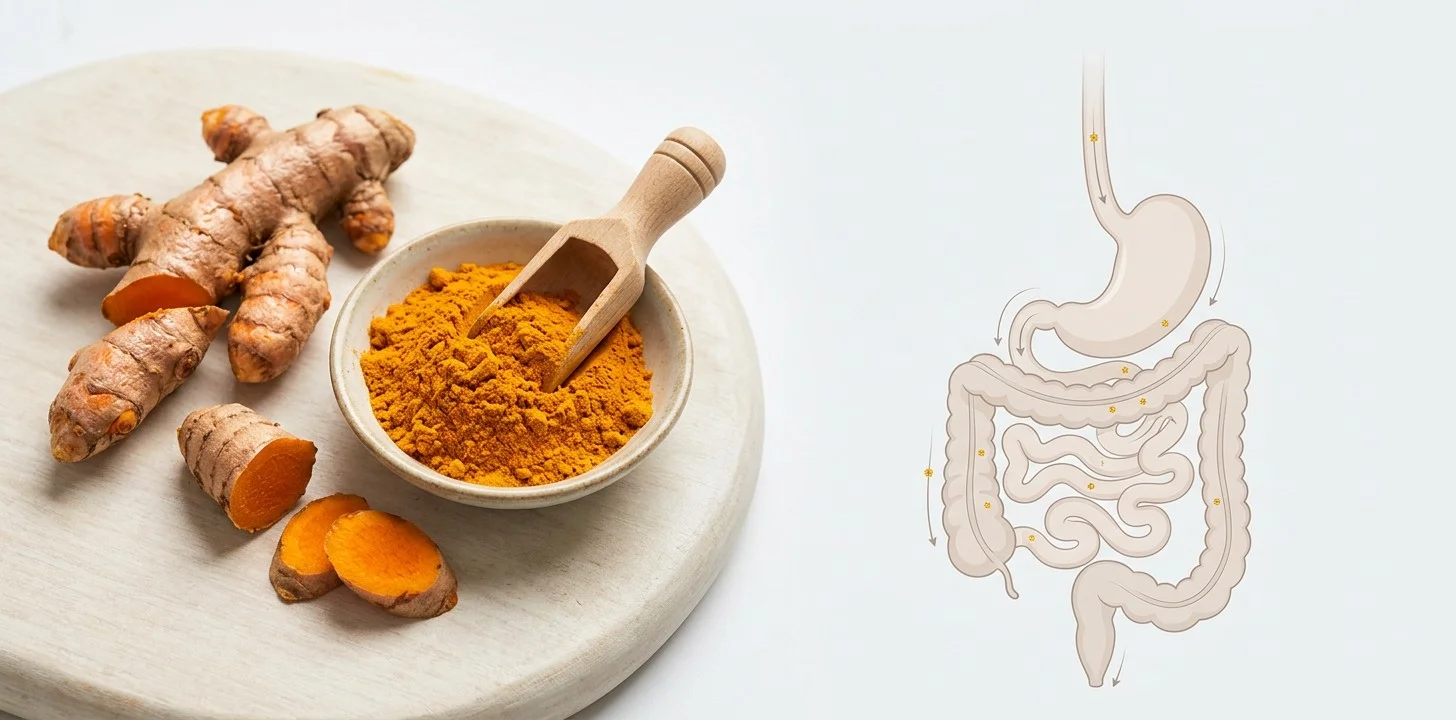
Turmeric has a long history of use for digestive complaints, and today people commonly search for it in relation to digestion, gut health, bloating, indigestion, IBS, acid reflux and bowel health.
However, traditional use and popularity do not prove that turmeric improves digestive health. Modern research has investigated turmeric and particularly curcumin, but the evidence varies considerably depending on the digestive problem being studied.
Turmeric may have potential effects on digestion and gut health, but the evidence is not strong enough to say that it improves digestive health generally.
Some research has investigated turmeric and curcumin for digestive symptoms and conditions such as indigestion and irritable bowel syndrome (IBS). There is also growing interest in how curcumin may interact with the gut microbiome.
However, studies vary in quality and often use curcumin or concentrated turmeric extracts rather than the turmeric powder normally used in cooking. A 2024 systematic review concluded that turmeric may have potential for some digestive disorders, but the overall effectiveness remains unclear because many studies had methodological limitations or a high risk of bias.
Turmeric can also cause digestive side effects in some people, including stomach upset, acid reflux, diarrhoea or constipation.
Explore other areas of turmeric and health:

Turmeric is commonly used in food and supplements and is being studied for several aspects of digestive and gut health.
People may use turmeric in food, drinks or supplements because they believe it supports digestion or general gut health.
Others investigate turmeric because they experience symptoms such as bloating, indigestion or changes in bowel habits.
People with diagnosed digestive conditions may also be interested in turmeric or curcumin, but a supplement should not be used as a replacement for appropriate medical treatment.
Turmeric comes from the plant Curcuma longa. Its underground stem is commonly dried and ground into the familiar yellow spice used in cooking.
Turmeric contains naturally occurring compounds called curcuminoids. The best known is curcumin, which is responsible for much of turmeric’s yellow colour and is the compound most extensively investigated in health research.
Some people include turmeric regularly in their diet, while others take turmeric or curcumin supplements when looking for additional digestive or gut-health support.
There is no established universal timing or dose of turmeric for improving digestion.
Turmeric is a food ingredient and is also sold in concentrated supplements.
These are not necessarily equivalent.
A meal containing turmeric powder may provide a very different amount of curcuminoids from the concentrated turmeric or curcumin formulations used in clinical studies.
Much of the scientific interest surrounding turmeric involves curcumin and other curcuminoids rather than culinary turmeric alone.
Researchers have investigated their possible effects on inflammatory processes, digestive symptoms and the microorganisms living in the digestive tract.
That does not mean curcumin has been proven to improve gut health.
Turmeric may be consumed as:
The formulation matters because different products can contain substantially different amounts of turmeric and curcuminoids.
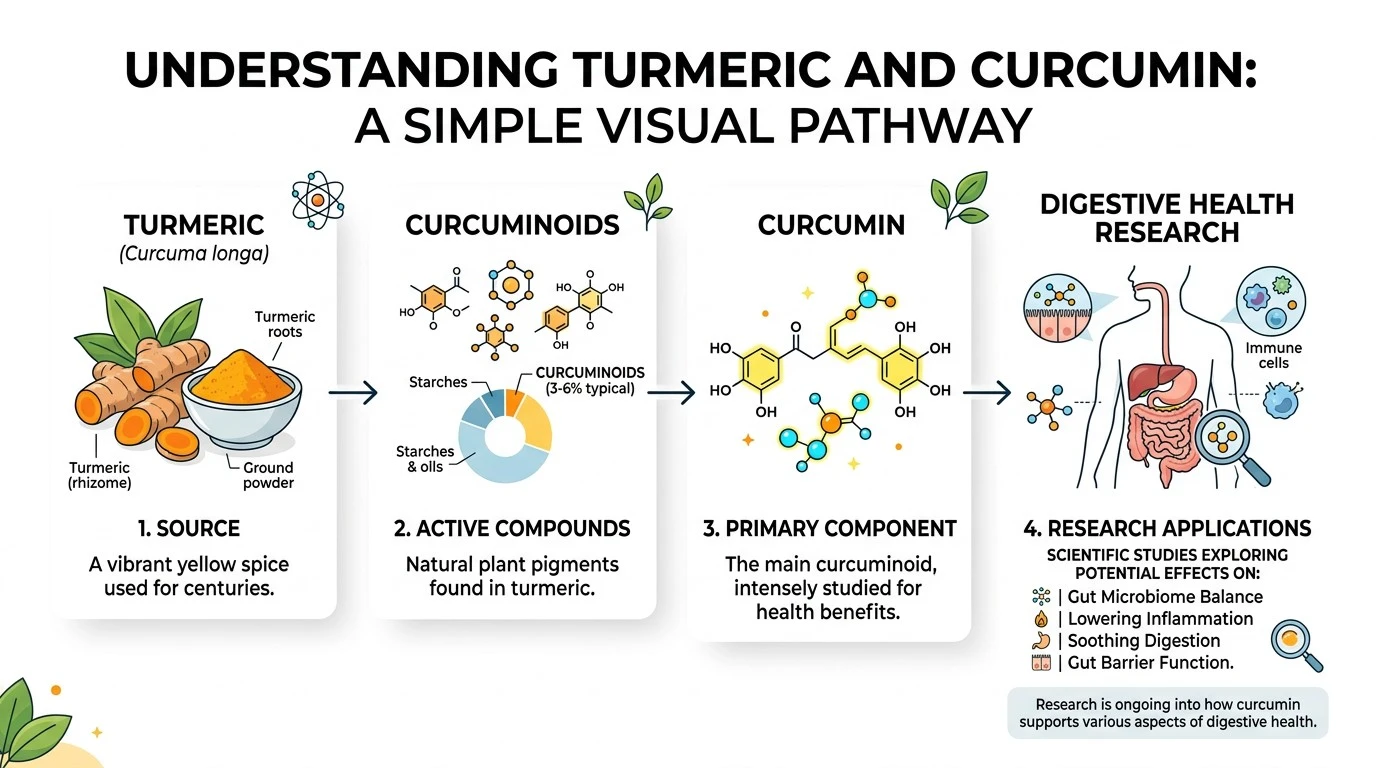
Turmeric contains curcuminoids, including curcumin, which is frequently studied in digestive health research.
Digestion is the process by which the body breaks down food and absorbs nutrients.
Gut health is a broader term. It can refer to how well the digestive system functions and may include factors such as bowel habits, digestive symptoms and the microorganisms living in the gastrointestinal tract.
This distinction matters because saying something is “good for gut health” can mean many different things.
Someone searching for turmeric and gut health may actually be asking whether turmeric helps with:
These are different questions and the evidence is not the same for each one.
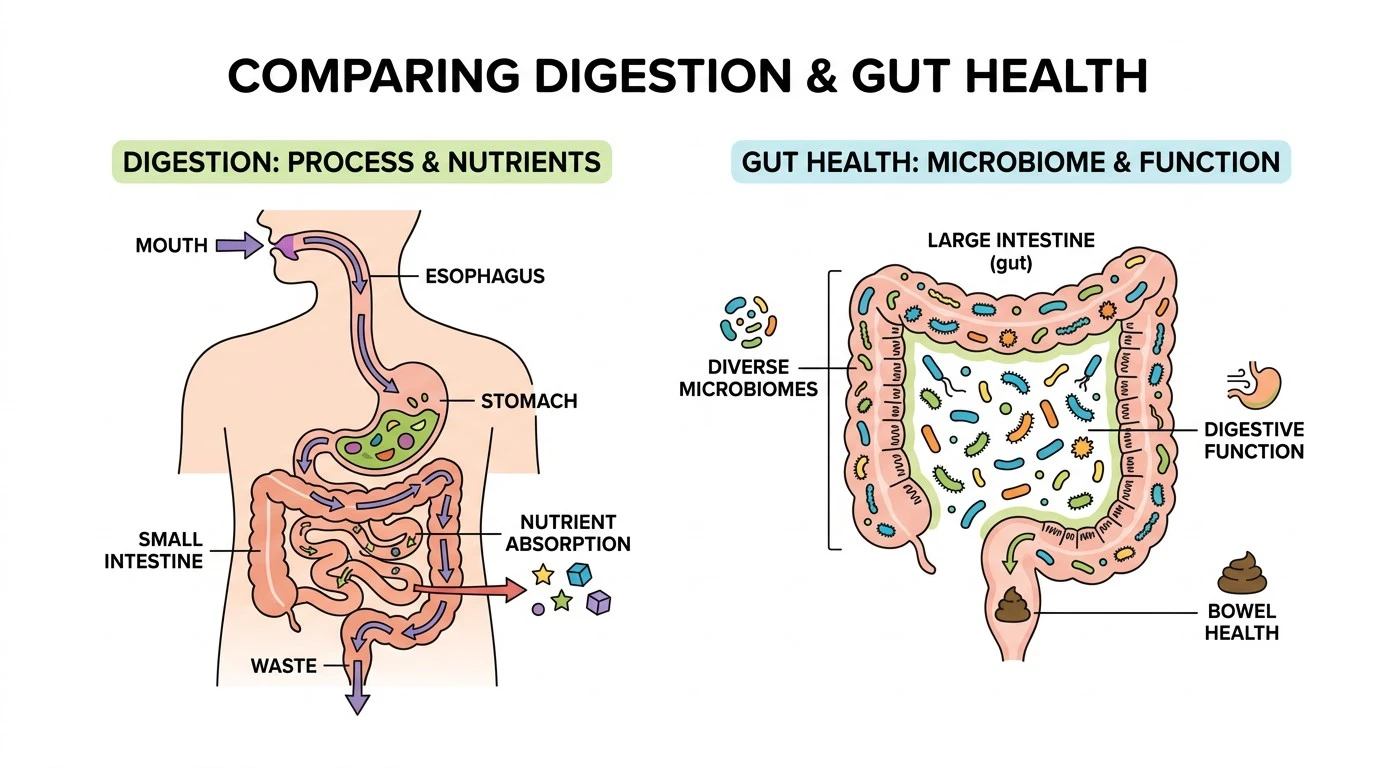
Digestion describes how food is broken down and nutrients absorbed, while gut health is a broader term covering digestive function, symptoms, bowel habits and the gut microbiome.
There is scientific interest in turmeric and curcumin for digestive health, but there is not enough evidence to describe turmeric as proven to be “good for your gut” generally.
Historically, turmeric has been used in several traditional medicine systems for problems including indigestion and abdominal pain.
Modern research has investigated a much wider range of digestive conditions.
A 2024 systematic review examined 26 studies involving digestive disorders including IBS, inflammatory bowel disease, dyspepsia, gastro-oesophageal reflux disease and peptic ulcers. The researchers found possible benefits in some areas, particularly IBS and inflammatory bowel disease, but concluded that turmeric’s effectiveness remained unclear because many studies had limitations and a high risk of bias.
So the most accurate answer is:
Turmeric and curcumin are being studied for digestive health, but the evidence depends on the particular digestive problem rather than showing a general gut-health benefit.
Researchers have proposed several ways in which turmeric or curcumin could potentially interact with the digestive system.
These include effects involving:
These are possible biological mechanisms, not proof that taking turmeric will improve someone’s digestion.
The distinction is particularly important because laboratory findings do not automatically translate into meaningful benefits in people.
The overall evidence is promising in some areas but inconsistent and incomplete.
An earlier systematic review of clinical trials found some positive results for several gastrointestinal conditions, but also concluded that further randomised controlled trials were needed.
The more recent 2024 systematic review reached a similarly cautious conclusion. It found possible efficacy for some conditions but noted considerable variation between studies and significant methodological limitations.
There has also been a small randomised controlled trial involving 79 adults with self-reported digestive complaints. Participants taking a curcumin extract reported greater improvement in overall gastrointestinal symptom scores than those taking placebo after eight weeks. However, the study found no significant changes in the intestinal microbiota or small intestinal bacterial overgrowth. The study also had industry involvement, which is useful context when interpreting the findings.
This means individual studies can be interesting without establishing that turmeric generally improves digestion.
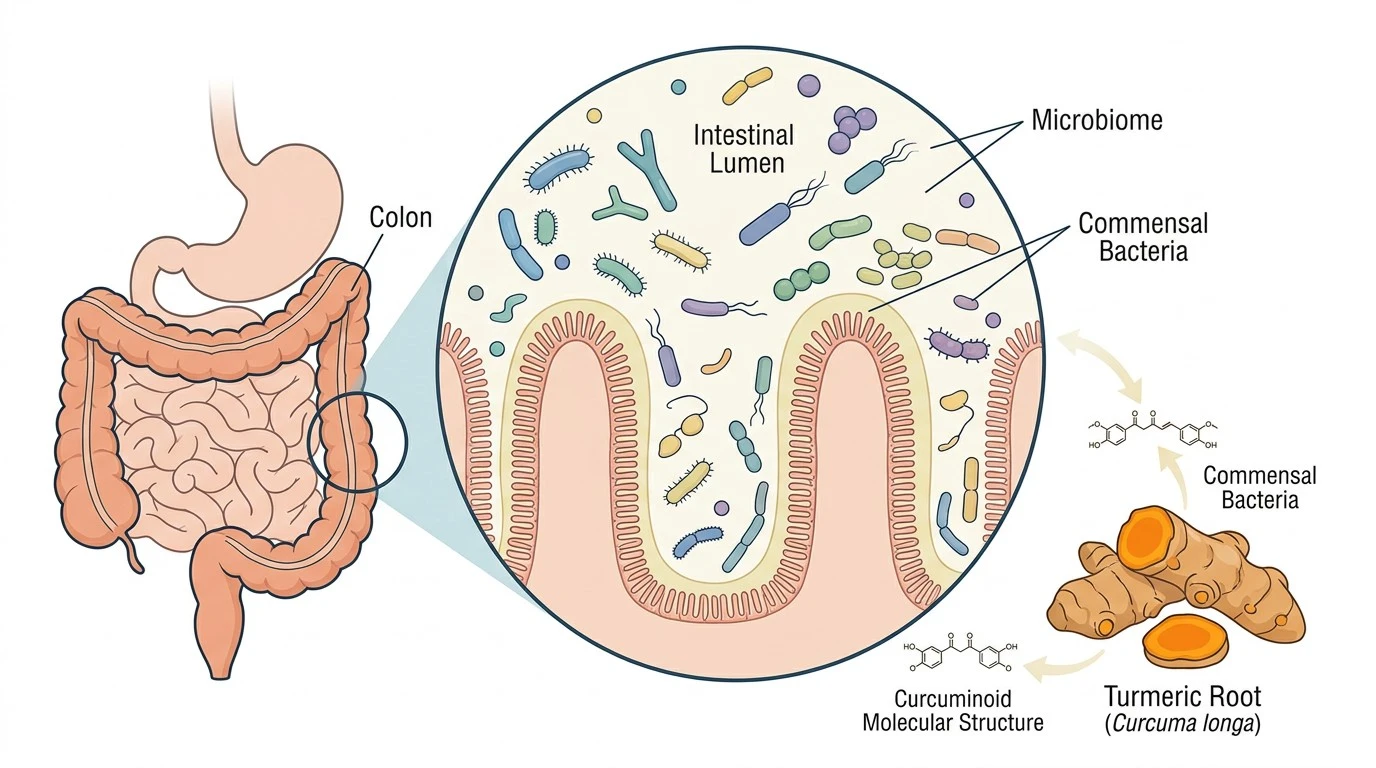
Researchers are investigating whether turmeric and curcumin can influence gut microorganisms, although human evidence remains limited.
The gut microbiome is the community of microorganisms living in the digestive tract.
Researchers are increasingly interested in whether turmeric and curcumin can influence these microorganisms.
One small human pilot study found changes in gut bacterial populations after turmeric or curcumin supplementation. However, there were very few participants and responses varied substantially between individuals.
That makes this an interesting area of research rather than an established benefit.
It would therefore be premature to say that taking turmeric will “improve”, “balance” or “restore” the gut microbiome.
There is not enough good-quality evidence to say that turmeric reliably reduces bloating.
Bloating can have many causes, including diet, constipation, swallowing air and digestive conditions such as IBS.
Some studies investigating broader digestive symptoms have included bloating among the symptoms assessed, but this is different from demonstrating that turmeric is an effective treatment specifically for bloating.
Anyone experiencing persistent or unexplained bloating should avoid assuming that turmeric will address the underlying cause.

People investigate turmeric for many different digestive symptoms, but the scientific evidence differs for each one.
Turmeric has a long history of traditional use for indigestion, but traditional use is not the same as clinical proof.
Indigestion, also called dyspepsia, can include symptoms such as feeling full or bloated, heartburn, nausea, burping and bringing bitter-tasting fluid or food back into the mouth.
Research into turmeric for dyspepsia exists, but the evidence is not strong enough to recommend turmeric as a proven treatment.
It is also important to remember that turmeric itself can cause stomach upset or acid reflux in some people.
Irritable bowel syndrome, or IBS, is one of the digestive conditions for which turmeric and curcumin have been investigated.
Some studies have reported improvements in symptoms, but the evidence remains uncertain.
NCCIH notes that an analysis of three studies involving 326 people suggested curcumin might potentially help IBS symptoms, but rated the quality of the evidence as very low and concluded there was insufficient evidence to know whether it was helpful.
An earlier meta-analysis similarly found a potentially beneficial effect that did not reach statistical significance, with substantial limitations in the available evidence.
So turmeric should not be presented as a proven treatment for IBS.
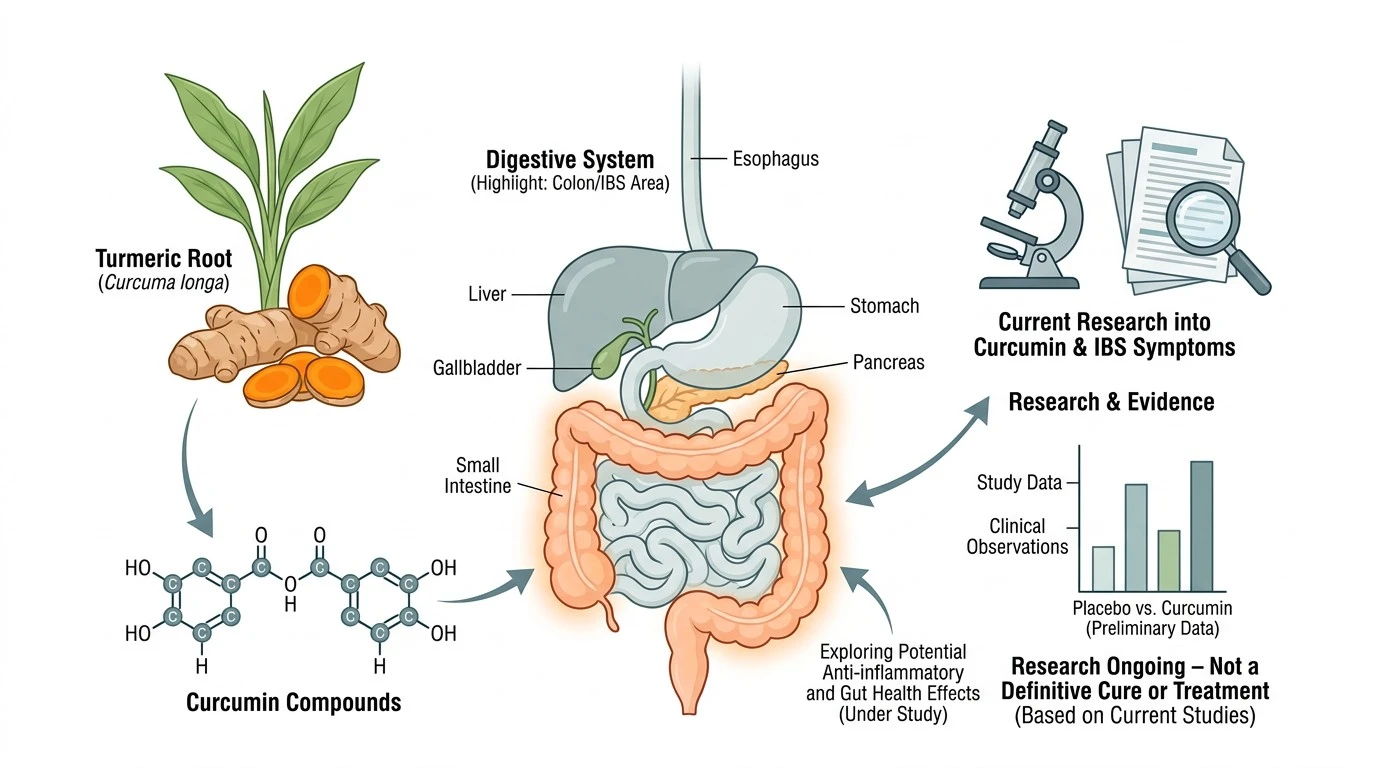
Turmeric and curcumin have been studied for IBS symptoms, but current evidence remains limited.
People sometimes search for turmeric as a possible natural approach to acid reflux.
However, this is an area where turmeric may actually make symptoms worse for some people.
NCCIH lists acid reflux and stomach upset among the possible adverse effects of oral turmeric.
Therefore, someone experiencing reflux should not assume that turmeric will help simply because turmeric is associated with digestive health.
Frequent or persistent acid reflux should be discussed with an appropriate healthcare professional.
There is not enough clinical evidence to recommend turmeric as a treatment for constipation.
Constipation can have many causes, including diet, hydration, medicines, activity levels and underlying medical conditions.
Although turmeric may affect digestion differently between individuals, that does not establish it as a reliable way to relieve constipation.
In fact, NCCIH lists both diarrhoea and constipation among possible adverse effects of oral turmeric.
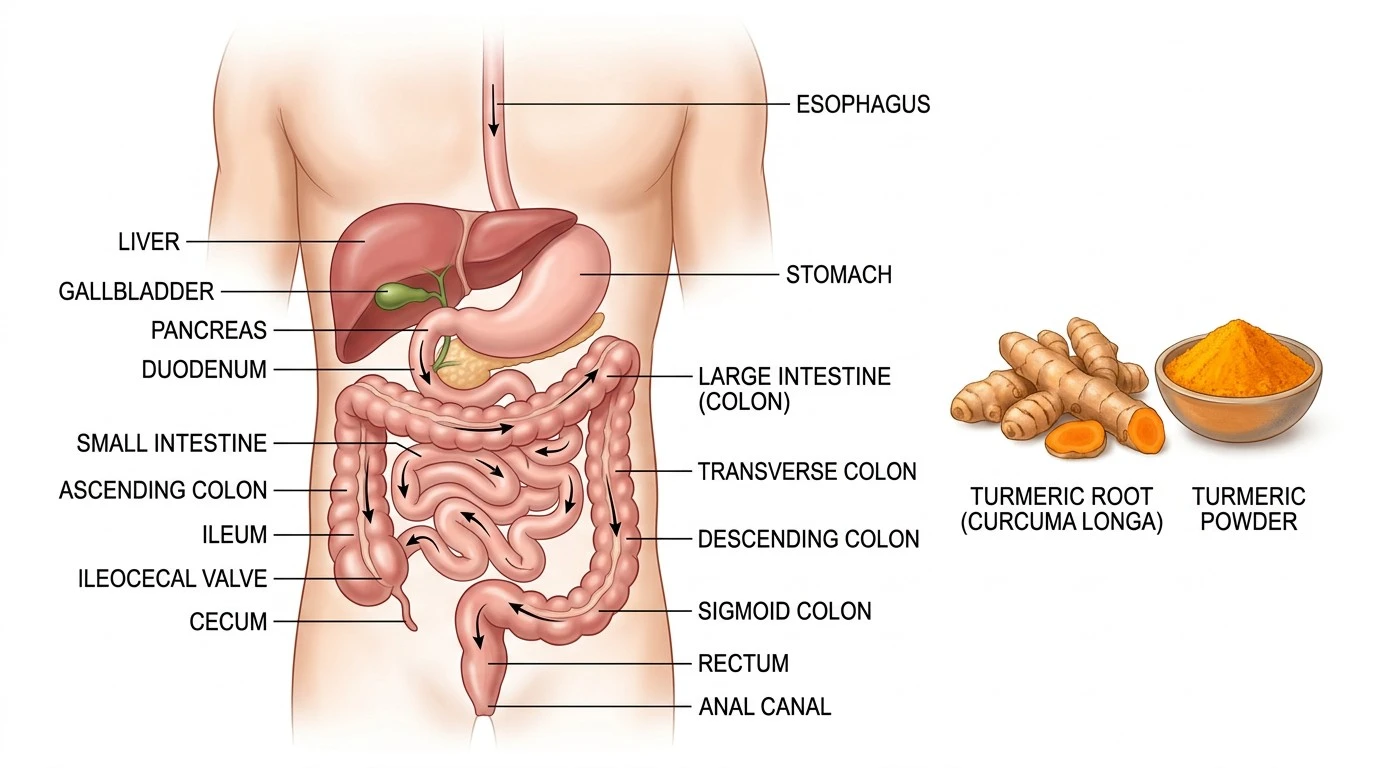
Turmeric does not have a predictable effect on bowel movements and may cause diarrhoea or constipation in some people.
Turmeric may affect the digestive system in some people, but there is no established evidence that everyone should expect a particular change in their bowel movements.
Some people may experience no noticeable digestive change.
Others taking turmeric or curcumin supplements may experience:
These effects are particularly relevant when someone starts taking a concentrated supplement rather than simply using turmeric as a culinary spice.
So, to answer one of Joe’s more direct questions:
Turmeric might change how often some people poo, but it should not be considered a proven laxative or constipation treatment.
Turmeric and curcumin are related, but they are not the same thing.
Turmeric is the whole plant material used as a spice and ingredient. Curcumin is one of the main curcuminoids naturally present in turmeric.
Much of the clinical research into digestive health uses curcumin, curcuminoids or concentrated turmeric extracts rather than ordinary culinary turmeric.
That distinction matters when interpreting claims such as “turmeric improves gut health”.
A positive study involving a concentrated curcumin formulation does not demonstrate that adding a teaspoon of turmeric to dinner will produce the same result.
Yes.
Studies can use very different formulations, including:
This makes studies difficult to compare directly.
It also means consumers should be cautious about transferring results from one particular researched extract to every turmeric supplement on the market.
Greater absorption does not automatically mean greater digestive benefit either.
Turmeric has traditionally been used for digestive complaints, and some modern research has investigated turmeric and curcumin for gastrointestinal conditions. However, there is not enough evidence to say turmeric is generally good for everyone’s stomach.
It can also cause stomach upset in some people.
There is insufficient clinical evidence to say that turmeric reliably reduces gas.
Gas and bloating have many possible causes, so persistent symptoms may require proper assessment rather than simply adding a supplement.
Not necessarily.
Turmeric is not an established laxative. Some people taking oral turmeric or curcumin may experience diarrhoea, while others can experience constipation.
Yes.
Possible adverse effects of oral turmeric include nausea, vomiting, acid reflux, stomach upset, diarrhoea and constipation.
It can in some people.
Acid reflux is a recognised possible adverse effect of oral turmeric, so someone who already experiences reflux should not assume turmeric will improve it.
There is some preliminary research, but the evidence is currently too limited to conclude that turmeric or curcumin is an effective treatment for IBS.
Research suggests turmeric and curcumin may interact with gut microorganisms, but human evidence is still limited.
A small pilot study found changes in microbiota, but responses varied substantially between participants.
Turmeric is commonly consumed as a food ingredient, but concentrated supplements are different.
There is no established universal daily dose specifically for improving gut health. Anyone considering regular supplementation should take account of the product formulation, possible side effects, medicines and existing health conditions.
Turmeric and curcumin supplements are tolerated by many people, but they are not suitable for everyone.
Safety can depend on the formulation, dose, length of use, medicines and individual health circumstances. Some highly bioavailable curcumin products have also been associated with reports of liver injury.
Possible digestive side effects include:
Anyone who develops concerning symptoms after taking a supplement should stop using it and seek appropriate medical advice.
Turmeric and curcumin may interact with medicines, so people taking regular medication should speak to a doctor or pharmacist before starting a concentrated supplement.
This is particularly important when a supplement provides substantially more turmeric or curcuminoids than would normally be consumed as food.

Turmeric can be included as part of a varied diet without assuming that it will treat digestive symptoms.
Turmeric has traditionally been associated with digestion, and modern research is investigating turmeric and curcumin for several aspects of digestive and gut health.
There are interesting findings involving digestive symptoms, IBS and the gut microbiome, but the overall evidence remains mixed and incomplete. A major systematic review published in 2024 concluded that the effectiveness of turmeric for digestive disorders remains unclear because much of the available research has methodological limitations.
It is also important not to assume that turmeric will always soothe the digestive system. Turmeric supplements can themselves cause stomach upset, acid reflux, diarrhoea or constipation.
For everyday use, turmeric can simply remain part of a varied diet. Concentrated turmeric and curcumin supplements are different products and should not automatically be assumed to provide the same effects as turmeric used in food.
Persistent, severe or unexplained digestive symptoms should be properly assessed rather than self-treated with turmeric.
The following video and independent sources provide further information about turmeric, curcumin and digestive health. They are included for informational purposes only and should not be considered medical advice.
This practical video shows how ingredients including turmeric can be incorporated into simple food and drink preparations as part of a healthy diet and lifestyle.
Useful UK guidance explaining common symptoms of indigestion, possible causes and when further medical advice may be appropriate.
An independent overview of turmeric and curcumin, including traditional digestive uses, current evidence and important information about side effects and safety.
A 2024 systematic review examining turmeric across digestive conditions including IBS, inflammatory bowel disease, dyspepsia, reflux and peptic ulcers.
The information on this page is provided for general informational purposes only and is not intended to diagnose, treat, cure or prevent any disease or medical condition.
Turmeric and curcumin supplements may not be suitable for everyone and may cause side effects or interact with medicines. Always read and follow the manufacturer’s label and instructions before using any supplement.
If you have persistent digestive symptoms, a diagnosed digestive condition, are pregnant or breastfeeding, take medication or are considering changing an existing treatment, speak to a doctor, pharmacist or other appropriately qualified healthcare professional.
Do not stop or change prescribed medication based on information provided on this website.
Written by J. Henderson
Health & Wellness Research Writer
J. Henderson writes evidence-based articles on nutrition, botanical supplements and everyday wellbeing. His work focuses on translating scientific research into clear, practical guidance that helps readers make informed decisions about natural health products.