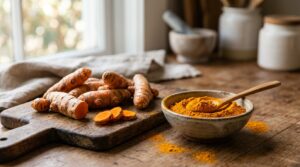
Turmeric Extract: Benefits, Uses, Safety and How It Compares with Other Turmeric Forms
Turmeric Extract: Quick Overview
Turmeric extract is a concentrated preparation made from the rhizome of Curcuma longa, the plant commonly used to produce turmeric powder. It is particularly well known for its curcuminoids, including curcumin, which have been extensively researched for their biological activity.
Unlike ordinary turmeric powder, which is primarily a whole-food spice, turmeric extract is processed to concentrate selected compounds. However, not all turmeric extracts are the same, so the amount and type of active compounds can vary considerably between products.
Key points
- Turmeric extract comes from Curcuma longa and is generally more concentrated than ordinary turmeric powder.
- Curcumin is a compound found in turmeric, but turmeric extract and curcumin are not necessarily the same product.
- Standardised extracts provide more information about their curcuminoid content, making products easier to compare.
- Curcumin has relatively low natural absorption, which is why some extracts use piperine or specialist delivery systems.
- Research suggests potential benefits for areas such as joint health, although results vary between extracts, doses and formulations.
- Concentrated turmeric supplements are different from culinary turmeric and can have side effects, including a rare risk of liver injury.
Turmeric Extract from Curcuma longa
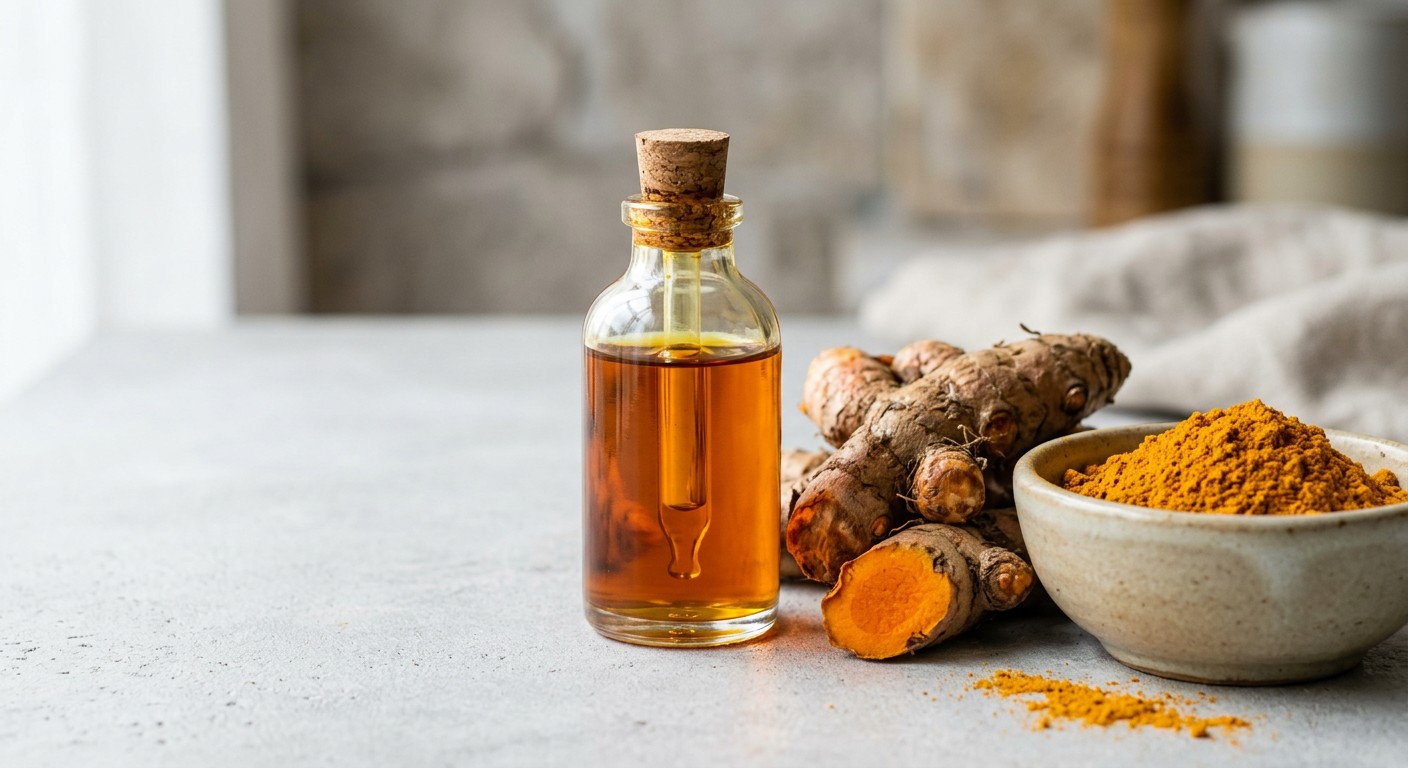
Turmeric extract is a concentrated preparation made from the rhizome of Curcuma longa.
Table of Contents
- What is turmeric extract?
- How is turmeric extract made?
- Turmeric extract vs turmeric powder
- Turmeric extract vs curcumin
- Potential benefits of turmeric extract
- What does standardised turmeric extract mean?
- Turmeric extract and absorption
- How to choose a turmeric extract
- How much turmeric extract should you take?
- Turmeric extract safety and side effects
- Frequently asked questions
- Summary
- Further Information
What Is Turmeric Extract?
Turmeric extract is a concentrated preparation made from the rhizome of Curcuma longa, the underground part of the plant used to make turmeric spice.
Turmeric contains various compounds, including curcuminoids and volatile oils. Curcumin is the best-known curcuminoid, but it is only one component of turmeric.
Extraction concentrates selected compounds, meaning turmeric extract can contain considerably more curcuminoids than turmeric powder. A gram of extract is therefore not automatically equivalent to a gram of turmeric powder.
The composition varies depending on the turmeric source, extraction method, concentration and standardisation.
How Is Turmeric Extract Made?
Turmeric extract starts with rhizomes from turmeric root, which are normally cleaned, dried and processed before selected compounds are extracted.
Manufacturers use different extraction and purification processes. The finished extract may then be concentrated or standardised to contain a specified amount of curcuminoids.
This can result in products described as:
- Turmeric root extract
- Curcuma longa extract
- Standardised turmeric extract
- Curcuminoid extract
- Curcumin extract
- Turmeric extract with piperine
- High-bioavailability curcumin
These descriptions are not interchangeable.
For example, a broad turmeric extract may contain several naturally occurring turmeric compounds, while a purified curcumin product is designed to provide a much more specific concentration of curcuminoids.
For consumers, the most useful information is therefore usually found in the ingredient specification rather than simply on the front of the packaging.
How Turmeric Extract Is Made

Turmeric extract is produced by processing turmeric rhizomes to concentrate selected plant compounds.
Turmeric Extract vs Turmeric Powder
Turmeric powder is generally produced by drying and grinding turmeric rhizomes. It is primarily a culinary ingredient and is commonly used in turmeric recipes such as curries, soups, sauces, drinks and other foods.
Turmeric extract undergoes additional processing to concentrate particular compounds.
| Feature | Turmeric powder | Turmeric extract |
| Source | Dried turmeric rhizome | Extracted turmeric compounds |
| Concentration | Generally lower | Usually higher |
| Main use | Food and cooking | Mainly supplements |
| Composition | Broad and naturally variable | Depends on extraction process |
| Curcuminoids | Naturally variable | May be standardised |
| Form | Powder or capsules | Capsules, tablets, powders or liquids |
| Main advantage | Whole culinary spice | Concentrated preparation |
| Main limitation | Variable concentration | Products vary considerably |
In simple terms, turmeric powder is closer to the whole dried spice, while turmeric extract is a concentrated preparation.
Neither is automatically “better”. They are designed for different purposes.
Turmeric Extract vs Turmeric Powder
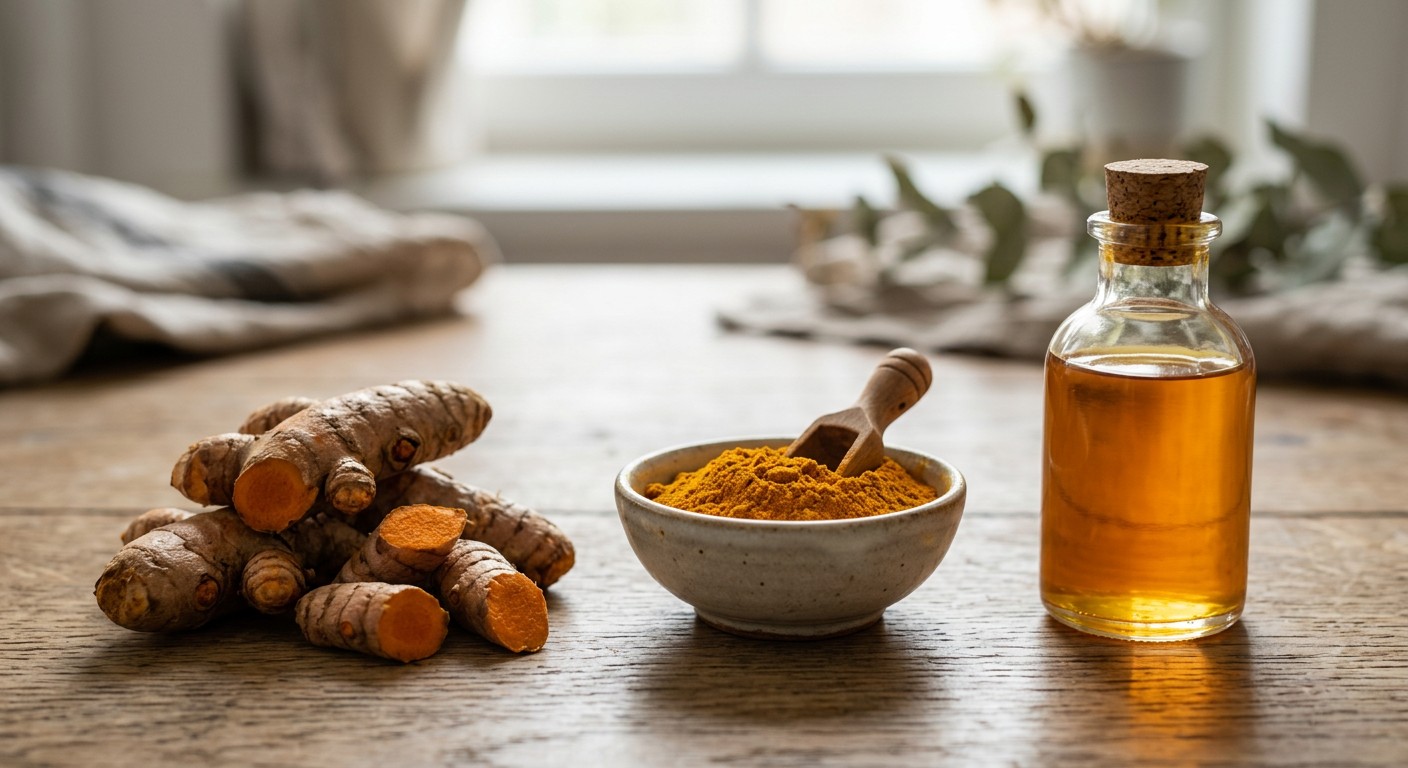
Turmeric powder and turmeric extract are different forms of the same turmeric plant.
Turmeric Extract vs Curcumin
Turmeric extract and curcumin are often treated as though they mean the same thing, but they do not.
Turmeric extract is a preparation made from turmeric. Curcumin is a specific compound naturally found within turmeric.
Turmeric naturally contains several curcuminoids, including curcumin, demethoxycurcumin and bisdemethoxycurcumin.
A turmeric extract may therefore contain a mixture of these compounds, while a curcumin supplement may be designed to provide a more concentrated or purified curcuminoid preparation.
| Feature | Turmeric extract | Curcumin |
| What is it? | Extract from Curcuma longa | Specific turmeric compound |
| Composition | Can contain multiple turmeric compounds | More specific composition |
| Concentration | Varies | Usually more defined |
| Whole turmeric profile | Potentially broader | More focused |
| Research | Depends on the extract | Extensive research on various formulations |
This distinction also matters when interpreting scientific research. A clinical study involving a particular standardised curcumin formulation does not necessarily demonstrate that every turmeric extract will have exactly the same effects.
Potential Benefits of Turmeric Extract
Turmeric and curcumin have attracted considerable scientific interest because of their effects on inflammatory and oxidative-stress pathways.
However, it is important to distinguish potential benefits supported by research from claims that a supplement can prevent or treat a medical condition. Turmeric is good for a number of reasons:
Joint health
Joint health is one of the better-researched areas for turmeric and curcumin.
Clinical trials and systematic reviews have reported potential improvements in pain, stiffness and physical function in people with osteoarthritis using certain Curcuma longa extracts or curcumin preparations.
A systematic review and meta-analysis of randomised controlled trials found promising results for osteoarthritis symptoms, although the studies used different preparations and doses.
This means the evidence is encouraging, but it should not be assumed that every turmeric extract will produce the same result.
Inflammation and oxidative stress
Curcumin is also studied for its potential influence on inflammatory and oxidative-stress markers.
Research has reported changes in several biomarkers in particular groups, including people with metabolic conditions. However, the certainty of evidence varies, and clinical outcomes are more important than changes in laboratory markers alone.
For this reason, it is more accurate to say that turmeric extract is being researched for its potential effects on inflammation and oxidative stress than to claim that it simply “reduces inflammation”.
Other areas of research
Researchers have investigated turmeric and curcumin in relation to:
- Metabolic health
- Exercise recovery
- Cardiovascular health
- Digestive health
- Cognitive health
- General inflammatory processes
Results vary between studies, and more research is needed to establish which formulations, amounts and populations are most likely to benefit.
Turmeric as part of a healthy lifestyle
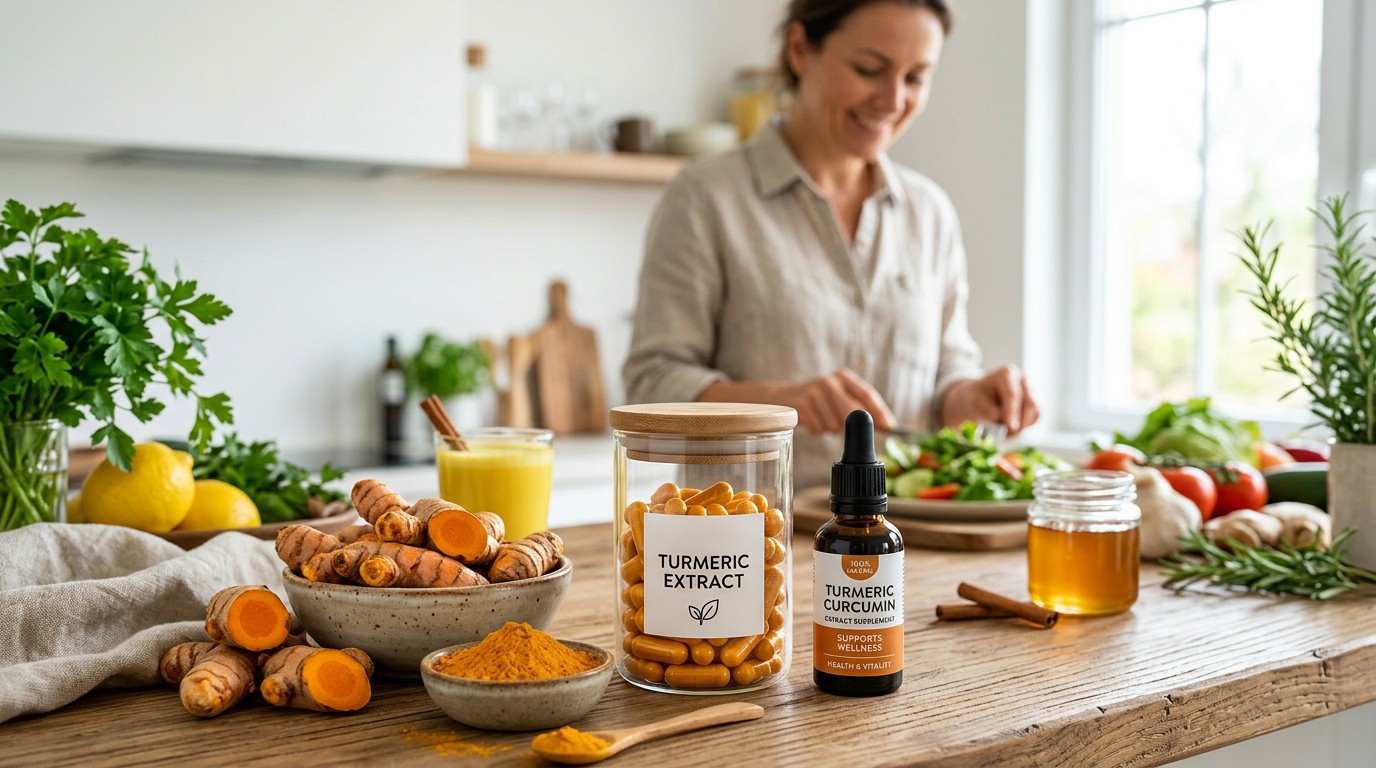
Turmeric extract contains curcumin, a naturally occurring compound studied for its antioxidant and anti-inflammatory properties.
What Does Standardised Turmeric Extract Mean?
A standardised turmeric extract is produced to contain a specified level of particular compounds.
With turmeric, standardisation commonly refers to total curcuminoids.
For example, a product may state that its extract is standardised to contain a particular percentage of curcuminoids. This provides more useful information than simply saying “turmeric extract”.
Standardisation can make products easier to compare, but it does not automatically mean that a product is more effective or safer.
When reading a label, look for:
- The botanical name, Curcuma longa
- The plant part used, usually rhizome
- The quantity of extract
- Curcuminoid percentage or amount
- Other active ingredients
- Details about the formulation
- Quality and testing information
Turmeric Extract and Absorption
One of the challenges with curcumin is that it has relatively low oral bioavailability. This means that only a proportion of orally consumed curcumin is absorbed and becomes available in the body.
This has led manufacturers to develop products intended to increase absorption.
Some formulations contain piperine, the main pungent compound in black pepper. Others use technologies involving oils, phospholipids, micelles or other delivery systems.
These approaches can change the amount of curcumin that enters the bloodstream.
However, greater absorption does not automatically prove greater health benefits. Pharmacokinetic results and clinical outcomes are not the same thing.
It is therefore worth being cautious with marketing claims such as “10 times more absorbed” or “maximum absorption”. Look for evidence relating to the specific formulation rather than assuming that a higher absorption figure means a better overall supplement.
How to Choose a Turmeric Extract
If you are comparing turmeric extract supplements, focus on transparency rather than simply choosing the product with the biggest number on the label.
1. Check the botanical name
Look for Curcuma longa and identify which part of the plant has been used.
2. Check the amount of extract
The amount of extract per serving is useful, but it should be considered alongside its concentration.
3. Look for curcuminoid information
A standardised extract should normally provide information about its curcuminoid content.
4. Understand the formulation
Check whether the product contains piperine or another technology intended to improve absorption.
5. Consider quality controls
Look for clear information about manufacturing standards, testing and ingredient quality.
6. Do not judge a product by milligrams alone
A higher number of milligrams does not automatically mean a better product. Concentration, formulation, evidence, quality and individual tolerance all matter.
Choosing a Turmeric Extract Supplement
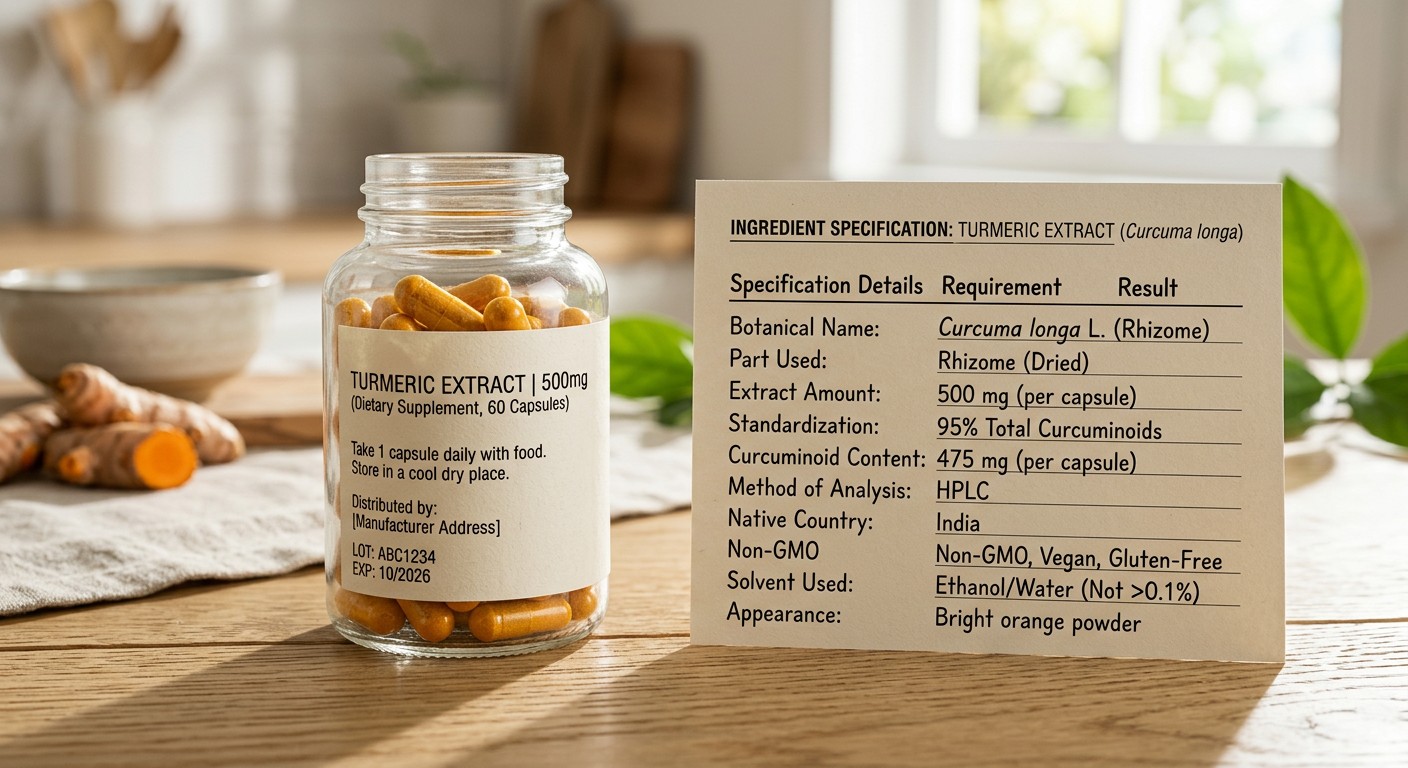
Check the botanical name, extract amount, curcuminoid content and formulation when comparing turmeric extracts.
How Much Turmeric Extract Should You Take?
There is no standard turmeric extract dose because products vary in their extracts, curcumin content and formulations. A dose used in one clinical study cannot automatically be applied to another supplement.
Follow the product’s recommended dosage and don’t assume that taking more will provide greater benefits. If using a concentrated supplement for a health condition, particularly alongside prescription medicines, consider speaking with a doctor, pharmacist or other qualified healthcare professional.
Is Turmeric Extract Safe?
Turmeric is widely consumed as a food, but concentrated turmeric and curcumin supplements are not equivalent to culinary turmeric.
Most people tolerate these supplements well, although side effects such as stomach discomfort, nausea, digestive upset and skin reactions can occur.
Rare cases of liver injury have also been reported. The UK’s Committee on Toxicity found reasonable evidence of a link between turmeric/curcumin supplements and rare idiosyncratic liver injury, including with some higher-bioavailability formulations containing piperine.
If unusual tiredness, loss of appetite, dark urine or yellowing of the skin or eyes develops after starting a supplement, stop taking it and seek medical advice.
Frequently Asked Questions
Is turmeric extract the same as turmeric?
No. Turmeric extract is a concentrated preparation made from turmeric, whereas turmeric can refer to the whole rhizome or the powdered culinary spice.
Is turmeric extract the same as curcumin?
No. Curcumin is a naturally occurring compound in turmeric. A turmeric extract can contain curcumin together with other curcuminoids and plant compounds. Read our guide on the differences between Turmeric and Curcumin.
What is turmeric extract used for?
It is commonly used in food supplements and has been studied particularly for joint health, inflammatory processes and oxidative stress.
Is turmeric extract better than turmeric powder?
Not necessarily. Turmeric powder is useful as a food ingredient, while an extract provides a more concentrated preparation. The best choice depends on the intended use.
Does turmeric extract with black pepper work better?
Piperine in black pepper can increase curcumin absorption, which is why it is used in some formulations. However, greater absorption does not automatically mean greater clinical benefit, and piperine-containing formulations are not suitable for everyone.
Summary
Turmeric extract is a concentrated preparation of Curcuma longa rhizome. Unlike turmeric powder, it concentrates selected compounds, while curcumin is just one of its principal constituents.
Importantly, turmeric extract is not a standardised ingredient. Products can differ considerably in curcuminoid content, extraction method and absorption technology. Evidence for benefits such as joint health is promising, but depends on the specific preparation studied.
Concentrated supplements should also be distinguished from culinary turmeric. Although serious adverse effects are uncommon, rare liver injuries have been reported, so careful product selection and professional advice may be appropriate for people taking medicines or managing health conditions.
In simple terms: turmeric powder is the dried spice, turmeric extract is a concentrated preparation, and curcumin is a key compound found in turmeric.
Further Information
1. What Exactly Is Turmeric? It’s Not Just a Spice!
2. Turmeric: Science and Safety
Published by: National Center for Complementary and Integrative Health (NCCIH), National Institutes of Health (NIH)
Brief description: Explains what turmeric and curcumin are, summarizes the current scientific evidence on potential health effects, and discusses issues such as curcumin’s low oral bioavailability and the safety of turmeric/curcumin products.
Direct article: Read article.
3. Turmeric benefits: A look at the evidence”
Published by: Harvard Health Publishing, Harvard Medical School
Brief description: Reviews the evidence behind turmeric and curcumin, including their potential anti-inflammatory effects, possible benefits for osteoarthritis, and important safety considerations and drug interactions associated with supplements.
Direct article: Read article.
4. Turmeric
Published by: Memorial Sloan Kettering Cancer Center (MSKCC)
Brief description: Provides an evidence-based overview of turmeric and its active compounds, particularly curcumin, covering potential uses, clinical research, mechanisms, safety concerns, interactions with medications, and the limitations of current evidence.
Direct article: Read article.
Disclaimer
This article is for general informational purposes only and is not medical advice. Food supplements should not be used as a substitute for a balanced diet or appropriate medical care. Always check whether a supplement is suitable for you, particularly if you take medication, have a medical condition, are pregnant or breastfeeding. Speak to a qualified healthcare professional if you are unsure.
Author
Written by J. Henderson
Health & Wellness Research Writer
J. Henderson writes evidence-based articles on nutrition, botanical supplements and everyday wellbeing. His work focuses on translating scientific research into clear, practical guidance that helps readers make informed decisions about natural health products.