
Turmeric for Joint Pain and Arthritis
Turmeric is widely used as a food ingredient and supplement, but it is also commonly taken by people looking for help with joint pain, stiffness and arthritis symptoms.
Most clinical research in this area has focused on osteoarthritis, particularly knee osteoarthritis, and has often investigated concentrated turmeric extracts or curcumin rather than ordinary culinary turmeric.
This distinction matters because curcumin is the best-known compound in turmeric studied for its potential effects on inflammation and joint symptoms.
Research is encouraging in some areas, but turmeric should not be considered a proven treatment or replacement for appropriate medical care.
Quick Answer
Turmeric and curcumin may help reduce pain and improve function in some people with osteoarthritis, but the evidence is not conclusive.
Much of the research actually investigates curcumin, curcuminoids or concentrated turmeric extracts, rather than the turmeric normally used in cooking.
Several reviews of clinical trials have reported improvements in knee osteoarthritis pain and function. However, studies have used different extracts, curcumin formulations and doses, making direct comparisons difficult.
There is much less evidence for other causes of joint pain or other forms of arthritis.
Key points
- Most research involves osteoarthritis.
- Curcumin is the main turmeric compound studied for joint health.
- Some studies report reduced joint pain and stiffness.
- Different turmeric products can produce different results.
- Culinary turmeric is not the same as a concentrated extract.
- Turmeric is not a replacement for arthritis treatment.
- Supplements can cause side effects and interact with medicines.
Related Guides
Explore other areas of turmeric and health:
- Turmeric for Inflammation — understanding turmeric and inflammation.
- Turmeric Antioxidants — exploring antioxidant research.
- Turmeric Cholesterol — what research says about cholesterol.
- Turmeric Heart Health — exploring turmeric and cardiovascular health.
- Turmeric Benefits — the wider picture of potential turmeric benefits.
Turmeric for Joint Pain and Arthritis

Research into turmeric and joint health has largely focused on curcumin and concentrated turmeric extracts, particularly for osteoarthritis.
About Turmeric for Joint Pain and Arthritis
Who Uses Turmeric for Joint Pain?
People may consider turmeric supplements when experiencing joint pain, stiffness or reduced mobility, particularly when they have osteoarthritis.
However, joint pain has many possible causes. Persistent, unexplained or worsening joint pain should be medically assessed rather than assumed to be arthritis.
What Is Turmeric?
Turmeric (Curcuma longa) is a plant in the ginger family. Its underground stem is dried and commonly used as the familiar yellow culinary spice.
Turmeric naturally contains compounds called curcuminoids, including curcumin.
Curcumin has attracted particular scientific interest, which is why many joint-health studies investigate turmeric extracts or concentrated curcumin rather than simply turmeric used in food.
When Is Turmeric Used for Joint Pain?
Turmeric supplements are generally taken regularly rather than used as an immediate treatment for sudden pain.
Clinical studies commonly assess changes over a period of weeks, so turmeric should not be viewed in the same way as a fast-acting painkiller.
Where Is the Evidence Strongest?
The most promising clinical evidence relates to knee osteoarthritis.
Research has investigated outcomes including pain, stiffness, mobility and physical function. Evidence for other forms of arthritis and general unexplained joint pain is much less certain.
Why Is Curcumin Studied?
Curcumin is one of turmeric’s best-known naturally occurring compounds and the main curcuminoid investigated in joint-health research.
Researchers have studied curcumin for potential effects on biological processes associated with inflammation and oxidative stress.
However, laboratory findings do not automatically mean that taking turmeric or curcumin will produce a meaningful improvement in joint pain in people.
How Is Turmeric Taken for Joint Health?
Turmeric and curcumin are available in numerous forms, including capsules, tablets, powders, extracts and specially formulated supplements.
The important point is that these products are not necessarily equivalent.
The amount of turmeric or curcumin, formulation and absorption can differ considerably between products.
Turmeric, Curcumin and Joint Research
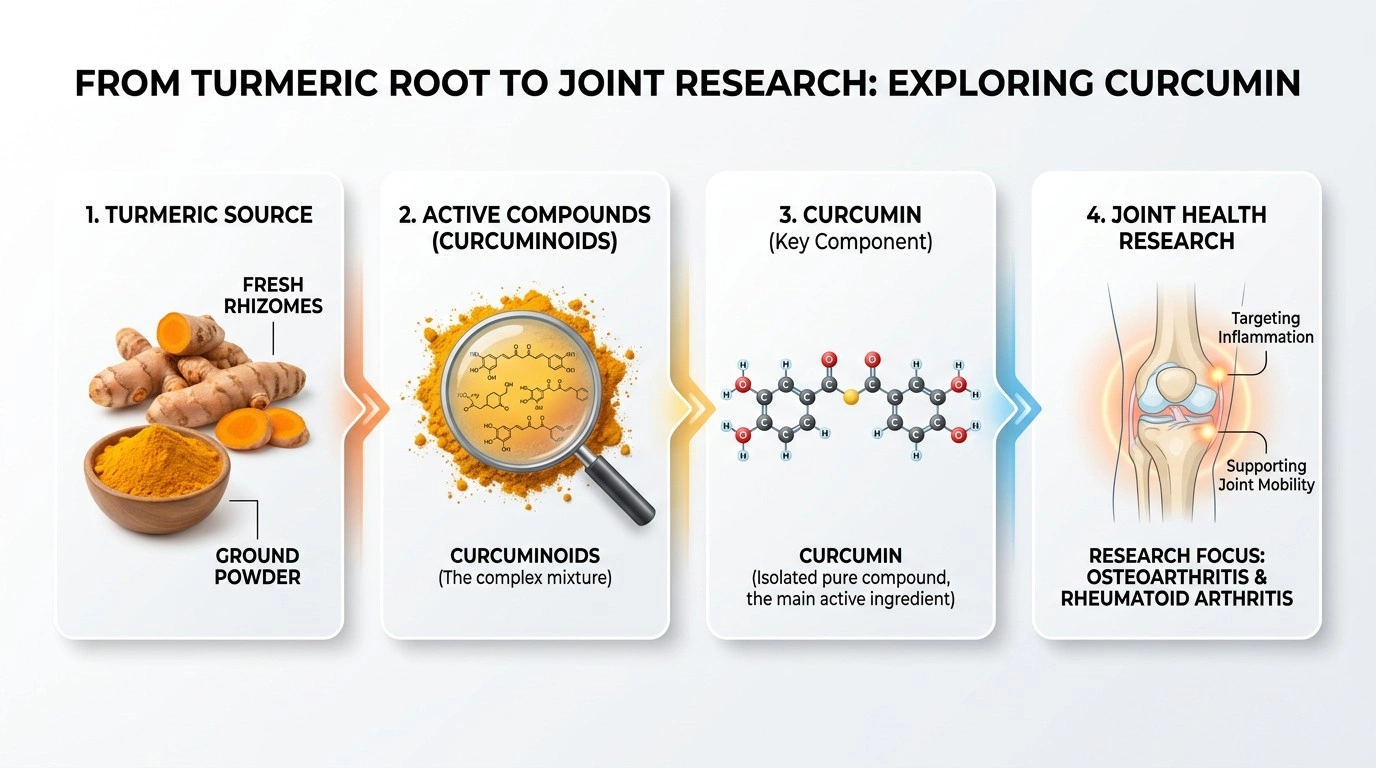
Turmeric contains curcuminoids, including curcumin, which is the compound most extensively studied in research relating to joint health.
Table of Contents
- What Causes Joint Pain?
- Can Turmeric Help Joint Pain?
- What Does the Research Say?
- Can Turmeric Help Osteoarthritis?
- What About Other Types of Arthritis?
- Is It Curcumin in Turmeric That May Help Joint Pain?
- Turmeric or Curcumin for Joint Pain?
- Does the Type of Turmeric Matter?
- How Much Turmeric Is Used for Joint Pain?
- How Long Might Turmeric Take to Work?
- When Should You Take Turmeric?
- Frequently Asked Questions
- Summary
- Related Guides
- Further Information and Reading
- Medical Disclaimer
What Causes Joint Pain?
Joint pain is a symptom rather than a single medical condition.
It can result from osteoarthritis, injury, inflammation, overuse and numerous other conditions. Different causes require different approaches to treatment.
Osteoarthritis is particularly relevant to turmeric research because it is the condition investigated in many clinical trials.
It develops when tissues within a joint change over time and can result in pain, stiffness and difficulty moving the affected joint.
This distinction matters because evidence that a supplement affects symptoms of knee osteoarthritis does not demonstrate that it will help every type of joint pain.
Joint Pain and Osteoarthritis
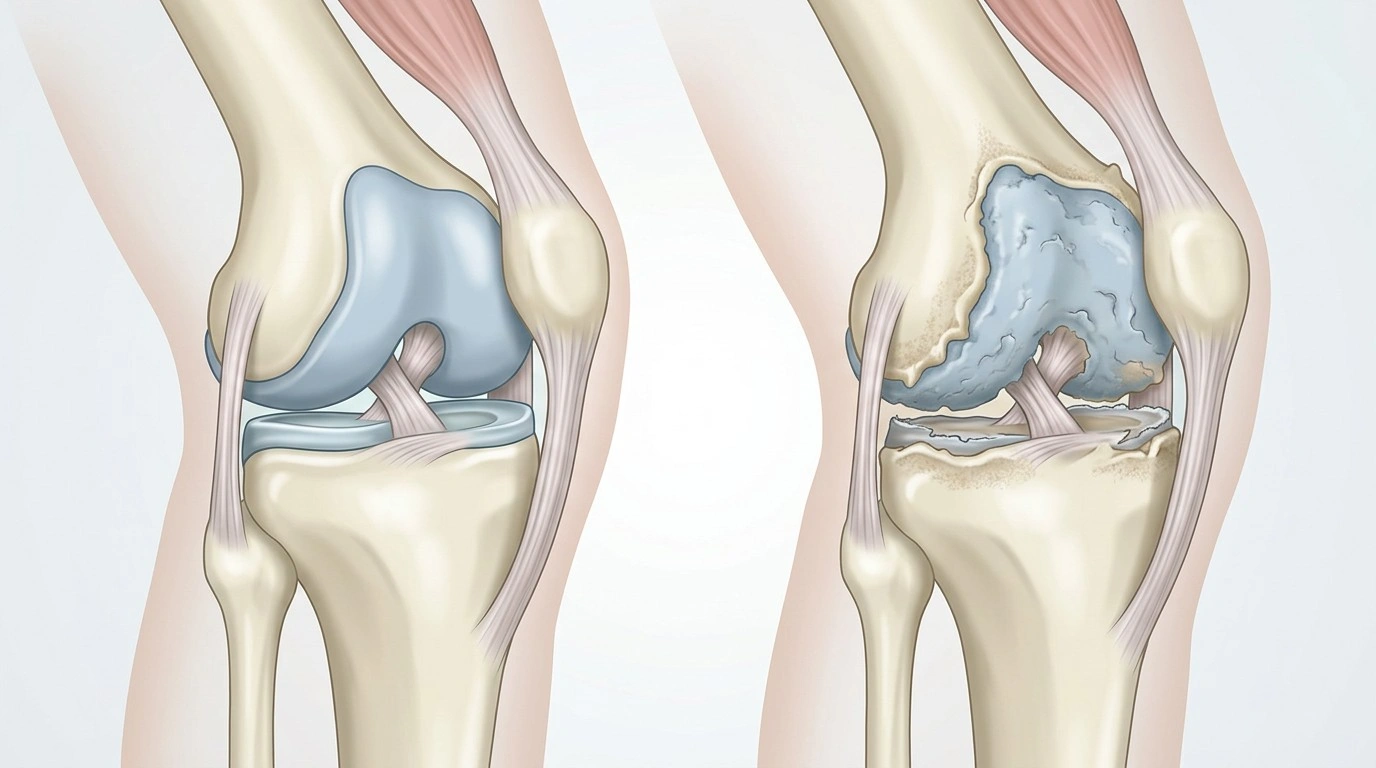
Joint pain has many possible causes. Much of the clinical research involving turmeric and curcumin has focused specifically on knee osteoarthritis.
How would you describe turmeric’s smell?
Smell is subjective, so there is no single description that everyone will perceive in exactly the same way.
However, earthy is probably the simplest description of turmeric’s aroma.
Other characteristics you may notice include:
- Warm
- Woody
- Root-like
- Mildly spicy
- Slightly peppery
- Ginger-like
- Faintly resinous
Turmeric is not normally sharp in the way that fresh chilli can be, nor does it have the obvious sweetness associated with cinnamon.
Freshly cut turmeric can have a particularly noticeable root-like freshness. Ground turmeric tends to have a warmer, drier character.
Can Turmeric Help Joint Pain?
There is evidence suggesting that certain turmeric and curcumin supplements and preparations may reduce pain in people with osteoarthritis, particularly knee osteoarthritis.
However, there is no single standard “turmeric treatment”.
Researchers have investigated different turmeric extracts, curcuminoid concentrations, doses and formulations. This makes it difficult to translate the results into a simple recommendation about turmeric supplements generally.
The National Center for Complementary and Integrative Health (NCCIH) describes the initial evidence for osteoarthritis as positive but says that higher-quality evidence is still needed before firm conclusions can be reached.
That is probably the most useful way to view the evidence:
Promising, but not proven.
What Does the Research Say About Turmeric and Joint Pain?
Several systematic reviews and meta-analyses have investigated turmeric and curcumin for osteoarthritis.
A 2021 systematic review and meta-analysis included 15 randomised controlled trials involving 1,621 participants. The researchers reported improvements in measures of pain, stiffness and physical function compared with placebo.
A more recent systematic review published in 2025 examined clinical trials of Curcuma longa for knee osteoarthritis and also reported reductions in pain.
Another 2025 network meta-analysis examined 17 randomised controlled trials involving different turmeric preparations for knee osteoarthritis. The researchers reported reductions in WOMAC pain scores, although results varied between formulations.
These findings are encouraging, but there are important limitations.
Studies differ in:
- turmeric or curcumin formulation
- concentration
- absorption
- dosage
- study length
- participant numbers
- comparison treatments
- methods used to measure pain and function
This makes it difficult to say that all turmeric supplements will produce the same effects.
Turmeric and Curcumin Joint Pain Research

Clinical studies have investigated different turmeric extracts, curcumin formulations, doses and measures of joint pain and physical function.
Can Turmeric Help Osteoarthritis?
Osteoarthritis is currently the most relevant condition when discussing turmeric and joint-health research.
Several reviews have found potential improvements in pain and physical function, particularly in people with knee osteoarthritis.
But turmeric does not repair damaged cartilage or cure osteoarthritis.
NCCIH says several meta-analyses have produced initially positive findings for measures including knee pain, stiffness and mobility, while also stressing that better-quality evidence is needed.
It is therefore more accurate to say that some turmeric or curcumin preparations may help manage certain osteoarthritis symptoms than to say that turmeric treats arthritis.
NICE guidance for osteoarthritis focuses on established management approaches, including therapeutic exercise and weight management where appropriate. Turmeric is not presented as a standard treatment in its recommendations.
What About Other Types of Arthritis?
“Arthritis” describes many different conditions rather than one disease.
This is important when interpreting claims about turmeric.
Rheumatoid Arthritis
Rheumatoid arthritis is an autoimmune condition and is different from osteoarthritis.
Although curcumin has been studied in relation to inflammation, evidence from osteoarthritis studies cannot simply be applied to rheumatoid arthritis.
Anyone with rheumatoid arthritis should follow the treatment plan agreed with their healthcare team rather than replacing prescribed treatment with turmeric supplements.
Other Joint Conditions
The evidence is also insufficient to assume that turmeric will help every other condition that causes joint pain.
A person’s joint pain may have little to do with the processes investigated in turmeric studies.
That is why identifying the cause of persistent joint pain is more important than choosing a supplement based solely on the symptom.
Turmeric vs Curcumin for Joint Pain
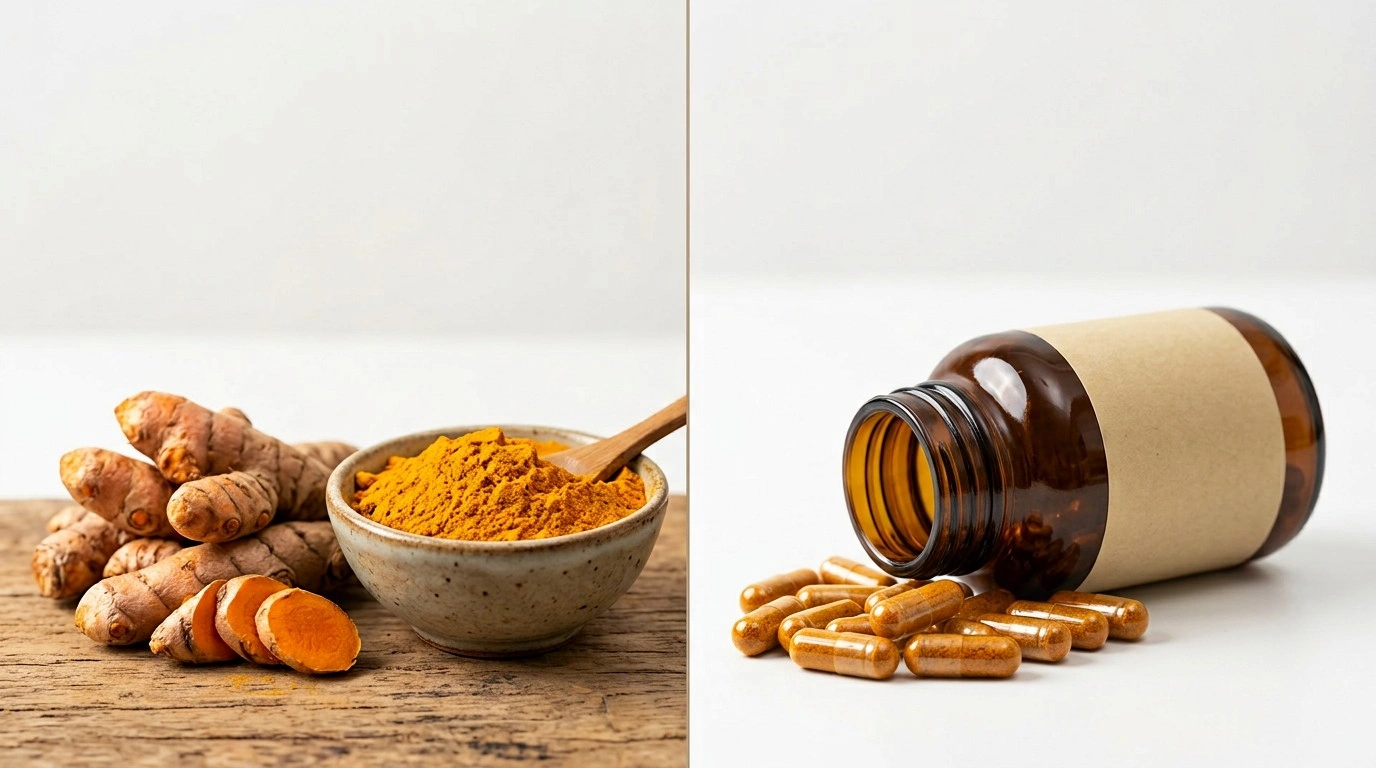
Clinical research may use concentrated curcumin or turmeric extracts rather than the turmeric powder normally used in cooking.
Is It Curcumin in Turmeric That May Help Joint Pain?
Curcumin is the main compound in turmeric that researchers have studied for potential effects on joint pain and inflammation.
Turmeric naturally contains a group of compounds called curcuminoids, of which curcumin is the best known and most extensively studied.
Much of the clinical research into turmeric and joint pain has therefore used curcumin, concentrated curcuminoids or standardised turmeric extracts rather than ordinary turmeric used in cooking.
This is an important distinction.
Someone searching for turmeric for joint pain may assume that all turmeric products are equivalent. In reality, the amount of curcumin and the way a supplement is formulated can vary considerably.
Research suggests that some curcumin and turmeric extract preparations may help reduce pain and improve function in people with osteoarthritis, particularly knee osteoarthritis. However, the evidence does not show that every turmeric or curcumin product will have the same effect.
Turmeric or Curcumin for Joint Pain?
Turmeric and curcumin are related, but they are not interchangeable terms.
Turmeric is the whole plant material. Curcumin is one of the naturally occurring curcuminoids found within turmeric.
Many clinical studies use:
- turmeric extracts
- concentrated curcuminoids
- curcumin extracts
- enhanced-absorption formulations
rather than the turmeric powder normally used in cooking.
This distinction helps explain why eating more turmeric in food cannot be assumed to produce the same effects observed in supplement trials.
If you want to understand this difference in more detail, our Turmeric vs Curcumin guide explains how the two are related and why the distinction matters when looking at research.
Does the Type of Turmeric Matter?
Yes. The formulation may matter considerably.
One challenge in turmeric research is the relatively low oral bioavailability of curcumin. In simple terms, only a proportion of curcumin consumed in conventional forms reaches the bloodstream.
Manufacturers have developed different approaches intended to increase absorption, including formulations using:
- piperine from black pepper
- phospholipids
- micellar systems
- other enhanced-absorption technologies
However, greater absorption does not automatically mean greater clinical benefit.
Research comparing different turmeric preparations illustrates why the formulation question remains complicated rather than demonstrating one universally superior type.
There is also a safety consideration. NCCIH notes that cases of liver injury have been reported in people consuming some highly bioavailable curcumin formulations.
Different Turmeric and Curcumin Formulations
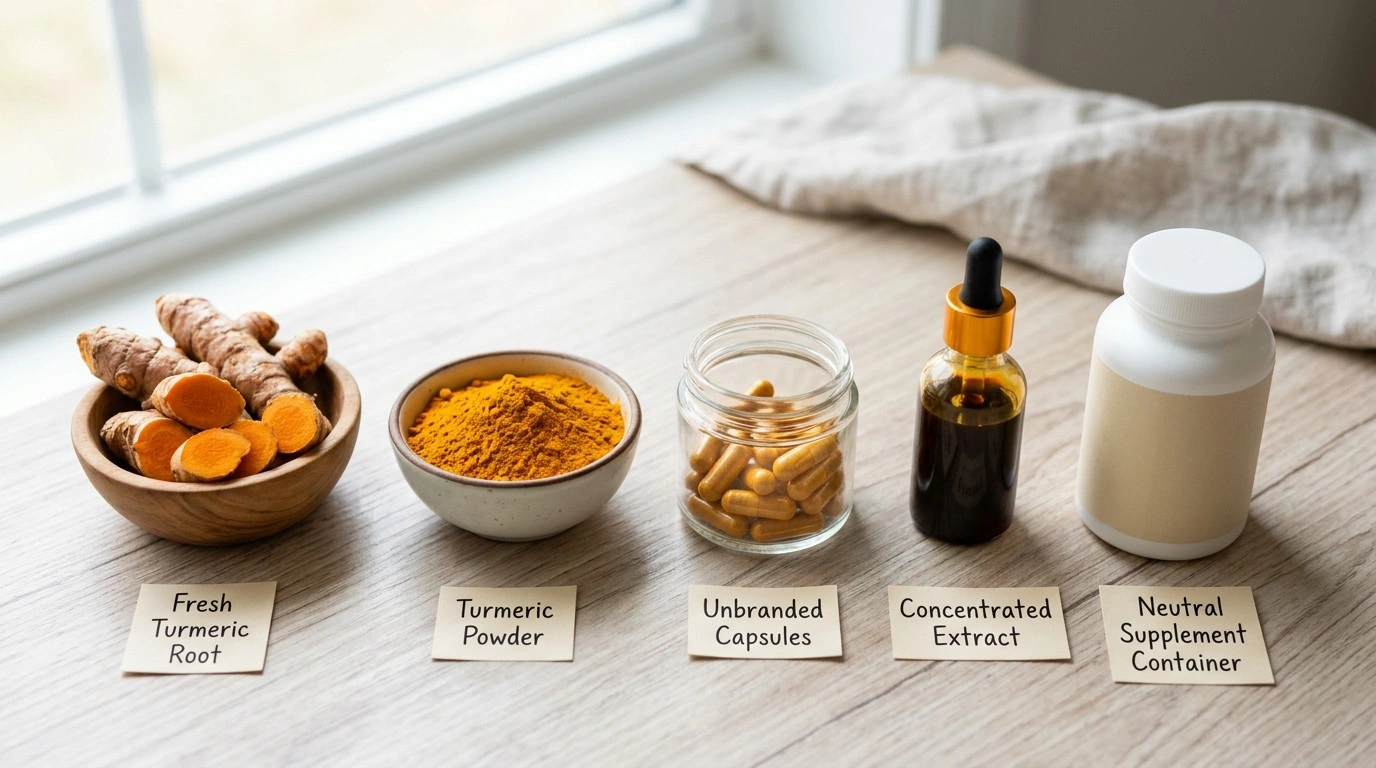
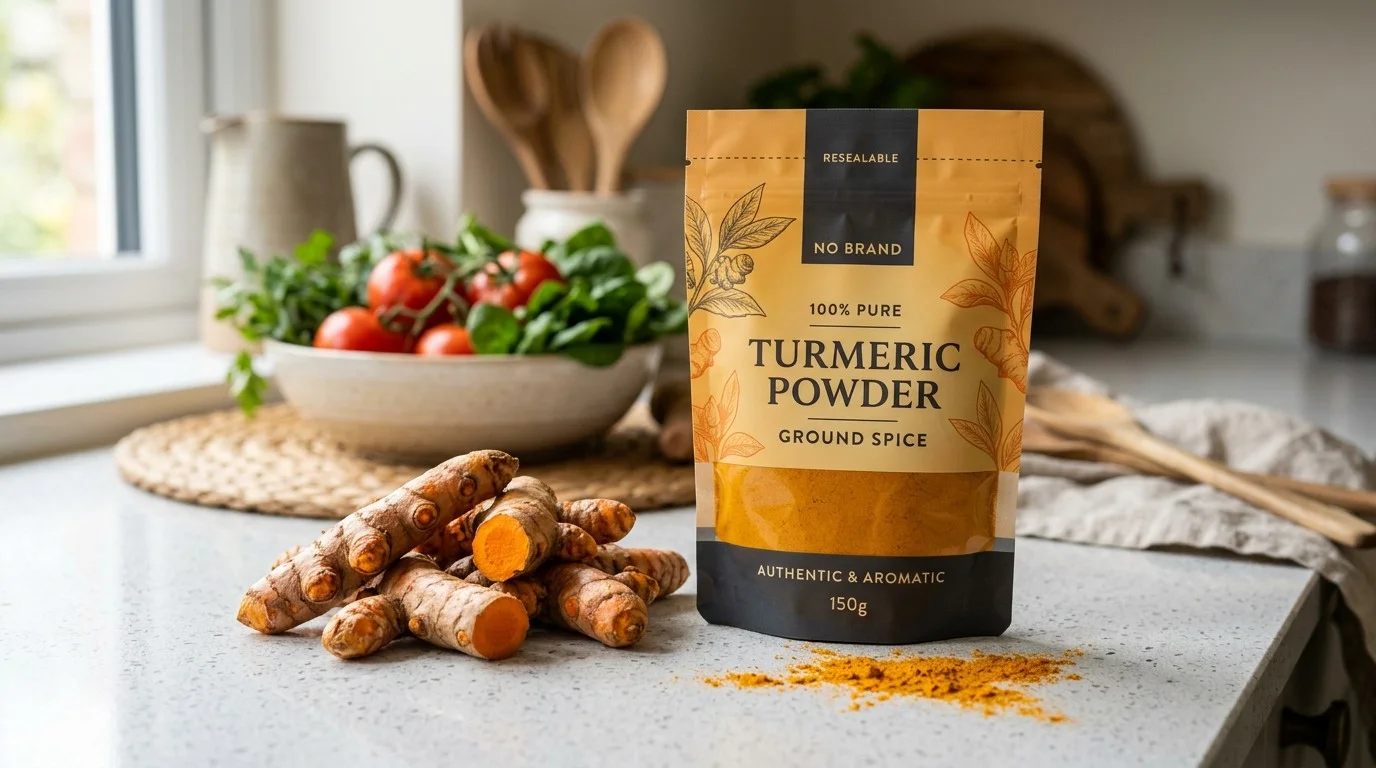
Turmeric supplements can contain whole turmeric, concentrated extracts or curcumin formulations, so products used in research are not necessarily equivalent.
How Much Turmeric Is Used for Joint Pain?
There is no universally established turmeric or curcumin dose for joint pain.
This is partly because clinical studies have investigated very different products.
A dose of whole turmeric powder cannot be directly compared with the same numerical amount of a concentrated curcumin extract.
Rather than concentrating only on the number of milligrams on the front of a supplement, it is useful to understand:
- what the product actually contains
- whether it contains turmeric or an extract
- the amount of curcuminoids or curcumin
- serving size
- formulation
- manufacturer’s directions
This is also why results from a clinical trial using one specific extract should not automatically be applied to every turmeric supplement sold in shops.
How Long Does Turmeric Take to Work for Joint Pain?
Turmeric should not be considered an immediate pain-relief treatment.
Clinical trials investigating osteoarthritis generally evaluate changes over several weeks rather than looking for an effect within hours.
The exact time varies between studies and products, and some people may experience no noticeable benefit.
This makes claims that turmeric will begin working after a precise number of days misleading.
If joint pain is severe, worsening or affecting normal activities, waiting for a supplement to take effect is not a substitute for obtaining appropriate medical advice.
Healthy Lifestyle and Joint Health

Joint health involves more than supplements, and persistent or worsening joint pain should be properly assessed.
When Should You Take Turmeric for Joint Pain?
There is no well-established evidence showing that turmeric is more effective for joint pain when taken in the morning rather than at night.
The formulation and how consistently it is taken are likely to be more relevant than a particular time on the clock.
Follow the directions supplied with the individual supplement, because products differ considerably.
Some people also find turmeric supplements easier to tolerate when taken with food.
Frequently asked questions
Is Turmeric Good for Joints?
Research suggests that some turmeric and curcumin preparations may improve pain, stiffness or function in people with osteoarthritis, particularly knee osteoarthritis.
Evidence is not strong enough to conclude that turmeric benefits everyone’s joints or every cause of joint pain.
Does Turmeric Help Arthritis?
It depends on what is meant by arthritis.
The strongest evidence relates to osteoarthritis, particularly knee osteoarthritis. Evidence for other forms of arthritis is much less established.
Is Turmeric Better Than Curcumin for Joint Pain?
There is not enough evidence to declare one universally better.
Clinical trials have used different turmeric extracts and curcumin preparations, making direct comparisons difficult.
Is Turmeric Better Than Ginger for Arthritis?
Both turmeric and ginger have been investigated for potential effects relating to inflammation and pain, but there is insufficient evidence to say that one is generally better for arthritis.
The appropriate approach also depends on the type and cause of joint symptoms.
Is Turmeric Better Than Ibuprofen for Joint Pain?
Turmeric supplements and ibuprofen should not be treated as interchangeable.
Some research has compared turmeric or curcumin preparations with non-steroidal anti-inflammatory drugs, but this does not establish turmeric as a replacement for prescribed or recommended medication.
Do not stop or replace medication without discussing it with an appropriate healthcare professional.
Can You Take Turmeric Every Day for Joint Pain?
Some studies have investigated daily turmeric or curcumin supplementation for periods of several weeks or months.
That does not mean daily supplementation is appropriate for everyone.
Safety depends on factors including the product, dose, other medicines and individual health circumstances.
Are Turmeric Supplements for Joint Pain Safe?
Turmeric used normally as a food ingredient is different from taking a concentrated supplement.
Conventionally formulated turmeric and curcumin supplements appear to be generally well tolerated when used appropriately for limited periods, but supplements are not risk-free.
People who are pregnant, have existing medical conditions or take medicines should seek appropriate advice before using concentrated turmeric or curcumin supplements.
What Are the Possible Side Effects of Turmeric Supplements?
Reported side effects can include:
- stomach upset
- nausea
- acid reflux
- diarrhoea
- constipation
NCCIH also reports cases of liver injury associated with some highly bioavailable curcumin formulations.
Anyone experiencing symptoms that could indicate liver problems should stop taking the product and seek medical advice.
Can Turmeric Supplements Interact with Medicines?
Turmeric and curcumin supplements may interact with medicines or be unsuitable in some circumstances.
Because concentrated supplements can provide substantially different exposure from turmeric used as a culinary spice, people taking regular medication should discuss supplementation with a doctor, pharmacist or other appropriately qualified healthcare professional.
This is particularly important if you are taking medication for an existing health condition or are due to have surgery.
Summary
Turmeric is widely searched for by people interested in joint pain and arthritis, but much of the scientific research actually focuses on curcumin, curcuminoids or concentrated turmeric extracts.
Curcumin is the best-known curcuminoid in turmeric and the compound most extensively investigated in relation to inflammation and joint symptoms.
The most encouraging clinical evidence relates to knee osteoarthritis, where several systematic reviews have found potential improvements in pain, stiffness or physical function.
However, studies use different turmeric extracts, curcumin preparations, doses and absorption technologies. This makes it difficult to translate research findings into one recommendation covering every turmeric supplement.
Turmeric should therefore be considered a possible complementary approach rather than a proven treatment for joint pain or arthritis.
Persistent or worsening joint pain should be properly assessed, particularly when its cause is unknown.
Further Information and Reading
The following video and independent sources provide further information about turmeric, curcumin and joint health. They are included for informational purposes only and should not be considered medical advice.
1. What Science ACTUALLY Says About Turmeric for Arthritis Pain – Jeffrey Peng MD
This video provides an accessible overview of the research into turmeric and curcumin for arthritis and joint pain.
2. Arthritis UK — Turmeric: Uses, Side Effects and Trials for Osteoarthritis
Arthritis UK provides a UK-focused overview of turmeric and curcumin for arthritis, including research into osteoarthritis, potential effects on joint pain and important safety considerations. Arthritis UK — Turmeric guide
3. NCCIH — Turmeric: Usefulness and Safety
The National Center for Complementary and Integrative Health provides an evidence-based overview of turmeric and curcumin research, including osteoarthritis and important safety considerations.
4. PubMed — Efficacy of Curcuma longa in Relieving Pain Symptoms of Knee Osteoarthritis Patients
This systematic review and meta-analysis examines clinical trials investigating Curcuma longa and pain in people with knee osteoarthritis.
Medical Disclaimer
The information on this page is provided for general informational purposes only and is not intended to diagnose, treat, cure or prevent any disease or medical condition. Always follow the instructions on the label.
Turmeric and curcumin supplements may not be suitable for everyone and may cause side effects or interact with medicines. If you have joint pain, arthritis, another medical condition, are pregnant or breastfeeding, take medication or are considering changing an existing treatment, speak to a doctor, pharmacist or other appropriately qualified healthcare professional.
Do not stop or change prescribed medication based on information provided on this website.
Author
Written by J. Henderson
Health & Wellness Research Writer
J. Henderson writes evidence-based articles on nutrition, botanical supplements and everyday wellbeing. His work focuses on translating scientific research into clear, practical guidance that helps readers make informed decisions about natural health products.
- Written by J. Henderson
- Reviewed by Fiona Finlay
- Reviewed on the 10 September 2026