Turmeric and its main studied compound, curcumin, may have a small effect on cholesterol and other blood fats in some people, but the evidence is not strong enough to use turmeric as a treatment for high cholesterol.
Large reviews of clinical trials have reported modest average reductions in total cholesterol, LDL cholesterol and triglycerides. However, results vary considerably between studies and different groups of people. PubMed
Most research has investigated turmeric or curcumin supplements rather than the amount of turmeric normally used in food.
Turmeric should not replace prescribed cholesterol-lowering medicines such as statins. If you take medication and are considering a concentrated turmeric or curcumin supplement, speak to your doctor or pharmacist.
Explore other areas of turmeric and health:

Turmeric can form part of a healthy diet, but managing cholesterol involves the wider diet, lifestyle and appropriate medical care.
Cholesterol is a fatty substance found in your blood. Your body needs some cholesterol to function normally, but having too much can increase the risk of heart and circulatory problems.
You may hear cholesterol described as LDL or “bad” cholesterol and HDL or “good” cholesterol. Triglycerides are another type of fat measured in the blood.
Turmeric contains naturally occurring compounds called curcuminoids. The best known is curcumin.
Researchers have investigated whether turmeric and curcumin could influence cholesterol and other blood fats, including LDL, HDL and triglycerides.
People with high cholesterol may come across turmeric when looking at diet, supplements or other ways of supporting their heart health.
However, high cholesterol can increase the risk of cardiovascular disease. Turmeric should therefore be considered separately from established approaches to managing cholesterol. nhs.uk
Turmeric can be used at any time as a normal culinary spice within a balanced diet.
Someone considering a concentrated turmeric or curcumin supplement should be more cautious, particularly if they have high cholesterol, take medicines or have been advised to manage their cardiovascular risk.
Turmeric is widely available in different forms.
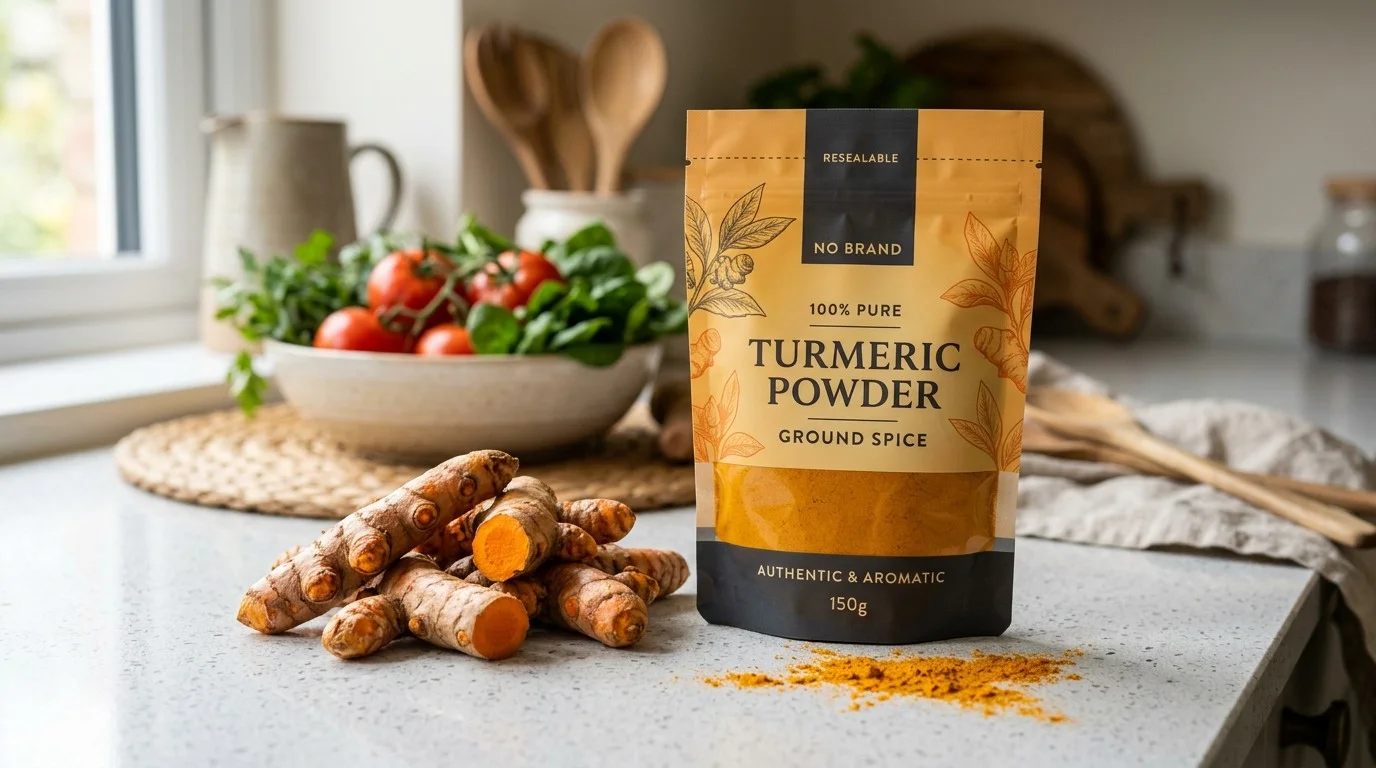
Turmeric for cooking is commonly sold in supermarkets and food shops as ground turmeric or fresh turmeric root.
Turmeric and curcumin supplements are sold by pharmacies, health-food retailers and online shops and can come as capsules, tablets, powders, extracts and other formulations.
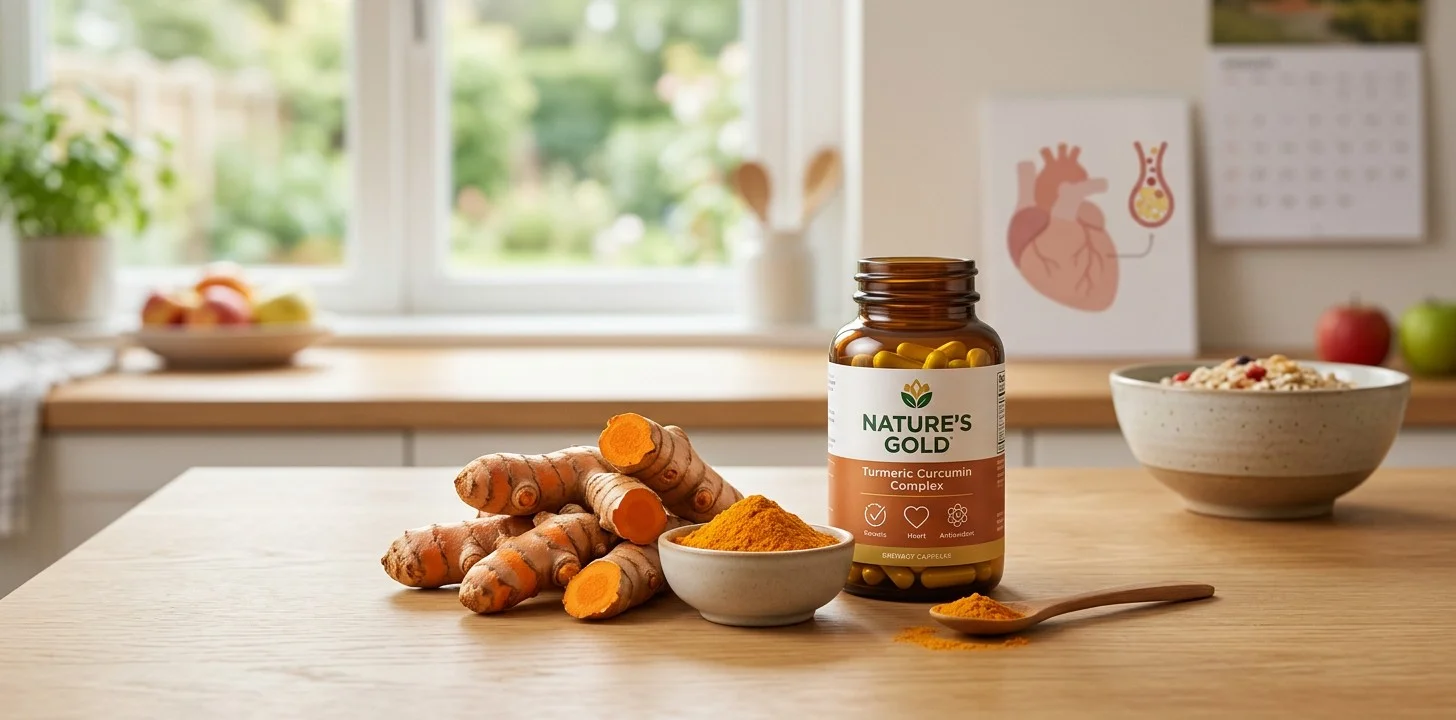
These products are not necessarily equivalent to one another, and a concentrated supplement is very different from adding turmeric to food.
Clinical research generally investigates measured amounts of turmeric extracts, curcumin or curcuminoid supplements rather than simply adding turmeric spice to meals.
The formulation, amount and duration differ between studies, which is one reason the results cannot be turned into a simple recommendation to “take this much turmeric to lower cholesterol”.
| Question | Simple Answer |
| Can turmeric lower cholesterol? | It may have a modest effect in some people, but results vary. |
| What about LDL cholesterol? | Some studies report small reductions. |
| What about triglycerides? | Some studies also report reductions. |
| Does turmeric increase HDL? | Some analyses report small increases, but findings vary. |
| Is turmeric in food the same as supplements? | No. Concentrated supplements are different from culinary turmeric. |
| Can turmeric replace statins? | No. |
| Should I take a supplement? | Check with a doctor or pharmacist, particularly if you take medicines. |
Research into turmeric, curcumin and cholesterol has produced some promising results, but the findings need to be interpreted carefully.
A 2023 systematic review and meta-analysis included 64 randomised clinical trials. On average, turmeric or curcumin supplementation was associated with reductions of approximately:
The analysis also found an average increase of around 1.8 mg/dL in HDL cholesterol. However, there was significant variation between the studies. PubMed
A 2026 meta-analysis looked specifically at people with prediabetes or type 2 diabetes. It included 27 randomised controlled trials and also found modest improvements in LDL, triglycerides, total cholesterol and HDL.
Importantly, the researchers rated the certainty of the evidence as low and found substantial differences between studies. PubMed
The simplest interpretation is that turmeric and curcumin may influence cholesterol levels, but the average effects found in research are relatively modest and results vary considerably.
That is very different from saying turmeric is a proven treatment for high cholesterol.
The British Heart Foundation also cautions that research into herbs and spices is not currently strong enough to make specific recommendations about using them for heart and circulatory health. British Heart Foundation
LDL stands for low-density lipoprotein and is commonly referred to as “bad” cholesterol.
The 2023 review of 64 randomised trials found an average reduction in LDL cholesterol of approximately 4.9 mg/dL among people receiving turmeric or curcumin supplementation. PubMed
However, the results varied between studies, populations and formulations.
This means turmeric should not be considered an alternative to established ways of managing high cholesterol.
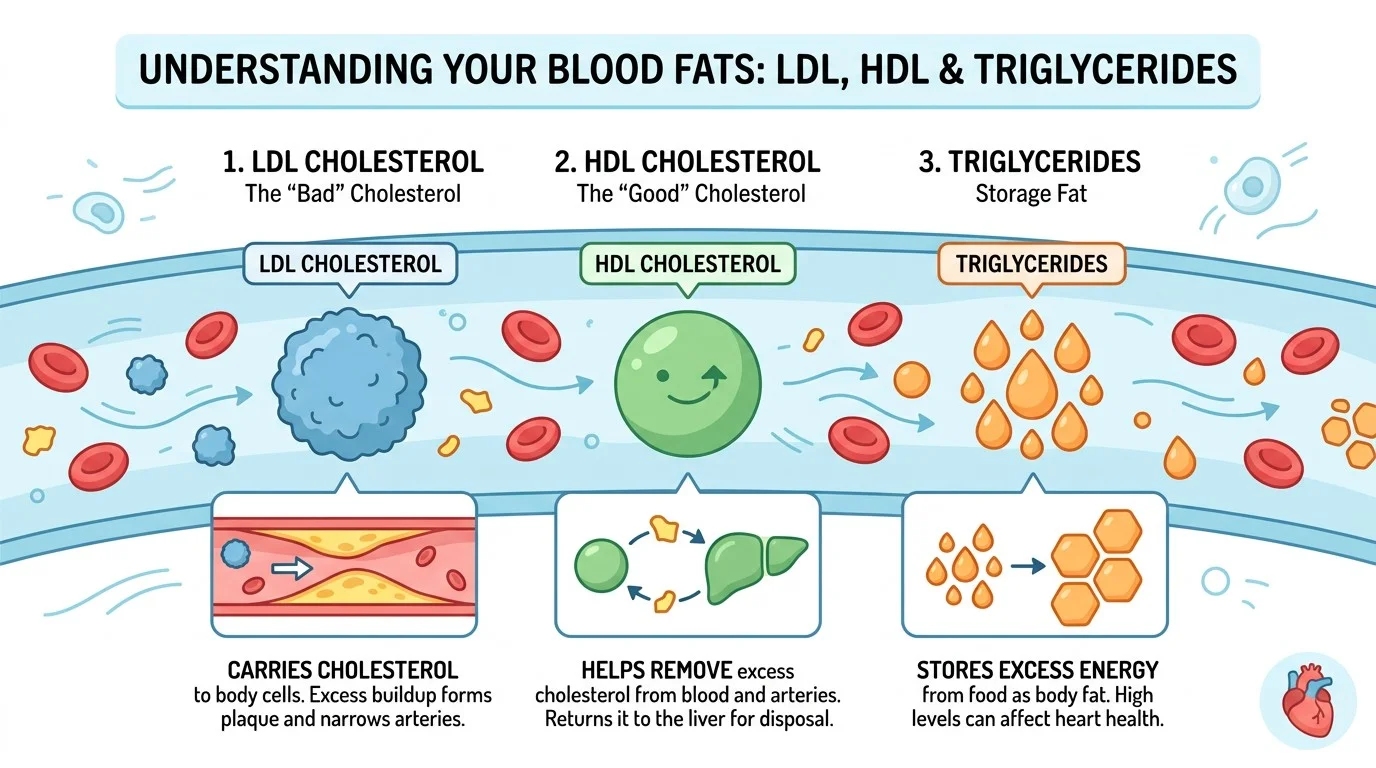
Cholesterol tests can include LDL, HDL and triglycerides, which provide different information about fats in the blood.
HDL stands for high-density lipoprotein and is often referred to as “good” cholesterol.
Some analyses have reported small increases in HDL following turmeric or curcumin supplementation. The 2023 review found an average increase of approximately 1.8 mg/dL. PubMed
However, research has not been completely consistent, so it would be misleading to say that taking turmeric will reliably raise HDL cholesterol.
Possibly.
Triglycerides are another type of fat found in the blood.
The 2023 meta-analysis found an average reduction of approximately 6.7 mg/dL in triglycerides following turmeric or curcumin supplementation. PubMed
The newer 2026 analysis in people with prediabetes or type 2 diabetes also reported a reduction in triglycerides, although the researchers emphasised the substantial variation between studies and low certainty of the evidence. PubMed
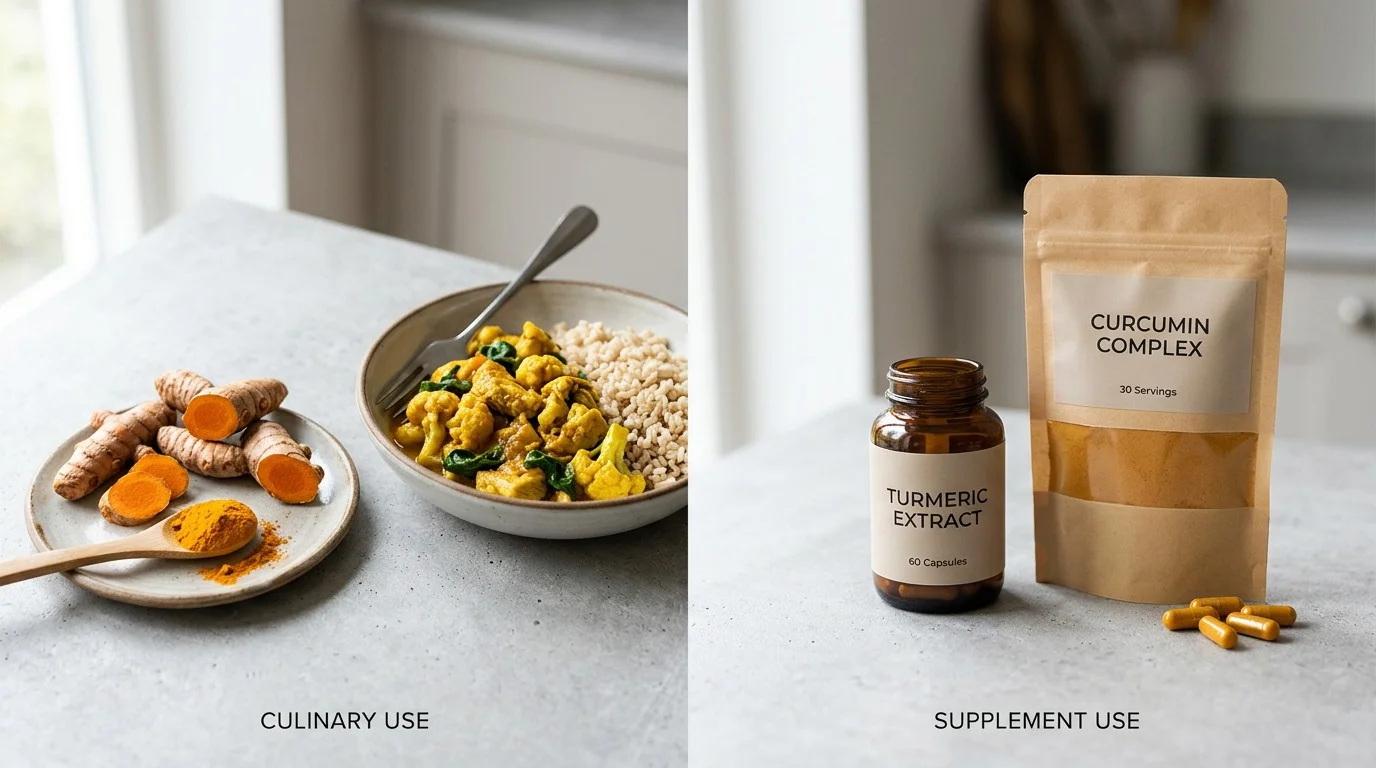
Turmeric used in cooking is different from the concentrated turmeric and curcumin preparations commonly investigated in clinical studies.
Adding turmeric to food and taking a concentrated turmeric or curcumin supplement are not the same thing.
Turmeric used in cooking contains curcumin naturally, but clinical trials frequently investigate extracts or supplements containing measured and sometimes concentrated amounts of curcuminoids.
This means results from a supplement study cannot simply be translated into spoonful’s of turmeric powder.
Turmeric can still form part of a healthy and varied diet. But eating turmeric should not be presented as a clinically established way of lowering cholesterol.
| Potential Advantages | Potential Disadvantages |
| Some research suggests modest effects on blood lipids. | Results vary considerably between studies. |
| Turmeric can form part of a healthy diet. | Culinary turmeric differs from concentrated supplements used in many studies. |
| LDL, HDL and triglycerides have all been studied. | Supplements may cause side effects or interact with medicines. |
| Research into curcumin continues to develop. | Turmeric cannot replace established cholesterol treatments. |
Turmeric should not be used as a replacement for prescribed statins or other cholesterol-lowering medicines.
Statins are established medicines used to lower cholesterol and reduce cardiovascular risk. NHS guidance states that they are the most commonly used medicines for high cholesterol. nhs.uk
Using turmeric in ordinary amounts in food is different from taking a concentrated supplement.
Some herbal supplements can interact with medicines. If you take a statin or another prescription medicine, check with your doctor or pharmacist before taking a concentrated turmeric or curcumin supplement. The British Heart Foundation also recommends checking with a healthcare professional before combining herbal supplements with medication. British Heart Foundation

Anyone taking cholesterol-lowering medicine should check with a doctor or pharmacist before adding a concentrated turmeric or curcumin supplement.
There is no established turmeric dose for treating high cholesterol.
Clinical trials use different turmeric extracts, curcumin concentrations, formulations, amounts and treatment periods.
This makes it difficult to turn the research into one reliable dosage recommendation for everyday use.
It is also why a precise number of milligrams should not automatically be interpreted as a proven cholesterol-lowering dose.
If you are considering a supplement, follow the manufacturer’s instructions and speak to a healthcare professional if you take medicines or have a medical condition.
There is no reliable timeframe that applies to everyone.
Clinical trials have used different treatment periods, populations, formulations and doses.
Even when researchers detect a change in cholesterol during a study, that does not mean everyone taking a turmeric supplement will experience the same result or that it will happen within the same period.
High cholesterol should therefore be monitored and managed using established medical guidance rather than waiting to see whether turmeric changes it.
Turmeric used normally in food is generally well tolerated by most people.
Concentrated turmeric and curcumin supplements provide larger amounts and may not be suitable for everyone.
Turmeric or curcumin supplements can cause digestive side effects in some people.
The likelihood and type of side effects may depend on the product, formulation and amount taken.
Turmeric and curcumin supplements may interact with some medicines.
If you take statins, anticoagulants or other prescription medicines, speak to your doctor or pharmacist before taking a turmeric supplement.
No.
Do not stop or change prescribed cholesterol medication because you are taking turmeric or curcumin.
NHS guidance recommends lifestyle changes for lowering cholesterol and, where appropriate, medicines such as statins. nhs.uk
Clinical studies use a variety of curcumin, curcuminoid and turmeric preparations.
That does not establish that one consumer product is “better” for lowering cholesterol. Different formulations and concentrations make simple comparisons difficult.
Turmeric is a useful spice and can form part of a healthy diet.
However, using more turmeric in cooking should not be regarded as a treatment for high cholesterol.
The quantities and formulations investigated in clinical studies can be very different from culinary turmeric.
Managing cholesterol is about much more than one food, spice or supplement.
NHS advice for lowering cholesterol includes eating a healthy diet, exercising regularly, stopping smoking and keeping alcohol within recommended limits. Some people also need cholesterol-lowering medicine. nhs.uk
Turmeric can form part of a healthy diet, but it cannot compensate for an unhealthy lifestyle or replace appropriate medical treatment.
Turmeric and curcumin may have modest effects on cholesterol and triglyceride levels, but research results vary and the clinical importance of these changes remains uncertain.
Most clinical research investigates supplements, extracts or concentrated curcumin preparations rather than ordinary amounts of turmeric used in cooking.
Turmeric should not replace healthy lifestyle measures, medical monitoring or prescribed cholesterol-lowering medicines.
If you take medication and are considering a turmeric or curcumin supplement, speak to your doctor or pharmacist first.
The following video and independent sources provide further information about healthy approaches to managing cholesterol, turmeric and cardiovascular health. They are included for informational purposes only and should not be considered medical advice.
Dr Rupy Aujla discusses practical food and nutrition choices that can form part of a heart-healthy lifestyle and help support healthy cholesterol levels.
The British Heart Foundation explains what is currently known about herbs, spices and heart health, including turmeric, and why the available evidence does not support specific recommendations for improving heart health.
This 2023 systematic review and dose-response meta-analysis examined 64 randomised clinical trials looking at the effects of turmeric and curcumin supplementation on cholesterol, triglycerides and other blood lipids.
https://pubmed.ncbi.nlm.nih.gov/37230418/
This 2026 systematic review and meta-analysis examined the effects of turmeric and curcumin supplementation on cholesterol and other blood lipids in people with prediabetes or type 2 diabetes.
https://pubmed.ncbi.nlm.nih.gov/41656101/
The NHS provides practical information about high cholesterol, including what it is, its health risks, lifestyle changes and established approaches to lowering cholesterol.
This article is provided for informational purposes only and is not a substitute for medical advice, diagnosis or treatment.
If you have high cholesterol, cardiovascular disease or another medical condition, speak to a qualified healthcare professional about appropriate treatment.
Do not stop, start or change prescribed medication because of information on this page.
If you take medicines, check with your doctor or pharmacist before using turmeric or curcumin supplements because interactions may occur.
Always read and follow the manufacturer’s label and instructions before using any supplement.
Written by J. Henderson
Health & Wellness Research Writer
J. Henderson writes evidence-based articles on nutrition, botanical supplements and everyday wellbeing. His work focuses on translating scientific research into clear, practical guidance that helps readers make informed decisions about natural health products.